Search This Blog

Tuesday, 22 November 2016

As a judge, I can see the racism embedded in the system

Peter Herbert in The Guardian

Britain often claims to possess the finest justice system in the world, with a “colour blind” approach to the law. Unfortunately, this isn’t true: justice is neither colour blind, nor is it equal.

Historically, the justice system has been used to legitimise slavery, and then colonialism, from Elizabethan England onwards. In Kenya, between 1951 and 1954, during the Mau Mau uprising, more than 1,090 Kenyans were executed by the British colonial judiciary, backed by the Foreign and Commonwealth Office. This appalling figure represents the most liberal use of the death penalty in British legal history and is double the number of those executed by the French during the war of liberation in Algeria 10 years later.


In more recent times, judges have enforced the unjust “sus” laws (the informal name used for stop-and-search laws which still disproportionately affect BME people). It can be argued that racism is embedded in the DNA of the British judiciary and that it has proved uniquely resilient to education or training.

But to what extent is racism present in the system today? A study headed by David Lammy MP, published last week, makes for very disturbing reading.

In 1991, statistics regarding how differently BME and white suspects were dealt with in the criminal justice system helped to trigger race training for all full-time judges over a five-year period. Those statistics have not improved. If you are an African-Caribbean man you are 16% more likely to be remanded in custody than if you are white; you are also likely to obtain a custodial sentence of 24 months compared to your white counterpart’s 17 months. This is not because African-Caribbean men commit more serious offences than their white counterparts – these are punishments handed down for the same or similar offences. African-Caribbean men are also subject to receiving immediate custodial sentences with fewer previous convictions than their white counterparts. Our perceptions have become the reality that means 41% of all young people in detention are now from BME communities.


If you are African-Caribbean you are 16% more likely to be remanded in custody than if you are white

What is critical is that the report highlights, yet again, the fundamental racist disparities in the dispensation, administration and dissemination of justice. There is a crisis of both trust and confidence in the British judicial system among black communities. Their concerns are that it remains arbitrary, inconsistent and discriminatory. This interim report proves them right – despite its diplomatic language.

Of course, poverty, homelessness and drug addiction all play their part, as does the disproportionate influence of an institutionally racist police culture, which means black defendants are stopped and searched seven times more often than their white counterparts. This is despite falling stop-and-search figures, and falling crime generally.

A significant responsibility for this disparity of treatment still lies with an overwhelmingly white, middle class and male magistracy and judiciary, resistant to ethnic monitoring, which hides behind the fallacy that justice is “colour blind and impartial”.

We cannot expect to have a diverse judiciary and magistracy, and to recruit police officers, probation officers, prison officers and lawyers who look like us and are knowledgeable of our communities, if we are forced to operate in a system that is itself unwilling or unable to deliver justice equally to all. As Martin Luther King said, “It is not possible to be in favour of justice for some people and not to be in favour of justice for all people.”

At present, out of 161 members of the high court judiciary, there is not a single African-Caribbean judge, while only two are of Asian origin. Less than 2.5% of Oxford and Cambridge graduates (from whom 86% of high court judges are drawn) are of African-Caribbean origin. The legal pipeline and the outcome are a self-fulfilling prophecy. The race training introduced in 1991, was only introduced on the basis that high court judges were exempt, as they simply did not require it. That rather arrogant intellectual exception must now be addressed.

Lord Neuberger’s comments last night suggest that he knows judicial diversity needs tackling. I am currently suing the Ministry of Justice for race discrimination and victimisation arising out of short speech on judicial racism and human rights I gave. It was at a meeting to protest at the decision of an electoral deputy high court judge to ban the former mayor of Tower Hamlets, Lutfur Rahman, from holding public office for five years. The allegation was that I indirectly criticised a fellow judge, the first time any judge has ever faced disciplinary action for this charge.

Several months later, in November 2015, there was an attempt to suspend me, approved by several high court judges, and the Judicial Conduct Investigations Office, who threatened me with a formal suspension. This was at the same time that a fellow immigration judge of African origin had her complaint of sex and race discrimination ignored while the three white judges accused were never faced with suspension. A fellow Asian district judge still faces disciplinary sanctions for a minor complaint that at most was a competence issue, and three other BME judges are currently suing the Ministry of Justice. The treatment of BME judges by our white colleagues demonstrates a culture in which we are not accepted as equals with a fundamental right to challenge discrimination. Little wonder then that BME defendants and litigants face race discrimination in all jurisdictions.
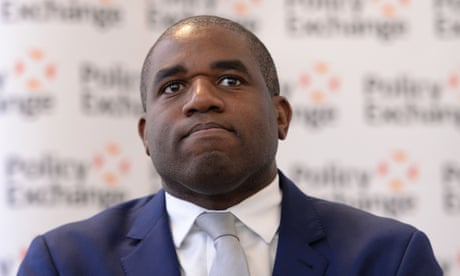


Ethnic minorities more likely to be jailed for some crimes, report finds


Even if one achieves a “critical mass” of BME judges and magistrates, the injustice is unlikely to be eradicated if the culture of who is perceived to be the likely recidivist or the most “dangerous” offender persists. The only solution is the one resisted by the Ministry of Justice, and by most senior judges – that is monitoring each crown court and magistrates centre so that there can be proper scrutiny of individual courts to identify where the problem lies.

Allied to this must be a full acknowledgement by the Sentencing Council that sentencing and bail guidance must set out clearly the levels of disparity for each offence. Simply pretending the problem does not exist is a recipe for unconscious but appalling levels of racial bias to continue unchecked.

The training on race from 1991 to 1995 worked, as it forced judges to engage with BME mentors who challenged subconscious bias and racism as equals in a secure setting. The race awareness training practised in the 20 years since has been discredited as wholly ineffective. It is too polite, conducted infrequently and by fellow judges who themselves are part of the problem.

The judiciary is a pillar of our democracy with a historical responsibility for the racism that affects our fundamental freedoms and rights. If that is to change, it must work hard to eradicate disproportionate sentences and bail that remove the freedom and rights of people of colour. Justice cannot be the prerogative of a narrow, white middle-class elite, who believe that racism is a problem for other lesser mortals to confront
.

Demonetisation Explained

War on Black Money : An Interview with S.Gurumurthy

Saturday, 19 November 2016

Brexit and Trump have exposed the left’s crucial flaw: playing by the rules

Jonathan Freedland in The Guardian


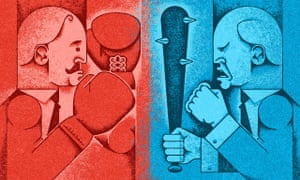
Illustration by Matt Kenyon


Join me in a little thought experiment. Imagine, if you would, that the Brexit referendum had gone the other way, 48% voting to leave and 52% to remain. What do you think Nigel Farage would have said? Would he have nodded ruefully and declared: “The British people have spoken and this issue is now settled. Our side lost and we have to get over it. It’s time to move on.”

Or would he have said: “We’ve given the establishment the fright of their lives! Despite everything they threw at us, they could only win by the skin of their teeth. It’s clear now that British support for the European project is dead: nearly half the people of this country want rid of it. Our fight goes on.”

I know which I’d bet on. Next, imagine what would have happened if, as a result of that narrow win for remain, a gaping hole in the public finances had opened up as the economy reeled, and even leading remainers admitted the machinery of state could barely cope. Farage and the rest would have denounced the chaos, boasting that this proved they had been right all along, that the voters had been misled and therefore must be given another say.

As we all know, reality did not work out this way. Next week the chancellor will deliver an autumn statement anchored in the admission that, as the Financial Times put it, “the UK faces a £100bn bill for Brexit within five years”. Thanks to the 23 June vote, the forecast is for “slower growth and lower-than-expected investment”.

Meanwhile, the government will reportedly have to hire an extra 30,000 civil servants to implement Brexit – that’s 6,000 more than the total staff employed by the European Union. In other words, in order to escape a vast, hulking bureaucracy we’re going to have to build a vast, hulking bureaucracy. (But these bureaucrats will speak English and have blue, hard-cover passports, so it’ll be OK.) Even the leavers don’t deny the scale of the undertaking they have dumped in our collective lap. Dominic Cummings, the zealot who masterminded the Vote Leave campaign, this week tweeted a description of Brexit as “hardest job since beating Nazis”. Sadly, there was no room for that pithy phrase on Vote Leave posters back in the spring.


The government will reportedly have to hire an extra 30,000 civil servants for Brexit – 6,000 more than the EU's total


And yet you do not hear remainers howling – as the leavers would if the roles were reversed – that this is an outrage so appalling it surely voids the referendum result. “We never voted for this,” they’d be bellowing, through the megaphone provided to them by most of the national papers, as they read that Brussels is likely to demand Britain cough up €60bn (£51bn) in alimony following our divorce.

Instead, the 48% exchange ironic, world-weary tweets, the electronic equivalent of a sigh, each time they read of some new hypocrisy or deception by the forces of leave. The single market is a perfect example. As a few, admirable voices have been noting, during the campaign the loudest Brexiteers were at pains to stress that leaving the EU did not mean leaving the single market. “Absolutely nobody is talking about threatening our place in the single market,” said Daniel Hannan. “Only a madman would actually leave the market,” said Owen Patterson. In the spring, Farage constantly urged us to be like Norway – which in fact pays through the nose and accepts free movement of people in order to remain in the single market. Yet now we are told that the vote to leave the EU was a clear mandate to leave the single market, and we’ve got to get on with it.

The correct response to this should be fury, along with a stubborn commitment to use every democratic tool at our disposal to stop it happening. We know that’s what the other side would do, if the boot were on the other foot. But just look at the state of the official opposition. Labour’s Keir Starmer is struggling valiantly to oppose the government on Brexit without appearing to defy the will of the people. He’s arguing for a bespoke arrangement, one that would give Britain full, tariff-free access to the single market, as well as highlighting the risks of leaving the customs union – and, above all making the case that saving the economy matters more than reducing immigration. (Theresa May clearly thinks it’s the other way around.)

I’d prefer an even simpler message: the people voted to leave the EU, not the single market, and Labour should fight for Britain’s place in the latter. But at least Starmer’s message is coherent. The trouble is, it’s undermined from the very top. This week the shadow chancellor, John McDonnell, far from opposing Brexit, urged Labour to “embrace the enormous opportunities to reshape our country that Brexit has opened for us”.

That’s not resistance. It’s surrender. And there has been similar weakness on the question of triggering article 50. MPs should withhold their vote until they know exactly what kind of Brexit the government intends. Yes, the government has the right to implement the people’s will. But the people voted to head for the exit; they were given no say over the destination once we’ve gone. Parliament can legitimately use its leverage to flush out some answers.

The point is, none of this is any more than the right would do. And this nods to a wider weakness, one that afflicts the centre-left, broadly defined, on both sides of the Atlantic. Too often, we play nice, sticking to the Queensberry rules – while the right takes the gloves off.

A prime example is unfolding right now. The final tallies of the election show that Hillary Clinton won at least a million more votes than Donald Trump. Oh well, shrug most Democrats: the electoral college is the system we have and, under those rules, we lost. True. But just imagine if Trump had won the popular vote by a seven-figure margin, only to be denied the presidency in the electoral college. Do we think he would have been a good sport and accepted it?

Happily, we don’t have to imagine. We can look at the tweets he posted in 2012, when he briefly thought Mitt Romney had garnered more votes than Barack Obama. “This election is a total sham and a travesty. We are not a democracy!” he said. He called for people to take to the streets and stage a “revolution”. As he put it, “phoney electoral college made a laughing stock out of our nation. The loser one [sic]!”

We can laugh at the inconsistency, but the contrast is striking. Democrats grumble but abide by the rules; Republicans immediately dial up the rhetoric and denounce their opponents as illegitimate, eventually paralysing their ability to act. That was the admitted strategy of congressional Republicans in the first Obama term: a determined effort to prevent him governing at all.

Democrats don’t play that game. Obama constantly strove to be “bipartisan”, even appointing Republicans to key jobs. (The FBI director, James Comey, was a Republican appointee, yet Obama renewed his term – with fateful consequences. A Republican president would not have hesitated to install his own man.)

Again and again, one side bows to the rules and to what’s fair – while the other focuses on the ruthless exercise of power. We’re seeing it now, as Trump stacks his team with a bunch of bigots. I know which approach is the more high-minded and public spirited. But the result is that today, in both Britain and America, the right has power and next to nothing standing in its way. No one wants the left to behave like the right – but it’s time we fought just as hard.

The Big Short: is the next financial crisis on its way?

Patrick Collinson in The Guardian

In the Oscar-winning The Big Short, Steve Carell plays the angry Wall Street outsider who predicts (and hugely profits from) the great financial crash of 2007-08. He sees sub-prime mortgages rated triple-A but which, in reality, are junk – and bets billions against the banks holding them. In real life he is Steve Eisman, he is still on Wall Street, and he is still shorting stocks he thinks are going to plummet. And while he’s tight-lipped about which ones (unless you have $1m to spare for him to manage) it is evident he has one major target in mind: continental Europe’s banks – and Italy’s are probably the worst.

Why Italy? Because, he says, the banks there are stuffed with “non-performing loans” (NPLs). That’s jargon for loans handed out to companies and households where the borrower has fallen behind with repayments, or is barely paying at all. But the Italian banks have not written off these loans as duds, he says. Instead, billions upon billions are still on the books, written down as worth about 45% to 50% of their original value.

The big problem, says Eisman, is that they are not worth anywhere near that much. In The Big Short, Eisman’s staff head to Florida to speak to the owners of newly built homes bundled up in “mortgage-backed securities” rated as AAA by the investment banks. What they find are strippers with loans against multiple homes but almost no income, the mortgages arranged by sharp-suited brokers who know they won’t be repaid, and don’t care. Visiting the housing estates that these triple-A mortgages are secured against, they find foreclosures and dereliction.


What is very negative is that in every country in Europe, the largest owner of sovereign bonds are that country’s banks


In a mix of moral outrage at the banks – and investing acumen – Eisman and his colleagues bought as many “swaps” as possible to profit from the inevitable collapse of the mortgage-backed securities, making a $1bn profit along the way.

This time around, Eisman is not padding around the plains of Lombardy because he says the evidence is in plain sight. When financiers look to buy the NPLs off the Italian banks, they value the loans at what they are really worth – in other words, how many of the holders are really able to repay, and how much money will be recovered. What they find is that the NPLs should be valued at just 20% of their original price. Trouble is, if the Italian banks recognise their loans at their true value, it wipes out their capital, and they go bust overnight.

“Europe is screwed. You guys are still screwed,” says Eisman. “In the Italian system, the banks say they are worth 45-50 cents in the dollar. But the bid price is 20 cents. If they were to mark them down, they would be insolvent.”

Eisman is careful not to name any specific Italian bank. But fears about the solvency of the system – weighed down by an estimated €360bn in bad debts – are not new. In official “stress tests” of 51 major European banks in July by the European Banking Authority, Italy’s third largest bank, Banca Monte dei Paschi di Siena, emerged as the weakest. It triggered a rescue package – and soothing words from Italy’s finance minister, who said there was no generalised crisis in the banking system. But MPPS’s share price remains at just 25 cents, down more than 90% from two years ago.

How worried should British bank account (and shareholders) be? “I’m not really worried about England’s banks,” says Eisman. “They are in better shape than most in Europe.” When it comes to the US, Eisman’s outrage, so central to the plot of The Big Short, has melted away (just don’t start him on Household Finance Corporation, the HSBC-owned lender at the heart of sub-prime crisis). “I think the regulators did a horrendous, just horrendous job pre-crisis. But under the Fed, the banks have been enormously deleveraged and de-risked. There are no sub-prime mortgages any more... the European regulators have been much more lenient than the US regulators.”

Eisman was of the view that US banks were rather boring as an investment – although Donald Trump’s victory has changed that. “I have a feeling there could be a softening in the Department of Labor rules (an Obama-led crackdown on how banks sell financial products) and the regulatory environment has now changed in favour of the banks.”


 Steve Eisman: ‘I’m not really worried about England’s banks. They are in better shape than most in Europe.’ Photograph: Bloomberg via Getty Images

Trump’s victory has sent the bond markets into disarray, with the yield on government bonds rising steeply. While this sounds good for savers – interest rates could rise – it is bad news for the holders of government bonds, which fall in value when the yield rises. Eisman sees that as another woe for Europe’s banks, who hold vast amounts of “sovereign bonds”.

“What is very negative is that in every country in Europe, the largest owner of that country’s sovereign bonds are that country’s banks,” he says. As the bonds decline in value, then the capital base of the banks deteriorates.

He doesn’t share the optimism around Deutsche Bank since Trump’s victory. The troubled German bank, facing a $14bn fine in the US for mortgage bond mis-selling, was for a long time one of the biggest lenders to the Trump business empire. In the three days after Trump’s victory, shares in Deutsche Bank, regarded as Europe’s most systemically important bank, jumped by a fifth from €12.90 to €15.30 as traders bet on Trump-inspired leniency over the fine.

But Eisman doesn’t buy it. By his reckoning, Deutsche Bank was less fundamentally profitable than its rivals, and relied more on leverage to boost earnings. His analysis suggests it will struggle to return to its former profitability.

Critics will point out that shorting the likes of Banca Monte dei Paschi di Siena or Deutsche Bank sounds fine – except that the share price of both have already fallen so dramatically the bad news is already in the price. But we don’t know for sure if they are Eisman’s precise targets – because he’s not willing to say unless you give him at least $1m to manage in one of his “personal accounts”.

Eisman now effectively runs his own “boutique” operation within a bigger Wall Street firm, Neuberger Berman. His “Eisman Long/Short SMA” account has opened to wealthy investors, and in January he will be in London drumming up interest among investors.

But not everything Eisman touches turns to gold. He declines to say how much he made during the financial crash, when he was manager of funds at FrontPoint Financial Services, though it was reportedly as much as $1bn. But in 2010 FrontPoint ran into trouble after one of its manager pleaded guilty to insider trading and was given a five-year prison sentence.

Eisman later set up a hedge fund, Emrys Partners, gathering nearly $200m from investors, but its returns were relatively humdrum compared to the drama of the great crash, making 3.6% in 2012 and 10.8% in 2013, according to the Wall Street Journal.

Did he think the film accurately portrayed what went on? He visited the set, and gave Carell and the other actors (Brad Pitt and Christian Bale also starred) advice and notes.

“When I saw the film, I thought it was great and that Steve Carell was wonderful. But I thought, hey, I wasn’t that angry. After the crash I was interviewed by the Federal Crisis Inquiry Commission, and I saw a transcription later on. After reading it, I realised that ‘yes’, I really was that angry... but the Fed has done a very good job since.”