Opinion of The Guardian
Britain’s 27 erstwhile European partners will meet next week to discuss the UK’s future with the country itself locked outside the room. The constitutional ground-rules of our democracy are in contention as never before, with arguments raging about whether or not Westminster can block Nicola Sturgeon’s mooted Scottish referendum, or Ms Sturgeon can deploy procedural weaponry at Holyrood to frustrate the UK-wide referendum decision. Meanwhile the grave economic consequences are coming into view, with the Institute of Directors suggesting that a quarter of companies will cease hiring and a fifth may shift operations overseas.
What is so damaging for the orderly conduct of business is not only the prospect of a messy divorce from the continent, but an immediate political crisis. After David Cameron’s post-dated resignation, nobody knows who is in charge, still less what happens next. The Brexit brigade stormed to victory without a manifesto, or even agreement on what “leaving the EU” involves. Some, including Michael Gove, would cut loose from the single market, and damn the vast economic cost; others now concede the UK will have to stay in the market, even though that would betray the campaign promise to “take control” of regulation and migration. Wider pre-election promises have turned to dust at great speed. At sunrise on Friday, while the final few votes were still being counted, Nigel Farage conceded that it had been “a mistake” for Vote Leave to pretend that there would be an extra £350m a week for the NHS; at sundown, leading leaver Daniel Hannan MEP killed the other central campaign promise by conceding free movement of labourmight continue. Lesser gimmicks, such as Boris Johnson and Michael Gove’s promise to scrap VAT on energy bills, were always going to be hard to honour with an economy that is set to slow; they seem entirely irrelevant when we don’t know who will be presenting the next budget.
A country in peril, without a functioning government, needs an office-ready opposition – to ask the awkward questions, warn against wild swerves, and force somebody on the government side to explain what is going on. Britain, however, is saddled with a second party so beset by schisms, that – even as the union strains, the government crumbles, and the economy teeters – the thing making the headlines is Labour’s disintergation. Hilary Benn’s “sacking”, a dubious description seeing as the shadow foreign secretary constructed his own dismissal, was followed by the self-sacrifice of no fewer than 11 shadow cabinet ministers by late evening on 26 June, a run of career suicide bombs all detonated with the single aim of forcing Jeremy Corbyn out, just nine months after the leftwinger secured an almighty mandate from party members, taking more than thrice the votes of any of his three rivals, from the party’s centre and right.
This is a dismal pass that Labour was always likely to reach, because the overwhelming bulk of MPs have, from the off, been convinced that Mr Corbyn would drive them off a cliff. Many members are understandably furious with parliamentarians who never allowed him a chance. But there is no escaping that the day-to-day work of a party leader is fronting the efforts of a team of MPs. And when he was initially backed by fewer than one in 10 of that team, and not much interested in compromises to win more over, it was a job he was always going to struggle to do effectively. After the attempted coup, Mr Corbyn may attempt to fill his top team with other MPs. But there is now a real question about whether he can function in the job at all.
The PLP putsch looks shoddy for various reasons. For those MPs who have done nothing but plot since September, moving against him now is opportunism pure and simple. For others, it is an emotional spasm, made in rage against the painful loss of Britain’s place in Europe. But Mr Corbyn did not ask for this referendum, and it seems perverse to blame him for David Cameron’s loss. While Labour’s pro-Europeans were convinced they would win, many rather admired his qualified call for a remain vote, hoping that it might win do more to win over Eurosceptics than EU cheerleading. Even now, they should pause and ask whether a smooth-talking Europhile would have done more harm or good in Newport and Barnsley last week. One can argue that either way, but now – with the votes counted – anything that looks like pro-European regime change could appear disdainful of the public. Even more fundamentally, third-way social democracy has been in crisis ever since the crash. After the spectacular failure of the “mainstream” candidates last year, Labour’s centre-right should have earned its way back into contention with a fundamental rethink. Sadly, it hasn’t done that.
Set against this is the continuing failure of Jeremy Corbyn to look serious about becoming prime minister. There are fair-minded MPs who despair at the fact that so many constituents can never envisage their leader in No 10. It becomes harder to ignore such concerns after the Brexit vote, amid speculation that the next general election, which had not been scheduled until 2020, may now be brought forward to this autumn. This is the context in which deputy leader Tom Watson, who has his own mandate, is demanding talks about “the way forward”.
These are perilous times for progressive politics, perhaps the most perilous since the 1930s. It is incumbent on everybody to think before acting. Jeremy Corbyn needs to look into his soul and ask himself if he really wants to be PM, and get out of the way if not. His critics need to get on the phone and establish whether or not they can build the strength in the grassroots to topple him. Some say members are moving post-referendum; others dispute this. If the members remain loyal, then the mutineers could wound but not kill. The result would be to split the parliamentary party and the movement asunder, which would give the Tories a free run on a Brexit plaform.
Make the wrong call, and the results could be as ruinous as in 1931, when Ramsay MacDonald clung to office by giving up on the Labour movement, and a party of government was reduced to a rump of 52 seats. A half-complete coup would be worse than a clean defenestration or uniting behind Mr Corbyn. If the activists have moved, his time is up; if not, it is the MPs who must back off. Labour has sometimes failed dismally at moments of national crisis, as in 1931. But at others – think 1940 – it has proved equal to the hour. With an intolerant right wing on the rise, every progressive must be hoping that, whoever prevails in the left’s faction fighting, it will be finished soon.
Monday, 27 June 2016
W ill article 50 ever be triggered?
Jon Henley in The Guardian

When David Cameron delivered his resignation speech outside No 10 on Friday, he said he would leave the task of triggering article 50 of the Lisbon treaty – the untested procedure governing how an EU member state leaves the bloc – to his successor.
This has prompted much speculation – and a glimmer of hope for those who want Britain to remain in the European Union. Cameron, they argue, had repeatedly said during the campaign that article 50 would be triggered immediately if Vote Leave were to win the Brexit referendum.
By not doing so, the theory is, and by bequeathing the responsibility to whoever succeeds him, Cameron has handed the next prime minister a poisoned chalice. Given the dramatic reaction to Brexit – on world stock markets, on the foreign exchanges, in Scotland, across Europe – and with the enormity of the consequences of leaving the EU now plain, who will dare pull the trigger?
One consequence of this, as a below-the-line commenter argued on the Guardian website, is that Cameron has effectively snookered the Brexit camp: they may have won the referendum, but they cannot use the mandate they have been given because if they do so they will be seen to be knowingly condemning the UK to recession, breakup and years of pain.
This could mean, as lawyer and writer David Allen Green has suggested in a blogpost, that “the longer article 50 notification is put off, the greater the chance it will never be made ... As long as the notification is not sent, the UK remains part of the EU. And there is currently no reason or evidence to believe that, regardless of the referendum result, the notification will be sent at all.”
Is this feasible? Certainly, leading Brexit campaigners, including Boris Johnson and Matthew Elliott, who ran Vote Leave, have said very clearly they are in no hurry to push the button.
They argue it is far more sensible to hold informal talks with Brussels, and other member states, in order to arrive at the outline of a possible settlement before locking Britain into the strict two-year timeframe within which article 50 negotiations must be concluded (and if they are not, Britain risks having to leave the EU with no deal at all).
In Brussels and other EU capitals, the UK’s heel-dragging is already causing great frustration. European foreign ministers and EU leaders have lined up this weekend to impress on Britain the need for urgency. Brexit talks must begin “immediately”, they said, so as to avoid a sustained period of uncertainty and instability that, with Euroscepticism on the rise across the continent, could do great damage to the already weakened bloc.
 © Reuters
This has prompted much speculation – and a glimmer of hope for those who want Britain to remain in the European Union. Cameron, they argue, had repeatedly said during the campaign that article 50 would be triggered immediately if Vote Leave were to win the Brexit referendum.
By not doing so, the theory is, and by bequeathing the responsibility to whoever succeeds him, Cameron has handed the next prime minister a poisoned chalice. Given the dramatic reaction to Brexit – on world stock markets, on the foreign exchanges, in Scotland, across Europe – and with the enormity of the consequences of leaving the EU now plain, who will dare pull the trigger?
One consequence of this, as a below-the-line commenter argued on the Guardian website, is that Cameron has effectively snookered the Brexit camp: they may have won the referendum, but they cannot use the mandate they have been given because if they do so they will be seen to be knowingly condemning the UK to recession, breakup and years of pain.
This could mean, as lawyer and writer David Allen Green has suggested in a blogpost, that “the longer article 50 notification is put off, the greater the chance it will never be made ... As long as the notification is not sent, the UK remains part of the EU. And there is currently no reason or evidence to believe that, regardless of the referendum result, the notification will be sent at all.”
Is this feasible? Certainly, leading Brexit campaigners, including Boris Johnson and Matthew Elliott, who ran Vote Leave, have said very clearly they are in no hurry to push the button.
They argue it is far more sensible to hold informal talks with Brussels, and other member states, in order to arrive at the outline of a possible settlement before locking Britain into the strict two-year timeframe within which article 50 negotiations must be concluded (and if they are not, Britain risks having to leave the EU with no deal at all).
In Brussels and other EU capitals, the UK’s heel-dragging is already causing great frustration. European foreign ministers and EU leaders have lined up this weekend to impress on Britain the need for urgency. Brexit talks must begin “immediately”, they said, so as to avoid a sustained period of uncertainty and instability that, with Euroscepticism on the rise across the continent, could do great damage to the already weakened bloc.
© Reuters
Martin Schulz, the president of the European parliament, expects Cameron to formally announce Britain’s EU exit on Tuesday evening.But there seems to be no immediate legal means out of the stalemate. It is entirely up to the departing member state to trigger article 50, by issuing formal notification of intention to leave: no one, in Brussels, Berlin or Paris, can force it to. But equally, there is nothing in article 50 that obliges the EU to open talks – including the informal talks the Brexit leaders want – before formal notification has been made.
“There is no mechanism to compel a state to withdraw from the European Union,” said Kenneth Armstrong, professor of European law at Cambridge University. “Article 50 is there to allow withdrawal, but no other party has the right to invoke article 50, no other state or institution. While delay is highly undesirable politically, legally there is nothing that can compel a state to withdraw.”
The president of the European parliament, Martin Schulz, has said he expects Cameron to initiate the process on Tuesday evening, making the formal announcement that Britain intends to exit the EU at the summit dinner he is due to address before going home and leaving – for the first time – the other 27 member states to discuss Britain’s situation without him the following day.
The European council has confirmed that notification does not have to be in writing, but could be in the form of a formal statement to the summit – so Cameron had better be careful about what exactly he says.
 © PA 10 highest votes for LeaveBut reports in German newspaper
“There is no mechanism to compel a state to withdraw from the European Union,” said Kenneth Armstrong, professor of European law at Cambridge University. “Article 50 is there to allow withdrawal, but no other party has the right to invoke article 50, no other state or institution. While delay is highly undesirable politically, legally there is nothing that can compel a state to withdraw.”
The president of the European parliament, Martin Schulz, has said he expects Cameron to initiate the process on Tuesday evening, making the formal announcement that Britain intends to exit the EU at the summit dinner he is due to address before going home and leaving – for the first time – the other 27 member states to discuss Britain’s situation without him the following day.
The European council has confirmed that notification does not have to be in writing, but could be in the form of a formal statement to the summit – so Cameron had better be careful about what exactly he says.
© PA 10 highest votes for LeaveBut reports in German newspaper
Süddeutsche Zeitung, among others, that an increasingly frustrated EU could, if push comes to shove, decide to consider the referendum result itself as “an official wish to leave” seem unreliable. “The notification of article 50 is a formal act and has to be done by the British government to the European council,” an EU official told Reuters.
“It has to be done in an unequivocal manner, with the explicit intent to trigger article 50. Negotiations to leave and on the future relationship can only begin after such a formal notification. If it is indeed the intention of the British government to leave the EU, it is therefore in its interest to notify as soon as possible.”
Carl Bildt, the former Swedish prime minister, has said “de facto ejection” is a possibility unless Britain gets a move on, but it is unclear on what grounds that could happen. Article 7 of the Lisbon treaty allows the EU to suspend a member if it deems it to be in breach of basic principles of freedom, democracy, equality and rule of law. But that would be the nuclear option.
The situation could get quite nasty, quite quickly. Politically, the pressure on Cameron – and on his successor, whoever that may be – could be extreme. But legally, there does not appear to be any easy way out. If Britain so chooses, this could become a standoff that could drag on for years.
“It has to be done in an unequivocal manner, with the explicit intent to trigger article 50. Negotiations to leave and on the future relationship can only begin after such a formal notification. If it is indeed the intention of the British government to leave the EU, it is therefore in its interest to notify as soon as possible.”
Carl Bildt, the former Swedish prime minister, has said “de facto ejection” is a possibility unless Britain gets a move on, but it is unclear on what grounds that could happen. Article 7 of the Lisbon treaty allows the EU to suspend a member if it deems it to be in breach of basic principles of freedom, democracy, equality and rule of law. But that would be the nuclear option.
The situation could get quite nasty, quite quickly. Politically, the pressure on Cameron – and on his successor, whoever that may be – could be extreme. But legally, there does not appear to be any easy way out. If Britain so chooses, this could become a standoff that could drag on for years.
Sunday, 26 June 2016
The EU will treat Britain like Greece
Matthew Holehouse The Telegraph
I arrived in Brussels as the Daily Telegraph’s correspondent in early June, 2015. A fortnight later, Alexis Tsipras snubbed Brussels, and called a referendum on the third bailout that was designed to save the Eurozone from collapse.
The terms he was later given - €50bn of assets sold and a de facto control of economic policy surrendered - were so harsh they were later denounced as a "coup".
It taught me two things: that in the cause of its salvation the European Union can be profoundly flexible and exceptionally brutal, and that events can swiftly take a momentum that is hard to control.
Nothing of that experience gives me hope for the years that now await our country.
Britain is almost certainly out the European Union
As far as Brussels is concerned, Britain has left.
At home on Friday morning, Britons were dumbstruck, agog at the result, or chuffed at having taught Brussels a lesson.
We now see street protests to overturn the result, internet petitions, suggestions that the UK or Scottish Parliament could revoke it or somehow make it go away. Westminster is occupied by Labour coups and Tory successions. Few seem to believe we are going.
In Brussels, they have been ready to say goodbye for a long time. Britain had been half-way out the door for forty years. David Cameron had announced this referendum in January 2013. He had won an election on the back of it, and many expected him to lose it. He, and they, repeated many times that it was final and binding. Patience is exhausted.
On Friday there was grave sadness, but no panic. The timetable for the talks was announced days before the vote. Martin Schulz, the president of the Parliament, spoke at dawn; Donald Tusk, the president of the Council, delivered a statement at 07.40 GMT. The founding members' foreign ministers met on Saturday; sherpas for the 27 remaining states will meet today to sketch out the months ahead.
Leaders have demanded Article 50 is activated immediately, to create certainty. Realistically, Mr Cameron has until Christmas.
Scotland is ready to quit, and diplomats are quite open to welcoming them into the EU club.
The treaties say that all Britain’s rights and obligations must remain for two years once Article 50 is activated. But Lord Hill, Britain’s commissioner, quit yesterday, and Downing Street said it had no plans to replace him, and Jean-Claude Juncker told Ukip MEPs to pack their bags. Is the legal order fragmenting? What other clauses in the treaties - which protect British expats on the continent, among other things - will now be ignored without consequence?
Can it be halted?
The European Council has offered a narrow window, saying that Britain has not left until Article 50 is activated formally by the Prime Minister, “if it is indeed the intention of the British government.”
Mr Cameron has left it to his successor to activate it. Mrs Merkel is in no hurry. Senior EU sources say they can wait until Christmas, but prevarication would trash Britain's credit-worthiness.
There are two problems. Firstly, to not activate Article 50 would be a rejection of democracy on a scale that could only be described as a coup, and would poison British public life for generations.
Secondly, a wave of movements demanding referendums on the terms of membership, given a huge boost by Mr Cameron, is tearing across Europe – in France, Denmark, the Netherlands, Slovakia, Italy, Hungary. Marine Le Pen could well run rampant in French elections in the spring.
Leaders anticipated that Boris Johnson would pursue a 'vote leave for a better deal' strategy, and ruled it out from February, precisely to prevent this scenario.
Jean-Claude Juncker said on Friday: “The repercussions of the British referendum could quickly put a stop to such crass rabble-rousing, as it should soon become clear that the UK was better off inside the EU.” Britain simply has to go, on bad terms, pour encourager les autres.
Britain has very few friends
In European eyes, David Cameron has had a remarkably generous lot: already out the euro, ever closer union, justice and home affairs obligations and Schengen, he was offered an enhanced deal that confirmed the perks of membership with scant obligations.
Yet he attacked Brussels for years for domestic advantage. Mr Cameron campaigned hard against his appointment. Stories about Mr Juncker's alleged drinking and the war record of his father, a conscript in the Wehrmacht, emerged. Yet Juncker offered an olive branch by giving Jonathan Hill the financial services portfolio Mr Cameron craved, in order to preserve the City. He is profoundly angry.
In his brutal negotiation, Alexis Tsipras had a number of cards to play. There was the “solidarity” that EU states are obliged to show each other, the pity and guilt at the plight of the Greek people who had been punished through no fault of their own, and the €83 billion of German taxpayer cash in Greek banks that risked going up in smoke. Their referendum had been hasty, the question unclear, Mr Juncker said; Greeks made plain they wanted to remain Europeans.
No such goodwill exists for Britain, now an ex-member. Mr Johnson, the possible next prime minister, caused genuine and grave offence by likening the European project to the ambitions of Hitler. His declarations that Brexit will trigger events that unravel the entire project is, in effect, a declaration of war that must be met.
Recall how inflexible European leaders were during Mr Cameron’s attempted renegotiation, when he put a gun to their heads and threatened to leave unless they submitted to his demands. He has fired that gun in the air, and locked himself out the room. Britain’s only leverage is how much damage a messy Brexit would inflict on European economies.
Time is not on our side
Once Article 50 is activated, events will move frighteningly fast. It took Mr Cameron seven full months to secure his meagre renegotiation. He will have just two years to get an exit deal covering every facet of British life, and a trade deal that will do the least harm to the fragile, debt-laden economy.
The government is in disarray, the Labour party in meltdown, and the imminent exit of Scotland means it will be unclear with who or what, exactly, the EU is negotiating with. The French foreign minister yesterday implored Cameron to find a successor to take charge.
A ban issued from Downing Street on Brexit preparations – lest it boost the leave campaign – meant Britain’s most senior officials were permitted to “think” about a Brexit, but not allowed to write anything down.
Several take their guide from Flexcit, a book by a blogger Richard North that advocates a Norway-style deal as a half-way house under a “soft” exit. The crucial weeks ahead of polling day were spent in purdah, tending the garden.
The UK has next to no trade negotiators, and will need hundreds, to replicate the market access it currently has with 50 states around the world .
But the EU is ready. Talks in Jean-Claude Juncker’s in house think-tank began months ago. Foreign ministries have been preparing position papers. Lawyers are busy: Brussels has had 70 years of practice in writing treaties, signing trade talks, fixing accessions and bailouts, making and breaking nations.
We don't get to be Norway
The Leavers’ best hope – a Norway deal that means EEA status, retained rights for the City and immigration - is almost certainly off the table.
Britain has made clear it doesn’t want free movement – and so any deal on those grounds would be so impossibly fragile as to be a waste of time. Frankfurt and Paris would certainly like our banks. Mr Juncker is determined to undo Britain's attempt to create a multi-currency union, meaning clearing houses that trade in Euros and generate billions for the Exchequer will have to be domiciled in the Eurozone.
Leaders have made clear, before and after the vote, that Britain is not getting access to the single market.
“Out is out,” said Wolfgang Schaeuble, the German finance minister, some weeks ago.
“There will certainly be no cherry picking,” confirmed Mr Juncker, saying it will be a "clean" divorce.
More likely is a Canadian-style trade deal, that will set tariffs on imports and exports. That may be fine for German manufacturers. But Britain’s service economy will be cut up like an old car. British graduates are about to learn what it's like to use an Australian-style points system.
We do not control this process
Article 50 is designed so that it leaves any state that activates it is a supplicant.
The remaining EU states will negotiate between themselves and deal with the UK as one, just as they would for Albania or Turkey.
If a deal covering trade arrangements isn’t struck once the two-year period expires, Britain is simply released from the EU treaties and left on crippling WTO terms - something the Treasury terms a "severe shock scenario" and which it envisages would likely result in a cut in GDP of six per cent and increase unemployment by 800,000, not including the risks presented by emergency spending cuts, or the "tipping points" presented by the crystallisation of financial stability risks.
It means the government will effectively be forced to take any fait accompli presented at the last minute, or face ruin.
Even then, any further trade deal will require ratification by EU parliaments, meaning Belgian MPs, amongst others, can veto it.
The Leave campaign is fond of a quote attributed to Churchill: “Each time we have to choose between Europe and the open sea, we shall always choose the open sea.”
Oh, hear us when we cry to Thee, For those in peril on the sea.
There are liars and then there’s Boris Johnson and Michael Gove
Nick Cohen in The Guardian
The Brexit figureheads had no plan besides exploiting populist fears and dismissing experts who rubbished their thinking
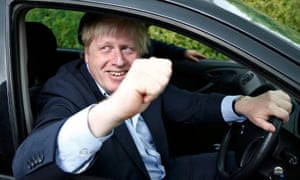
The Brexit figureheads had no plan besides exploiting populist fears and dismissing experts who rubbished their thinking
‘Prospered by treating public life as a game’: Boris Johnson leaves his home in Oxfordshire on Saturday. Photograph: Peter Nicholls/Reuters
Where was the champagne at the Vote Leave headquarters? The happy tears and whoops of joy? If you believed Boris Johnson and Michael Gove, the Brexit vote was a moment of national liberation, a day that Nigel Farage said our grateful children would celebrate with an annual bank holiday.
Johnson and Gove had every reason to celebrate. The referendum campaign showed the only arguments that matter now in England are on the right. With the Labour leadership absent without leave and the Liberal Democrats and Greens struggling to be heard, the debate was between David Cameron and George Osborne, defending the status quo, and the radical right, demanding its destruction. Johnson and Gove won a dizzying victory with the potential to change every aspect of national life, from workers’ rights to environmental protection.
Yet they gazed at the press with coffin-lid faces and wept over the prime minister they had destroyed. David Cameron was “brave and principled”, intoned Johnson. “A great prime minister”, muttered Gove. Like Goneril and Regan competing to offer false compliments to Lear, they covered the leader they had doomed with hypocritical praise. No one whoops at a funeral, especially not mourners who are glad to see the back of the deceased. But I saw something beyond hypocrisy in those frozen faces: the fear of journalists who have been found out.
The media do not damn themselves, so I am speaking out of turn when I say that if you think rule by professional politicians is bad wait until journalist politicians take over. Johnson and Gove are the worst journalist politicians you can imagine: pundits who have prospered by treating public life as a game. Here is how they play it. They grab media attention by blaring out a big, dramatic thought. An institution is failing? Close it. A public figure blunders? Sack him. They move from journalism to politics, but carry on as before. When presented with a bureaucratic EU that sends us too many immigrants, they say the answer is simple, as media answers must be. Leave. Now. Then all will be well.
Johnson and Gove carried with them a second feature of unscrupulous journalism: the contempt for practical questions. Never has a revolution in Britain’s position in the world been advocated with such carelessness. The Leave campaign has no plan. And that is not just because there was a shamefully under-explored division between the bulk of Brexit voters who wanted the strong welfare state and solid communities of their youth and the leaders of the campaign who wanted Britain to become an offshore tax haven. Vote Leave did not know how to resolve difficulties with Scotland, Ireland, the refugee camp at Calais, and a thousand other problems, and did not want to know either.
It responded to all who predicted the chaos now engulfing us like an unscrupulous pundit who knows that his living depends on shutting up the experts who gainsay him. For why put the pundit on air, why pay him a penny, if experts can show that everything he says is windy nonsense? The worst journalists, editors and broadcasters know their audiences want entertainment, not expertise. If you doubt me, ask when you last saw panellists on Question Time who knew what they were talking about.
Naturally, Michael Gove, former Times columnist, responded to the thousands of economists who warned he was taking an extraordinary risk with the sneer that will follow him to his grave: “People in this country have had enough of experts.” He’s being saying the same for years.
If sneers won’t work, the worst journalists lie. The Times fired Johnson for lying to its readers. Michael Howard fired Johnson for lying to him. When he’s cornered, Johnson accuses others of his own vices, as unscrupulous journalists always do. Those who question him are the true liars, he blusters, whose testimony cannot be trusted because, as he falsely said of the impeccably honest chairman of the UK Statistics Authority, they are “stooges”.
The Vote Leave campaign followed the tactics of the sleazy columnist to the letter. First, it came out with the big, bold solution: leave. Then it dismissed all who raised well-founded worries with “the country is sick of experts”. Then, like Johnson the journalist, it lied.
I am not going to be over-dainty about mendacity. Politicians, including Remain politicians lie, as do the rest of us. But not since Suez has the nation’s fate been decided by politicians who knowingly made a straight, shameless, incontrovertible lie the first plank of their campaign. Vote Leave assured the electorate it would reclaim a supposed £350m Brussels takes from us each week. They knew it was a lie. Between them, they promised to spend £111bn on the NHS, cuts to VAT and council tax, higher pensions, a better transport system and replacements for the EU subsidies to the arts, science, farmers and deprived regions. When boring experts said that, far from being rich, we would face a £40bn hole in our public finances, Vote Leave knew how to fight back. In Johnsonian fashion, it said that the truth tellers were corrupt liars in Brussels’ pocket.
Where was the champagne at the Vote Leave headquarters? The happy tears and whoops of joy? If you believed Boris Johnson and Michael Gove, the Brexit vote was a moment of national liberation, a day that Nigel Farage said our grateful children would celebrate with an annual bank holiday.
Johnson and Gove had every reason to celebrate. The referendum campaign showed the only arguments that matter now in England are on the right. With the Labour leadership absent without leave and the Liberal Democrats and Greens struggling to be heard, the debate was between David Cameron and George Osborne, defending the status quo, and the radical right, demanding its destruction. Johnson and Gove won a dizzying victory with the potential to change every aspect of national life, from workers’ rights to environmental protection.
Yet they gazed at the press with coffin-lid faces and wept over the prime minister they had destroyed. David Cameron was “brave and principled”, intoned Johnson. “A great prime minister”, muttered Gove. Like Goneril and Regan competing to offer false compliments to Lear, they covered the leader they had doomed with hypocritical praise. No one whoops at a funeral, especially not mourners who are glad to see the back of the deceased. But I saw something beyond hypocrisy in those frozen faces: the fear of journalists who have been found out.
The media do not damn themselves, so I am speaking out of turn when I say that if you think rule by professional politicians is bad wait until journalist politicians take over. Johnson and Gove are the worst journalist politicians you can imagine: pundits who have prospered by treating public life as a game. Here is how they play it. They grab media attention by blaring out a big, dramatic thought. An institution is failing? Close it. A public figure blunders? Sack him. They move from journalism to politics, but carry on as before. When presented with a bureaucratic EU that sends us too many immigrants, they say the answer is simple, as media answers must be. Leave. Now. Then all will be well.
Johnson and Gove carried with them a second feature of unscrupulous journalism: the contempt for practical questions. Never has a revolution in Britain’s position in the world been advocated with such carelessness. The Leave campaign has no plan. And that is not just because there was a shamefully under-explored division between the bulk of Brexit voters who wanted the strong welfare state and solid communities of their youth and the leaders of the campaign who wanted Britain to become an offshore tax haven. Vote Leave did not know how to resolve difficulties with Scotland, Ireland, the refugee camp at Calais, and a thousand other problems, and did not want to know either.
It responded to all who predicted the chaos now engulfing us like an unscrupulous pundit who knows that his living depends on shutting up the experts who gainsay him. For why put the pundit on air, why pay him a penny, if experts can show that everything he says is windy nonsense? The worst journalists, editors and broadcasters know their audiences want entertainment, not expertise. If you doubt me, ask when you last saw panellists on Question Time who knew what they were talking about.
Naturally, Michael Gove, former Times columnist, responded to the thousands of economists who warned he was taking an extraordinary risk with the sneer that will follow him to his grave: “People in this country have had enough of experts.” He’s being saying the same for years.
If sneers won’t work, the worst journalists lie. The Times fired Johnson for lying to its readers. Michael Howard fired Johnson for lying to him. When he’s cornered, Johnson accuses others of his own vices, as unscrupulous journalists always do. Those who question him are the true liars, he blusters, whose testimony cannot be trusted because, as he falsely said of the impeccably honest chairman of the UK Statistics Authority, they are “stooges”.
The Vote Leave campaign followed the tactics of the sleazy columnist to the letter. First, it came out with the big, bold solution: leave. Then it dismissed all who raised well-founded worries with “the country is sick of experts”. Then, like Johnson the journalist, it lied.
I am not going to be over-dainty about mendacity. Politicians, including Remain politicians lie, as do the rest of us. But not since Suez has the nation’s fate been decided by politicians who knowingly made a straight, shameless, incontrovertible lie the first plank of their campaign. Vote Leave assured the electorate it would reclaim a supposed £350m Brussels takes from us each week. They knew it was a lie. Between them, they promised to spend £111bn on the NHS, cuts to VAT and council tax, higher pensions, a better transport system and replacements for the EU subsidies to the arts, science, farmers and deprived regions. When boring experts said that, far from being rich, we would face a £40bn hole in our public finances, Vote Leave knew how to fight back. In Johnsonian fashion, it said that the truth tellers were corrupt liars in Brussels’ pocket.
Now they have won and what Kipling said of the demagogues of his age applies to Michael Gove, Boris Johnson and Nigel Farage.
I could not dig; I dared not rob:
Therefore I lied to please the mob.
Now all my lies are proved untrue
And I must face the men I slew.
What tale shall serve me here among
Mine angry and defrauded young?
The real division in Britain is not between London and the north, Scotland and Wales or the old and young, but between Johnson, Gove and Farage and the voters they defrauded. What tale will serve them now? On Thursday, they won by promising cuts in immigration. On Friday, Johnson and the Eurosceptic ideologue Dan Hannan said that in all probability the number of foreigners coming here won’t fall. On Thursday, they promised the economy would boom. By Friday, the pound was at a 30-year low and Daily Mail readers holidaying abroad were learning not to believe what they read in the papers. On Thursday, they promised £350m extra a week for the NHS. On Friday, it turns out there are “no guarantees”.
If we could only find a halfway competent opposition, the very populist forces they have exploited and misled so grievously would turn on them. The fear in their eyes shows that they know it.
I could not dig; I dared not rob:
Therefore I lied to please the mob.
Now all my lies are proved untrue
And I must face the men I slew.
What tale shall serve me here among
Mine angry and defrauded young?
The real division in Britain is not between London and the north, Scotland and Wales or the old and young, but between Johnson, Gove and Farage and the voters they defrauded. What tale will serve them now? On Thursday, they won by promising cuts in immigration. On Friday, Johnson and the Eurosceptic ideologue Dan Hannan said that in all probability the number of foreigners coming here won’t fall. On Thursday, they promised the economy would boom. By Friday, the pound was at a 30-year low and Daily Mail readers holidaying abroad were learning not to believe what they read in the papers. On Thursday, they promised £350m extra a week for the NHS. On Friday, it turns out there are “no guarantees”.
If we could only find a halfway competent opposition, the very populist forces they have exploited and misled so grievously would turn on them. The fear in their eyes shows that they know it.
Subscribe to:
Comments (Atom)