Search This Blog

Saturday, 25 June 2016

Brexit is a wake-up call: save Europe

Natalie Nougayrède in The Guardian


The British vote has dealt an irreparable blow to the European project, and the shock is hard to exaggerate. Yet if there is one mistake EU leaders should avoid now, it would be to think that the forces at play represent a strictly British phenomenon. Twin dynamics have been brutally exposed: the breakdown of the link connecting British voters to elites and institutions – who all argued for remain – and the rapidly fading connection between citizens across the continent and EU institutions.
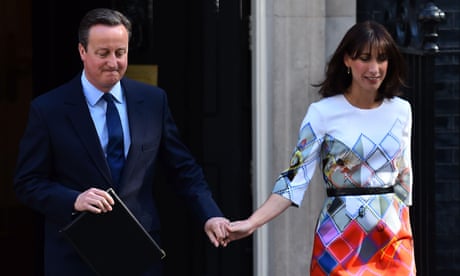


David Cameron thought victory was his at 10pm on Brexit eve


It’s true that Britain is a special case in Europe. It joined belatedly, and purely for economic reasons. It has had all sorts of opt-outs. For years it fought for and won special statusfor a specific status and it got it in diverse ways. This was a product of Europe’s past – not just of British identity or domestic politics, or even the media environment. Unlike postwar France and Germany, Britain – as Jean Monnet, the father of the EU, acknowledged in his memoirs – “felt no need to exorcise history”.

But this vote is not one that affects Britain alone, and for which just one country will bear the consequences. It puts the cohesion and strength of western liberal democracies at stake in a global environment plagued with uncertainties. Picking up the pieces of this wreckage will require clear-headed decisions and a new approach across Europe. Whether that will happen is now the big uncertainty.

The first thing to avoid is going into denial about the magnitude of what has happened. Now populist, far-right and anti-western forces will push forward in the belief that a precedent has been set for other “exits”. Look at the statements from Marine Le Pen, the head of France’s Front National, and the Dutch far-right leader Geert Wilders – and the messaging from the Kremlin’s propaganda machine.

The very survival of the EU is now in peril, and not just because a country representing its second largest economy and a key pillar of its security is set to withdraw. Surely, that much is clear to all. Yet some reactions are already baffling. Angela Merkel has solemnly called for calm. François Hollande has declared that there needs to be a “refoundation” of the EU. Donald Tusk, European council president, quotes Nietzsche: “What doesn’t kill you makes you stronger.” Martin Schulz, president of the European parliament, believes “the chain reaction being celebrated everywhere now by Eurosceptics won’t happen”.
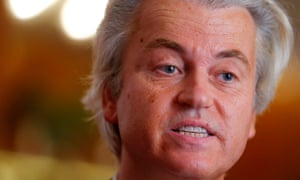


Dutch Party for Freedom leader Geert Wilders. ‘Now populist, far-right and anti-western forces will push forward in the belief that a precedent has been set for other ‘exits’.’ Photograph: Laszlo Balogh/Reuters

Stand by for more such delusional talk in the days and weeks to come. Most will betray the angst of damage limitation rather than a recognition that one era has ended and the new is not yet born.

But if there is one lesson, it is that the usual rituals of the EU simply won’t do. Diplomatic choreography won’t be enough to restore what has been shattered, and what the Brexit vote has starkly reflected: there is no longer confidence among European citizens that a collective endeavour of solidarity and values can deliver what they need and want.

The confidence of the lower and middle classes is now closer to zero than it ever has been. Remember recent surveys: only 38% of the French view the EU positively today (the same poll said it was 44% of the British).

The French historian Fernand Braudel once wrote that “history can be divided into three movements: that which moves rapidly, moves slowly and appears not to move at all”. History is now accelerating right before our eyes. It is moving swiftly in a bad direction, and for those who, as I did, witnessed the spread of democracy and the reunification of the continent that followed the fall of the Berlin Wall in 1989, or who were brought up to think that Europe’s future lay in the coming together of its disparate parts, it is an ominous and painful moment.

The British divorce will be messy and drawn out. It will divert energy needed to address other challenges like security, unemployment, migration, and the geopolitical chaos in the EU’s neighbouring regions. It could make it even harder to address the gap that increasingly divides the political elites from the public mood across the continent. Pro-EU politicians are in denial if they think more European integration slogans are the solution. Citizens simply won’t buy it. For more than 10 years now, EU-related referendums have been a disaster. The federalist-minded European constitution project was rejected in 2005, and this year the Netherlands voted against an EU association agreement with Ukraine. Hungary is due to hold a referendum on EU refugee quotas. Expect a no.

If something can be salvaged, the EU needs to rebuild itself from the ground up, not top down. It is a folly to think measures to fix eurozone governance will suffice, however needed those may be. Anyone who has regularly travelled across Europe in recent years and sounded out grassroots perceptions knows that something else is lacking: a sense of purpose, a belief that Europe stands for something positive and that it can act in people’s interest.

The European project was built by a small group of visionary politicians in the 1950s who believed that citizens would over time see its positive impact on their lives. For a long time that’s what happened. And many young people, including in the UK, do grasp the advantages. But for many reasons that link is in danger, and if it is further weakened Europe will unravel. This is the one priority that should obsess those who sit in Brussels and people everywhere who care about preserving fundamental values. If trust and hope are not restored in the notion that the EU can be democratic in its functioning and deliver concrete outcomes to citizens, the Pied Pipers of populism will continue to attract confused electorates. More illiberalism and toxic divisions will seep into the continent. This vote is a wake-up call: Europe needs saving.
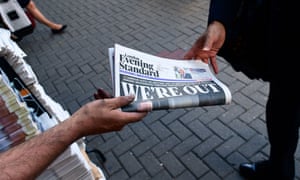
Brexit won’t shield Britain from the horror of a disintegrating EU

Yannis Varoufakis in The Guardian


Leave won because too many British voters identified the EU with authoritarianism, irrationality and contempt for parliamentary democracy while too few believed those of us who claimed that another EU was possible.

I campaigned for a radical remain vote reflecting the values of our pan-European Democracy in Europe Movement (DiEM25). I visited towns in England, Wales, Scotland and Northern Ireland, seeking to convince progressives that dissolving the EU was not the solution. I argued that its disintegration would unleash deflationary forces of the type that predictably tighten the screws of austerity everywhere and end up favouring the establishment and its xenophobic sidekicks. Alongside John McDonnell, Caroline Lucas, Owen Jones, Paul Mason and others, I argued for a strategy of remaining in but against Europe’s established order and institutions. 

Against us was an alliance of David Cameron (whose Brussels’ fudge reminded Britons of what they despise about the EU), the Treasury (and its ludicrous pseudo-econometric scare-mongering), the City (whose insufferable self-absorbed arrogance put millions of voters off the EU), Brussels (busily applying its latest treatment of fiscal waterboarding to the European periphery), Germany’s finance minister Wolfgang Schäuble (whose threats against British voters galvanised anti-German sentiment), France’s pitiable socialist government, Hillary Clinton and her merry Atlanticists (portraying the EU as part of another dangerous “coalition of the willing") and the Greek government (whose permanent surrender to punitive EU austerity made it so hard to convince the British working class that their rights were protected by Brussels).
The repercussions of the vote will be dire, albeit not the ones Cameron and Brussels had warned of. The markets will soon settle down, and negotiations will probably lead to something like a Norwegian solution that allows the next British parliament to carve out a path toward some mutually agreed arrangement. Schäuble and Brussels will huff and puff but they will, inevitably, seek such a settlement with London. The Tories will hang together, as they always do, guided by their powerful instinct of class interest. However, despite the relative tranquillity that will follow on from the current shock, insidious forces will be activated under the surface with a terrible capacity for inflicting damage on Europe and on Britain.

Italy, Finland, Spain, France, and certainly Greece, are unsustainable under the present arrangements. The architecture of the euro is a guarantee of stagnation and is deepening the debt-deflationary spiral that strengthens the xenophobic right. Populists in Italy and Finland, possibly in France, will demand referendums or other ways to disengage.


‘The markets will soon settle down, and negotiations will probably lead to something like a Norwegian solution that allows the next British parliament to carve out a path toward some mutually agreed arrangement.’ Photograph: Leon Neal/AFP/Getty Images

The only man with a plan is Germany’s finance minister. Schäuble recognises in the post-Brexit fear his great opportunity to implement a permanent austerity union. Under his plan, eurozone states will be offered some carrots and a huge stick. The carrots will come in the form of a small eurozone budget to cover, in some part, unemployment benefits and bank deposit insurance. The stick will be a veto over national budgets.

If I am right, and Brexit leads to the construction of a permanent austerian iron cage for the remaining EU member states, there are two possible outcomes: One is that the cage will hold, in which case the institutionalised austerity will export deflation to Britain but also to China (whose further destabilisation will have secondary negative effects on Britain and the EU).


Another possibility is that the cage will be breached (by Italy or Finland leaving, for instance), the result being Germany’s own departure from the collapsing eurozone. But this will turn the new Deutschmark zone, which will probably end at the Ukrainian border, into a huge engine of deflation (as the new currency goes through the roof and German factories lose international markets). Britain and China had better brace themselves for an even greater deflation shock wave under this scenario.

The horror of these developments, from which Britain cannot be shielded by Brexit, is the main reason why I, and other members of DiEM25, tried to save the EU from the establishment that is driving Europeanism into the ground. I very much doubt that, despite their panic in Brexit’s aftermath, EU leaders will learn their lesson. They will continue to throttle voices calling for the EU’s democratisation and they will continue to rule through fear. Is it any wonder that many progressive Britons turned their back on this EU?


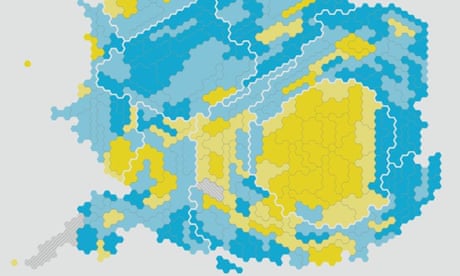
EU referendum full results – find out how your area voted


While I remain convinced that leave was the wrong choice, I welcome the British people’s determination to tackle the diminution of democratic sovereignty caused by the democratic deficit in the EU. And I refuse to be downcast, even though I count myself on the losing side of the referendum.

As of today, British and European democrats must seize on this vote to confront the establishment in London and Brussels more powerfully than before. The EU’s disintegration is now running at full speed. Building bridges across Europe, bringing democrats together across borders and political parties, is what Europe needs more than ever to avoid a slide into a xenophobic, deflationary, 1930s-like abyss.

Likely Scenarios after the Brexit vote?


By Girish Menon

Now that a majority of Britons have voted to leave the EU, Nigel Farage has denied his claim to fund the NHS, David Cameron has resigned and the markets have fallen; so what happens next?

Scenario 1: The Status Quo

The Conservative party will elect a leader who will try to develop a national consensus on the EU. . S/he will then embark on negotiations with the EU and this time the spooked EU leaders will concede enough to make a difference. S/he will conduct another referendum in 1-2 years time and the UK will continue to be a part of the EU.

Scenario 2: The Nightmare

True Eurosceptics with strong neoliberal leanings will come to power. They will fan xenophobic forces to mask the budget cuts to public services. They will negotiate trade deals from a weak position, dilute workers' rights and help their rich funders convert England into another Russia.

Scenario 3: The Ideal

There will be intense and honest soul searching across the EU. A realisation will dawn that inequality is the major cause for the rise of fissiparous forces. The EU will become a transparent organisation with accountability. It will ensure a Universal and Unconditional Basic Income, Free Education, Free Health and subsidised Housing for all its citizens.


There could be many more scenarios which will be variations on the above themes. I hope the EU will choose scenario 3 but as a betting man I think it will choose scenario 1. The case for scenario 1 becomes stronger as the government is in no hurry to invoke Clause 50 which is the next step to start the Brexit negotiation and Boris Johnson appears subdued after the victory.

Friday, 24 June 2016

Cameron has lost his job – his Teflon cockiness has finally worn off

Aditya Chakrabortty in The Guardian
As the pound plunges and markets slide, remember that this referendum was called by David Cameron to fend off Nigel Farage and his own Tory ultras. He has lost his gamble – and the country will pay the price

Friday 24 June 2016


Financial chaos, economic crisis, the likely breakaway of Scotland and possibly Northern Ireland: quite a morning’s work for the Bullingdon Club.

Remember as the pound plunges and the markets slide that this entire referendum was called by David Cameron to fend off Nigel Farage and his own Tory ultras. There was no public outcry for a ballot – but for the sake of a bit of internal party management, he called one anyway. He gambled Britain and Europe’s future to shore up his own position. With all the confidence of a member of the Etonian officer class, he thought he’d win. Instead he has bungled so badly that the fallout will drag on for years, disrupting tens of millions of lives across Europe.

All this from a man who sauntered into the job of prime minister “because I thought I’d be good at it”. He rarely showed any reason for such self-confidence. His plans to modernise the Conservative party crumbled upon first touch with the banking crisis, which forced him and Osborne to reheat the Thatcherite economics they’d imbibed as students. The “big society” turned almost immediately back into the “small state”. At No 10, he launched an austerity drive that was meant to be over within five years, but is now scheduled to go on for double that. Other prime ministers handed power for a long stretch come up with ideas, policies, a style of governing that defines them: Thatcherism, Blairism. What was Cameronism, apart from a hectoring manner at PMQs and an inability to keep on top of detail?

You’ll be reminded endlessly over the next few days how tight this referendum was – that half the country didn’t vote for this. Quite right – and also serious evidence of the weakness of the prime minister. At the last referendum over Britain’s future in Europe, in 1975, Harold Wilson secured a whopping majority. Never a man to ask a question of whose answer he wasn’t absolutely certain, he got a landslide. But when Cameron was handed the full resources of the British state to run this campaign, he still couldn’t count on anything more than a small lead in the polls. A born member of the governing class, he simply wasn’t able to govern.

Not all of this was his creation; much of it is his political inheritance. For the past 40 years, prime minister after prime minister has embraced a regime that has allowed a massive wealth gap to open up between those at the top and the rest of us, that has fattened up central London even while starving other regions of the country – and that has offered the rest of the country elected police chiefs and city mayors instead of an actual voice.

This morning’s results reflect those decades of calculated callousness and the distrust of the political elites they have produced. Thatcher, Blair, Cameron: all pursued an economic inequality – which in turn bred a political and regional polarisation that marked out this referendum campaign. No wonder inner London voted so strongly for the status quo – it’s one of the few places that is doing well out of it. Likewise, it’s no wonder south Wales mutinied, when all the status quo has offered people there for the past four decades is broken promises and rolling immiseration. The shame of it is that all these justified resentments were mobilised by the racists and the hard-rightists. You know things are upside down when the “big merchant banks” are attacked by a former City trader called Nigel Farage.

As prime minister, Cameron had the chance to tackle this toxic mix of inequality and distrust – instead, he made it worse. Leading the remain campaign, he had the chance to address those who had been cut out of the national settlement – instead, he and George Osborne waved around a threat to house prices, even though housing is now this country’s biggest divide between the haves and the have-nots.

In tacit acceptance of his own lack of popular legitimacy, the prime minister invoked the authority of others: the Bank of England governor, Mark Carney; Christine Lagarde at the IMF; the civil servants at the Treasury. Nothing showed up this politician’s own smallness as the technocrats he sheltered behind.

Now he has lost his big gamble and he has lost his job – but it will be the rest of the country that pays the price. He was never that good, he was just cocky. It was never luck, it was just Teflon. And now it’s worn off.