Saturday, 9 April 2016
How corruption revealed in Panama Papers opened the door to Isis and al-Qaida
Patrick Cockburn in The Independent
The message of Rudyard Kipling's poem is that corruption is always with us and has not changed much down the ages. There is some truth in this, but degrees of corruption greatly matter, as the Cheops would have found to his cost if he tried to build his pyramid in modern Iraq instead of ancient Egypt. The project would cost him billions rather than millions - and he would be more likely to end up with a hole in the ground than anything resembling a pyramid.
Three years ago I was in Baghdad after it had rained heavily, driving for miles through streets that had disappeared under grey-coloured flood water combined with raw sewage. Later I asked Shirouk Abayachi, an advisor to the Ministry of Water Resources, why this was happening and she said that "since 2003, $7bn has been spent to build a new sewage system for Baghdad, but either the sewers weren't built or they were built very badly". She concluded that "corruption is the key to all this".
Anybody discussing the Panama Papers and the practices of the law firm Mossack Fonseca should think about the ultimate destination of the $7bn not spent on the Baghdad drainage system. There will be many go-betweens and middle men protecting anyone who profited from this huge sum, but the suspicion must be that a proportion of it will have ended up in offshore financial centres where money is hidden and can be turned into legally held assets.
There is no obvious link between the revelations in the Panama Papers, the rise of Islamic State and the wars tearing apart at least nine countries in the Middle East and North Africa. But these three developments are intimately connected as ruling elites, who syphon off wealth into tax havens and foreign property, lose political credibility. No ordinary Afghans, Iraqis and Syrians will fight and die for rulers they detest as swindlers. Crucial to the rise of Isis, al-Qaida and the Taliban in Iraq, Syria, Afghanistan is not their own strength and popularity, but the weakness and unpopularity of the governments to which they are opposed.
Kipling was right in believing that there has always been corruption, but since the early 1990s corrupt states have often mutated into kleptocracies. Ruling families and the narrow coteries around them have taken a larger and larger share of the economic cake.
In Syria since the turn of the century, for instance, the rural population and the urban poor no longer enjoyed the limited benefits they had previously received under an equally harsh but more egalitarian regime. By 2011, President Bashar al-Assad's first cousin Rami Makhlouf was reported to be a dominant player in 60 per cent of the Syrian economy and to have a personal worth of $5 billion.
In Iraq earlier this year, a financial specialist, who wished to remain anonymous, said that the government of prime minister Haider al-Abadi held files on corrupt individuals, including "one politician who has amassed a fortune of $6 billion through corrupt dealings."
The danger of citing extreme examples of corruption from exotic and war-ravaged countries like Iraq, Afghanistan and Syria is that these may sound like events happening on another planet. But the political and economic systems in Iraq and Afghanistan were devised under the tutelage of the US and allies like Britain. They were proponents of free market economics which in the West may increase inequality and benefit the wealthy, but in Kabul and Baghdad were a license to steal by anybody with power.
Neo-liberal economists have a lot to answer for. A few days after Isis had captured Mosul in June 2014, I was in Baghdad and asked a recently retired four-star Iraqi general why the much larger and better-equipped Iraqi army had been defeated so swiftly and humiliatingly. He replied that the explanation was: "Corruption! Corruption! Corruption!"
He added that this was pervasive and had begun when the US was building a new Iraqi military after the overthrow of Saddam Hussein in 2003, when the American commanders had insisted on out-sourcing food and other supplies to private contractors. These businessmen and the army officers soon determined that, if the Iraqi government was paying money to feed and equip a battalion of 600 men, but its real strength was only 150, they could pocket the difference. So profitable was this arrangement that by 2014 all officers' jobs were for sale and it cost $200,000 to become a colonel and up to $2m a general in charge of a division.
Blatant corruption at the top in Kabul and Baghdad has been frequently reported over the years, though nothing much seems to change. But it is a mistake to imagine that this was simply the outcome of a culture of corruption specific to Afghanistan and Iraq. The most corrupt ministers were appointed and the most crooked contracts signed at a time when US officials were the real decision-makers in Baghdad.
For example, the entire military procurement budget of $1.2 billion was effectively stolen in 2004/5 when the Defence Ministry was substantially under US control, raising questions of the competence, or even collusion, of the US authorities.
The situation has got worse, not better. "I feared seven or eight years ago that Iraq would become like Nigeria," said one former minister in 2013, "but in fact it is far worse."
He cited as evidence a $1.3bn contract signed by a minister with one foreign company that had only a nominal existence - and a second company that was bankrupt. This took place in a country in which one third of the labour force is unemployed, and, if the underemployed are taken into account, the figure rises to over half.
The use of offshore financial centres by the moneyed elite in the oil states and much of the rest of the world is not always to avoid taxes which they would not pay if they kept the money at home, but in some cases to conceal what they have stolen and later to legally launder it.
Some of this can be done by buying property in places like Baghdad, which explains why property prices in that dangerous city are as high as London. But it is safer and better to buy property in London itself, something that will ultimately require the services of a company like Mossack Fonseca - though these services will be far removed from the original toxic source of the investment.
The Panama Papers give insight into the names and mechanisms through which globalised elites hide their wealth and avoid paying tax on it. Commentators now predict that popular disgust with political establishments will benefit radical leaders like Bernie Sanders in the US and Jeremy Corbyn in the UK.
What they do not see is that the way in which the detachment of interests of elites from the countries they rule has already produced states that have failed or are failing, or are wracked by conflict and war.
Who shall doubt 'the secret hid
Under Cheops' pyramid'
Was that the contractor did
Cheops out of several millions?
The message of Rudyard Kipling's poem is that corruption is always with us and has not changed much down the ages. There is some truth in this, but degrees of corruption greatly matter, as the Cheops would have found to his cost if he tried to build his pyramid in modern Iraq instead of ancient Egypt. The project would cost him billions rather than millions - and he would be more likely to end up with a hole in the ground than anything resembling a pyramid.
Three years ago I was in Baghdad after it had rained heavily, driving for miles through streets that had disappeared under grey-coloured flood water combined with raw sewage. Later I asked Shirouk Abayachi, an advisor to the Ministry of Water Resources, why this was happening and she said that "since 2003, $7bn has been spent to build a new sewage system for Baghdad, but either the sewers weren't built or they were built very badly". She concluded that "corruption is the key to all this".
Anybody discussing the Panama Papers and the practices of the law firm Mossack Fonseca should think about the ultimate destination of the $7bn not spent on the Baghdad drainage system. There will be many go-betweens and middle men protecting anyone who profited from this huge sum, but the suspicion must be that a proportion of it will have ended up in offshore financial centres where money is hidden and can be turned into legally held assets.
There is no obvious link between the revelations in the Panama Papers, the rise of Islamic State and the wars tearing apart at least nine countries in the Middle East and North Africa. But these three developments are intimately connected as ruling elites, who syphon off wealth into tax havens and foreign property, lose political credibility. No ordinary Afghans, Iraqis and Syrians will fight and die for rulers they detest as swindlers. Crucial to the rise of Isis, al-Qaida and the Taliban in Iraq, Syria, Afghanistan is not their own strength and popularity, but the weakness and unpopularity of the governments to which they are opposed.
Kipling was right in believing that there has always been corruption, but since the early 1990s corrupt states have often mutated into kleptocracies. Ruling families and the narrow coteries around them have taken a larger and larger share of the economic cake.
In Syria since the turn of the century, for instance, the rural population and the urban poor no longer enjoyed the limited benefits they had previously received under an equally harsh but more egalitarian regime. By 2011, President Bashar al-Assad's first cousin Rami Makhlouf was reported to be a dominant player in 60 per cent of the Syrian economy and to have a personal worth of $5 billion.
In Iraq earlier this year, a financial specialist, who wished to remain anonymous, said that the government of prime minister Haider al-Abadi held files on corrupt individuals, including "one politician who has amassed a fortune of $6 billion through corrupt dealings."
The danger of citing extreme examples of corruption from exotic and war-ravaged countries like Iraq, Afghanistan and Syria is that these may sound like events happening on another planet. But the political and economic systems in Iraq and Afghanistan were devised under the tutelage of the US and allies like Britain. They were proponents of free market economics which in the West may increase inequality and benefit the wealthy, but in Kabul and Baghdad were a license to steal by anybody with power.
Neo-liberal economists have a lot to answer for. A few days after Isis had captured Mosul in June 2014, I was in Baghdad and asked a recently retired four-star Iraqi general why the much larger and better-equipped Iraqi army had been defeated so swiftly and humiliatingly. He replied that the explanation was: "Corruption! Corruption! Corruption!"
He added that this was pervasive and had begun when the US was building a new Iraqi military after the overthrow of Saddam Hussein in 2003, when the American commanders had insisted on out-sourcing food and other supplies to private contractors. These businessmen and the army officers soon determined that, if the Iraqi government was paying money to feed and equip a battalion of 600 men, but its real strength was only 150, they could pocket the difference. So profitable was this arrangement that by 2014 all officers' jobs were for sale and it cost $200,000 to become a colonel and up to $2m a general in charge of a division.
Blatant corruption at the top in Kabul and Baghdad has been frequently reported over the years, though nothing much seems to change. But it is a mistake to imagine that this was simply the outcome of a culture of corruption specific to Afghanistan and Iraq. The most corrupt ministers were appointed and the most crooked contracts signed at a time when US officials were the real decision-makers in Baghdad.
For example, the entire military procurement budget of $1.2 billion was effectively stolen in 2004/5 when the Defence Ministry was substantially under US control, raising questions of the competence, or even collusion, of the US authorities.
The situation has got worse, not better. "I feared seven or eight years ago that Iraq would become like Nigeria," said one former minister in 2013, "but in fact it is far worse."
He cited as evidence a $1.3bn contract signed by a minister with one foreign company that had only a nominal existence - and a second company that was bankrupt. This took place in a country in which one third of the labour force is unemployed, and, if the underemployed are taken into account, the figure rises to over half.
The use of offshore financial centres by the moneyed elite in the oil states and much of the rest of the world is not always to avoid taxes which they would not pay if they kept the money at home, but in some cases to conceal what they have stolen and later to legally launder it.
Some of this can be done by buying property in places like Baghdad, which explains why property prices in that dangerous city are as high as London. But it is safer and better to buy property in London itself, something that will ultimately require the services of a company like Mossack Fonseca - though these services will be far removed from the original toxic source of the investment.
The Panama Papers give insight into the names and mechanisms through which globalised elites hide their wealth and avoid paying tax on it. Commentators now predict that popular disgust with political establishments will benefit radical leaders like Bernie Sanders in the US and Jeremy Corbyn in the UK.
What they do not see is that the way in which the detachment of interests of elites from the countries they rule has already produced states that have failed or are failing, or are wracked by conflict and war.
David Cameron’s gift to the world: trickle-down tax-dodging
Marina Hyde in The Guardian
An intriguing approach to damage limitation by Panama prat David Cameron, particularly considering the prime minister’s only real life job ever was as a PR. The prime minister appears to have been the last person to realise what everyone else in Westminster could see on Monday. Namely, that he’d be sitting down for an awkward tell-all – or at least a tell-some – by Thursday.
My absolute favourite tale from Cameron’s era as press chief for the culturocidal Carlton Television comes courtesy of the Guardian’s then media correspondent, who rang him up on a story. Like all mediocre PRs, a large part of his strategy was ignoring calls, but having accidentally answered this one he was cornered – and consequently pretended to be his own cleaner. “I can’t prove it was him,” the journalist reflected later, “but it certainly sounded a lot like him.” Well, he does have that central casting cleaner’s voice, so perhaps we ought to leave the case file open. Even so, for the journalists who recall the barefaced whoppers Cameron was able to tell them back in those days, this week has not been an occasion to break out the smelling salts.
“I’ve never tried to be anything I’m not,” Cameron claimed to Robert Peston in his belated confession. What about a cleaner? Or a football fan? Evidently the PM judged it the wrong moment to bring up either impersonations of the help, or Aston Villa. Or, indeed, West Ham. Still, at some point, Fortune was always going to collect on the deal Cameron foolishly made when he called the comedian Jimmy Carr’s (also legal) tax arrangements “morally wrong”. Showbiz now joins football on the list of things upon which he ought never to comment again.
Explaining to Peston that “my dad was a man I love and miss every day”, Cameron admitted that he and his wife had in fact invested in Ian Cameron’s offshore firm Blairmore in 1997, then sold their stake in 2010 for “something like £30,000”. That Cameron’s shifty cover-up has been more damaging than his non-crime is almost too insultingly obvious to state. He will not be assisted by the subconscious dismissiveness in that styling – “something like £30,000”. There is a fine line between fastidious precision and sounding like something north of the average British salary is rather forgettable, and the PM fell on the wrong side of it.
Even so, despite the obvious temptations, it would be a destructive mistake for Cameron’s enemies to get too tribal about these things. For all that this story appears currently to concern the Conservatives, there is something rather more Labourish – New Labourish, particularly – to it. The history of British political scandal dictates that it is traditionally sex that gets the Tories in trouble, and money that lands Labour in hot water.
That the Camerons’ investment in Blairmore lasted from 1997 to 2010 – the precise era of New Labour government – feels like a bit of a signpost. Indeed, for a story featuring something called Blairmore, it is surprising that it is Blair-less. For my money – something like £30, for this bet – the saga this most closely resembles is “Cheriegate”. Back at the very end of 2002, you may remember, Cherie Blair unwittingly used a conman (the gentleman caller of her special-adviser-cum-aromatherapist) to assist her in the purchase of two £250,000 Bristol flats.
Just as it has with Cameron, it took Mrs Blair several days to realise she was going to have to tell the truth, but eventually she too was making an emotional speech explaining that she had only been trying to protect her family “particularly my son in his first term at university [sob] living away from home”. A cri de coeur that certainly put in perspective the worries of other mothers who were at that time sending their 18-year-olds off to her husband’s war in Afghanistan. Toughest game in the world, the university game.
That said, Cameron’s emotional citation of his father, though obviously relevant, does rather recall Gordon Brown when on a sticky wicket. A defensive mention of his dad was Brown’s poker tell, and one almost as inscrutable as Homer Simpson’s habit of dancing round the table shrieking in delight at having been dealt four jacks. Mr Brown was never delighted when he brought up the scrupulous honesty of his Presbyterian minister father, but felt the urgent need in order to bolster the fib he was about to tell. An absurd denial that he’d never contemplated sacking Alistair Darling, for instance, came with the giveaway mention that his father had taught him “always to be honest”.
“He’s a prime minister,” skills minister Nick Boles conceded of Cameron on Friday morning, “but he’s also a human being and he’s a son.” I think we can ignore Mr Boles on the father-son dynamic. His last public reference to it was when he accused the grieving father of a Tory activist who had killed himself of trying to “hound” the party chairman out of a job.
Even so, Labour should consider the bigger picture. There are – how to put this delicately? – certain big political names of the relatively recent era that have yet to feature in the tale of tax avoidance, but on whom you’d be unwise to bet against emerging in some future story, some later data leak. Then again, perhaps these persons unnamed have opened their umbrella firms even more carefully, and we shall never know on the record. But we shall know it in our hearts, with that epistemology made fashionable by Tony Blair. “I only know what I believe,” he once intoned. Don’t we all, Mr Blair. Don’t we all.
The gravest danger of casting the tax debate as some tribal battle between the same old foes is to us – the little people who pay taxes, as Leona Helmsley once deathlessly observed. A tit-for-tat between parties does society in which we all have a stake no favours. Down that path, the path where ordinary people conclude that politicians and companies are all in it together, lies a corrupted society like Greece, where top-tier tax dodging eventually trickled down to dentists and doctors and beyond.
The idea that Britain – where people traditionally paid tax relatively willingly – could ever end up anything like this was unthinkable only a few years ago. It is now rather more thinkable, with the accretion of endless stories about Google, Amazon, the Panama Papers names … Never mind the details. Over time, overall impressions are taken. In the end, ordinary people will only know what they believe, and the fear for society is that they will begin to act accordingly.
An intriguing approach to damage limitation by Panama prat David Cameron, particularly considering the prime minister’s only real life job ever was as a PR. The prime minister appears to have been the last person to realise what everyone else in Westminster could see on Monday. Namely, that he’d be sitting down for an awkward tell-all – or at least a tell-some – by Thursday.
My absolute favourite tale from Cameron’s era as press chief for the culturocidal Carlton Television comes courtesy of the Guardian’s then media correspondent, who rang him up on a story. Like all mediocre PRs, a large part of his strategy was ignoring calls, but having accidentally answered this one he was cornered – and consequently pretended to be his own cleaner. “I can’t prove it was him,” the journalist reflected later, “but it certainly sounded a lot like him.” Well, he does have that central casting cleaner’s voice, so perhaps we ought to leave the case file open. Even so, for the journalists who recall the barefaced whoppers Cameron was able to tell them back in those days, this week has not been an occasion to break out the smelling salts.
“I’ve never tried to be anything I’m not,” Cameron claimed to Robert Peston in his belated confession. What about a cleaner? Or a football fan? Evidently the PM judged it the wrong moment to bring up either impersonations of the help, or Aston Villa. Or, indeed, West Ham. Still, at some point, Fortune was always going to collect on the deal Cameron foolishly made when he called the comedian Jimmy Carr’s (also legal) tax arrangements “morally wrong”. Showbiz now joins football on the list of things upon which he ought never to comment again.
Explaining to Peston that “my dad was a man I love and miss every day”, Cameron admitted that he and his wife had in fact invested in Ian Cameron’s offshore firm Blairmore in 1997, then sold their stake in 2010 for “something like £30,000”. That Cameron’s shifty cover-up has been more damaging than his non-crime is almost too insultingly obvious to state. He will not be assisted by the subconscious dismissiveness in that styling – “something like £30,000”. There is a fine line between fastidious precision and sounding like something north of the average British salary is rather forgettable, and the PM fell on the wrong side of it.
Even so, despite the obvious temptations, it would be a destructive mistake for Cameron’s enemies to get too tribal about these things. For all that this story appears currently to concern the Conservatives, there is something rather more Labourish – New Labourish, particularly – to it. The history of British political scandal dictates that it is traditionally sex that gets the Tories in trouble, and money that lands Labour in hot water.
That the Camerons’ investment in Blairmore lasted from 1997 to 2010 – the precise era of New Labour government – feels like a bit of a signpost. Indeed, for a story featuring something called Blairmore, it is surprising that it is Blair-less. For my money – something like £30, for this bet – the saga this most closely resembles is “Cheriegate”. Back at the very end of 2002, you may remember, Cherie Blair unwittingly used a conman (the gentleman caller of her special-adviser-cum-aromatherapist) to assist her in the purchase of two £250,000 Bristol flats.
Just as it has with Cameron, it took Mrs Blair several days to realise she was going to have to tell the truth, but eventually she too was making an emotional speech explaining that she had only been trying to protect her family “particularly my son in his first term at university [sob] living away from home”. A cri de coeur that certainly put in perspective the worries of other mothers who were at that time sending their 18-year-olds off to her husband’s war in Afghanistan. Toughest game in the world, the university game.
That said, Cameron’s emotional citation of his father, though obviously relevant, does rather recall Gordon Brown when on a sticky wicket. A defensive mention of his dad was Brown’s poker tell, and one almost as inscrutable as Homer Simpson’s habit of dancing round the table shrieking in delight at having been dealt four jacks. Mr Brown was never delighted when he brought up the scrupulous honesty of his Presbyterian minister father, but felt the urgent need in order to bolster the fib he was about to tell. An absurd denial that he’d never contemplated sacking Alistair Darling, for instance, came with the giveaway mention that his father had taught him “always to be honest”.
“He’s a prime minister,” skills minister Nick Boles conceded of Cameron on Friday morning, “but he’s also a human being and he’s a son.” I think we can ignore Mr Boles on the father-son dynamic. His last public reference to it was when he accused the grieving father of a Tory activist who had killed himself of trying to “hound” the party chairman out of a job.
Even so, Labour should consider the bigger picture. There are – how to put this delicately? – certain big political names of the relatively recent era that have yet to feature in the tale of tax avoidance, but on whom you’d be unwise to bet against emerging in some future story, some later data leak. Then again, perhaps these persons unnamed have opened their umbrella firms even more carefully, and we shall never know on the record. But we shall know it in our hearts, with that epistemology made fashionable by Tony Blair. “I only know what I believe,” he once intoned. Don’t we all, Mr Blair. Don’t we all.
The gravest danger of casting the tax debate as some tribal battle between the same old foes is to us – the little people who pay taxes, as Leona Helmsley once deathlessly observed. A tit-for-tat between parties does society in which we all have a stake no favours. Down that path, the path where ordinary people conclude that politicians and companies are all in it together, lies a corrupted society like Greece, where top-tier tax dodging eventually trickled down to dentists and doctors and beyond.
The idea that Britain – where people traditionally paid tax relatively willingly – could ever end up anything like this was unthinkable only a few years ago. It is now rather more thinkable, with the accretion of endless stories about Google, Amazon, the Panama Papers names … Never mind the details. Over time, overall impressions are taken. In the end, ordinary people will only know what they believe, and the fear for society is that they will begin to act accordingly.
Thursday, 7 April 2016
Making money is not a vice, but refusing to contribute tax is
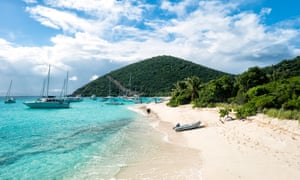
We can have a vision of a good life that is not simply a yacht off the Virgin Islands, but one in which we have decent schools and hospitals. Photograph: Alamy
Suzanne_Moore in The Guardian
That global elite – I always suspected they were up to no good … I must be psychic! And look, here is the proof: the Panama leaks show all these vultures hiding away their money in perfectly legal schemes to avoid paying taxes in countries out of which they operate their businesses. The yachts flying Panamanian flags off the coast of some of these islands may have been a hint but somehow the wrong-doing of the super rich has simply become part of the environment. A stroll around London reveals rough sleepers among ghost mansions and empty penthouses, bought by those who will never make them homes.
This is just what a globalised capital city looks like. This is where global capital comes to hide itself. Never mind these idyllic tax havens, the UK itself is a centre for a form of money laundering. This is “our” success.
After the crash of 2008, the City rallied, paying for more than half of the Tory election campaign.
Anger at the bankers dissipated into a sort of shrug of the shoulders. Those who caused the damage hung on to their bonuses. Austerity works by saying that it is in our own self-interest to punish ourselves.
Hopefully some of this compliance is now falling apart, but the Panama leaks reveal something so massive that it’s hard to get to grips with it: big, bad, rich people do secret, mean things.
Jeremy Corbyn, as ever, seems mildly irritated by the workings of global capitalism. After all, he was elected in protest at a leadership that had simply sucked it up. New Labour was so intensely relaxed about wealth that it made up phrases such as “wealth creators”. All of this was personified by Cherie Blair, forever on some grabby supermarket sweep while her hollowed-out husband sells his services to dictators. Corbyn’s asceticism may be a relief, but its not yet an alternative.
Some things need to be said now, and said clearly. Not paying tax may not be illegal, but it is immoral. It is a form of theft. The acceptance of a caste system whereby the likes of David Cameron and George Osborne rule us, and we are not allowed to question the finances of this elite has to stop. We all pay tax to train doctors and maintain the roads they are driven on. The idea that this elite does not use the services that are provided is simply not true.
Try, for instance, calling a private ambulance and having it driven only on private roads? I note, after another strike by junior doctors, that just before the 2010 election, Jeremy Hunt, then culture secretary, reduced his tax bill by £100,000 through a deal that meant he transferred his companies’ office buildings. This is only human isn’t it? Why shouldn’t he do this?
Here is why: tax is a marker of civilisation, a form of a social contract that right now is being torn up in front of our eyes. Even Adam Smith called tax a badge of liberty. And yet for many, freedom is entirely bound up with paying as little tax as possible. The richer you are the more free you are to not contribute – though you are still free to lecture others on the benefits of hard work.
This is what is so peculiar, too, about Cameron telling us he will no longer benefit from his father’s offshore arrangements. He did. He has. That is not in question. But the new kind of privilege is one that sees itself both as God-given and hard-earned. This delusion has hit its apotheosis in Zac Goldsmith, that charisma vacuum, who is strangely listless except when he is stirring up racial tension.
But then this wealth bubble is a private-members club because it is, by nature, profoundly antisocial. Tax-dodging, aversion or whatever polite term we use, is premised on the free movement of money. The social consequences of this, be it the movement of migrants or the closure of industries, is someone else’s problem.
Part of this hyper-capitalism is the idea that only money makes money and people make nothing. “The left” went badly wrong buying into this worldview for a while. Financialisation meant only services would produce profit. But making things, whether you’re assembling a car, or a painting, or a house, still matters. We also became muddled about aspiration. It was good, then it was bad – rather than it being just a fact of life, like breathing. The need is to simply find a language of aspiration that is about all of us. The economy is increasingly spoken of as if it were the weather and completely uncontrollable. No.
We can have a vision of a good life that is not simply a yacht off the Virgin Islands, but one in which we have decent schools and hospitals, and our entrepreneurial skills are both useful and what we use to contribute. Where we understand that we pay tax precisely because there is such a thing as society; making money is neither a vice nor a virtue. Refusing to contribute, though, is a vice. That tight bastard who never buys a round in the pub though he earns more than you? Do you really want him running the country? Because that’s the country in which we currently live.
Suzanne_Moore in The Guardian
That global elite – I always suspected they were up to no good … I must be psychic! And look, here is the proof: the Panama leaks show all these vultures hiding away their money in perfectly legal schemes to avoid paying taxes in countries out of which they operate their businesses. The yachts flying Panamanian flags off the coast of some of these islands may have been a hint but somehow the wrong-doing of the super rich has simply become part of the environment. A stroll around London reveals rough sleepers among ghost mansions and empty penthouses, bought by those who will never make them homes.
This is just what a globalised capital city looks like. This is where global capital comes to hide itself. Never mind these idyllic tax havens, the UK itself is a centre for a form of money laundering. This is “our” success.
After the crash of 2008, the City rallied, paying for more than half of the Tory election campaign.
Anger at the bankers dissipated into a sort of shrug of the shoulders. Those who caused the damage hung on to their bonuses. Austerity works by saying that it is in our own self-interest to punish ourselves.
Hopefully some of this compliance is now falling apart, but the Panama leaks reveal something so massive that it’s hard to get to grips with it: big, bad, rich people do secret, mean things.
Jeremy Corbyn, as ever, seems mildly irritated by the workings of global capitalism. After all, he was elected in protest at a leadership that had simply sucked it up. New Labour was so intensely relaxed about wealth that it made up phrases such as “wealth creators”. All of this was personified by Cherie Blair, forever on some grabby supermarket sweep while her hollowed-out husband sells his services to dictators. Corbyn’s asceticism may be a relief, but its not yet an alternative.
Some things need to be said now, and said clearly. Not paying tax may not be illegal, but it is immoral. It is a form of theft. The acceptance of a caste system whereby the likes of David Cameron and George Osborne rule us, and we are not allowed to question the finances of this elite has to stop. We all pay tax to train doctors and maintain the roads they are driven on. The idea that this elite does not use the services that are provided is simply not true.
Try, for instance, calling a private ambulance and having it driven only on private roads? I note, after another strike by junior doctors, that just before the 2010 election, Jeremy Hunt, then culture secretary, reduced his tax bill by £100,000 through a deal that meant he transferred his companies’ office buildings. This is only human isn’t it? Why shouldn’t he do this?
Here is why: tax is a marker of civilisation, a form of a social contract that right now is being torn up in front of our eyes. Even Adam Smith called tax a badge of liberty. And yet for many, freedom is entirely bound up with paying as little tax as possible. The richer you are the more free you are to not contribute – though you are still free to lecture others on the benefits of hard work.
This is what is so peculiar, too, about Cameron telling us he will no longer benefit from his father’s offshore arrangements. He did. He has. That is not in question. But the new kind of privilege is one that sees itself both as God-given and hard-earned. This delusion has hit its apotheosis in Zac Goldsmith, that charisma vacuum, who is strangely listless except when he is stirring up racial tension.
But then this wealth bubble is a private-members club because it is, by nature, profoundly antisocial. Tax-dodging, aversion or whatever polite term we use, is premised on the free movement of money. The social consequences of this, be it the movement of migrants or the closure of industries, is someone else’s problem.
Part of this hyper-capitalism is the idea that only money makes money and people make nothing. “The left” went badly wrong buying into this worldview for a while. Financialisation meant only services would produce profit. But making things, whether you’re assembling a car, or a painting, or a house, still matters. We also became muddled about aspiration. It was good, then it was bad – rather than it being just a fact of life, like breathing. The need is to simply find a language of aspiration that is about all of us. The economy is increasingly spoken of as if it were the weather and completely uncontrollable. No.
We can have a vision of a good life that is not simply a yacht off the Virgin Islands, but one in which we have decent schools and hospitals, and our entrepreneurial skills are both useful and what we use to contribute. Where we understand that we pay tax precisely because there is such a thing as society; making money is neither a vice nor a virtue. Refusing to contribute, though, is a vice. That tight bastard who never buys a round in the pub though he earns more than you? Do you really want him running the country? Because that’s the country in which we currently live.
Subscribe to:
Posts (Atom)