Search This Blog

Thursday, 5 November 2015

Bolivia Gives Legal Rights To The Earth

Kirsten Cowart


Bolivia has become the first country in the world to actually give nature legal rights in a huge effort to put a halt to not only climate change but the exploitation of our world, and in turn improve the quality of life for the people of Bolivia.

Our Mother Earth looks to Bolivia as they spearhead new economic and social models based on the protection and preservation for nature.

This idea had been developed by grass root social groups that presented their ideas to politicians and were accepted as one. In doing so, the Law of Mother Earth in Bolivia recognizes the rights of all living beings, whether they be plant or animal. This law gives our world equal status to human beings.

When this law is fully approved, this legislation will then provide the Earth with the rights to life and regeneration; liberation from genetic modification and biodiversity; naturally balanced systems, pure water and clean air; complete restoration from the effects of its human activity; and freedom from the continual contamination on all fronts.


The prioritising of this legislation based on broader principles of looking towards living in harmony side by side with the Earth and moving towards the collective good of all. At the core of this legislation is a full understanding that the Earth is sacred, which comes from the indigenous people called Andean, viewing the world as ‘Pachamama’ which translates to Mother Earth a living being.

Back in December 2010 the initial act had already outlined the rights of the earth as a dynamic and “indivisible community of all living systems and living organisms, interrelated, interdependent and complementary, which share a common destiny.”

With the Law of Mother Earth Bolivia’s government would then be legally bound to ensure the prioritising of not only the natural world’s policies and making sure that they are promoting sustainability and controlling industry, but making sure they have the wellbeing of its citizens and the world are at their heart.

The economy of Bolivia will be looking to operate within the limits of nature as they push towards a renewable green food stability and energy efficient technologies. Helping to prevent the drastic climate changes already taking place, ensuring that the future generations have brighter lives and a more hopeful future.

The Bolivian government is also requesting a call to arms with other rich countries to work together in adopting the recognition of the effects of climate change due to their high carbon emissions. According to an Oxfam report in 2009, Bolivia is particularly susceptible to the impacts of climate change with increasing drought, flooding and melting glaciers.

On the stage international change, the Bolivian government will have a duty to help promote the upkeep of the rights of Earth, while becoming advocates of not only peace but the elimination of all nuclear, chemical and biological weapons.

Following the change to the Bolivian constitution back in 2009, the law will play a large part of overhauling the legal system. It helps represent a strong shift away from the universally adopted western development model to a much greener holistic vision, based on the concept of Vivir Bien meaning ‘to live well’.

The proposal for the new law brightly states:


“Living Well means adopting forms of consumption, behaviour and conduct that are not degrading to nature. It requires an ethical and spiritual relationship with life. Living Well proposes the complete fulfilment of life and collective happiness.”

An umbrella group for five different Bolivian social movements called the Unity Pact helps prepare the draft of the new law. The represent and speak for over 3 million people of the countries 36 different indigenous groups, the majority of them are small scale farmers who still call their ancestral lands home. The bill helps to protect not only their livelihoods but the diverse cultures that feel the immense impacts of the large industries.

One of the leaders of the social movement Confederación Sindical Única de Trabajadores Campesinos de Bolivia Undarico Pinto, states that “It will make the industry more transparent. It will allow people to regulate industry at national, regional and local levels,” helping to signify a large shift away from the exploitation of nature.

The draft laws that refers to the mineral resources of the world as “blessings” and goes further and states that Mother Earth, “is sacred, fertile and the source of life that feeds and cares for all living beings in her womb. She is in permanent balance, harmony and communication with the cosmos.”

Bolivia will also establish a Ministry of Earth to promote their new rights and make sure that they are all complied with. yet the economy of Bolivia is at this moment solely dependent of the exports of natural resources, earning almost a third of its foreign currency which averages around £300m a year from multiple mining companies. Bolivia is looking to create a new balance and obligations against the demands of that industry.

Bolivia Rain forest


Within the next few months, the full law is expected to pass and it is very unlikely to face opposition due to the ruling party, The Movement Towards Socialism, has been able to hold a considerable majority in their parliament. President Evo Morales, its leader, voiced a commitment to what they were creating at the World People’s Conference on Climate change that was held in Bolivia back in April 2010.


The Law of Mother Earth includes the following:

The right to maintain the integrity of life and natural processes.

The right to not have cellular structure modified or genetically altered.

The right to continue vital cycles and processes free from human alteration.

The right to pure water.

The right to clean air.

The right to balance, to be at equilibrium.

The right to be free of toxic and radioactive pollution.

The right to not be affected by mega-infrastructure and development projects that affect the balance of ecosystems and the local inhabitant communities

This law pushes the world “harmony and peace” with “the elimination of all nuclear, chemical, and biological weapons.”
Unhappy? Welcome to Bhutan – the nation of 90% joy

The Himalayan kingdom of Bhutan was the first to measure happiness as an alternative to GDP. No wonder they’re so pleased


Tim Dowling in The Guardian


News from the International Conference on Gross National Happiness, where Bhutan’s happiness index rose from 0.743 in 2010 to 0.756 in 2015. “Is this fast or slow?” asked Bhutan’s prime minister in his keynote speech. “We do not yet know. We are still learning what is a ‘good’ growth rate!” He sounds jolly.

The notion of GNH was first introduced by Bhutan’s fourth king in the 70s, when he announced that “gross national happiness is more important that gross national product”. The GNH index is a number crunched from happiness survey statistics across nine “domains”, of which only one is living standards. Others include health, education, psychological wellbeing, time use, community vitality and cultural diversity.
GNH is a blend of hard numbers, subjective perceptions and virtually unmeasurable concepts, but it works pretty well in Bhutan, provided you’re not among the 17% of the population – mostly Hindus of Nepalese origin – expelled from the country in the 90s. It’s one way to get your GNH index up – kick out that oppressed minority.

In the last decade the idea of GNH has gained international traction. In the US some states measure the genuine progress indicator, alongside gross state product. In 2012, the UN released a World Happiness report. And the UK’s Office For National Statistics recently started measuring national wellbeing.

There’s nothing wrong with measuring subjective happiness levels – it’s interesting precisely because they’re subjective. Recent GDP improvements brought no corresponding increase British wellbeing. In Bhutan, people’s perceptions of their own health worsened even as healthcare indices improved. Still, 91% of Bhutanese are classed as either narrowly, extensively or deeply happy. Joy-wise it’s roughly on a par with Denmark, even though Bhutan’s adult literacy rate is around 60% and its GDP per capita puts it well below mid-table in world rankings.

Happiness is relative, which means the statistics can be pressed into service by anybody wanting to prove anything, including those who would suggest that spending money to improve people’s lives isn’t worth the bother. I fear that’s where all this wellbeing measurement will lead us. But cheer up – it may never happen.

Wednesday, 4 November 2015

Don’t sneer at redbrick revolutionaries – some of our best leaders were terrible students

Owen Jones in The Guardian

It is the season for academic snobbery, apparently. Labour was once the “clever party”, bemoaned Harry Mount in the Spectator recently, but now it’s had a “brain transplant. It’s out with the Oxbridge and Harvard graduates with first class degrees; in with the redbrick university graduates”. The horror. Martin Amis concurs, slamming Jeremy Corbyn for being “undereducated”. And now Tristram Hunt is at it, referring to Cambridge University students lazily but revealingly as the “top 1%” who had a “responsibility to take leadership going forward”.


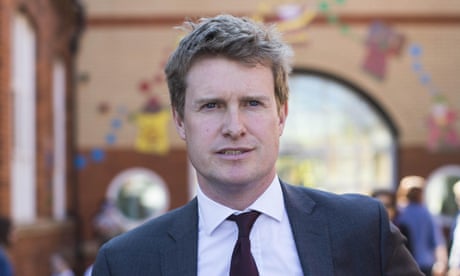
Labour risks turning into a sect, says Tristram Hunt


A disclaimer: I am, myself, an Oxbridge graduate, like so many who write on these pages. I’m not ashamed of making the jump from comprehensive schools to Oxford either (although I am no working class hero): if Oxbridge drew more students from non-selective comprehensives, the status quo would be less objectionable. But the comments betray a depressing lack of insight into supposed academic success and its relevance in the world of politics.

First off, Oxbridge does not mean the best. Knowing lots of things and being clever are not the same thing. Yes, Oxbridge is supposed to be about more than stuffing the heads of students full of knowledge – it’s about encouraging critical thinking and the like. But while I met some incredibly bright people at Oxford, I also met others who were certainly not clever at all; similarly, I’ve met people who never attended university who are supremely clever.

Unless you are a social Darwinian who believes the richest are the brightest, in no sense can Oxbridge be described as an academic elite. More than 43% of Oxford students went to a private school, as did 7% of the rest of the population; many of its state school students went to grammars, and a terrifyingly small 11% of Oxbridge students are working class by origin.

We all like to imagine our achievements are down to our own individual ability, and suggestions to the contrary normally provoke defensive and insecure reactions. But the backgrounds of Mount, Amis and Hunt go a long way to explain their successes. Westminster school-educated, ex-Bullingdon Club member Mount is the son of Sir Ferdinand Mount, Margaret Thatcher’s former head of policy. Amis (whose best friend, Christopher Hitchens, was awarded a third-class degree in PPE at Oxford) is the son of literary giant Sir Kingsley Amis, and Hunt is the University College School-educated son of Lord Hunt. Would they have racked up their achievements without their privileged background? It is possible. But very unlikely.

Academic success is disproportionately the preserve of those from privileged backgrounds for many reasons: among them, being exposed to broader vocabularies from an earlier age; the quality of housing; diet; the potential stresses of poverty, and so on. And to rebut the inevitable calls for the reintroduction of secondary moderns, the evidence shows worse outcomes for poorer children in areas that still select by supposed ability. Oxford and Cambridge go to great lengths to improve their access, but the truth is many bright working class students don’t apply because they feel the institutions are culturally alien. The Oxbridge colleges should surely enrol the brightest working class and state school students without interview if they aspire to a full representation of the brightest. Privileged people, who disproportionately attend Oxbridge, go on to dominate the professions for other reasons, such as unpaid internships being a gateway to, say, media, politics and law; or postgraduate qualifications that are affordable if you have parents with deep pockets.

In any case, succeeding at a university is no automatic guarantee of being an effective politician. What we need are politicians with an understanding of the problems confronted by millions of people, and a creative imagination that allows them to conjure up appropriate solutions. Winston Churchill was notoriously poor at school, though it seems his political career turned out OK in the end.

The postwar Labour government may have been led by the public school educated Clement Attlee, but look at his ministers. Nye Bevan was the son of a miner; after languishing near the bottom of the class, he began working down the pit almost as soon as he became a teenager. But the conditions he grew up in informed his politics, and he went on to found one of our greatest institutions, the National Health Service. Herbert Morrison was a linchpin of the government, born to a police constable at a time when they were paid derisory wages. Ernest Bevin was born to an impoverished family in Somerset, and went on to become foreign secretary.

I am no fan of John Major, but it is worth noting that under this non-graduate, the Tories chalked up 41.9% of the vote in 1992, trouncing the 36.9% won under the stewardship of Old Etonian David Cameron in May.

If academic success were a guide to political achievement then President George W Bush’s administration would have been a triumph. It was, after all, stuffed full of alumni of Princeton University, Yale University, Harvard Business School (like Bush himself), Harvard University and Notre Dame. Alas, his turned into the most disastrous presidency since the second world war, bequeathing us the calamity of the Iraq war and financial meltdown.

What we need is not politicians who flourish at university coursework and exams, but those who have powers of empathy and imagination. Hailing from a privileged background does not mean you are unable to understand the lives of those less advantaged than you. But when parliament is so white, so male, and where around two-thirds of MPs are from middle class professional backgrounds, inevitable questions have to be raised about our “representative” democracy. Having more female MPs means the issues affecting women are more likely to be addressed, and the same goes for, say, those trapped on social housing waiting lists, lacking secure work, or indeed those who are having their tax credits cut.

Education is so much more than what is learned in lecture rooms and libraries. Political disillusionment and cynicism are complex beasts and they have been stirred for many reasons, but one factor is surely that parliament does not much look like the country it exists to serve. “Oxbridgeocracy”, and those who agitate for it, are sources of sustenance for Ukip and other rightwing populist forces. Sure, there is a place for Oxbridge alumni, but we need far more balance – including from the redbrick universities that so scandalise Mount, and those who haven’t been to university in the first place. Oxbridge isn’t everything. Trust me – I know.

Friday, 30 October 2015

Another recession is coming - the only question is how bad

Jeremy Warner in The Telegraph


According to the late, and great, American economist Rudi Dornbusch “none of the US expansions of the past 40 years died in bed of old age; every one was murdered by the Federal Reserve”. What he meant by this was that all US business cycles are brought to an end not by natural causes but by the actions of the Fed in raising interest rates. The art of the central banker is to take away the punch bowl before the party gets going, but few succeed; invariably they leave it too late, so that when they do apply the brakes, the economy crashes.


A powerful US senator is proposing the Federal Reserve, pictured, is stripped of the majority of its regulatory powers


With the Fed’s Open Market Committee again hinting at a rate rise by the end of the year, are not policymakers in danger of repeating the same mistake? I believe they are – that recession risk in the US and in Britain is substantially underestimated both by policymakers and the markets. Consider the facts. The current expansion may not feel like a boom, and in many respects it isn’t. In the UK, working age disposable income has still to recover to pre-crisis levels.

Yet in both Britain and the US, the economic expansion is already a long one by historic standards. Indeed, in the US it is one of the longest ever, as defined by the National Bureau of Economic Research, proud keeper of the record on American business cycles – a full 76 months, against the 58.4 month average for the 11 post war cycles identified. Only three of these cycles have been longer.

No recession is ever predicted by official forecasting; it would be an admission of failure if it was, for the whole purpose of economic policy making is to keep things just right – not too hot and not too cold. Ultimately, the policymakers always fail. Gordon Brown, the last UK prime minister, preposterously boasted that he had abolished boom and bust. Alan Greenspan, former Fed chairman, likewise believed he could defy the gods. Both were in for a rude awakening, having failed to notice the mega-boom their policies helped create in financial services.

With this searing experience to learn from, the present generation of economic decision makers tends to be less hubristic in aim, yet even George Osborne, the Chancellor, is relying on extended growth way beyond the normal parameters of a typical business cycle to meet his target of a budget surplus by 2019/20.

As it is, there is little chance of this target being met. It will be broken on the anvil of events. Already there are worrying signs of a slowdown in the UK, with both construction and manufacturing contracting in the last quarter. Lead indicators published by the OECD, a relatively accurate predictor of past recessions, point unambiguously to a pronounced UK slowdown and to a loss of growth momentum in the US.

In Europe, things are still so bad that the European Central Bank is considering even more monetary accommodation on top of the quantitative easing and negative interest rates already applied. Likewise China, where far from raising rates, they are cutting them in an attempt to head off a hard landing which in all probability is already happening. The China Iron & Steel Association has warned of an “unprecedented” slump in steel demand and prices as China attempts to transition from investment to consumption led growth.

Central banks normally act in raising rates when the economy is booming. The curiosity of this particular expansion is that for advanced economies at least, it seems barely to have begun. If there has been a boom, you’ll be forgiven for not having been aware of it. So why is the Fed thinking of acting?

There are two reasons. First, the Fed worries that once the effect of the sharp drop in oil prices falls out of the equation, inflation will come surging back, and it wants to dampen things before this happens. The other is that it simply yearns, like the rest of us, for a degree of normality in interest rates. If it can’t do it now, with the economy growing, when will it ever?

Regrettably, it may already be too late. After seven years of “unconventional monetary policy”, the world economy is once more drowning in easy credit, with few of the underlying causes of the global financial crisis even remotely addressed.
Excessive leverage and investment risk taking is again the order of the day, not so much in Britain, but certainly in the US and previously booming emerging market economies. One small interest rate rise may be all it takes to plunge the world back into some kind of mild recession. Yet to double up, as the Bank of England’s chief economist, Andy Haldane, recently suggested as a possible answer to renewed weakness in the global economy, and pile yet further “unconventional” policy on top, risks an even bigger bust further down the line. The choice, I’m afraid, is between the economy catching a cold now, or full-blown pneumonia later.

Paralysed by political cowardice, advanced economy governments have become far too reliant on monetary voodoo to support demand, leaving central banks with an almost impossible task. Supply-side measures to turbo-charge investment, including if necessary additional public infrastructure spending, must be brought forward as a matter of urgency.