Search This Blog

Friday, 23 October 2015

Expecting Sehwag to do the unexpected

Siddhartha Vaidyanathan in Cricinfo

Opposition captains always feared: what if Sehwag gets going? Everyone else just learned to accept that he would forever surprise


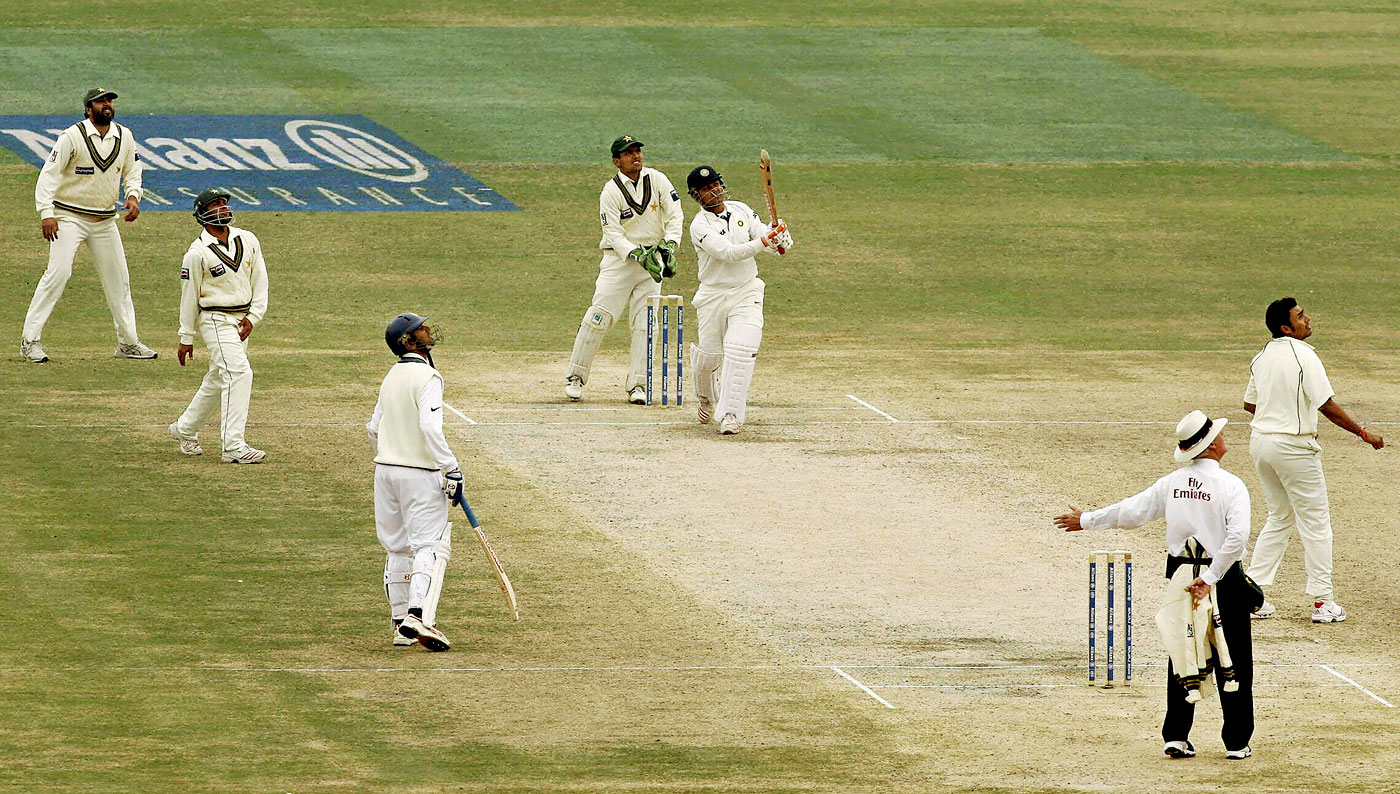
Going up: Sehwag constantly turned traditional batting concepts on their head © AFP


The heart wishes Virender Sehwag had retired after a rousing Test, his team-mates chairing him off the ground, the crowd bidding him adieu with a standing ovation. The mind understands that this was never going to come to pass, that Sehwag's days as an international cricketer were long past, and that he would tweet the news of his exit (as he had promised late last year) and be off without a fuss.

The end was as abrupt as it was apt. Not for him a press conference bathed in emotion, or a speech that tugged at heartstrings. There was no grand felicitation, there were no teary goodbyes. Instead he went his own way, wrapping up with a tweet that started "I hereby… " and a statement that began, "To paraphrase Mark Twain…"

None of this should come as a surprise; to have experienced Sehwag's career is to have come to expect the unexpected. During times when conventional wisdom advised circumspection, he would blast off. Where other batsmen shut shop a few overs before stumps, he saw it as an opportunity to pick off boundaries. When opposition captains pushed mid-off and mid-on back, he didn't look at it as a chance for singles; instead he was determined to launch the ball over the fielders' heads. Where team-mates used the services of a nightwatchman, he deemed it an insult ("If I can't play for 25 minutes, I'm not much of a batsman.")

Stories of Sehwag's counter-intuition are legion. He once charged a medium-pace bowler in a Ranji Trophy game, swished wildly, and missed by more than a foot. That in itself should come as no surprise, except, as his former team-mate Aakash Chopra wrote on this website, it was little but an act. On "one of the worst pitches", Sehwag was actually trying to mess with the bowler's length. Sure enough, the trick rattled the opponent. The next two balls pitched short. And Sehwag smashed two fours.


Paul Harris ended up the loser in his contest with Sehwag in 2008 © Getty Images


The common refrain while talking about Sehwag's batting is how his approach was so simple, how the see-ball-hit-ball approach served him so well. This, of course, is partly true - he has himself acknowledged the value of clearing all clutter from the mind - but it is also somewhat reductionist. Sehwag might not have analysed ground conditions and wagon wheels with a high level of granularity (and, back in 2006, he might not have known about Pankaj Roy and Vinoo Mankad's record partnership) but he was far from unschooled. He analysed his innings and dismissals, and spoke to those he respected about technical glitches, taking on advice from openers as varied in approach as Sunil Gavaskar and Kris Srikkanth. He enjoyed chatting with psychologist Rudi Webster (he was especially curious to hear about the early struggles of Viv Richards, whom Webster likened Sehwag to) and sometimes surprised team-mates by reeling off names of bowlers he had faced in stray innings.

Most significantly he was astute enough to constantly upend traditional approaches to batting. Where Sachin Tendulkar was bogged down, padding away Ashley Giles bowling over the wicket, Sehwag backed away and slashed; charged diagonally and slashed; and, in what was little short of a tight slap across the bowler's face, reverse-swept without a care in the world. None of this was blind slogging; it was a planned assault to disrupt a bowler's rhythm, nullifying his negative tactics. Six years on, when another left-arm spinner targeted his pads, Sehwag challenged him: "Come round the wicket and first ball I'll hit you for a six." Paul Harris - with a long-off, long-on, deep midwicket and a deep point - accepted the dare. And sure enough, the first ball soared over the sightscreen.

Such provocation wasn't merely an instinctive flash of bravado. Like the smartest of bowlers, Sehwag understood when to needle the opposition and when to send out a message by shutting up. Against Australia in Chennai in 2004, he made friendly small-talk with some fielders as he walked off after the first day's play. But come the end of the fourth day, with India chasing a tricky target, he pounded a drive past Glenn McGrath and strode off, chin up, with a raging sense of purpose. "You have to show the other team that you're here to win," he would later say of that unforgettable walk-off.


Fury Road: Sehwag set up India's record chase against England in Chennai in 2008 © AFP


It has often been pointed out that Sehwag averaged slightly over 30 in the third and fourth innings of Tests with just one hundred, a stat used to demonstrate his frailty under "scoreboard pressure". What is not highlighted as much is that he averaged a mighty 65.91 in the second innings of Tests, with 12 hundreds - many of which came after the opposition had piled on massive scores. When New Zealand amassed 630 in Mohali in 2003, Sehwag responded with 130; when South Africa piled on 510 in Kanpur in 2004, he answered with 164; when Pakistan erected 679 in Lahore in 2006, he blitzed 254; and when South Africa put on 540 in Chennai in 2008, he smoked the fastest Test triple-hundred. As important as it is to celebrate Sehwag the match-winner, it's vital to hail Sehwag the match-saver: the opening batsman who drew games not by playing out time but by rollicking along at berserker pace, eliminating threats of India following on.

What this meant was that, despite his poor fourth-innings record, teams were often hesitant to declare in the third innings, the fear of "what if Sehwag gets going?" never far from their calculations. There is no stat to quantify the psychological effect that Sehwag had on fielding teams but an Ian Chappell quote from 2005 sums up the sentiment: "Sehwag can change the course of a match with the ease of Moses parting the Red Sea".

Over the years there were a number of innings when Sehwag parted the metaphorical Red Sea, but the apex of match-changeability arrived on that December afternoon in 2008 - a month after the terrorist attacks in Mumbai - when England set India 387 for victory in Chennai. The odds were grim. No team had chased more than 155 at the ground and no team had achieved a fourth-innings target of more than 276 at any Indian venue.

None of this mattered to Sehwag. He had begun the fourth day by telling Ravi Shastri, "We could easily chase 300-plus against England," and then gone on to burn the batting manual, juddering a 68-ball 83 to fire-start the chase. There were rasping upper cuts and swirling sixes; the short balls ending up in the V between point and third man, the full ones in the V between square leg and midwicket. It was a kind of innings that galvanises the team to dare to dream; an innings that sends shock waves through the fielding side; and an innings that makes ten-year-olds want to reach for their bats, getting them hooked to the game for good.

Once the win was achieved, Tendulkar was asked about Sehwag's mighty eruption. "We are quite used to that," he said with a smile. "You kind of expect something which is not expected."

He may as well have been summing up a once-in-a-lifetime career.

Thursday, 22 October 2015

Why too much choice is stressing us out

Stuart Jeffries in The Guardian

Once upon a time in Springfield, the Simpson family visited a new supermarket. Monstromart’s slogan was “where shopping is a baffling ordeal”. Product choice was unlimited, shelving reached the ceiling, nutmeg came in 12lb boxes and the express checkout had a sign reading, “1,000 items or less”. In the end the Simpsons returned to Apu’s Kwik-E-Mart.

In doing so, the Simpsons were making a choice to reduce their choice. It wasn’t quite a rational choice, but it made sense. In the parlance of economic theory, they were not rational utility maximisers but, in Herbert Simon’s term, “satisficers” – opting for what was good enough, rather than becoming confused to the point of inertia in front of Monstromart’s ranges of products.

This comes to mind because Tesco chief executive Dave Lewis seems bent on making shopping in his stores less baffling than it used to be. Earlier this year, he decided to scrap 30,000 of the 90,000 products from Tesco’s shelves. This was, in part, a response to the growing market shares of Aldi and Lidl, which only offer between 2,000 and 3,000 lines. For instance, Tesco used to offer 28 tomato ketchups while in Aldi there is just one in one size; Tesco offered 224 kinds of air freshener, Aldi only 12 – which, to my mind, is still at least 11 too many.

Now Lewis is doing something else to make shopping less of an ordeal and thereby, he hopes, reducing Tesco’s calamitous losses. He has introduced a trial in 50 stores to make it easier and quicker to shop for the ingredients for meals. Basmati rice next to Indian sauces, tinned tomatoes next to pasta.

What Lewis is doing to Tesco is revolutionary. Not just because he recognises that customers are time constrained, but because he realises that increased choice can be bad for you and, worse, result in losses that upset his shareholders.
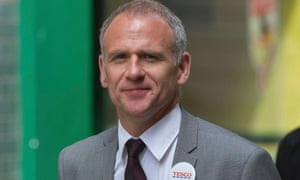

Scrapping 30,000 products ... Tesco chief executive Dave Lewis is streamlining the supermarket experience. Photograph: Neil Hall/Reuters

But the idea that choice is bad for us flies in the face of what we’ve been told for decades. The standard line is that choice is good for us, that it confers on us freedom, personal responsibility, self-determination, autonomy and lots of other things that don’t help when you’re standing before a towering aisle of water bottles, paralysed and increasingly dehydrated, unable to choose. That wasn’t how endless choice was supposed to work, argues American psychologist and professor of social theory Barry Schwartz in his book The Paradox of Choice. “If we’re rational, [social scientists] tell us, added options can only make us better off as a society. This view is logically compelling, but empirically it isn’t true.”

Consider posh jams. In one study cited by Schwartz, researchers set up two displays of jams at a gourmet food store for customers to try samples, who were given a coupon for a dollar off if they bought a jar. In one display there were six jams, in the other 24: 30% of people exposed to the smaller selection bought a jam, but only 3% of those exposed to the larger selection did.

Now consider – and there’s no easy way to say this – your pension options. Schwartz found that a friend’s accounting firm was offering 156 different retirement plans. Schwartz noted that there was a shift of responsibilities from employer to employee in this seemingly benign transfer of choice: “When the employer is providing only a few routes to retirement security, it seems important to take responsibility for the quality of those routes. But when the employer takes the trouble to provide many routes, then it seems reasonable to think that the employer has done his or her part. Choosing wisely among those options becomes the employees’s responsibility.”


Posh jam conundrum ... too many options can be baffling. Photograph: Graham Turner for the Guardian

But that’s the problem. Which of us, really, feels competent to choose between 156 varieties of pension plan? Who wouldn’t rather choose to lie in a bath of biscuits playing Minecraft? And yet, at the same time, we are certain that making a decision about our workplace pensions is an important one to get right. But instead of making that choice, Schwartz says, many defer it endlessly. One of his colleagues got access to the records of Vanguard, a gigantic mutual-fund company, and found that for every 10 mutual funds the employer offered, rate of participation went down 2% – even though by not participating, employees were passing up as much as $5,000 a year from the employer who would happily match their contribution.

But even if we do make a choice, Schwartz argues, “we end up less satisfied with the result of the choice than we would be if we had fewer options to choose from”. When there are lots of alternatives to consider, it is easy to imagine the attractive features of alternatives that you reject that make you less satisfied with the alternative that you’ve chosen.

Increased choice, then, can make us miserable because of regret, self-blame and opportunity costs. Worse, increased choice has created a new problem: the escalation in expectations. Consider jeans. Once there was only one kind, says Schwartz – the ill-fitting sort that, fingers-crossed, would get less ill-fitting once he wore and washed them repeatedly. Now, what with all the options (stone-washed, straight-leg, boot-fit, distressed, zip fly, button fly, slightly distressed, very distressed, knee-holed, thigh-holed, knee and thigh-holed, pretty much all holes and negligible denim), Schwartz feels entitled to expect that there is a perfect pair of jeans for him. Inevitably, though, when he leaves the store, he is likely to be less satisfied now than when there were hardly any options.


In the good old days there was just one kind of jeans ... Photograph: Ben Margot/AP

Schwartz’s suggestion is that, at a certain point, choice shifts from having a positive relationship with happiness to an inverse one. So, what’s the answer? “The secret to happiness is low expectations,” he says, sensibly.

No wonder, then, we aren’t happy. In the 10 years since Schwartz wrote his book, the ideology of unlimited choice has expanded into unlikely areas – schools, sex, parenting, TV – and expectations have risen as a result. Equally importantly, new tactics have developed to help consumers deal with the downsides of choice. For instance, Schwartz notes, there is an increasing reliance on recommendation engines to help people cope with choice. “The internet hath created a problem that it is now trying to solve,” he says.

One of the areas affected is dating. Relationships are being treated like any other product – online we can browse and compare prospective sexual partners.

“I think dating sites are now the most common path for meeting romantic partners, and the overwhelming amount of choice that dating sites have created is a real problem,” says Schwartz. One of those problems was noted by the comedian Aziz Ansari in his book Modern Romance. In it, a woman recounts meeting a man on the dating app Tinder, then spending the journey to their first date swiping through the service to see if anyone better was available. Failure to commit to a date or a relationship can itself be a choice – indeed, the sociology professor who helped Ansari with his book, Eric Klinenberg, wrote Going Solo: The Extraordinary Rise and Surprising Appeal of Living Alone to account for those who have stepped off the treadmill of dating, the nightmare of having more choice but less reason to choose. Hence, too, Japan’s soshoku danshi or herbivore men who, so corrupted by the endless choices offered by online pornography, are no longer interested in real sex or romantic relationships. Psychologist Philip Zimbardo fears that, thanks to how online pornography is offering more choices for masturbatory satisfactions, becoming more interactive and immersive, choosing real-life romantic relationships will become even less appealing.


BT vying with Sky for football coverage is good news, right? Not necessarily ... Photograph: Rex Shutterstock

There’s another problem with choice: it can be more apparent than real – that is, a seeming increase in choice masks the fact that you’re paying more for the same stuff you had before. My Guardian colleague Barney Ronay identified this when he considered football on TV recently. The ostensibly good news is that BT Sport is competing with Sky for football rights. It now exclusively shows European Champions League football, which should mean more choice, lower customer outlay and more joy, shouldn’t it? But if you are already a Sky Sports subscriber (or, perhaps more pertiniently, watched the free-to-air games on ITV), it means the opposite. If Barney wants to watch the same amount of football as last year, he will now have to pay more.

That sort of phenomenon repeats itself across TV more generally. To watch all the good stuff on TV now involves paying money in the form of monthly subscriptions to Amazon Prime, Netflix, Sky, BT and Blinkbox, as well as having a Freeview box. But who can afford that kind of outlay? A decade ago everything you could ever wish to watch was on Sky (if you were prepared, admittedly, to pay a monthly subscription to Murdoch). A decade before that, all good TV was on terrestrial, so once you had paid for the telly and the licence you were set. What is sold to us as increased choice has thus made us poorer and, if Ronay’s experience is anything to go by, more disappointed. As Ronay says: “for the captive consumer this isn’t really a proper choice at all, but an opportunity to spend the same and get less, or alternatively spend more and get the same.”



UK TV: how much does it cost to watch everything?


Anger at this state of affairs is comprehensible to anyone who lives in an advanced western society in 2015 and has to choose between mobile phone plans, schools, and water, gas and electricity suppliers – not to mention minimally distinguishable prospective dates. Admittedly these are the choices typical of decadent westerners in the era of late capitalism, but that thought doesn’t make the burden of choice any easier to bear.

Consider electricity, says Professor Renata Salecl, author of The Tyranny of Choice. “Privatisation of electricity did not bring the desired outcome – lesser prices, better service – however, it did contribute to the anxiety and feeling of guilt on the side of the consumers. We feel that it is our fault we are paying too much and we are anxious that a better deal is just around the corner. However, while we are losing valuable time doing research on which provider to choose, we then stop short of actually making the choice.”

So we do nothing, and corporations profit from this inertia.

All of this confounds the idea that human beings act in such a way that they maximise their wellbeing and minimise their pain. “People often act against their wellbeing. They also rarely make choices in a rational way.”

The political idea of allowing parents to choose between schools was to apply the presumed rigour of the market to education so that underperforming schools would improve or close. Standards would rise and formerly illiterate brats in key stage II would relax after double quantum physics by dancing around the maypole singing settings of Horace’s verse in Latin, just like in Michael Gove’s dreams.
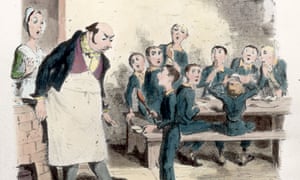


 Education has become a consumer good, and could all go wrong ... Illustration from Charles Dickens’ Oliver Twist. Mansell/Time Life Pictures/Getty Images

So education has become a consumer good, and my daughter’s is something I’m encouraged to think about as though it were a trip to the shops to buy shoes. Can I buy the best education for my daughter, possibly by moving house, lying about my real address or selling a kidney for private schooling? I’m not sure, but one thing I am becoming increasingly convinced of is what Salecl says: “Ideology that convinces us that everyone can make it if only he or she makes the right choice relies on blindness – we do not see that social constraints stop us making out of our lives what we wish for. And when we think about choice as a primarily individual matter, we also become blind about broader social, political choices.”

What she means, I think, is that the ideology of choice makes us forget that some things shouldn’t be bought and sold, and they are the most important things of all. What’s more, having made a decision, we don’t want to hear we have got our choices wrong. “We are constantly under the impression that life choices we made after careful planning should bring us expected results – happiness, security, contentment – and that with better choices, traumatic feelings that we have when dealing with loss, risk and uncertainty can be avoided.” No wonder, then, that Slacel’s most recent work is on the power of denial and ignorance. “When people are overwhelmed by choice and when they are anxious about it, they often turn to denial, ignorance and wilful blindness.”

Schwartz demurs, arguing that some extensions of choice can be a good thing. When I tell him about the preponderance of academies and free schools that, seemingly, increase choice for British parents, he says a similar phenomenon, charter schools, has arisen in the US. “There is something good about this, since public education in much of the US is dreadful, and competition might make it better. But there is no doubt it is stressing parents out big time.”

As with choosing a pension, choosing a school leaves scope for regret, shame and fear of missing out. And, in extremis, the terrifying sense that I might inadvertently choose an option that will mess up my daughter’s future.
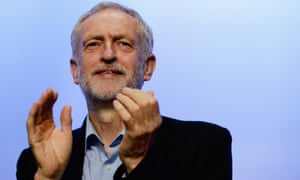

Challenging the rhetoric of choice ... Jeremy Corbyn. Photograph: Mary Turner/Getty Images

In 2015, though, there are counter-tendencies to the stress-inducing extension of choice. Not only is Tesco reducing its number of products, but the new leader of the Labour party has just been elected on a political platform that, in part, challenges the rhetoric of choice. Jeremy Corbyn proposes to renationalise not just the rail network but public utilities (gas, electricity and water), partly in the hope that the reduction of choice will provide a fairer, less anxiety-inducing experience for their users.

Perhaps, Corbyn’s political philosophy suggests, what we need is not more choice, but less; not more competition but more monopolies. But before you counter with something along the lines of “Why don’t you go and live in North Korea, pinko?” consider this: Paypal founder Peter Thiel argues that monopolies are good things and that competition, often, doesn’t help either businesses or customers. “In the real world outside economic theory, every business is successful exactly to the extent that it does something others cannot. Monopoly is therefore not a pathology or an exception. Monopoly is the condition of every successful business.” Competition, in short, is for losers.

That, of course, doesn’t mean that successful capitalists like Thiel would be supporting Corbyn in his plan to recreate the state monopolies of yore or submit schools once more to local education control, but it does mean the rhetoric of choice and competition is at least being challenged and not only from the political left.

“At least we are talking about a political and economic choice,” says Salecl, “and are not simply following the ‘desires’ of the market.” Perhaps: if she’s right about that, then we are opting for something we haven’t done for a long time.
Tuesday, 20 October 2015

Adil Rashid's England leg-spin ignites the hopes of cricket's romantics

Vic Marks in The Guardian


All hail Adil Rashid! Not because he is suddenly the spinning messiah that we have all been craving since the retirement of Graeme Swann, but because he has survived.

Rashid will play in the next Test in Dubai and there should be a spring in his step. During his debut he probably had better things to do than wonder whether he might become England’s Bryce McGain, the Australian leg-spinner, who made his debut in Cape Town in 2009. It didn’t go frightfully well for Bryce, 18-2-149-0, though there must – in the manner of Chris Cowdrey – be a damn good after-dinner routine there somewhere.

It looked a bit bleak for Rashid after 34-0-163-0 in the first innings at Abu Dhabi – at least Bryce conjured a couple of maidens against South Africa. In these circumstances a Test match becomes an eternity. When will the next chance come around to make a contribution? But Rashid managed to hold his nerve. As he waited there was consolation in the fact that none of the other spinners were taking wickets. Then, when he was tossed the ball again, the batsmen were surprisingly under a bit of pressure; the ball gripped and once the hurdle of that first wicket had been leapt, something clicked to the tune of 5-64.

Whereupon leg-spinners around the world, whether amateur or professional, rejoiced – for they are a breed apart; they have a peculiar bond like wicketkeepers (“Do you want to have a look at my new inner gloves?” “Ooh, yes please.”) They recognise the tightrope that they have to walk every time the ball is tossed in their direction. By comparison finger-spinning is a low-risk doddle.

 It is probably inadvisable for aspiring youngsters to study the history of English leg-spin since any research might persuade them to give up forthwith and bowl some medium-pacers instead. Last week the name of Tommy Greenhough of Lancashire was recalled for the first time in a while, since he was the last English leg-spinner to take five wickets in a Test match – in 1959.

Since then the specialists have been Robin Hobbs (12 wickets in seven Tests at 40 apiece), Ian Salisbury (20 wickets at 76 in 15 Tests), Chris Schofield (two Tests against Zimbabwe but no wickets) and Scott Borthwick, who has four wickets in his solitary Test at Sydney at an impressive average of 20, but who realistically is only likely to resurface at the top level if he bats in the first six. In the 60s there were the gifted casuals such as Bob Barber (42 wickets) and Ken Barrington (29), batsmen who could bowl. On this evidence there is not much encouragement for English wrist-spinners. Yet still leg-spinners prompt much wish fulfilment among the romantics.

There was great excitement when Salisbury took five wickets in his first Test match at Lord’s in 1992 against Pakistan, but that would be his best effort over the eight-year span of his Test career. Dear old Christopher Martin-Jenkins spent ages advancing his cause but in the end even he had to acknowledge that it wasn’t working. Salisbury, by the way, after coaching at county level for a while, is now doing some fine work with England’s Physical Disability Squad. He spoke movingly at the Cricket Writers’ lunch about how fulfilling this role was for him, let alone those he has been coaching.

There is the same yearning for Rashid to succeed. This is understandable, for wrist-spin is a glorious art to behold. The googly duping an unsuspecting batsman is a wonderful sight from most perspectives – though not all. Here writes a man, who padded up rather ineffectively to Abdul Qadir’s googly on his Test debut at Headingley only to hear the ball clunk on to off stump.

Later in Pakistan the mysteries of Qadir remained indecipherable. After a torrid time batting against him in a Test at Karachi, one journalist, Pat Gibson, who would become a valued colleague and guide, unkindly noted in his copy: “I don’t know what Marks read at Oxford … but it certainly wasn’t wrist spin.” Eventually I did score some runs against Qadir but only on flat, slow pitches later in the series – by adopting a West Country version of French cricket.

Qadir was a brilliant, exuberant bowler with all the varieties of the traditional wrist-spinner. The ball would fizz down often prompting this kind of thought process among callow batsmen. “Whoopee! He’s bowled me a full toss. Where shall I hit it? Hang on; it’s dipping. Not to worry. It’s a juicy half-volley. No problems here. Oh no … it keeps on dipping … where’s the damn thing going to pitch? Where’s it gone?”

The best spin bowlers obviously get the ball to turn off the pitch, but their greatest attribute is to make the ball dip in such a way that the batsmen cannot judge the length. Shane Warne in his pomp got the ball to swerve in to the right-hander menacingly. So did Qadir. And on a very good day so might Rashid. The extra spin that the wrist can impart enables the back of the hand men to find more “dip”. But this is such a difficult art to master.

I was impressed by Rashid when he was interviewed by Mike Atherton, another leg-spinner, after the game in Abu Dhabi. He was quite matter-of-fact, as if his Test match ordeal was a commonplace occurrence for a wrist spinner. He rejected the notion that he would have to bowl quicker in Test cricket (in fact he propels the ball at similar pace to Warne). And that sounded sensible to me. It might be lovely if Rashid could bowl at 53mph or more but the fact is that he has been bowling around the 47-49 mph mark throughout his career. That is his natural pace. It would make no sense for him to overhaul his method now because he has finally been promoted to Test level. Only the very best spinners can operate at significantly different paces according to the conditions.

For the moment Rashid has to stick to what he knows. Indeed for some bowlers it is almost impossible to change one’s natural pace significantly. This clearly applied to Monty Panesar, who was always less effective when he tried to bow to those yearning for him to bowl slower. In Dubai Rashid may be more relaxed now.

Meanwhile Alastair Cook is learning how best to use him. Rashid rarely operates as a stock bowler in the first innings of the match when playing for Yorkshire so he’s unlikely to be good at that for England against better players. Currently it is hard to imagine him as a solitary spinner in the Test team. We should not expect too much from him at this stage of his international career. This may make him seem like a luxury, someone who has to be protected sometimes. Hard-nosed coaches and pundits tend to be wary of such players – until the last two days of the game when the ball starts to misbehave and there’s a match to be won.

Osborne is all for renationalisation – so long as the nation isn’t Britain

Aditya Chakrabortty in The Guardian

Steel yourself, for an unlikely source is about to spout a highly unfashionable idea. This week, George Osborne will come out for renationalisation.

You won’t hear the N-word from his lips, of course. Nor shall the chancellor go full Corbyn and seize some of the FTSE’s crown jewels. Instead, you can expect something far more in keeping with the spirit of 21st-century Britain. The government will indeed put some of our most vital infrastructure under state control – but the states in question will be France and China.

At some point during this week’s visit of president Xi Jinping – perhaps sandwiched between lunch at the palace and a trip to Chequers – Osborne shall confirm that nuclear plants will be built at Hinkley in Somerset and Sizewell in Suffolk, by the energy giant EDF, nearly 85% owned by the French government, and China. What’s more, Beijing will get a shot at designing and building its own nuclear facility at Bradwell in Essex.


Britain has made 'visionary' choice to become China's best friend, says Xi


Even as that announcement is made with all the fanfare available to the British state, the promises of privatisation will be revealed as lies. What were voters guaranteed by Margaret Thatcher and John Major, as they flogged off electricity and the rest of our publicly-owned utilities? More competition, lower bills and greater investment: all the plump fruit of a more dynamic capitalism.

A generation later and their children, David Cameron and Osborne, are handing Britain’s nuclear future back to the public sector – of two foreign countries – and paying handsomely for the privilege.

Take Hinkley, which at £24.5bn will cost as much as the London Olympics, Crossrail and a new terminal at Heathrow put together. Osborne will proudly blare that taxpayers aren’t chipping in a penny towards the costs. True enough, but his civil servants will quietly admit that we are guaranteeing up to £17bn of the total cost. In the screwy logic of Britain’s renationalised capitalism, the public assumes the risk while the corporations get to scoop the profits.

Because rest assured, there will be profits – all of us will be making sure of that. To secure EDF as a builder, Cameron guaranteed a fixed price for electricity from Hinkley of £92.50 per megawatt hour. That is around double the going rate for electricity on the wholesale markets, a price so high that equity analysts term it“financial insanity”. Change your supplier as often as you like, you and everyone else in Britain will be paying for that de facto subsidy in your electricity bills for decades to come. Britons will in effect be paying more for their energy so that French households can pay less. Indeed, so generous are the terms of this deal that the government of Austria is currently taking Britain to court on the grounds that it’s handing out state aid to EDF.


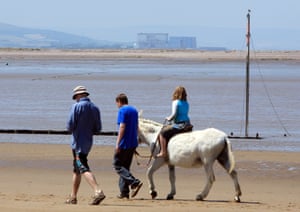
Holidaymakers in Burnham-on-Sea, Somerset, across from Hinkley Point nuclear power station. Photograph: SWNS.com

Yes, you read that last sentence right: the UK stands accused of dispensing state aid – to another state. How many times have you read about some age-old manufacturer and thousands of jobs going down the swanee, while ministers wrung their hands over European state aid rules? Now we know that such rules can be tested – provided the recipient is headquartered not in Port Talbot, but Paris.

When questioned about these eye-watering numbers, ministers will inevitably defend them as a price worth paying to stop the lights going out. But like the sanctity of the state-aid regulations, this is a bogeyman deployed to shut down conversation. True, Britain has a clapped-out generating system. Realistically, the price we face for that is not our TVs going dark in the middle of Gogglebox, or our smartphones no longer charging, but paying a lot more for our electricity. Except, with Hinkley, we’re guaranteed to be paying a lot more anyway.

As James Meek points out in his prize-winning book Private Island, the publicly owned energy-generating system was in very good nick, enjoying both investment and domestic engineering expertise. A generation of privatisation has seen off both of those. Sue Ion, a fellow of the Royal Academy of Engineering who has spent over 30 years in nuclear power, says, “We have no capacity to make a reactor design from scratch.”

Hinkley’s boss, Nigel Cann, boasted to this paper last year of the thousands of local jobs his plant would bring. He gave just one example: “We’ve already seen a local food co-op … set up in preparation for feeding what we estimate to be the 25,000 people” who’ll move through the site. One insider predicts that the British will largely be employed “digging ditches, laying concrete and running the pie wagon”. The big-boy jobs will go to those calling the shots – that is, the French and the Chinese.

A share-owning democracy, Thatcher promised, as she auctioned off BT. Britons were about to be put in charge of their economy. Another fib: in 1981, ordinary Britons owned over 25% of the stock market; they now hold less than half that.

She offered a capitalism in which private firms took risks and reaped rewards, while the customer benefited. What she delivered was very different. A system in which you can’t get 3G on trains, can’t rely on broadband or buses in the countryside, and in which train operators and energy firms compete not on service – but on how many tariffs they can bamboozle customers with. In which parastatal organisations from France and China, Germany and the Netherlands take an easy clip from ordinary British customers and plough the bare minimum back. This isn’t a dynamic capitalism, it is lazy, arthritic and very expensive.

And still Whitehall and Westminster, and their mini-mes in town halls up and down the country, carry on down the same road. Cameron proposes to sell anything left in the cupboard, even old student loans. Civil servants let Redcar and thousands of steel jobs go down the drain, as they lend millions to Roman Abramovich to keep his foreign steel plant going.

Nuclear power is merely the punchline to this whole rotten joke. We won’t build it, we won’t own it, we certainly won’t control it. But we will pay for it: in lost jobs, in vanishing taxes, in whopping great winter fuel bills.