Search This Blog

Monday, 29 May 2017

‘We’re in an even deeper malaise’: Many of Modi’s right-wing liberal supporters are now disappointed

Shoaib Daniyal in Scroll.in

As chief minister of Gujarat, Narendra Modi was a highly polarising figure. Due to the 2002 anti-Muslim riots that took place on his watch, Modi was anathema to leftists, liberals and even to a section on the right. After the riots, Atal Bihari Vajpayee, the Bharatiya Janata Party prime minister at that time, himself wanted Modi sacked as chief minister.
Yet, as the general election of 2014 approached, Modi’s base expanded. As the prime ministerial candidate, Modi ran a powerful campaign that focused on economic growth, limited government and liberalisation. The communal polarisation that had kept him in power in Gujarat was rarely addressed. Coming after the moribund United Progressive Alliance-II government, Modi presented an attractive economic pitch to many right-wing liberals.

The utilitarian approach

The mood of many right-wing liberals was captured by a much-discussed Gurcharan Das piece that was published in April, 2014, a few weeks before the election results were due. In his piece, Das, former CEO of Procter & Gamble, India, and an author and columnist, juxtaposed Modi’s communalism versus his promise of reform thus:
“There is a clear risk in voting for Modi — he is polarising, sectarian and authoritarian. There is a greater risk, however, in not voting for him. It is to not create jobs for 8-10 million youth that enter the market each year…There will always be a trade-off in values at the ballot box and those who place secularism above demographic dividend are wrong and elitist.”
As a thesis, this was utilitarian in the extreme. Das was not absolving Modi of the communal stain. He was simply saying it was outweighed by the benefits Modi would bring as an economic reformer. Three years down the line, how well has this bargain worked?

One end of the bargain

Novelist and political commentator Aatish Taseer said that his initial assessment of Modi was off the mark. “In 2014, I expected a mixture of economic vitality and chauvinism with Modi, but I was wrong,” said Taseer. “What India got was only chauvinism – and now we’re in an even deeper malaise”.
Taseer’s point is backed by data. In 2014, Das was clear that job creation was a moral imperative that outweighed ideals such as secularism. However, this argument is under severe strain three years later, given that job creation has ground to a halt under the Modi administration. India’s unemployment rate has actually increased since the Bharatiya Janata Party-led government took office. The number of jobs added by the Modi government in its three years in office is just 50% of the jobs added by the previous Manmohan Singh government in its final three years.
Even as the Modi government is unable to live up to its promise on increasing employment, it has also slipped on its promise of small government. In 2014, Modi ran for prime minister with the slogan “maximum governance, minimum government” – a thrilling prospect for India’s economic liberals, given how rare the concept is in India. Yet, as right-wing commentator Rupa Subramanya pointed out in a piece last month, the Modi-led Union government is “starting to slip back into the old command and control mode and away from the promise of good governance”.
Earlier this week, clashes erupted between Dalits and Thakurs in Saharanpur, UP. (Photo credit: PTI).

Religious identity politics

Even as the vast majority of India’s population stagnates economically, religious identity has emerged as the main axis of Indian politics. For the past three years, politics around the cow has taken centre stage, with vigilante groups attacking Muslims and Dalits across the country on the suspicion of cattle smuggling and slaughter.
Political columnist Tavleen Singh supported Modi in 2014. Yet, on May 7, Singh wrote,
“It is hard to understand why a Prime Minister so passionate about making India a modern, digital, prosperous country has seemingly not noticed that hunting and killing Muslims on the pretext of cows and love jihad does not sit well with modernity.”
Speaking to Scroll.in, Singh said, “I think I misjudged him. I thought he was a liberaliser.”
In Swarajya, a magazine that describes itself as “a big tent for liberal right of centre discourse”, senior journalist Seetha argued that right-wing liberals are “disappointed at his [Modi’s] inability to get the BJP-ruled state governments to rein in the hardline/fringe elements and vigilante groups”.
Seetha specifically called out the appointment of the far right Adityanath as the chief minister of Uttar Pradesh in March to buttress her point.

Hobson’s choice

Gurcharan Das, though, is still sticking to his 2014 analysis. “Jobs are plummeting all over the world,” argued Das, defending Modi’s poor job-creation record. “This is due to automation. I am not sure what other policies could have been pursued to make it better.”
Das is also sanguine about the BJP’s record on law and order. “Yes, there have been stray events such as gau rakshak attacks,” he said. “There has been no sort of state-planned murder or anything.”
Das is disappointed with the fact that Modi has been unable to raise India’s ease of doing business ranking but said, overall, he would still support the BJP were he given a chance to turn back the clock to 2014. “There is nobody else,” explained Das.
The TINA or “there is no alternative” argument, however, is something that punctuates most critiques of Modi from his right-wing liberal supporters.
“Modi and the BJP is still the best option,” said Tavleen Singh. “Compare him with Nitish [Kumar], Lalu [Yadav] or Rahul Gandhi. That is why he wins; because the voter can see he is the best option.”

Liberal irrelevance

In the end, the fact that Modi can coolly ignore his right-wing liberal supporters and still end up being backed by them might serve to illustrate how increasingly irrelevant India’s tiny liberal elite – both right and left – are becoming to the political discourse. Maybe nothing captures this better than the Union government’s demonetisation of Rs 500 and Rs 1,000 banknotes late last year. The move went against every liberal principle of limited government and had few economic benefits. Sadanand Dhume, a Wall Street Journal columnist and a prominent supporter of Modi during the 2014 elections called the move a “debacle”.
Yet, Modi simply brushed aside this criticism and converted what was an economic disaster into a political windfall. Months after demonetisation was announced, the BJP won a landslide victory in India’s most populous state, Uttar Pradesh. If 2014 saw a provisional alliance between right-wing liberals and Hindutva groups, three years since, it is clear that right-wing liberals are getting increasingly marginalised. For the last two years of the Modi adminstration’s term, it seems the Hindutva right will call the shots within the BJP.
Sunday, 28 May 2017

When algorithms are racist

Ian Tucker in The Guardian


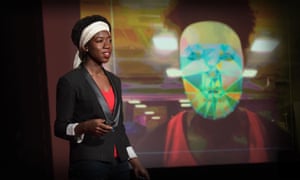
Joy Buolamwini is a graduate researcher at the MIT Media Lab and founder of the Algorithmic Justice League – an organisation that aims to challenge the biases in decision-making software. She grew up in Mississippi, gained a Rhodes scholarship, and she is also a Fulbright fellow, an Astronaut scholar and a Google Anita Borg scholar. Earlier this year she won a $50,000 scholarship funded by the makers of the film Hidden Figures for her work fighting coded discrimination.


A lot of your work concerns facial recognition technology. How did you become interested in that area?

When I was a computer science undergraduate I was working on social robotics – the robots use computer vision to detect the humans they socialise with. I discovered I had a hard time being detected by the robot compared to lighter-skinned people. At the time I thought this was a one-off thing and that people would fix this.

Later I was in Hong Kong for an entrepreneur event where I tried out another social robot and ran into similar problems. I asked about the code that they used and it turned out we’d used the same open-source code for face detection – this is where I started to get a sense that unconscious bias might feed into the technology that we create. But again I assumed people would fix this.

So I was very surprised to come to the Media Lab about half a decade later as a graduate student, and run into the same problem. I found wearing a white mask worked better than using my actual face.
This is when I thought, you’ve known about this for some time, maybe it’s time to speak up.


How does this problem come about?


Within the facial recognition community you have benchmark data sets which are meant to show the performance of various algorithms so you can compare them. There is an assumption that if you do well on the benchmarks then you’re doing well overall. But we haven’t questioned the representativeness of the benchmarks, so if we do well on that benchmark we give ourselves a false notion of progress.

When we look at it now it seems very obvious, but with work in a research lab, I understand you do the “down the hall test” – you’re putting this together quickly, you have a deadline, I can see why these skews have come about. Collecting data, particularly diverse data, is not an easy thing.
Outside of the lab, isn’t it difficult to tell that you’re discriminated against by an algorithm?

Absolutely, you don’t even know it’s an option. We’re trying to identify bias, to point out cases where bias can occur so people can know what to look out for, but also develop tools where the creators of systems can check for a bias in their design.

Instead of getting a system that works well for 98% of people in this data set, we want to know how well it works for different demographic groups. Let’s say you’re using systems that have been trained on lighter faces but the people most impacted by the use of this system have darker faces, is it fair to use that system on this specific population?

Georgetown Law recently found that one in two adults in the US has their face in the facial recognition network. That network can be searched using algorithms that haven’t been audited for accuracy. I view this as another red flag for why it matters that we highlight bias and provide tools to identify and mitigate it.


Besides facial recognition what areas have an algorithm problem?


The rise of automation and the increased reliance on algorithms for high-stakes decisions such as whether someone gets insurance of not, your likelihood to default on a loan or somebody’s risk of recidivism means this is something that needs to be addressed. Even admissions decisions are increasingly automated – what school our children go to and what opportunities they have. We don’t have to bring the structural inequalities of the past into the future we create, but that’s only going to happen if we are intentional.


If these systems are based on old data isn’t the danger that they simply preserve the status quo?
Absolutely. A study on Google found that ads for executive level positions were more likely to be shown to men than women – if you’re trying to determine who the ideal candidate is and all you have is historical data to go on, you’re going to present an ideal candidate which is based on the values of the past. Our past dwells within our algorithms. We know our past is unequal but to create a more equal future we have to look at the characteristics that we are optimising for. Who is represented? Who isn’t represented?

Isn’t there a counter-argument to transparency and openness for algorithms? One, that they are commercially sensitive and two, that once in the open they can be manipulated or gamed by hackers?

I definitely understand companies want to keep their algorithms proprietary because that gives them a competitive advantage, and depending on the types of decisions that are being made and the country they are operating in, that can be protected.

When you’re dealing with deep neural networks that are not necessarily transparent in the first place, another way of being accountable is being transparent about the outcomes and about the bias it has been tested for. Others have been working on black box testing for automated decision-making systems. You can keep your secret sauce secret, but we need to know, given these inputs, whether there is any bias across gender, ethnicity in the decisions being made.


Thinking about yourself – growing up in Mississippi, a Rhodes Scholar, a Fulbright Fellow and now at MIT – do you wonder that if those admissions decisions had been taken by algorithms you might not have ended up where you are?

If we’re thinking likely probabilities in the tech world, black women are in the 1%. But when I look at the opportunities I have had, I am a particular type of person who would do well. I come from a household where I have two college-educated parents – my grandfather was a professor in school of pharmacy in Ghana – so when you look at other people who have had the opportunity to become a Rhodes Scholar or do a Fulbright I very much fit those patterns. Yes, I’ve worked hard and I’ve had to overcome many obstacles but at the same time I’ve been positioned to do well by other metrics. So it depends on what you choose to focus on – looking from an identity perspective it’s as a very different story.

In the introduction to Hidden Figures the author Margot Lee Shetterly talks about how growing up near Nasa’s Langley Research Center in the 1960s led her to believe that it was standard for African Americans to be engineers, mathematicians and scientists…

That it becomes your norm. The movie reminded me of how important representation is. We have a very narrow vision of what technology can enable right now because we have very low participation. I’m excited to see what people create when it’s no longer just the domain of the tech elite, what happens when we open this up, that’s what I want to be part of enabling.

British voters support every point on it, but the public square echoes with summary dismissal - The mystery of Jeremy Corbyn

Tabish Khair in The Hindu


How does one account for the fact that most U.K. voters support every point of the Labour manifesto, but the Tories, despite fumbles, are still leading in opinion polls by about 10 percentage points?

It is two weeks since the Labour manifesto was ‘leaked’. Immediately all the tabloids and most of the broadsheets went to town decrying the manifesto. It is the “second-longest suicide note in history”, they scoffed.

The hara-kiri reference was to the disastrous and divisive Labour manifesto of 1983, dubbed the “longest suicide note in history”. It is not an accurate reference. This 2017 manifesto is not protectionist like the 1983 one, and it promotes very restrained nationalisation. Moreover, the 1983 Labour manifesto was anti-Europe, anti-NATO (North Atlantic Treaty Organisation), and uncompromisingly pacifist.


Not quite a ‘suicide note’


The 2017 manifesto is not anti-NATO; it even endorses NATO’s defence requirements. Jeremy Corbyn, the Labour leader, has repeatedly explained that sometimes collective military interventions can be justified, though he has also criticised the hasty wars of recent years.

Similarly, his plan to nationalise the railway services is not necessarily an ‘old-fashioned leftist idea’. It is a bid to bring government-controlled railways back onto a level playing field, thus undercutting the monopolies of private companies and providing commuters with more options. Most voters support this, as they do his plans to abolish education fees, provide more and cheaper housing, and improve the National Health Service. And yet Corbyn is expected to lose — narrowly by some sympathisers, hugely by his opponents. Why is that so?

Some of it has to do with Corbyn. He comes across as a severely honest but uncharismatic leader from the past, someone who engages with ideas (whether you agree or disagree with them) and not sound bites. The media does not like such politicians, as we know in India too. They provide boring copy.

The problem facing Labour is that of credibility: voters agree with their manifesto, but they do not believe it can be implemented. This is especially true of the ‘middle’ voters, who usually sway elections: many of them feel that Mr. Corbyn is idealistically leftist.


Deviating from core principles

It has to be said in Mr. Corbyn’s defence that for decades Labour has been diluting its pro-worker platform and the Tories increasing or sustaining their free-market platform.
This has not been held against the Tories by many in the ‘middle’, while Labour, because of its compromises, has lost ground to the far right, even when it has won elections.

It is also a morbid world in which many ‘middle’ voters feel that something absolutely necessary for citizens cannot be done for fear of offending capital!
Surely, a nation is not a corporation or an individual, both of which can go bankrupt, and a politician’s first responsibility is to citizens?

In that sense, Mr. Corbyn’s manifesto is a gamble — to attract more ordinary voters back into the folds of Labour, on the assumption that concrete policies will count for more than xenophobic rhetoric for many of them.

But are the policies outlined by Mr. Corbyn ‘sustainable’? Many papers and all tabloids seem to claim that they are not.

One way to answer this is to look at the general outline of what Mr. Corbyn is promising: he is promising to “transform” the lives of ordinary Britons. This, in effect, was also what Donald Trump had promised the Americans, and both Marine Le Pen and Emmanuel Macron had promised the French.

Interestingly, at least some of the tabloids that have dismissed Mr. Corbyn’s promise were far less critical of similar claims to shake the cart by Mr. Trump. As interestingly, Mr. Trump, Mr. Macron (at least until he got elected) and Ms. Le Pen, in very different ways, had offered less concrete policies to induce us to believe that they could make any significant dent in the status quo.

Mr. Corbyn’s 2017 manifesto has clearer ideas: a pledge not to increase middle class taxes but to tax the top 5% more heavily, action to shrink the growing wage gap between employees and top management, a better housing policy than the Tories, etc. Even his position on the European Union seems to be more concrete than Tory leader Theresa May’s vacuous statement, redolent of colonial hubris, that she will be a “bloody difficult woman” during Brexit negotiations!


The media’s role

It remains perfectly valid to ask whether these Labour measures are enough or fully ‘sustainable’, but that is not what is being done by much of the U.K. media. Instead, the very effort is being dismissed.

Is it the case that, being paid huge salaries by the neo-liberal dream, which is becoming a nightmare for many, British media leaders (who are not necessarily editors) do not wish to question its myths. Especially the cardinal myth that ‘national bankruptcy’ can be avoided only by passing on public debts to individuals, as private debts, while nationally subsidising banks and corporations.

Friday, 26 May 2017

India: The bleak new academic scenario

Krishna Kumar in The Hindu


The other day, a student asked me what exactly the word ‘liberal’ mean. She wanted to know whether ‘liberalisation’ promotes ‘liberal’ values. She had noticed that institutions of higher education, which are supposed to promote liberal values, were finding it difficult to resist ideological and commercial pressures triggered by the process of economic liberalisation. So, was economic liberalism different from political liberalism? And what do people mean when they refer to neo-liberal policies? The questions she was asking could hardly be addressed without invoking the political economy that has emerged over the last three decades.

When liberalisation of the economy started to receive common consent in the mid-1980s, few people thought of examining what it would mean for education. Then, in 1991 came the dramatic announcement of a new economic policy, accompanied by a package of steps to be taken for ‘structural adjustment’ of the Indian economy. The purpose of ‘adjustment’ was to facilitate India’s integration into the global economy. Even then, education didn’t receive specific attention. Some critics of the new economic policy expressed anxiety about the consequences of state withdrawal from its prime role and responsibility in sectors like education and health. The national policy on education drafted in 1986 had mostly adhered to the established state-centric view. A major review in the early 1990s vaguely resonated the new discourse of liberalisation, but offered little evidence of change in the basic perspective. The Programme of Action, announced in 1992, stopped short of admitting that the state’s role in education was about to change. Nobody could imagine at that point that over the following decades, the state’s role in education would change so much that the Constitution would begin to sound like rhetoric.

School education


In order to examine what happened, we must make a distinction between school and higher education. When Prime Minister P.V. Narasimha Rao spoke about liberalisation as the central theme of the new economic policy, he also referred to the ‘structural adjustment programme’. Under this programme, the World Bank offered a ‘safety net’ for primary education. It meant additional resources and policy guidance to enable the system to expand its capacity for enrolling children. The District Primary Education Programme (DPEP), which later mutated into Sarva Shiksha Abhiyan (SSA), symbolised the ‘safety net’ approach. It was designed to cushion the harsh effects that ‘structural adjustment’ under liberalisation was expected to cause in welfare sectors like children’s education and health. The DPEP and SSA efficiently served this role, creating an ethos in which children’s education seemed to have become a major priority of the state. The success of these programmes emboldened the government to push the Right to Education (RTE) law through Parliament. Governments of many States registered their anxiety over their capacity to fund the implementation of RTE after the Central assistance provided under SSA runs dry.

How valid that anxiety was is now amply clear. All across northern India, the DPEP and SSA have left a radically expanded system that no one wishes to own. The contractual teachers appointed on a massive scale to fulfil the ambitious goals of DPEP and SSA are crying aloud for dignity and stability. Post-RTE, many State governments have drawn on the services of mega-NGOs and private companies to look after schools. As one might guess, it is children of the poor who attend these schools. Under the policy of liberalisation, the state has outsourced these children to non-state players. Those belonging to the better-off sections of society have moved to private schools.


Higher education


In higher education, the new economic policy designed on the principles of liberalisation offered no safety net. From the beginning, the assumption was that higher education ought to generate its own resources. An accompanying idea was that higher education should respond to market demands in terms of knowledge and skills. Over the last three decades, these two guiding ideas have dented the established system of higher education in all parts of the country. Both Central and State universities have been starved of financial resources. Cutting down on permanent staff, both teaching and non-teaching, has emerged as the best strategy to cope with financial crunch. A complex set of outcomes, specific to different universities, makes any general analysis difficult. In some, self-financed courses, mostly vocational in nature, have provided a means of income. In others, such courses have been resisted by teacher unions. However, these unions have gradually lost their power and say because they are broken from within.

A shrinking elite of senior, permanent teachers is struggling to represent a vast underclass of frustrated and vulnerable ad hoc teachers. The old idea that an academic career should attract the best among the young holds no meaning now. Research fellowships have been used as a cushion to absorb the growing army of unemployed, highly qualified young men and women. They have no organised voice, and each one of them is individually too vulnerable to protest against continuous exploitation.

This is the bleak new academic scenario. In India, the term ‘liberal’ essentially meant a voice representing courage and wider awareness. Training of such a voice was the main job of colleges and universities. This function grew under severe constraints in colonial times. The constraints were both social and cultural, but as electoral democracy advanced, political constraints gained ground. Politicians of every ideological persuasion resented the role of colleges and universities in maintaining the supply of critical voices. These institutions have now been forced to compromise their role in training the young to speak out. The compromise has taken over three decades to occur. It is hardly surprising that no political party shed a tear. So, if we now return to the question my young student had asked: ‘Does liberalisation promote liberal values?’ The answer is, ‘It hasn’t.’ Rather, it has eroded our society’s institutional capacity to train young people who might pursue liberal values by exercising an independent voice.