Thursday, 1 December 2016
There is a plan: Brexit means good riddance to austerity
John Redwood in The Guardian
As we leave the EU, the UK can turn its back on the austerity policies that have been the hallmark of the euro area. My main argument against staying in the EU has been the poor economic record of the EU as a whole, and the eurozone in particular. The performance has got worse the more the EU has developed joint policies and central controls.

Housing gets £4bn boost to increase number of new homes
The UK public warmed to the idea of spending our own money on our own priorities in the referendum campaign. The main issue between leave and remain was the money. Remain tried to dismiss its importance by claiming there was in practice little money at stake, and disagreed strongly with any reference to the gross figure for UK contributions.
The public did not take away one particular figure from the debate, but did believe that we contributed substantial money that it would be useful to spend at home. Cancelling the contributions would also make an important reduction in our large balance of payments deficit, as every penny we send and do not get back swells the deficit, just as surely as if we bought another import.
During the campaign I released a draft post-Brexit budget, showing how we could scrap VAT on domestic fuel, tampons and green products, and boost spending substantially on the NHS.
The government will be able to choose what to do once we have stopped the payments. The autumn statement showed a saving of a net contribution of £11.6bn in 2019-20 once we are out of the EU, as well as additional domestic spending in place of spending in the UK by the EU currently.
I am glad the chancellor has also adopted more flexible rules for the budget deficit. There is no need to genuflect to the Maastricht debt and deficit criteria once we leave, nor to pretend that we are about to get our overall debt down to 60% of GDP, as is required by those rules. The UK economy needs further stimulus, as the autumn statement acknowledged. There are roads and railway lines to be built, new power stations to be added, more water storage, schools and hospitals to cater for the rising population.
The government is right to say the UK needs to invest more. We need to make new provision for all the additional people who have joined the country in recent years, and to improve the efficiency of our infrastructure. The country is well behind in meeting demand for train and road capacity, and in energy provision.
The UK also needs to make, grow and provide more for its own needs. Leaving the EU will enable the UK to undertake a major campaign for import substitution. When we have our own fishing policy we could move back to being net exporters, instead of being importers. The common fisheries policy means too much of our fish is taken by other member states, leaving us short for our own needs. Designing our own agriculture policy will mean we can put behind us the quotas and regulations that have held back UK output during our years in the EU. We can change our procurement rules, so that the government when spending taxpayers’ money can ensure more is bought from home suppliers.
Why do we have a balance of payments surplus with the rest of the world but a deficit with our EU neighbours?
The UK is embarking on a substantial expansion of housebuilding. Too many materials and components for our new homes are imported. The lower level of sterling provides an opportunity for the UK to put in more brick, block and tile capacity, to prefabricate and manufacture more of the components and systems a new home needs. If more of the home is fabricated off-site – as happens in Germany and Scandinavia – we reduce the impact of bad weather, of labour shortages and other inefficiencies on the building site. Industry by industry there are opportunities for suitable investment and entrepreneurial activity, to meet more of the UK’s own demands. This will be good for jobs, and better for the environment, when more is produced close to the place of consumption.
As we leave the EU, the UK can turn its back on the austerity policies that have been the hallmark of the euro area. My main argument against staying in the EU has been the poor economic record of the EU as a whole, and the eurozone in particular. The performance has got worse the more the EU has developed joint policies and central controls.
Housing gets £4bn boost to increase number of new homes
The UK public warmed to the idea of spending our own money on our own priorities in the referendum campaign. The main issue between leave and remain was the money. Remain tried to dismiss its importance by claiming there was in practice little money at stake, and disagreed strongly with any reference to the gross figure for UK contributions.
The public did not take away one particular figure from the debate, but did believe that we contributed substantial money that it would be useful to spend at home. Cancelling the contributions would also make an important reduction in our large balance of payments deficit, as every penny we send and do not get back swells the deficit, just as surely as if we bought another import.
During the campaign I released a draft post-Brexit budget, showing how we could scrap VAT on domestic fuel, tampons and green products, and boost spending substantially on the NHS.
The government will be able to choose what to do once we have stopped the payments. The autumn statement showed a saving of a net contribution of £11.6bn in 2019-20 once we are out of the EU, as well as additional domestic spending in place of spending in the UK by the EU currently.
I am glad the chancellor has also adopted more flexible rules for the budget deficit. There is no need to genuflect to the Maastricht debt and deficit criteria once we leave, nor to pretend that we are about to get our overall debt down to 60% of GDP, as is required by those rules. The UK economy needs further stimulus, as the autumn statement acknowledged. There are roads and railway lines to be built, new power stations to be added, more water storage, schools and hospitals to cater for the rising population.
The government is right to say the UK needs to invest more. We need to make new provision for all the additional people who have joined the country in recent years, and to improve the efficiency of our infrastructure. The country is well behind in meeting demand for train and road capacity, and in energy provision.
The UK also needs to make, grow and provide more for its own needs. Leaving the EU will enable the UK to undertake a major campaign for import substitution. When we have our own fishing policy we could move back to being net exporters, instead of being importers. The common fisheries policy means too much of our fish is taken by other member states, leaving us short for our own needs. Designing our own agriculture policy will mean we can put behind us the quotas and regulations that have held back UK output during our years in the EU. We can change our procurement rules, so that the government when spending taxpayers’ money can ensure more is bought from home suppliers.
Why do we have a balance of payments surplus with the rest of the world but a deficit with our EU neighbours?
The UK is embarking on a substantial expansion of housebuilding. Too many materials and components for our new homes are imported. The lower level of sterling provides an opportunity for the UK to put in more brick, block and tile capacity, to prefabricate and manufacture more of the components and systems a new home needs. If more of the home is fabricated off-site – as happens in Germany and Scandinavia – we reduce the impact of bad weather, of labour shortages and other inefficiencies on the building site. Industry by industry there are opportunities for suitable investment and entrepreneurial activity, to meet more of the UK’s own demands. This will be good for jobs, and better for the environment, when more is produced close to the place of consumption.
One of the great unanswered questions of our time in the EU is: why do we run a balance of payments surplus with the rest of the world but a deficit with our EU neighbours? Why has it been so large and so persistent? Part of the reason rests in the way the EU rules were organised.
Early liberalisation was designed to help the sectors the continent was best at, rather than the sectors where the UK had a relative advantage. The continental competitors soon outpaced us in their better areas, leading to UK factory closures and job losses in areas like shipbuilding steel production and cars in the early years of membership. The special designs of the common agricultural and fishing policies also led to larger import bills for us.
Leaving the EU has coincided, so far, with a fall in the value of the pound. The UK should now be very competitive. It is time for business to respond to the favourable levels of domestic demand, and to work with government to put in the extra capacity we need to meet more of our own requirements. Prosperity, not austerity, should be the watchword.
Early liberalisation was designed to help the sectors the continent was best at, rather than the sectors where the UK had a relative advantage. The continental competitors soon outpaced us in their better areas, leading to UK factory closures and job losses in areas like shipbuilding steel production and cars in the early years of membership. The special designs of the common agricultural and fishing policies also led to larger import bills for us.
Leaving the EU has coincided, so far, with a fall in the value of the pound. The UK should now be very competitive. It is time for business to respond to the favourable levels of domestic demand, and to work with government to put in the extra capacity we need to meet more of our own requirements. Prosperity, not austerity, should be the watchword.
Cricket: Why you need to master defence to score runs
Jon Hotten in Cricinfo
Technique is a servant, not a master. Take the example of Jonny Bairstow, and his successful comeback to the England Test side
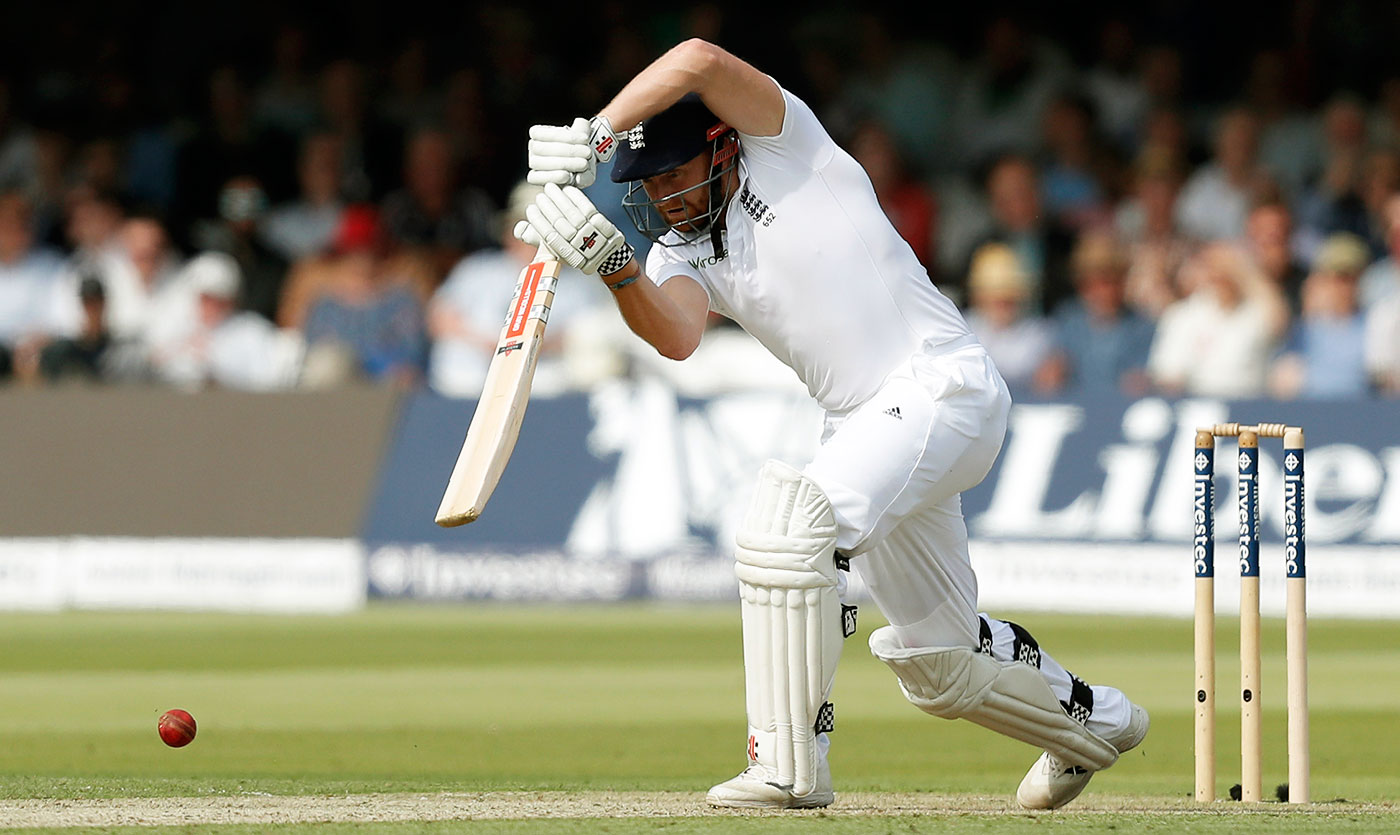 Dropped from the Test side after a run of low scores, Jonny Bairstow worked out his technical flaws and became a prolific run scorer © Getty Images
Graham Gooch once said, "I don't coach batting, I coach run-scoring." In a sentence he defined the requirements of the game's highest levels: those who arrived there already knew how to bat; what they needed to know was how to prosper on the mean streets, where the pressure was greatest and where any and every weakness would be found and exploited.
It suggested, too, that technique is a servant rather than a master, a means to an end rather than the end itself. Ugly runs count the same as pretty ones; David Gower's and Shivnarine Chanderpaul's look just the same in the scorebook, if not the history book. And as Alastair Cook, Gooch's most famous pupil, has moved inexorably onto the list of the all-time top ten Test match run scorers, and Goochie himself got more than anyone else across all forms of cricket, he's probably on to something.
Like all good buzzwords, technique has been thrumming through Test series between England and India, and Australia and South Africa. There's nothing like a batting collapse to begin the self-evisceration. Speaking to the Guardian for a thoughtful examination of Australian concepts of batting written by Sam Perry, Ed Cowan said: "One of [our] biggest issues is the attitude of 'attack at all costs', which I think is defunct in Test cricket. The message feeds through that we've got to pick attacking cricketers and that you need to be an attacking cricketer to be picked."
In India, Haseeb Hameed is the new poster boy for doing it right, the "baby Boycott", a kid with arms like sticks who hits through the covers with all of the easy power of a natural ball-player. Ben Duckett and Gary Ballance, having got it wrong, well, how must it feel to be them, to keep touring knowing that your tour is over and that stretching ahead is exile, and in that exile there are hard truths to be faced, hard labour to be undertaken.
They will join a list of recent discards, from Alex Hales to Sam Robson, Nick Compton to Adam Lyth, James Vince to Ian Bell, who have various hopes of a recall somehow, someday.
In that, they can look to Jonny Bairstow, who knows the feeling. When he was dropped from the side he averaged 27. He was out for 18 months and went through what he called some "dark spots". In the summer of 2014 he missed six weeks of domestic cricket with a broken finger and afterwards his renaissance began.
Bairstow addressed a point of technique. He felt that he was crouching too low in his stance, which led to a rigid right elbow and back and made him lunge at the ball, a fault compounded by a low backlift that often had him playing shots well in front of his body. He began standing up straighter and holding his hands higher, the bat hovering almost baseball-style as he waited. He still waggled the bat, but it came at the ball from a steeper angle and because of that it arrived later, which meant the interception point was under his eyes, where he was perfectly balanced. He laid waste to county attacks and was recalled for the 2015 Ashes. In 2016 he has made 1355 runs, more than any wicketkeeper in a calendar year, at an average of 64.52.
"You got two options," he says of being dropped. "You either run and hide or you front up."
It wouldn't have happened without a technical change, but then the technical change would not have happened without the desire to improve, to escape that darkness. He had what seems like the right attitude to technique, that it existed to serve him, to help him score runs. If he wasn't scoring runs, then he needed to find out why.
Dean Jones, the former Australia batsman, has published a book called Dean Jones' Cricket Tips (The Things They Don't Teach You At The Academy), about the kind of small improvements players need to make to evolve from being good professional sportsmen to international stars. He analysed a typical Sachin Tendulkar century, which took 180 deliveries, and found that Tendulkar left or defended around 70% of them - about 126 deliveries.
It suggested that the ability to stay in remains a great batsman's primary quality. His array of of scoring strokes, however wide and thrilling, are restricted to one ball in three. What all players looking to score runs must be able to do is defend forward and back and leave the ball well. To score runs, you begin by knowing how to not score them too.
It's interesting that the most discussed technical flaws always apply to defensive technique. England's most improved players, Bairstow and Ben Stokes, have improved most in that area. The problems of Duckett and Ballance lie there. For all of modern batting's pyrotechnics, finding a way to stay in remains the key to it all, as Cook and Gooch continue to show.
Technique is a servant, not a master. Take the example of Jonny Bairstow, and his successful comeback to the England Test side
Dropped from the Test side after a run of low scores, Jonny Bairstow worked out his technical flaws and became a prolific run scorer © Getty ImagesGraham Gooch once said, "I don't coach batting, I coach run-scoring." In a sentence he defined the requirements of the game's highest levels: those who arrived there already knew how to bat; what they needed to know was how to prosper on the mean streets, where the pressure was greatest and where any and every weakness would be found and exploited.
It suggested, too, that technique is a servant rather than a master, a means to an end rather than the end itself. Ugly runs count the same as pretty ones; David Gower's and Shivnarine Chanderpaul's look just the same in the scorebook, if not the history book. And as Alastair Cook, Gooch's most famous pupil, has moved inexorably onto the list of the all-time top ten Test match run scorers, and Goochie himself got more than anyone else across all forms of cricket, he's probably on to something.
Like all good buzzwords, technique has been thrumming through Test series between England and India, and Australia and South Africa. There's nothing like a batting collapse to begin the self-evisceration. Speaking to the Guardian for a thoughtful examination of Australian concepts of batting written by Sam Perry, Ed Cowan said: "One of [our] biggest issues is the attitude of 'attack at all costs', which I think is defunct in Test cricket. The message feeds through that we've got to pick attacking cricketers and that you need to be an attacking cricketer to be picked."
In India, Haseeb Hameed is the new poster boy for doing it right, the "baby Boycott", a kid with arms like sticks who hits through the covers with all of the easy power of a natural ball-player. Ben Duckett and Gary Ballance, having got it wrong, well, how must it feel to be them, to keep touring knowing that your tour is over and that stretching ahead is exile, and in that exile there are hard truths to be faced, hard labour to be undertaken.
They will join a list of recent discards, from Alex Hales to Sam Robson, Nick Compton to Adam Lyth, James Vince to Ian Bell, who have various hopes of a recall somehow, someday.
In that, they can look to Jonny Bairstow, who knows the feeling. When he was dropped from the side he averaged 27. He was out for 18 months and went through what he called some "dark spots". In the summer of 2014 he missed six weeks of domestic cricket with a broken finger and afterwards his renaissance began.
Bairstow addressed a point of technique. He felt that he was crouching too low in his stance, which led to a rigid right elbow and back and made him lunge at the ball, a fault compounded by a low backlift that often had him playing shots well in front of his body. He began standing up straighter and holding his hands higher, the bat hovering almost baseball-style as he waited. He still waggled the bat, but it came at the ball from a steeper angle and because of that it arrived later, which meant the interception point was under his eyes, where he was perfectly balanced. He laid waste to county attacks and was recalled for the 2015 Ashes. In 2016 he has made 1355 runs, more than any wicketkeeper in a calendar year, at an average of 64.52.
"You got two options," he says of being dropped. "You either run and hide or you front up."
It wouldn't have happened without a technical change, but then the technical change would not have happened without the desire to improve, to escape that darkness. He had what seems like the right attitude to technique, that it existed to serve him, to help him score runs. If he wasn't scoring runs, then he needed to find out why.
Dean Jones, the former Australia batsman, has published a book called Dean Jones' Cricket Tips (The Things They Don't Teach You At The Academy), about the kind of small improvements players need to make to evolve from being good professional sportsmen to international stars. He analysed a typical Sachin Tendulkar century, which took 180 deliveries, and found that Tendulkar left or defended around 70% of them - about 126 deliveries.
It suggested that the ability to stay in remains a great batsman's primary quality. His array of of scoring strokes, however wide and thrilling, are restricted to one ball in three. What all players looking to score runs must be able to do is defend forward and back and leave the ball well. To score runs, you begin by knowing how to not score them too.
It's interesting that the most discussed technical flaws always apply to defensive technique. England's most improved players, Bairstow and Ben Stokes, have improved most in that area. The problems of Duckett and Ballance lie there. For all of modern batting's pyrotechnics, finding a way to stay in remains the key to it all, as Cook and Gooch continue to show.
Wednesday, 30 November 2016
Frightened by Donald Trump? You don’t know the half of it
George Monbiot in The Guardian
Yes, Donald Trump’s politics are incoherent. But those who surround him know just what they want, and his lack of clarity enhances their power. To understand what is coming, we need to understand who they are. I know all too well, because I have spent the past 15 years fighting them.
Over this time, I have watched as tobacco, coal, oil, chemicals and biotech companies have poured billions of dollars into an international misinformation machine composed of thinktanks, bloggers and fake citizens’ groups. Its purpose is to portray the interests of billionaires as the interests of the common people, to wage war against trade unions and beat down attempts to regulate business and tax the very rich. Now the people who helped run this machine are shaping the government.
I first encountered the machine when writing about climate change. The fury and loathing directed at climate scientists and campaigners seemed incomprehensible until I realised they were fake: the hatred had been paid for. The bloggers and institutes whipping up this anger were funded by oil and coal companies.
Among those I clashed with was Myron Ebell of the Competitive Enterprise Institute (CEI). The CEI calls itself a thinktank, but looks to me like a corporate lobbying group. It is not transparent about its funding, but we now know it has received $2m from ExxonMobil, more than $4m from a group called the Donors Trust (which represents various corporations and billionaires), $800,000 from groups set up by the tycoons Charles and David Koch, and substantial sums from coal, tobacco and pharmaceutical companies.
For years, Ebell and the CEI have attacked efforts to limit climate change, through lobbying, lawsuits and campaigns. An advertisement released by the institute had the punchline “Carbon dioxide: they call it pollution. We call it life.”

Former campaign manager Corey Lewandowski, like other members of Trump’s team, came from a group called Americans for Prosperity. Photograph: UPI/Barcroft Images
It has sought to eliminate funding for environmental education, lobbied against the Endangered Species Act, harried climate scientists and campaigned in favour of mountaintop removal by coal companies. In 2004, Ebell sent a memo to one of George W Bush’s staffers calling for the head of the Environmental Protection Agency to be sacked. Where is Ebell now? Oh – leading Trump’s transition team for the Environmental Protection Agency.
Charles and David Koch – who for years have funded extreme pro-corporate politics – might not have been enthusiasts for Trump’s candidacy, but their people were all over his campaign. Until June, Trump’s campaign manager was Corey Lewandowski, who like other members of Trump’s team came from a group called Americans for Prosperity (AFP).
This purports to be a grassroots campaign, but it was founded and funded by the Koch brothers. It set up the first Tea Party Facebook page and organised the first Tea Party events. With a budget of hundreds of millions of dollars, AFP has campaigned ferociously on issues that coincide with the Koch brothers’ commercial interests in oil, gas, minerals, timber and chemicals.
In Michigan, it helped force through the “right to work bill”, in pursuit of what AFP’s local director called “taking the unions out at the knees”. It has campaigned nationwide against action on climate change. It has poured hundreds of millions of dollars into unseating the politicians who won’t do its bidding and replacing them with those who will.
I could fill this newspaper with the names of Trump staffers who have emerged from such groups: people such as Doug Domenech, from the Texas Public Policy Foundation, funded among others by the Koch brothers, Exxon and the Donors Trust; Barry Bennett, whose Alliance for America’s Future (now called One Nation) refused to disclose its donors when challenged; and Thomas Pyle, president of the American Energy Alliance, funded by Exxon and others. This is to say nothing of Trump’s own crashing conflicts of interest. Trump promised to “drain the swamp” of the lobbyists and corporate stooges working in Washington. But it looks as if the only swamps he’ll drain will be real ones, as his team launches its war on the natural world.
Understandably, there has been plenty of coverage of the racists and white supremacists empowered by Trump’s victory. But, gruesome as they are, they’re peripheral to the policies his team will develop. It’s almost comforting, though, to focus on them, for at least we know who they are and what they stand for. By contrast, to penetrate the corporate misinformation machine is to enter a world of mirrors. Spend too long trying to understand it, and the hyporeality vortex will inflict serious damage on your state of mind.
Don’t imagine that other parts of the world are immune. Corporate-funded thinktanks and fake grassroots groups are now everywhere. The fake news we should be worried about is not stories invented by Macedonian teenagers about Hillary Clinton selling arms to Islamic State, but the constant feed of confected scares about unions, tax and regulation drummed up by groups that won’t reveal their interests.
The less transparent they are, the more airtime they receive. The organisation Transparify runs an annual survey of thinktanks. This year’s survey reveals that in the UK only four thinktanks – the Adam Smith Institute, Centre for Policy Studies, Institute of Economic Affairs and Policy Exchange – “still consider it acceptable to take money from hidden hands behind closed doors”. And these are the ones that are all over the media.
When the Institute of Economic Affairs, as it so often does, appears on the BBC to argue against regulating tobacco, shouldn’t we be told that it has been funded by tobacco companies since 1963? There’s a similar pattern in the US: the most vocal groups tend to be the most opaque.
As usual, the left and centre (myself included) are beating ourselves up about where we went wrong. There are plenty of answers, but one of them is that we have simply been outspent. Not by a little, but by orders of magnitude. A few billion dollars spent on persuasion buys you all the politics you want. Genuine campaigners, working in their free time, simply cannot match a professional network staffed by thousands of well-paid, unscrupulous people.
You cannot confront a power until you know what it is. Our first task in this struggle is to understand what we face. Only then can we work out what to do,
Yes, Donald Trump’s politics are incoherent. But those who surround him know just what they want, and his lack of clarity enhances their power. To understand what is coming, we need to understand who they are. I know all too well, because I have spent the past 15 years fighting them.
Over this time, I have watched as tobacco, coal, oil, chemicals and biotech companies have poured billions of dollars into an international misinformation machine composed of thinktanks, bloggers and fake citizens’ groups. Its purpose is to portray the interests of billionaires as the interests of the common people, to wage war against trade unions and beat down attempts to regulate business and tax the very rich. Now the people who helped run this machine are shaping the government.
I first encountered the machine when writing about climate change. The fury and loathing directed at climate scientists and campaigners seemed incomprehensible until I realised they were fake: the hatred had been paid for. The bloggers and institutes whipping up this anger were funded by oil and coal companies.
Among those I clashed with was Myron Ebell of the Competitive Enterprise Institute (CEI). The CEI calls itself a thinktank, but looks to me like a corporate lobbying group. It is not transparent about its funding, but we now know it has received $2m from ExxonMobil, more than $4m from a group called the Donors Trust (which represents various corporations and billionaires), $800,000 from groups set up by the tycoons Charles and David Koch, and substantial sums from coal, tobacco and pharmaceutical companies.
For years, Ebell and the CEI have attacked efforts to limit climate change, through lobbying, lawsuits and campaigns. An advertisement released by the institute had the punchline “Carbon dioxide: they call it pollution. We call it life.”
Former campaign manager Corey Lewandowski, like other members of Trump’s team, came from a group called Americans for Prosperity. Photograph: UPI/Barcroft Images
It has sought to eliminate funding for environmental education, lobbied against the Endangered Species Act, harried climate scientists and campaigned in favour of mountaintop removal by coal companies. In 2004, Ebell sent a memo to one of George W Bush’s staffers calling for the head of the Environmental Protection Agency to be sacked. Where is Ebell now? Oh – leading Trump’s transition team for the Environmental Protection Agency.
Charles and David Koch – who for years have funded extreme pro-corporate politics – might not have been enthusiasts for Trump’s candidacy, but their people were all over his campaign. Until June, Trump’s campaign manager was Corey Lewandowski, who like other members of Trump’s team came from a group called Americans for Prosperity (AFP).
This purports to be a grassroots campaign, but it was founded and funded by the Koch brothers. It set up the first Tea Party Facebook page and organised the first Tea Party events. With a budget of hundreds of millions of dollars, AFP has campaigned ferociously on issues that coincide with the Koch brothers’ commercial interests in oil, gas, minerals, timber and chemicals.
In Michigan, it helped force through the “right to work bill”, in pursuit of what AFP’s local director called “taking the unions out at the knees”. It has campaigned nationwide against action on climate change. It has poured hundreds of millions of dollars into unseating the politicians who won’t do its bidding and replacing them with those who will.
I could fill this newspaper with the names of Trump staffers who have emerged from such groups: people such as Doug Domenech, from the Texas Public Policy Foundation, funded among others by the Koch brothers, Exxon and the Donors Trust; Barry Bennett, whose Alliance for America’s Future (now called One Nation) refused to disclose its donors when challenged; and Thomas Pyle, president of the American Energy Alliance, funded by Exxon and others. This is to say nothing of Trump’s own crashing conflicts of interest. Trump promised to “drain the swamp” of the lobbyists and corporate stooges working in Washington. But it looks as if the only swamps he’ll drain will be real ones, as his team launches its war on the natural world.
Understandably, there has been plenty of coverage of the racists and white supremacists empowered by Trump’s victory. But, gruesome as they are, they’re peripheral to the policies his team will develop. It’s almost comforting, though, to focus on them, for at least we know who they are and what they stand for. By contrast, to penetrate the corporate misinformation machine is to enter a world of mirrors. Spend too long trying to understand it, and the hyporeality vortex will inflict serious damage on your state of mind.
Don’t imagine that other parts of the world are immune. Corporate-funded thinktanks and fake grassroots groups are now everywhere. The fake news we should be worried about is not stories invented by Macedonian teenagers about Hillary Clinton selling arms to Islamic State, but the constant feed of confected scares about unions, tax and regulation drummed up by groups that won’t reveal their interests.
The less transparent they are, the more airtime they receive. The organisation Transparify runs an annual survey of thinktanks. This year’s survey reveals that in the UK only four thinktanks – the Adam Smith Institute, Centre for Policy Studies, Institute of Economic Affairs and Policy Exchange – “still consider it acceptable to take money from hidden hands behind closed doors”. And these are the ones that are all over the media.
When the Institute of Economic Affairs, as it so often does, appears on the BBC to argue against regulating tobacco, shouldn’t we be told that it has been funded by tobacco companies since 1963? There’s a similar pattern in the US: the most vocal groups tend to be the most opaque.
As usual, the left and centre (myself included) are beating ourselves up about where we went wrong. There are plenty of answers, but one of them is that we have simply been outspent. Not by a little, but by orders of magnitude. A few billion dollars spent on persuasion buys you all the politics you want. Genuine campaigners, working in their free time, simply cannot match a professional network staffed by thousands of well-paid, unscrupulous people.
You cannot confront a power until you know what it is. Our first task in this struggle is to understand what we face. Only then can we work out what to do,
Subscribe to:
Comments (Atom)