Editorial in The Dawn
Nearly one and a half billion people in two countries — India and Pakistan — appear to be held hostage to conspiracy, rumour and reckless warmongering. That needs to stop, and it needs to stop immediately.
On Thursday, 11 days after the Uri attack and seemingly an eternity in Pak-India sabre-rattling and diplomatic tensions, another layer of confusion and chaos was added to one of the world’s most complicated bilateral relationships.
With the facts of the Uri attack yet to be established or shared with the world, a new, potentially larger, set of questions has now overshadowed an already fraught situation.
What happened along the Line of Control between midnight and early morning on Thursday is a story that Indian authorities appear to be very clear about and the Indian media has reported with relish. But virtually nothing has been independently confirmed about the events along the LoC, an area that is effectively cordoned off from the media in both countries and where the local population is unlikely to know the facts or be willing to speak candidly.
What is clear is that something did happen at several points along the LoC in the early hours of Thursday morning. At the very least, Pakistani and Indian forces exchanged fire in which two Pakistani soldiers died.
That is a sad, if long-standing, reality of the region: whenever tensions between the two countries are high, parts of the LoC see live ammunition fired, the lives of local populations disrupted and several casualties among security personnel and civilians.
Indeed, two summers ago, with Indian Prime Minister Narendra Modi newly installed in office, the LoC saw a series of skirmishes that progressively escalated until reaching crisis point around mid-October. That set of events was supposedly meant to herald the start of a new, so-called get-tough policy by India.
Eventually, better sense prevailed and by September 2015 the DG Rangers and DG Border Security Force met and agreed to renew the LoC ceasefire. The Pathankot attack earlier this year, which involved infiltration across the Working Boundary, did not materially change the situation along the LoC, but unrest in India-held Kashmir and the Uri attack appear to have done so.
At this point, it is imperative to establish the facts quickly. The wild cheering that greeted the government’s accounts of events in India may become a dangerous precedent and create a new set of expectations in a region where war in an overtly nuclear environment would be catastrophic for both countries.
Facts, however, would help nudge the situation towards de-escalation, given signalling from the Pakistani state and Indian government.
Pakistani policymakers, both civilian and military, have reacted sensibly, and appear to be resisting Indian attempts to bait Pakistan. But the media echo chamber — jingoistic, fiercely nationalistic and often removed from reality — can have unpredictable effects, especially when it comes to whipping up warlike sentiment among the populations of the two countries.
Quickly establishing two sets of facts, of events along the LoC on Thursday and the Uri attack, would switch a media narrative from punch and counter-punch and allow the two states to work on how to ratchet down tensions along the LoC.
The Modi government, despite its hawkish instincts and muscle-flexing, has indicated an awareness of the dangers of unrestrained rhetoric. Facts will help clear the miasma and introduce the necessary rationality into a debate that is increasingly unhinged.
Clearly, the problems in the region are not unilateral and one-directional. Pakistan has pursued flawed policies in the past and could do more to help end the menace of terrorism in the region. But this is not an area of straightforward cause and effect, nor are the broader issues of the Pak-India relationship of immediate relevance.
First and foremost, the priority of the leaderships of Pakistan and India should be to ensure that no matter what the circumstances and no matter what the concerns, the path to war is not taken.
India suffered a blow in Uri as it did in Pathankot. It has a right to expect justice and Pakistan has a responsibility to investigate any links to citizens of this country. But what has been unleashed in India since the seemingly exaggerated claims of so-called surgical strikes along the LoC is frightening and wildly destabilising.
If now is not a propitious time for a dialogue of peace, it is the time for some serious introspection.
Only a few days ago, the Indian prime minister talked of a joint war against poverty; he must now also resist the poverty of ideas and the temptation to take the low, dangerous road.
Saturday, 1 October 2016
Friday, 30 September 2016
Why you need to count time, not money
by Oliver Burkeman in The Guardian
Should you choose time over money, or money over time? This is one of those so-called dilemmas of happiness that isn’t really a dilemma at all, because the answer’s so painfully obvious. Circumstances might oblige you to choose money over time. But if you truly, ultimately value a large bank balance over meaningful experiences, you’re what’s known in the psychological literature as a doofus. Money, after all, is just an instrument for obtaining other things, including time – whereas time is all we’ve got. And to make matters worse, you can’t save it up: if money worked like time, every new deposit into your account would be immediately eliminated by a transaction fee of exactly the same size. However much you hate your bank, it’s surely not that bad.
And yet we do choose money over time, again and again, even when basic material wellbeing doesn’t demand it. Partly, no doubt, that’s because even well-off people fear future poverty. But it’s also because the time/money trade-off rarely presents itself in simple ways. Suppose you’re offered a better-paid job that requires a longer commute (more money in return for less time); but then again, that extra cash could lead to more or better time in future, in the form of nicer holidays, or a more secure retirement. Which choice prioritises time, and which money? It’s hard to say.
Thankfully, a new study sheds a little light on the matter. The researchers Hal Hershfield, Cassie Mogilner and Uri Barnea surveyed more than 4,000 Americans to determine whether they valued time or money more, and how happy they were. A clear majority, 64%, preferred money – but those who valued time were happier. Nor was it only those rich enough to not stress about money who preferred time: after they controlled for income, the effect remained. Older people, married people and parents were more likely to value time, which makes sense: older people have less time left, while those with spouses and kids presumably either cherish time with them, or feel they steal all their time. Or both.
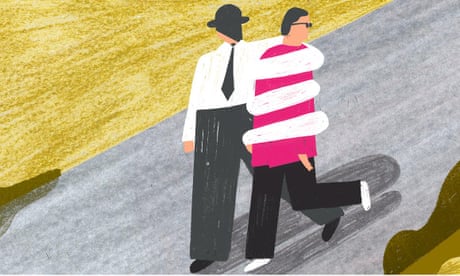
The crucial finding here is that it’s not having more time that makes you happier, but valuing it more. Economists continue to argue about whether money buys happiness – but few doubt that being comfortably off is more pleasant than struggling to make ends meet. This study makes a different point: it implies that even if you’re scraping by, and thus forced to focus on money, you’ll be happier if deep down you know it’s time that’s most important.
It also contains ironic good news for those of us who feel basically secure, moneywise, but horribly pushed for time. If you strongly wish you had more time, as I do, who could accuse you of not valuing it? At least my craving for more time shows that my priorities are in order, and maybe that means I’ll savour any spare time I do get. We talk about scarce time like it’s a bad thing. But scarcity’s what makes us treat things as precious, too.
Should you choose time over money, or money over time? This is one of those so-called dilemmas of happiness that isn’t really a dilemma at all, because the answer’s so painfully obvious. Circumstances might oblige you to choose money over time. But if you truly, ultimately value a large bank balance over meaningful experiences, you’re what’s known in the psychological literature as a doofus. Money, after all, is just an instrument for obtaining other things, including time – whereas time is all we’ve got. And to make matters worse, you can’t save it up: if money worked like time, every new deposit into your account would be immediately eliminated by a transaction fee of exactly the same size. However much you hate your bank, it’s surely not that bad.
And yet we do choose money over time, again and again, even when basic material wellbeing doesn’t demand it. Partly, no doubt, that’s because even well-off people fear future poverty. But it’s also because the time/money trade-off rarely presents itself in simple ways. Suppose you’re offered a better-paid job that requires a longer commute (more money in return for less time); but then again, that extra cash could lead to more or better time in future, in the form of nicer holidays, or a more secure retirement. Which choice prioritises time, and which money? It’s hard to say.
Thankfully, a new study sheds a little light on the matter. The researchers Hal Hershfield, Cassie Mogilner and Uri Barnea surveyed more than 4,000 Americans to determine whether they valued time or money more, and how happy they were. A clear majority, 64%, preferred money – but those who valued time were happier. Nor was it only those rich enough to not stress about money who preferred time: after they controlled for income, the effect remained. Older people, married people and parents were more likely to value time, which makes sense: older people have less time left, while those with spouses and kids presumably either cherish time with them, or feel they steal all their time. Or both.
The crucial finding here is that it’s not having more time that makes you happier, but valuing it more. Economists continue to argue about whether money buys happiness – but few doubt that being comfortably off is more pleasant than struggling to make ends meet. This study makes a different point: it implies that even if you’re scraping by, and thus forced to focus on money, you’ll be happier if deep down you know it’s time that’s most important.
It also contains ironic good news for those of us who feel basically secure, moneywise, but horribly pushed for time. If you strongly wish you had more time, as I do, who could accuse you of not valuing it? At least my craving for more time shows that my priorities are in order, and maybe that means I’ll savour any spare time I do get. We talk about scarce time like it’s a bad thing. But scarcity’s what makes us treat things as precious, too.
In his victory speech Jeremy Corbyn spelled out exactly why the establishment hates him so much
Youssef El Gingihy in The Independent
Jeremy Corbyn's conference speech yesterday underlined exactly why he has been subjected to a ferocious smear campaign. We have heard an endless catalogue of critiques: That Corbyn lacks leadership; that he is not electable; that Labour has become a protest party infiltrated by the far left. Yet the real reason behind these attacks is that Corbyn is a clear and present danger to powerful, vested interests.
For the first time in a generation, a Labour leader is truly challenging the cosy political consensus extending through the Thatcher-Blair-Cameron axis. The policies taking shape represent a clean break from several decades of deregulated free market economics.
Corbyn has positioned Labour as an anti-austerity party. He emphasised that the financial sector caused the 2008 crisis not public spending. This is important as Miliband and Balls mystifyingly failed to make this argument. One can only surmise that they were eager not to offend the City of London.
Corbyn promised to reverse privatisation of public services. This would mean renationalisation of the railways. It would mean restoring a public NHS reversing its privatisation and conversion into a private health insurance system.
It would mean an end to the outsourcing of council services. It would mean returning public services into public hands. And none of this is radical. Polling shows the majority of the public, including Conservative voters, is in favour.
It is no surprise that Richard Branson and Virgin seemingly used Traingate in an attempt to discredit Corbyn. Virgin would stand to lose billions in contracts if such policies went ahead. As would many other corporate interests - the likes of Serco, G4S, Capita and Unitedhealth to name a few.
Corbyn promised Labour will build enough social housing and regulate the housing market. Again, property developers, investors and construction firms would stand to lose from the restoration of housing as a social good rather than a financial instrument.
Corbyn vowed that bankers and financial speculators cannot be allowed to wreak havoc again. Regulation of the financial sector will have the City running scared - the party may well be truly over for them. Deregulated finance has resulted in industrial scale corruption profiting a tiny elite at the expense of ordinary people. This was evident not only during the crash but in the raft of scandals since, including LIBOR and PPI.
Corbyn added that the wealthy must pay their fair share of taxes. Labour would take effective steps to end tax avoidance and evasion. This would need to start with winding down the offshore empire much of which comes under the influence of the UK and the City of London.
Corbyn highlighted the grotesque inequalities driven by neoliberalism. The result has seen millions of ordinary people abandoned by a system that does not work for them. Here, Corbyn again broke with the consensus pointing out that immigration is not to blame. Scapegoating of migrants is convenient for elites keen to distract from the damage that they are causing. Corbyn emphasised that it is exploitative corporations, which are to blame for low wages not migrants. Over-stretched public services are down to Conservative cuts not immigration. However, after years of xenophobic anti-migrant rhetoric, winning this argument will require plenty of hard work.
On the economy, Corbyn promised investment with £500bn of public spending and a national investment bank. He also promised investment in research and development, education and skilling up of the workforce.
Yet none of this is especially controversial. Much of it is increasingly accepted as common sense amongst economists.
It is Corbyn's reset on foreign policy, which is truly intolerable for the establishment.
Corbyn spoke of a peaceful and just foreign policy. There would be no more imperial wars destroying the lives of millions; generating terrorism and migration crises. Arms sales to countries committing war crimes would be banned starting with Saudi Arabia. This will have set alarm bells ringing amongst the nexus of intelligence agencies, defence contractors and corporates. Corbyn is directly challenging the Atlanticist relationship paramount to the US-UK establishment and its global hegemony, particularly in the Middle East.
It is no surprise that the Conservatives and their mainstream media cheerleaders have therefore attacked Corbyn. The most damaging attacks, though, have come from his parliamentary party. The process of disentangling from the New Labour machine captured by corporate interests may still generate more damage.
As Corbyn and McDonnell have both made abundantly clear, socialism is no longer a dirty word. Corbyn's Labour - the largest party in Western Europe - is powering forward with a vision of forward-looking 21st century socialism.
Jeremy Corbyn's conference speech yesterday underlined exactly why he has been subjected to a ferocious smear campaign. We have heard an endless catalogue of critiques: That Corbyn lacks leadership; that he is not electable; that Labour has become a protest party infiltrated by the far left. Yet the real reason behind these attacks is that Corbyn is a clear and present danger to powerful, vested interests.
For the first time in a generation, a Labour leader is truly challenging the cosy political consensus extending through the Thatcher-Blair-Cameron axis. The policies taking shape represent a clean break from several decades of deregulated free market economics.
Corbyn has positioned Labour as an anti-austerity party. He emphasised that the financial sector caused the 2008 crisis not public spending. This is important as Miliband and Balls mystifyingly failed to make this argument. One can only surmise that they were eager not to offend the City of London.
Corbyn promised to reverse privatisation of public services. This would mean renationalisation of the railways. It would mean restoring a public NHS reversing its privatisation and conversion into a private health insurance system.
It would mean an end to the outsourcing of council services. It would mean returning public services into public hands. And none of this is radical. Polling shows the majority of the public, including Conservative voters, is in favour.
It is no surprise that Richard Branson and Virgin seemingly used Traingate in an attempt to discredit Corbyn. Virgin would stand to lose billions in contracts if such policies went ahead. As would many other corporate interests - the likes of Serco, G4S, Capita and Unitedhealth to name a few.
Corbyn promised Labour will build enough social housing and regulate the housing market. Again, property developers, investors and construction firms would stand to lose from the restoration of housing as a social good rather than a financial instrument.
Corbyn vowed that bankers and financial speculators cannot be allowed to wreak havoc again. Regulation of the financial sector will have the City running scared - the party may well be truly over for them. Deregulated finance has resulted in industrial scale corruption profiting a tiny elite at the expense of ordinary people. This was evident not only during the crash but in the raft of scandals since, including LIBOR and PPI.
Corbyn added that the wealthy must pay their fair share of taxes. Labour would take effective steps to end tax avoidance and evasion. This would need to start with winding down the offshore empire much of which comes under the influence of the UK and the City of London.
Corbyn highlighted the grotesque inequalities driven by neoliberalism. The result has seen millions of ordinary people abandoned by a system that does not work for them. Here, Corbyn again broke with the consensus pointing out that immigration is not to blame. Scapegoating of migrants is convenient for elites keen to distract from the damage that they are causing. Corbyn emphasised that it is exploitative corporations, which are to blame for low wages not migrants. Over-stretched public services are down to Conservative cuts not immigration. However, after years of xenophobic anti-migrant rhetoric, winning this argument will require plenty of hard work.
On the economy, Corbyn promised investment with £500bn of public spending and a national investment bank. He also promised investment in research and development, education and skilling up of the workforce.
Yet none of this is especially controversial. Much of it is increasingly accepted as common sense amongst economists.
It is Corbyn's reset on foreign policy, which is truly intolerable for the establishment.
Corbyn spoke of a peaceful and just foreign policy. There would be no more imperial wars destroying the lives of millions; generating terrorism and migration crises. Arms sales to countries committing war crimes would be banned starting with Saudi Arabia. This will have set alarm bells ringing amongst the nexus of intelligence agencies, defence contractors and corporates. Corbyn is directly challenging the Atlanticist relationship paramount to the US-UK establishment and its global hegemony, particularly in the Middle East.
It is no surprise that the Conservatives and their mainstream media cheerleaders have therefore attacked Corbyn. The most damaging attacks, though, have come from his parliamentary party. The process of disentangling from the New Labour machine captured by corporate interests may still generate more damage.
As Corbyn and McDonnell have both made abundantly clear, socialism is no longer a dirty word. Corbyn's Labour - the largest party in Western Europe - is powering forward with a vision of forward-looking 21st century socialism.
The Labour plotters are right: it‘s definitely Jeremy Corbyn who needs to ‘learn lessons’ from the last few months
Mark Steel in The Independent
Well, that was a highly successful three-month campaign to get rid of Jeremy Corbyn. There’s nothing like spending all summer on a project that proves worthwhile and repays the effort.
If Angela Eagle and Owen Smith were generals in a medieval army, they would report back to their commander: “We fired incessantly for three months and have brought such damage to our opponent’s army they now have 100,000 more soldiers than when we started, sir. And I’m not sure how, but although we’re fighting in Belgium, we seem to have given them Wales.”
Corbyn should ask them to do it every year; by 2025 he’d be crowned King of Europe.
Even more impressive was the way the plotters all agreed, after the result, that “this shows the lessons Jeremy needs to learn, and he has to reach out”.
Next they’ll ask Owen Smith to fight Tyson Fury, and as Owen is dragged away by paramedics, Stephen Kinnock will announce: “This shows the lessons Tyson has to learn. From now on he needs to look more skinny and wear glasses and reach out if he knows what’s good for him”.
This is an exciting development in democracy, that the side who won the least number of votes decides what the lessons are that have to be learned. Maybe this is how the anti-Corbyn section of Labour hopes to govern after a general election. They’ll say to the Tories: “As you won a majority of 190, you have to learn to reach out and fill your cabinet with me and my mates”.
Even so, the plotters made an important point: that Corbyn must reach out to those who already tried to unite the party by calling him a moronic pitiful unelectable pile of steaming goat sick for the last year.
Instead of being divisive, as he was last time by offering them jobs in the shadow Cabinet from which they resigned, he should let them pick their own jobs, and if they don’t fancy doing them one day, let them bring in games.
All the plotters agreed on the need for unity, and many of them displayed that straight away by not turning up to Corbyn’s speech. But Corbyn himself ruined the unity by turning up to it himself, rather than uniting with his colleagues by saying he couldn’t be bothered to say anything so he was popping down the pub.
Some MPs will soon resume their commitment to unity by insisting Corbyn is hopeless, on every TV station, one by one through the news channels, the cartoon channels and the GOD channels. Then on a porn channel, John Mann will knock on a door to say: “Hope you’ll be voting Labour in the council by-election”. But a woman in rubber will reply: “I certainly won’t be voting for you”, so he’ll say: “I suppose that’s because we’ve been very, very bad and chosen an unelectable leader”, then lay down and scream: “We’ve been so irresponsible by saying we’ll renationalise the Royal Mail!” while getting thrashed on the arse with an egg whisk.
Others will prove their loyalty as they did before, by texting helpful snippets of information to journalists from meetings, such as: “OMG! Apparently Corbyn wants to abolish the army and replace it with a salad”.
The other demand from the side celebrating its achievement of getting fewer votes than someone they say is unelectable is there can be no threats of deselection. There should be no half measures with this; if Jess Phillips announces: “I’d rather vote for Donald Trump than Corbyn, that’s why I broke into his house and poisoned his fish”, that’s her right as a loyal party member and any talk of deselection would be divisive.
The next issue Corbyn must address now he’s been humbled by winning the election is the problem of all these new members. For example, an investigation into Liverpool Riverside complains there has been “an explosion in membership” which now “meets several times a month”.
That sounds sinister, because when has there ever been any need to do two things in a month?
And what are they all doing, joining like that? No wonder proper Labour members are suspicious. They should have to pass a test, clambering across an assault course, or swimming through piranhas.
As any business leader will confirm, there’s nothing more damaging to an enterprise than an explosion in people demanding your product. This is why Bill Gates always insists, when a new version of Microsoft Windows comes out, that anyone who asks for one is told they can’t have it as they’re almost certainly a member of the Workers Revolutionary Party.
One MP grumbled: “It’s all right these new people joining, but will they go knocking on doors at the election?” We can’t know the answer to that, which is why the best way to ensure they’re enthusiastic enough to knock on doors is to tell them they’re all infiltrating scum and they can sod off somewhere else with their several meetings a month.
If they still join, they should have to prove their loyalty by not only knocking on doors, but when someone answers, say: “Our leader’s unelectable so I don’t know why I’m bothering”.
But most importantly, not one of the plotters has fallen into the trap of accepting they may have made the odd mistake, and perhaps shouldn’t have all resigned to get rid of their elected leader, or whined too many people have joined their party, or gone to court to ban their own voters, or insisted people supported Corbyn because they’d had their arm twisted by Trotskyists, because it’s obviously Corbyn that needs to learn the lessons from the result.
Well, that was a highly successful three-month campaign to get rid of Jeremy Corbyn. There’s nothing like spending all summer on a project that proves worthwhile and repays the effort.
If Angela Eagle and Owen Smith were generals in a medieval army, they would report back to their commander: “We fired incessantly for three months and have brought such damage to our opponent’s army they now have 100,000 more soldiers than when we started, sir. And I’m not sure how, but although we’re fighting in Belgium, we seem to have given them Wales.”
Corbyn should ask them to do it every year; by 2025 he’d be crowned King of Europe.
Even more impressive was the way the plotters all agreed, after the result, that “this shows the lessons Jeremy needs to learn, and he has to reach out”.
Next they’ll ask Owen Smith to fight Tyson Fury, and as Owen is dragged away by paramedics, Stephen Kinnock will announce: “This shows the lessons Tyson has to learn. From now on he needs to look more skinny and wear glasses and reach out if he knows what’s good for him”.
This is an exciting development in democracy, that the side who won the least number of votes decides what the lessons are that have to be learned. Maybe this is how the anti-Corbyn section of Labour hopes to govern after a general election. They’ll say to the Tories: “As you won a majority of 190, you have to learn to reach out and fill your cabinet with me and my mates”.
Even so, the plotters made an important point: that Corbyn must reach out to those who already tried to unite the party by calling him a moronic pitiful unelectable pile of steaming goat sick for the last year.
Instead of being divisive, as he was last time by offering them jobs in the shadow Cabinet from which they resigned, he should let them pick their own jobs, and if they don’t fancy doing them one day, let them bring in games.
All the plotters agreed on the need for unity, and many of them displayed that straight away by not turning up to Corbyn’s speech. But Corbyn himself ruined the unity by turning up to it himself, rather than uniting with his colleagues by saying he couldn’t be bothered to say anything so he was popping down the pub.
Some MPs will soon resume their commitment to unity by insisting Corbyn is hopeless, on every TV station, one by one through the news channels, the cartoon channels and the GOD channels. Then on a porn channel, John Mann will knock on a door to say: “Hope you’ll be voting Labour in the council by-election”. But a woman in rubber will reply: “I certainly won’t be voting for you”, so he’ll say: “I suppose that’s because we’ve been very, very bad and chosen an unelectable leader”, then lay down and scream: “We’ve been so irresponsible by saying we’ll renationalise the Royal Mail!” while getting thrashed on the arse with an egg whisk.
Others will prove their loyalty as they did before, by texting helpful snippets of information to journalists from meetings, such as: “OMG! Apparently Corbyn wants to abolish the army and replace it with a salad”.
The other demand from the side celebrating its achievement of getting fewer votes than someone they say is unelectable is there can be no threats of deselection. There should be no half measures with this; if Jess Phillips announces: “I’d rather vote for Donald Trump than Corbyn, that’s why I broke into his house and poisoned his fish”, that’s her right as a loyal party member and any talk of deselection would be divisive.
The next issue Corbyn must address now he’s been humbled by winning the election is the problem of all these new members. For example, an investigation into Liverpool Riverside complains there has been “an explosion in membership” which now “meets several times a month”.
That sounds sinister, because when has there ever been any need to do two things in a month?
And what are they all doing, joining like that? No wonder proper Labour members are suspicious. They should have to pass a test, clambering across an assault course, or swimming through piranhas.
As any business leader will confirm, there’s nothing more damaging to an enterprise than an explosion in people demanding your product. This is why Bill Gates always insists, when a new version of Microsoft Windows comes out, that anyone who asks for one is told they can’t have it as they’re almost certainly a member of the Workers Revolutionary Party.
One MP grumbled: “It’s all right these new people joining, but will they go knocking on doors at the election?” We can’t know the answer to that, which is why the best way to ensure they’re enthusiastic enough to knock on doors is to tell them they’re all infiltrating scum and they can sod off somewhere else with their several meetings a month.
If they still join, they should have to prove their loyalty by not only knocking on doors, but when someone answers, say: “Our leader’s unelectable so I don’t know why I’m bothering”.
But most importantly, not one of the plotters has fallen into the trap of accepting they may have made the odd mistake, and perhaps shouldn’t have all resigned to get rid of their elected leader, or whined too many people have joined their party, or gone to court to ban their own voters, or insisted people supported Corbyn because they’d had their arm twisted by Trotskyists, because it’s obviously Corbyn that needs to learn the lessons from the result.
Subscribe to:
Comments (Atom)