Search This Blog

Sunday, 28 February 2016

The difficulty in saying sorry

When we are criticised it hurts our feelings, but the pain goes much deeper than that, says Paul Randolph

 
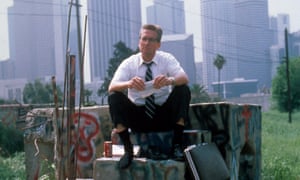
Breaking point: Michael Douglas stars in 1993’s Falling Down. Photograph: Moviestore/REX/Shutterstock


Paul Randolph in The Guardian


Why do sensible and rational people seem to lose the ability to act sensibly and rationally when they are in conflict? What makes some families tear themselves apart in a variety of squabbles which to outsiders may seem petty but which result in family members not speaking to each other for years? What drives neighbours to blight their daily lives with unpleasant, bitter and confrontational disputes? And how can otherwise placid and restrained people become almost unrecognisable when involved in road rage incidents – or even trolley rage in supermarkets?

The answer may be distilled down to one psychological phenomenon: self-esteem. It is one of the strongest motivating factors in conflict and generates powerful emotions. We all have self-esteem, whether corporate or individual; we all have a need to think well of ourselves, and for others to think well of us. Self-esteem governs many of the decisions we make daily, as we expend huge amounts of time and effort constantly maintaining and protecting our self-image.

The flipside of our desire for approval is our aversion to disapproval – or worse still, our dread of humiliation. An example of this is the fear of public speaking – a dread that can be greater than that of flying or even of death. It is explained by the fact that the disapproval of each person in the audience constitutes a potentially significant attack on our self-image. The larger the audience, the more overwhelming is the prospect of humiliation.

There is now neurological evidence demonstrating the effect that attacks on our self-esteem have on the brain. One study showed that “social pain” activated the same circuits of the brain as physical pain. Consequently any attack on our self-image is interpreted by the brain as physical pain. When we speak of “hurt” feelings, we acknowledge that any form of censure, from slight criticism to outright condemnation or rejection, affects our self-esteem and is felt as physical pain – hence our aversion to admitting fault or to accepting liability. The word “sorry” is one of the most difficult to express, despite it being the quickest, cheapest and most effective form of resolving a dispute. But our brain seems to indicate to us that saying sorry will be as painful as putting our hand into a fire.

The ability to monitor neural pathways helps us to see how our brain functions in conflict situations. For example, we now have a neurological explanation of our “fight or flight” instinct. This reflex is governed by the amygdala, two small structures in the brain that control our instinctive responses. Originally needed as a part of our evolutionary development, they enabled us to act swiftly and instinctively in the face of physical attacks in the wild.

Today the amygdala can be triggered by any attack on our self-esteem. When the brain perceives a threat, whether physical or on our self-image, the amygdala “takes control”, diverting the signals away from the cortex, the “thinking” part of the brain. This “amygdala hijack” prevents us from engaging in logical or analytical thought, instead creating instant defensive reactions.

That is why we recoil at any allegation of fault, whether in business, within the family, behind the wheel of a car – or in the supermarket. It is an assault on our self-esteem, and it is painful. It is at these moments that we need to shrink our egos, to tell ourselves that our self-esteem is unnecessarily getting in the way, and that it is far more productive to try to see things from the other’s perspective.

Thursday, 25 February 2016

Chhattisgarh Government Strips Forest Community of Land Rights

Manon Verchot

In an unprecedented move, the Chhattisgarh government cancelled land rights of tribal communities in the Surguja district to make way for coal mining.

Land rights of people in the Ghatbarra village were written off after land was allocated to the Rajasthan Vidyut Utpadan Nigam Limited (RVUNL) and Adani Minerals Private Limited.

The Gram Sabha (village council) of Ghatbarra gained their land in 2013 as part of the Forest Rights Act. Under the act, the government can divert forest land use for different purposes with the consent of tribal groups. In 2014, Ghatbarra and 19 other villages opposed mining developments on their land, but the government overrode this opposition earlier this year. There are no provisions for the cancelling of the land rights, according to Nitin Sethi of Business Standard.


What is the Forest Rights Act?

In India, millions of people depend on forests as a source of livelihood, but most of this land belongs to the government. These communities are often victims of bonded labour and extortion, and are regularly evicted from their homes.

The Forest Rights Act (FRA) was established in 2006 to protect the rights of tribes and traditional forest dwellers. It grants forest communities the right to collect non-timber forest products, access to grazing grounds and water bodies, and the right to claim land.


The FRA provides for the diversion of forest land for non-forest use by obtaining free and prior informed consent from the communities who have a claim over the forest patch in question. It clearly lays down that such diversion should happen only at the Gram Sabha level – 3/4th of the members of the Gram Sabha should be present and 50% of them need to agree to the diversion. The specific process is clearly laid down in the Act and any other process is in contravention of the FRA and unconstitutional.Priya Pillai, Senior Campaigner, Greenpeace India

A villager transports fodder on his bullock cart on the outskirts of Raipur. This image is for representation purposes only. (Photo: Reuters)


What Are the Consequences of Cancelling Land Rights?


Forest communities are dependent on forests for their livelihood, but without any rights, they will lose access to the resources they depend on.

This development is very worrying because it is the first time rights have been taken away. It sets a very bad precedence. It is going to have huge implications all over the country.- Tushar Dash, Forest Rights Researcher, Vasundhara

According to Dash, there are around 150 million forest tribal people in India, and 1 lakh 77 thousand villages affected by forests in India. Government actions that deny the rights of these people would have repercussions that would ripple throughout the country.

The final offer made to junior doctors was too generous – they should stop striking and get on with it

Mary Dejevsky in The Independent

You know things have reached a pretty pass in any dispute when the combatants start to invoke the spirit of deceased politicians. But when two men who have reached the top of their political trees also start invoking their own mothers – as Jeremy Corbyn and David Cameron did at Prime Minister’s Questions – well, the possibility of any agreement looks remote indeed.

Yes, after a merciful, but all too brief, period of remission, we are back in the heat of the junior doctors’ dispute. The Labour leader accused the Government of showing bad faith and “misrepresenting” statistics (about hospital deaths at weekends); the Prime Minister returned to his mantra about people not getting sick only on weekdays. Whatever else the Government may be ready to compromise on, it appears not to be a “seven-day NHS”.

And quite right, too.

“Our” NHS is not run for the benefit of the staff, however long they have spent in training, however mountainous their student loans, however arduous and responsible their work. A great many people would probably like to work only Monday to Friday, 9 to 5, especially if highly-paid overtime for additional hours comes virtually guaranteed. But this is not the reality for most people, and there is no reason, when so much in this country now functions 24/7 – with the staff on rotas and little, if any, overtime paid – why it should still be such a struggle to get the emergency services to do the same. Yet it is here the overtime culture has proved most resilient.

There will be those – and I admit to being among them – who saw the final offer to the junior doctors as too generous. By preserving a system of overtime, for Saturdays after 5pm and all Sundays, it leaves in place the idea that doctors can expect to work something like traditional office or factory hours with additional rewards for anything else. Those expectations need to be scotched.

Junior doctors, and their many vocal supporters, have tried to turn the contested statistics about weekend fatalities to their advantage, suggesting that a “cut-price” seven-day NHS would simply raise death rates around the week. Anyone who visits hospitals on weekdays and at weekends, however, will be familiar with the glaring disparity in staffing – at every level, and what sometimes appears to be a surfeit of employees, especially in the least skilled jobs, during standard working hours. There is surely money to be saved here, that could offset the cost of more staff at weekends.

Nor can the junior doctors’ dispute be seen in isolation. Their new contract is just one part – if a large part – of reform of the NHS that is yet to come. If next in line are to be the consultants, for whom the junior doctors are often deputising at nights and weekends, you can understand why the Government might be keen to hold the line.

What occasioned the latest sword-crossing in the Commons was the announcement by the British Medical Association earlier this week that the junior doctors would hold three more days of strikes, and would fight the Health Secretary’s imposition of the new contract through the courts. In the first instance, this means seeking a judicial review.

On precisely what legal grounds the BMA intends to fight is not yet clear. For all the perception that the English judiciary has become more politically engaged in recent years, it is hard to see a judge ruling that an elected government is not within its rights to set the terms of a contract for public sector employees, particular when in line with a manifesto commitment. Going to court is only going to inject more poison into this already toxic dispute.

It is beyond time that the BMA called it a day and recognised that the junior doctors have won as much as they are going to – more than they could have expected at the outset and more, indeed, than may be wise for the future health of the NHS. The BMA’s continued insistence a “safe” seven-day NHS is somehow beyond the country’s means is defeatism of the first order, and really not junior doctors’ call to make. It is the stated policy of an elected government.

That said, the extent to which this dispute has become politicised has made it infinitely harder to resolve. Jeremy Hunt has not just been defending his government’s policy of a seven-day NHS, he has been engaged directly in negotiating the small print of a new contract. This has enabled junior doctors, and the BMA on their behalf, to cast the project as a heartless Tory plot.

The most senior non-politicians – the chief executive of NHS England, Simon Stevens, and the medical director, Sir Bruce Keogh – have both been conspicuously absent from the fray. This may be because, if heads had to roll, the Health Secretary is deemed more dispensable than either of them. But here, perhaps, also lies the key to change. For 10 years or more – most recently in the Conservatives’ 2010 election manifesto – proposals have been mooted to separate the NHS from politics by placing it under an independent board. Policy, such as the creation of seven-day service, and the overall NHS budget would be set by central government, leaving the rest to professionals. Each time, however, a consensus evolved to the effect that the NHS was so integral a part of national life and the sums of money allocated so vast, that there had to be direct political accountability. The scandal at Mid-Staffs augmented that view.

But the downside of the argument is again before us. Junior doctors and a Conservative government at loggerheads; there is talk of relations blighted for a generation. One solution might be for the Government to return to its election manifesto of 2010 and divest itself of managerial responsibility for the NHS. If junior doctors can cast that as a victory, so be it. But there is no reason why the sort of hands-off arrangement that is considered good for the BBC and – increasingly – for schools should not be good for the NHS, too.

Sunday, 21 February 2016

Jawaharlal Nehru University was never a bastion of open debate

Swapan Dasgupta in the Times of India

During the course of the acrimonious exchanges over a series of incidents that originated in Delhi’s Jawaharlal Nehru University, some commentators alluded to a controversial motion —“This House would not in any circumstances fight for King and Country” — that was passed by the Oxford Union in 1933. The argument was that universities are natural centres of heretical and unconventional views and that the authorities should not overreact.
Whether or not the Union home ministry and Delhi Police were guilty of astonishing stupidity by charging an excitable student politician with sedition for hobnobbing and sharing a platform with separatists is an issue that will prompt different responses. In 1933, for example, Winston Churchill described the Oxford students who voted for the grandstanding motion as “abject, squalid, shameless and nauseating” — sentiments that many who don’t possess the same measure of erudition would echo in the case of the JNU radicals. Indeed, the reaction of British society to the Oxford poseurs was unwaveringly hostile and evidence of universities harbouring spoilt brats. Likewise, there is little doubt that had the provocative slogans championing the breakup of India been chanted in public — and not within the safe haven of the campus or, indeed, the Delhi Press Club — the street reaction would not have been couched in niceties.

Echoes of a similar town-gown divide appear to be quite evident in the furore over the sedition charges levelled against a student — not that this excuses the disgraceful behaviour of some lawyers in Delhi’s Patiala House court. But what has complicated the situation is that the political opponents of the Narendra Modi government ranging from the Congress to the Maoists have joined hands to scream fascism. The assault on the government has been complemented by the international rent-a-cause brigade that has become accustomed to circulating pious petitions on issues that range from who Indians should not vote for to the state of higher education in India.

Part of the problem stems from the caricatured views the Indian Right and Left-Liberals have of each other, a process the civil war of journalists has added to.

In the normal course, universities should have been a forum for informed and intelligent conversations. Even if a dialogue didn’t narrow the political divide, it would have prevented demonology and the near-complete absence of social interaction and the ostracism of those who violate a consensus — Arnab Goswami is the most recent target.

To blame this ghettoisation on the Modi regime is being disingenuous. Contrary to recent mythology, JNU wasn’t ever the bastion of free, open and convivial debate. There was a pre-determined view of what was acceptable and what was beyond the pale. In political terms, openness meant a dialogue that involved all the 57 varieties of Marxism, Nehruvian and Lohiaite thought and, the new fangled ‘alternative’ currents emerging from Left orphanages. In recent years, and partly as a response to bleeding hearts in Western universities, even Islamism has been accommodated under the radical roof. What has been consistently shown the door are India’s indigenous conservative traditions and their contemporary expressions.

This exclusionary process was confirmed in a recent article upholding the ‘idea’ of JNU by an alumnus, Professor Peter DeSouza: “the liberal persuasion was not allowed the space it should have been given by the Stalinist Left. The political spectrum was wide but could have been wider. Analytical thinking was feeble and ideological camps gave protection to the less capable.” JNU reproduced itself ideologically over decades, a reason why its intellectual establishment initially thought there was nothing odd about students being associated with divisive slogans. The ‘sedition’ overkill provided an escape route from troubling questions centred on JNU’s relationship with nationhood.

The ideological bubble that sustained JNU was shaken by the post-2014 political change. The exclusion of its stalwarts from the new establishment has bred insecurity and added to its determination to paint the ‘outlanders’ as cretinous, semi-educated and aesthetically suspect. This phenomenon was also in evidence last week in the post-modernist ghettos of Jadavpur University.

The ‘sedition’ stir will pass but the partition pangs of Indian academia will have to be addressed. The question of whether India is merely a geographical mass or is also blessed with sacredness will be a basis of a wider polarization.