Grace Dent in The Independent
One of the binds of having an extraordinarily long marriage, like Tom and Linda Jones’s 58-year partnership, must be questions about how it has survived – and then disgruntlement over the answer. Because the answer we all want about marital longevity is a heart-fluttering, lightly existential comment on the benefits of zen-like tolerance, weekly date nights and unquellable, life-long lust. Not, as Tom Jones gave in an interview published this weekend, a response which instead mentions depression, infidelity and a point back in the 1970s where his wife punched him several times in the face over one of his dalliances.
“She’s lost her spark,” Tom said of Linda – although, importantly, the resounding themes about his “solid” partnership were of love, respect, dependency and gratitude for the life they’ve weathered together. “She is an unbelievable woman,” he said. “She’s the most important thing in my life. All the rest is just fun and games.”
I’m sure Tom will be criticised for being candid about Linda, 75, although mainly by single people who “haven’t time for a relationship” and smug marrieds who’ve been together seven minutes. But I very much enjoyed this wholly unvarnished look at the long slog of staying legally tied for nearly six decades to someone you first met when you were both 12.
The fact is that the vast majority of weddings which we maxed out credit cards to attend this summer will implode within the next five or 10 years, in a nappy-scented fug of mutual disappointment, shagged tennis instructors and costly solicitors letters. This rot sets in even if you did have a sublime Puglian villa-wedding with an Instagram hashtag. It happens despite your joint solemn adherence to visiting Bella Pasta every Tuesday night in order to discuss “non mummy and daddy things” and “keep the magic alive”.
I’ve long suspected that any couple’s love which survives over 30 years relies heavily on selective deafness and multiple televisions. The deafness is handy for avoiding hearing the other one tell a story that you’ve not only heard 66 times already, but which you also know isn’t completely true. Televisions in different rooms are vital when one of you loves Homes Under the Hammer and the other loves Columbo re-runs. Also handy is a dog which needs frequent walking – often via the pub – and the option of a spare bedroom for those nights when your beloved is snoring like an asthmatic warthog inhaling tapioca.
None of these things is remotely romantic, especially the most stringent requirement of a long marriage: mutual pig-headed stubbornness.
Tom and Linda Jones could have easily divorced at any point over the past six decades. By easily, I mean that with excruciating emotional pain and a lot of tedious paperwork they could have gone their separate ways upon earth. Tom could have swallowed an enormous divorce payment and had a lot of other weddings with skinny things with pert knockers who, inevitably, would become as familiar as Linda themselves and need upgrading. Linda could have banked the money and remarried a man who didn’t perform pelvis-grinding pop songs in Las Vegas to a sea of screaming knicker-throwers.
Being married to a showbiz god when you’re happier in the house reading paperbacks must be virtually impossible. Staying married to a civilian who doesn’t gasp when your starry self enters the room must take enormous willpower. But instead, Tom and Linda seem to accept – as many normal everyday couples do, too – that regardless of how imperfect home life is, it holds a damn sight more substance than the new or the unknown.
Many have chosen this path, like Tom and Linda, and are seeing it out to the end. Quibbles about her growing reclusiveness, smoking or the stuff he got up to in 1976 are nothing more than window-dressing. Regardless of it all, wherever Linda is, Tom classes it as home. That, I cannot help but think, is a definition of real love – and it’s one that’s rarely paid tribute to in Hallmark Cards.
There is no “Jesus Christ, We Really Are Stuck With Each Other” Day to rival the hollow sentiment of St Valentine’s. Suggested gifts for this new “special day” would be elasticated-waist lounge-pants, anti-dandruff shampoo and lint rollers to remove pet-hair. A tin of anti-freeze for cold grumpy school-run mornings and a Ped Egg so your loved one can grate those hard bits off their toes.
These are the nuts and bolts of real love. Older people don’t mention this much at weddings because the bride and groom would run a mile.
I liked the part of Tom Jones’s interview when he said he loved speaking to Linda on the phone, wherever he is in the world, as they still have the same old giggle they always did. The idea of a person lying about on a hotel bed in London, chatting and laughing with their spouse in Los Angeles, still solid after 56 years, is rather special.
“When you’re face-to-face with somebody, you realise that time has gone on, but when you’re on the phone, we’re both young again. We haven’t aged on the phone,” he explained. “You’re not looking at one another, I’m looking at an old picture I carry around with me and leave by the bed. She says, ‘I don’t look like that any more’. I say, ‘I know you don’t, it brings back wonderful memories’.”
Rival women have come and gone. I’m fairly sure many of them thought that, within time, boring old Linda with her fags and her social anxiety would be “let go”. It’s exciting being a mistress, for a couple of weeks, until it’s just boring and painful. Women like Linda always laugh last and laugh longest.
Tuesday, 6 October 2015
Monday, 5 October 2015
You can print money, so long as it’s not for the people
Zoe Williams in The Guardian
In its broadest sense, the phrase “there’s no magic money tree” is just a variation on “money doesn’t grow on trees”, a thing you say to children to indicate that wealth comes not from the beneficence of a magical universe, but from hard graft in a corporeal reality. The pedantic child might point to the discrepant amounts of work required to yield a given amount of money, and say that its value is a social construction.
Over time, that loose, rather weak-minded meaning has ceded to a specific economic critique; Jeremy Corbyn – along with anyone who challenges the prevailing fiscal narrative – is dangerous and wrong, since he wants to print money. Money cannot be created from nowhere, because there’s no magic money tree. End of.
The flaw in that argument is that all money is created from nowhere. In normal circumstances, it is created from nowhere as credit, by private banks, and lent to us, usually (85% of the time) in the form of a mortgage on an existing residential property. Decades of credit extension have perverted the housing market to turn a mortgage into a lifetime’s bonded servitude. The economists Jordá, Schularick and Taylor argued convincingly last year that the causes of this economic crisis, the next and the one before are all, fundamentally, the extension of credit and its impact on house prices. So the magic money tree isn’t gushing cash in a socially responsible fashion (if it were used responsibly, it wouldn’t be magic) but the idea that we have a centrally planned, carefully stewarded monetary policy, with finite creation and demonstrable long-term aims, which some loonie leftie wants to come along and unravel, is simply wrong.
In abnormal circumstances, such as the ones we’ve lived through since the financial crisis, central banks are also magic money trees. In the bizarre construction of current economic orthodoxy, you’re not allowed to say so, even though the Bank of England has created £375bn in quantitative easing (QE); theFederal Reserve bought $1.25tn worth of mortgage-backed securities in its first round of QE; the European Central Bank had as a core principle that it couldn’t create money until, suddenly, in awesome amounts, it could; the Bank of Korea has a stimulus package, as does the People’s Bank of China; and Japan started it. Central banks typically justify money creation on the basis that it’s temporary, it’s unfortunate, it’s driven by the crisis and it will ultimately get back to normal.
None of that alters the fact that no bank had that money in savings. I recently said out loud, “we do have a magic money tree, it’s called the Bank of England” in a Newsnight debate with a former adviser to Blair, John McTernan. He made a face like a politician accidentally talking to a member of the public but what the camera didn’t catch was Evan Davis, who stuck his tongue out, like a cat taking a pill. It was days ago, and people are still tweeting me pictures of the Zimbabwean dollar and the Weimar Republic, saying “is this what you want? IS IT?”
Quantitative easing is bizarrely unapproachable, even though it’s happening right across the world and its unwinding will dominate the economic picture for years to come; one is allowed to reference QE, so long as one maintains at all times a technocratic tone, to indicate that one understands and approves of it as nothing more than a lever to create stability. It was the best idea ever, until you suggest something similar could be done for a social purpose, and then it’s the most perilous idea ever. To interrogate why the benefit must always go to the existing asset-holding class, why human ingenuity can’t devise anything more productive and equitable, is to reveal the shaming depth of your incomprehension. It’s not that you don’t understand money; it’s that you don’t understand the exigencies of the debate, which are that you sign up to a number of false principles before you start.
It turned out that the “no money tree” brigade meant: “If you create money infinitely, that will cause inflation” That is a really curious argument against Corbyn’s people’s QE, like going up to someone eating a banana and saying: “If you eat limitless bananas, you will give yourself potassium poisoning.” There’s a secondary argument about the independence of central banks from governments, which is actually rather an elegant example of our dishevelled politics: if the government issues no directive to the Bank of England, and all the gains of QE go to the wealthiest, that’s “independent”. If the government had said, invest this in, say, the green economy, that would have been independence lost. It has become normal to see upwards redistribution as a law of the physical universe, and anything else as the interference of a heavy-handed state.
None of this is to say that people’s QE is straightforward and unproblematic; Corbyn is talking about spending on infrastructure (housing, broadband), whereas that phrase as it was coined described helicopter money, or overt money financing, literally getting money into the economy by randomly giving it to people. They’re two discrete propositions – overt money financing and green and social investment – and rolling them into one doesn’t do much to promote understanding on this terrain.
However, the real barrier to debate is, as with so much in the realm of debt and austerity, that it’s conducted in bad faith, with infantilising aphorisms, aimed not at deepening understanding but at shooing away public interest with unavoidable economic realities. As a tactic, this has reached the end of its plausibility.
In its broadest sense, the phrase “there’s no magic money tree” is just a variation on “money doesn’t grow on trees”, a thing you say to children to indicate that wealth comes not from the beneficence of a magical universe, but from hard graft in a corporeal reality. The pedantic child might point to the discrepant amounts of work required to yield a given amount of money, and say that its value is a social construction.
Over time, that loose, rather weak-minded meaning has ceded to a specific economic critique; Jeremy Corbyn – along with anyone who challenges the prevailing fiscal narrative – is dangerous and wrong, since he wants to print money. Money cannot be created from nowhere, because there’s no magic money tree. End of.
The flaw in that argument is that all money is created from nowhere. In normal circumstances, it is created from nowhere as credit, by private banks, and lent to us, usually (85% of the time) in the form of a mortgage on an existing residential property. Decades of credit extension have perverted the housing market to turn a mortgage into a lifetime’s bonded servitude. The economists Jordá, Schularick and Taylor argued convincingly last year that the causes of this economic crisis, the next and the one before are all, fundamentally, the extension of credit and its impact on house prices. So the magic money tree isn’t gushing cash in a socially responsible fashion (if it were used responsibly, it wouldn’t be magic) but the idea that we have a centrally planned, carefully stewarded monetary policy, with finite creation and demonstrable long-term aims, which some loonie leftie wants to come along and unravel, is simply wrong.
In abnormal circumstances, such as the ones we’ve lived through since the financial crisis, central banks are also magic money trees. In the bizarre construction of current economic orthodoxy, you’re not allowed to say so, even though the Bank of England has created £375bn in quantitative easing (QE); theFederal Reserve bought $1.25tn worth of mortgage-backed securities in its first round of QE; the European Central Bank had as a core principle that it couldn’t create money until, suddenly, in awesome amounts, it could; the Bank of Korea has a stimulus package, as does the People’s Bank of China; and Japan started it. Central banks typically justify money creation on the basis that it’s temporary, it’s unfortunate, it’s driven by the crisis and it will ultimately get back to normal.
None of that alters the fact that no bank had that money in savings. I recently said out loud, “we do have a magic money tree, it’s called the Bank of England” in a Newsnight debate with a former adviser to Blair, John McTernan. He made a face like a politician accidentally talking to a member of the public but what the camera didn’t catch was Evan Davis, who stuck his tongue out, like a cat taking a pill. It was days ago, and people are still tweeting me pictures of the Zimbabwean dollar and the Weimar Republic, saying “is this what you want? IS IT?”
Quantitative easing is bizarrely unapproachable, even though it’s happening right across the world and its unwinding will dominate the economic picture for years to come; one is allowed to reference QE, so long as one maintains at all times a technocratic tone, to indicate that one understands and approves of it as nothing more than a lever to create stability. It was the best idea ever, until you suggest something similar could be done for a social purpose, and then it’s the most perilous idea ever. To interrogate why the benefit must always go to the existing asset-holding class, why human ingenuity can’t devise anything more productive and equitable, is to reveal the shaming depth of your incomprehension. It’s not that you don’t understand money; it’s that you don’t understand the exigencies of the debate, which are that you sign up to a number of false principles before you start.
It turned out that the “no money tree” brigade meant: “If you create money infinitely, that will cause inflation” That is a really curious argument against Corbyn’s people’s QE, like going up to someone eating a banana and saying: “If you eat limitless bananas, you will give yourself potassium poisoning.” There’s a secondary argument about the independence of central banks from governments, which is actually rather an elegant example of our dishevelled politics: if the government issues no directive to the Bank of England, and all the gains of QE go to the wealthiest, that’s “independent”. If the government had said, invest this in, say, the green economy, that would have been independence lost. It has become normal to see upwards redistribution as a law of the physical universe, and anything else as the interference of a heavy-handed state.
None of this is to say that people’s QE is straightforward and unproblematic; Corbyn is talking about spending on infrastructure (housing, broadband), whereas that phrase as it was coined described helicopter money, or overt money financing, literally getting money into the economy by randomly giving it to people. They’re two discrete propositions – overt money financing and green and social investment – and rolling them into one doesn’t do much to promote understanding on this terrain.
However, the real barrier to debate is, as with so much in the realm of debt and austerity, that it’s conducted in bad faith, with infantilising aphorisms, aimed not at deepening understanding but at shooing away public interest with unavoidable economic realities. As a tactic, this has reached the end of its plausibility.
Saturday, 3 October 2015
The Art Of Fear-Mongering
Uri Avnery in Outlook India
"WE HAVE nothing to fear but fear itself," said President Franklin Delano Roosevelt. He was wrong.
Fear is a necessary condition for human survival. Most animals in nature possess it. It helps them to respond to dangers and evade or fight them. Human beings survive because they are fearful.
Fear is both individual and collective. Since its earliest days, the human race has lived in collectives. This is both a necessary and a desired condition. Early humans lived in tribes. The tribe defended their territory against all “strangers" — neighboring tribes — in order to safeguard their food supply and security. Fear was one of the uniting factors.
Belonging to one's tribe (which after many evolutions became a modern nation) is also a profound psychological need. It, too, is connected with fear — fear of other tribes, fear of other nations.
But fear can grow and become a monster.
RECENTLY I received a very interesting article by a young scientist, Yoav Litvin [*], dealing with this phenomenon.
It described, in scientific terms, how easily fear can be manipulated. The science involved was the research of the human brain, based on experiments with laboratory animals like mice and rats.
Nothing is easier than to create fear. For example, mice were given an electric shock while exposed to rock music. After some time, the mice showed reactions of extreme fear when the rock music was played, even without being given a shock. The music alone produced fear.
This could be reversed. For a long time, the music was played for them without the pain. Slowly, very slowly, the fear abated. But not completely: when, after a long time, a shock was again delivered with the music, the full symptoms of fear re-appeared immediately. Once was enough.
APPLY THIS to human nations, and the results are the same.
The Jews are a perfect laboratory specimen. Centuries of persecution in Europe taught them the value of fear. Smelling danger from afar, they learned to save themselves in time — generally by flight.
In Europe, the Jews were an exception, inviting victimizing. In the Byzantine (East Roman) Empire, Jews were normal. All over the empire, territorial peoples turned into ethnic-religious communities. A Jew in Alexandria could marry a Jewess in Antioch, but not the girl next door, if she happened to be an Orthodox Christian.
This "millet" system endured all through the Islamic Ottoman Empire, the British Mandate and still lives happily in today's State of Israel. An Israeli Jew cannot legally marry an Israeli Christian or Muslim in Israel.
This was the reason for the absence of anti-Semitism in the Arab world, apart from the detail that the Arabs are Semites themselves. Jews and Christians, the "peoples of the book", have a special status in an Islamic state (like Iran today), in some ways second-class, in some ways privileged (they do not have to serve in the army). Until the advent of Zionism, Arab Jews were no more fearful than most other human beings.
The situation in Europe was quite different. Christianity, which split off from Judaism, harbored a deep resentment towards the Jews from the start. The New Testament contains profoundly anti-Jewish descriptions of Jesus' death, which every Christian child learns at an impressionable age. And the fact that the Jews in Europe were the only people (apart from the gypsies) who had no homeland made them all the more suspicious and fear-inspiring.
The continued suffering of the Jews in Europe implanted a continuous and deep-seated fear in every European Jew. Every Jew was on continuous alert, consciously, unconsciously or subconsciously, even in times and countries which seemed far from any danger — like the Germany of my parents' youth.
My father was a prime example of this syndrome. He grew up in a family that had lived in Germany for generations. (My father, who had studied Latin, always insisted that our family had come to Germany with Julius Caesar.) But when the Nazis came to power, it took my father just a few days to decide to flee, and a few months later my family arrived happily in Palestine.
ON A personal note: my own experience with fear was also interesting. For me, at least.
When the Hebrew-Arab war of 1948 broke out, I naturally enlisted for combat duty. Before my first battle I was — literally — convulsed by fear. During the engagement, which happily was a light one, the fear left me, never to return. Just so. Disappeared.
In the following 50 or so engagements, including half a dozen major battles, I felt no fear.
I was very proud of this, but it was a stupid thing. Near the end of the war, when I was already a squad leader, I was ordered to take over a position which was exposed to enemy fire. I went to inspect it, walking almost upright in broad daylight, and was at once hit by an Egyptian armor-piercing bullet. Four of my soldiers, volunteers from Morocco, bravely got me out under fire. I arrived at the field hospital just in time to save my life.
Even this did not restore to me my lost fear. I still don't feel it, though I am aware that this is exceedingly stupid.
BACK TO my people.
The new Hebrew community in Palestine, founded by refugees from the pogroms of Moldavia, Poland, Ukraine and Russia, and later reinforced by the remnants of the Holocaust, lived in fear of their Arab neighbors, who revolted from time to time against the immigration.
The new community, called the Yishuv, took great pride in the heroism of its youth, which was quite able to defend itself, its towns and its villages. A whole cult grew up around the new Sabra ("cactus plant"), the fearless, heroic young Hebrew born in the country. When in the war of 1948, after prolonged and bitter fighting (we lost 6500 young men out of a community of 650,000 people) we eventually won, collective rational fear was replaced by irrational pride.
Here we were, a new nation on new soil, strong and self-reliant. We could afford to be fearless. But we were not.
Fearless people can make peace, reach a compromise with yesterday's enemy, reach out for co-existence and even friendship. This happened — more or less — in Europe after many centuries of continuous wars.
Not here. Fear of the "Arab World" was a permanent fixture in our national life, the picture of "little Israel surrounded by enemies" both an inner conviction and a propaganda ploy. War followed war, and each one produced new waves of anxiety.
This mixture of overweening pride and profound fears, a conqueror's mentality and permanent Angst, is a hallmark of today's Israel. Foreigners often suspect that this is make-believe, but it is quite real.
FEAR IS also the instrument of rulers. Create Fear and Rule. This has been a maxim of kings and dictators for ages.
In Israel, this is the easiest thing in the world. One has just to mention the Holocaust (or Shoah in Hebrew) and fear oozes from every pore of the national body.
Stoking Holocaust memories is a national industry. Children are sent to visit Auschwitz, their first trip abroad. The last Minister of Education decreed the introduction of Holocaust studies in kindergarten (seriously). There is a Holocaust Day — in addition to many other Jewish holidays, most of which commemorate some past conspiracy to kill the Jews.
The historical picture created in the mind of every Jewish child, in Israel as well as abroad, is, in the words of the Passover prayer read aloud every year in every Jewish family: "In every generation they arise against us to annihilate us, but God saves us from their hands!"
PEOPLE WONDER what is the special quality that enables Binyamin Netanyahu to be elected again and again, and rule practically alone, surrounded by a flock of noisy nobodies.
The person who knew him best, his own father, once declared that "Bibi" could be a good Foreign Minister, but on no account a Prime Minister. True, Netanyahu has a good voice and a real talent for television, but that is all. He is shallow, he has no world vision and no real vision for Israel, his historical knowledge is negligible.
But he has one real talent: fear-mongering. In this he has no equal.
There is hardly any major speech by Netanyahu, in Israel or abroad, without at least one mention of the Holocaust. After that, there comes the latest up-to-date fear-provoking image.
Once it was "international terrorism". The young Netanyahu wrote a book about it and established himself as an expert. In reality, this is nonsense. There is no such thing as international terrorism. It has been invented by charlatans, who build a career on it. Professors and such.
What is terrorism? Killing civilians? If so, the most hideous acts of terrorism in recent history were Dresden and Hiroshima. Killing civilians by non-state fighters? Take your pick. As I have said many times: "freedom fighters" are on my side, "terrorists" are on the other side.
Palestinians, and Arabs in general, are, of course, terrorists. They hate us for taking part of their land away. Obviously, you cannot make peace with perverse people like that. You can only fear and fight them.
When the field of terrorist-fighters became too crowded, Netanyahu switched to the Iranian bomb. There it was — the actual threat to our very existence. The Second Holocaust.
To my mind, this has always been ridiculous. The Iranians will not have a bomb, and if they did — they would not use it, because their own national annihilation would be guaranteed.
But take the Iranian bomb from Netanyahu, and what remains? No wonder he fought tooth and nail to keep it. But now it has been finally pushed away. What to do?
Don't worry. Bibi will find another threat, more blood-curdling than any before.
Just wait and tremble.
"WE HAVE nothing to fear but fear itself," said President Franklin Delano Roosevelt. He was wrong.
Fear is a necessary condition for human survival. Most animals in nature possess it. It helps them to respond to dangers and evade or fight them. Human beings survive because they are fearful.
Fear is both individual and collective. Since its earliest days, the human race has lived in collectives. This is both a necessary and a desired condition. Early humans lived in tribes. The tribe defended their territory against all “strangers" — neighboring tribes — in order to safeguard their food supply and security. Fear was one of the uniting factors.
Belonging to one's tribe (which after many evolutions became a modern nation) is also a profound psychological need. It, too, is connected with fear — fear of other tribes, fear of other nations.
But fear can grow and become a monster.
RECENTLY I received a very interesting article by a young scientist, Yoav Litvin [*], dealing with this phenomenon.
It described, in scientific terms, how easily fear can be manipulated. The science involved was the research of the human brain, based on experiments with laboratory animals like mice and rats.
Nothing is easier than to create fear. For example, mice were given an electric shock while exposed to rock music. After some time, the mice showed reactions of extreme fear when the rock music was played, even without being given a shock. The music alone produced fear.
This could be reversed. For a long time, the music was played for them without the pain. Slowly, very slowly, the fear abated. But not completely: when, after a long time, a shock was again delivered with the music, the full symptoms of fear re-appeared immediately. Once was enough.
APPLY THIS to human nations, and the results are the same.
The Jews are a perfect laboratory specimen. Centuries of persecution in Europe taught them the value of fear. Smelling danger from afar, they learned to save themselves in time — generally by flight.
In Europe, the Jews were an exception, inviting victimizing. In the Byzantine (East Roman) Empire, Jews were normal. All over the empire, territorial peoples turned into ethnic-religious communities. A Jew in Alexandria could marry a Jewess in Antioch, but not the girl next door, if she happened to be an Orthodox Christian.
This "millet" system endured all through the Islamic Ottoman Empire, the British Mandate and still lives happily in today's State of Israel. An Israeli Jew cannot legally marry an Israeli Christian or Muslim in Israel.
This was the reason for the absence of anti-Semitism in the Arab world, apart from the detail that the Arabs are Semites themselves. Jews and Christians, the "peoples of the book", have a special status in an Islamic state (like Iran today), in some ways second-class, in some ways privileged (they do not have to serve in the army). Until the advent of Zionism, Arab Jews were no more fearful than most other human beings.
The situation in Europe was quite different. Christianity, which split off from Judaism, harbored a deep resentment towards the Jews from the start. The New Testament contains profoundly anti-Jewish descriptions of Jesus' death, which every Christian child learns at an impressionable age. And the fact that the Jews in Europe were the only people (apart from the gypsies) who had no homeland made them all the more suspicious and fear-inspiring.
The continued suffering of the Jews in Europe implanted a continuous and deep-seated fear in every European Jew. Every Jew was on continuous alert, consciously, unconsciously or subconsciously, even in times and countries which seemed far from any danger — like the Germany of my parents' youth.
My father was a prime example of this syndrome. He grew up in a family that had lived in Germany for generations. (My father, who had studied Latin, always insisted that our family had come to Germany with Julius Caesar.) But when the Nazis came to power, it took my father just a few days to decide to flee, and a few months later my family arrived happily in Palestine.
ON A personal note: my own experience with fear was also interesting. For me, at least.
When the Hebrew-Arab war of 1948 broke out, I naturally enlisted for combat duty. Before my first battle I was — literally — convulsed by fear. During the engagement, which happily was a light one, the fear left me, never to return. Just so. Disappeared.
In the following 50 or so engagements, including half a dozen major battles, I felt no fear.
I was very proud of this, but it was a stupid thing. Near the end of the war, when I was already a squad leader, I was ordered to take over a position which was exposed to enemy fire. I went to inspect it, walking almost upright in broad daylight, and was at once hit by an Egyptian armor-piercing bullet. Four of my soldiers, volunteers from Morocco, bravely got me out under fire. I arrived at the field hospital just in time to save my life.
Even this did not restore to me my lost fear. I still don't feel it, though I am aware that this is exceedingly stupid.
BACK TO my people.
The new Hebrew community in Palestine, founded by refugees from the pogroms of Moldavia, Poland, Ukraine and Russia, and later reinforced by the remnants of the Holocaust, lived in fear of their Arab neighbors, who revolted from time to time against the immigration.
The new community, called the Yishuv, took great pride in the heroism of its youth, which was quite able to defend itself, its towns and its villages. A whole cult grew up around the new Sabra ("cactus plant"), the fearless, heroic young Hebrew born in the country. When in the war of 1948, after prolonged and bitter fighting (we lost 6500 young men out of a community of 650,000 people) we eventually won, collective rational fear was replaced by irrational pride.
Here we were, a new nation on new soil, strong and self-reliant. We could afford to be fearless. But we were not.
Fearless people can make peace, reach a compromise with yesterday's enemy, reach out for co-existence and even friendship. This happened — more or less — in Europe after many centuries of continuous wars.
Not here. Fear of the "Arab World" was a permanent fixture in our national life, the picture of "little Israel surrounded by enemies" both an inner conviction and a propaganda ploy. War followed war, and each one produced new waves of anxiety.
This mixture of overweening pride and profound fears, a conqueror's mentality and permanent Angst, is a hallmark of today's Israel. Foreigners often suspect that this is make-believe, but it is quite real.
FEAR IS also the instrument of rulers. Create Fear and Rule. This has been a maxim of kings and dictators for ages.
In Israel, this is the easiest thing in the world. One has just to mention the Holocaust (or Shoah in Hebrew) and fear oozes from every pore of the national body.
Stoking Holocaust memories is a national industry. Children are sent to visit Auschwitz, their first trip abroad. The last Minister of Education decreed the introduction of Holocaust studies in kindergarten (seriously). There is a Holocaust Day — in addition to many other Jewish holidays, most of which commemorate some past conspiracy to kill the Jews.
The historical picture created in the mind of every Jewish child, in Israel as well as abroad, is, in the words of the Passover prayer read aloud every year in every Jewish family: "In every generation they arise against us to annihilate us, but God saves us from their hands!"
PEOPLE WONDER what is the special quality that enables Binyamin Netanyahu to be elected again and again, and rule practically alone, surrounded by a flock of noisy nobodies.
The person who knew him best, his own father, once declared that "Bibi" could be a good Foreign Minister, but on no account a Prime Minister. True, Netanyahu has a good voice and a real talent for television, but that is all. He is shallow, he has no world vision and no real vision for Israel, his historical knowledge is negligible.
But he has one real talent: fear-mongering. In this he has no equal.
There is hardly any major speech by Netanyahu, in Israel or abroad, without at least one mention of the Holocaust. After that, there comes the latest up-to-date fear-provoking image.
Once it was "international terrorism". The young Netanyahu wrote a book about it and established himself as an expert. In reality, this is nonsense. There is no such thing as international terrorism. It has been invented by charlatans, who build a career on it. Professors and such.
What is terrorism? Killing civilians? If so, the most hideous acts of terrorism in recent history were Dresden and Hiroshima. Killing civilians by non-state fighters? Take your pick. As I have said many times: "freedom fighters" are on my side, "terrorists" are on the other side.
Palestinians, and Arabs in general, are, of course, terrorists. They hate us for taking part of their land away. Obviously, you cannot make peace with perverse people like that. You can only fear and fight them.
When the field of terrorist-fighters became too crowded, Netanyahu switched to the Iranian bomb. There it was — the actual threat to our very existence. The Second Holocaust.
To my mind, this has always been ridiculous. The Iranians will not have a bomb, and if they did — they would not use it, because their own national annihilation would be guaranteed.
But take the Iranian bomb from Netanyahu, and what remains? No wonder he fought tooth and nail to keep it. But now it has been finally pushed away. What to do?
Don't worry. Bibi will find another threat, more blood-curdling than any before.
Just wait and tremble.
Cricket: How much does captaincy really matter?
Kartikeya Date in Cricinfo
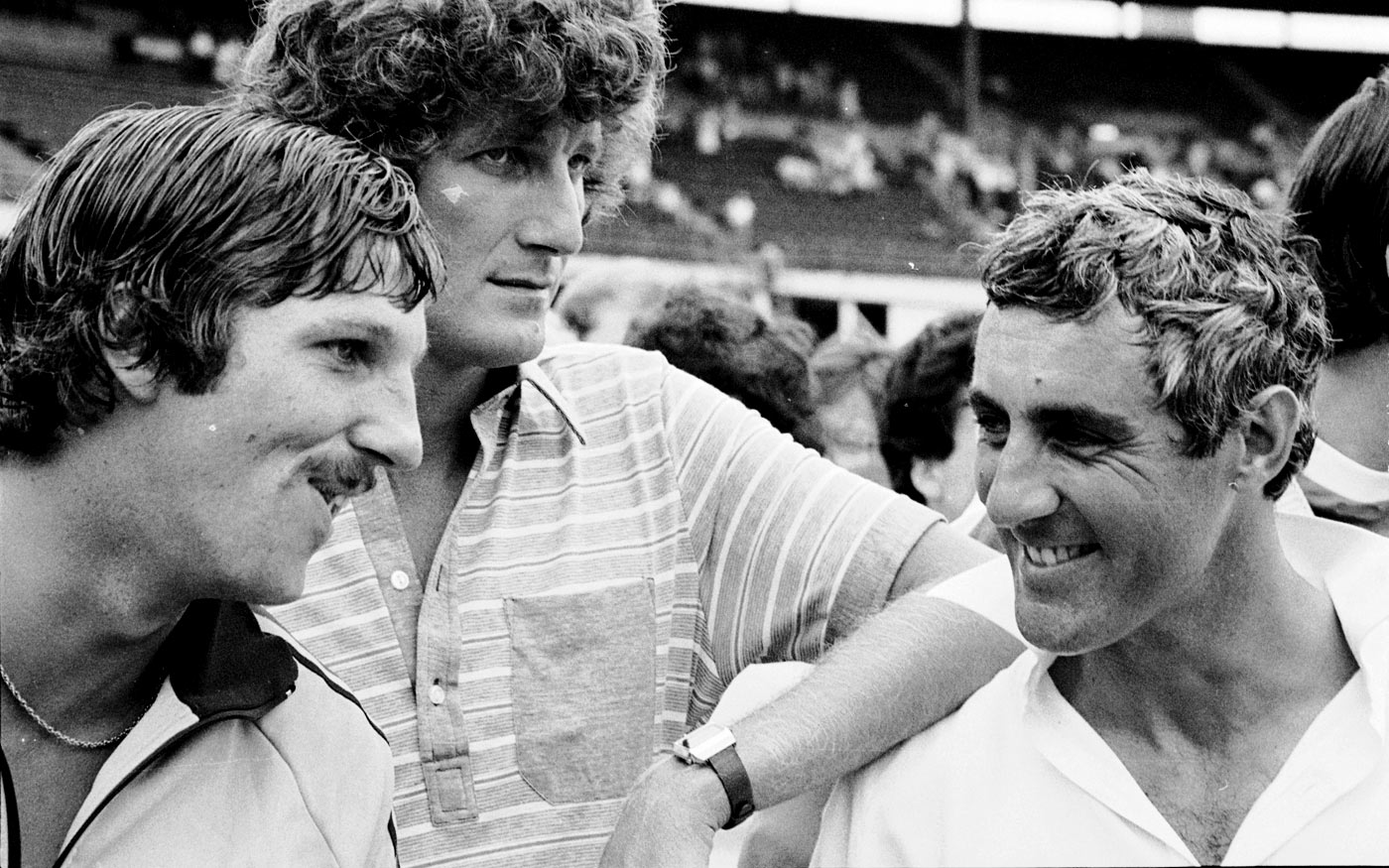 Mike Brearley was fortunate to have captained England when Botham and Willis were arguably at their best © Getty Images
How often have you heard "captaincy" being applauded by professional observers? "Great captaincy", they say. Or "lacklustre captaincy". Mahendra Singh Dhoni has experience of both types of criticism.
The entire concept is bogus. Have you ever heard of a captain being criticised when his team wins? Or have you heard it said, "We saw some superb captaincy from Clarke today but Australia were just not good enough"? No, when Australia lose, it is the other captain who did well. More consequentially, can you think of a good captain of an inferior team beating a better side purely because of captaincy?
Captaincy seems to be a concept by writers for writers. It exists not because cricket is played but because cricket is written about and argued about. There is a difference between noting the mere existence of a captain as the person who decides bowling changes and field settings, and captaincy as a full-fledged art consequential to the game. It is the latter that is bogus. Every time a captain puts a third slip in and a catch goes there, it doesn't amount to "great captaincy". Since a field is set every over, it's just one choice that worked, among many dozens of choices that didn't.
Historically captaincy has also had social significance. The captain had to be someone from a good background. Who are his parents? What social class does he come from? Which university did he go to? Will he look plausible when dignitaries visit? Until 1952, the captain of England had to be an amateur (someone who could afford to play cricket for fun, not as a job, because he had other sources of income). That year, Len Hutton became the first professional cricketer to captain England, 75 years after England first played a Test. As Osman Samiuddin notes in his history of Pakistan cricket, early Pakistan captains were chosen for their Oxbridge pedigree. Today these colonial markers are no longer fashionable. In their place we have vague notions of "leadership" and other such management-speak.
Mike Brearley (Cambridge University and Middlesex) captained England in 31 of his 39 Tests. He made 1442 runs at 22.88 in 66 innings in Test cricket. He played all his innings in the top seven, most frequently as opener.
Brearley did not get picked for England as a specialist batsman alone after the Centenary Test in Melbourne in March 1977. He is Exhibit A for the pro-captaincy set - the most prominent member of the very small set of players who were not good enough to make a Test team with bat or ball, but were picked primarily as captain.
Brearley's reputation rests on his career as captain in Ashes Tests. He led England to two Ashes wins at home, in 1977 and 1981. He also led England to an Ashes win against a Packer-affected Australia side in Australia. Apart from this, Brearley led England to victory against New Zealand at home, and a Pakistan side (also Packer-depleted) in 1978. Add to this an unconvincing 1-0 win at home against an Indian side that had very little fast bowling (Kapil Dev was still raw in 1979) and the tired remnants of their spin quartet. Sunil Gavaskar nearly brought India level at The Oval in that series, despite Brearley's captaincy.
At first glance, it is an impressive record. But in all those series, England were simply the better side, either because they were playing at home or because their opponents were crippled by defections.
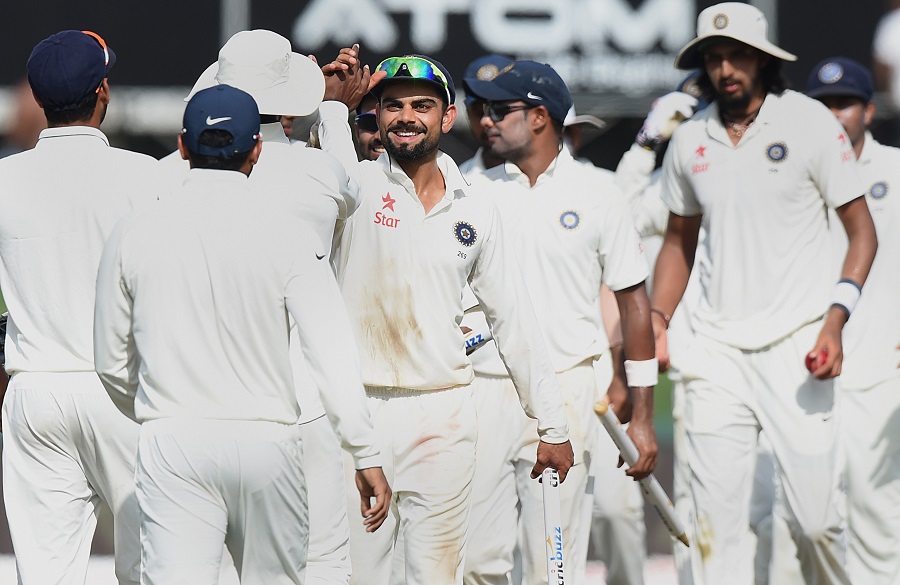 Indian captains have been termed "aggressive" usually when they've had quality bowlers at their disposal © AFP
What happened to England against full-strength opposition in that 1977-81 period? They were thumped 3-0 in three Tests in Australia in 1979-80 under Brearley, lost 1-0 to West Indies at home in 1980 and 2-0 away in 1980-81. Brearley did not make the side in the two series against West Indies. In fact, he never faced the strongest team of his era. Without him, under Ian Botham, England did quite well against West Indies in 1980 when you consider what had happened in 1976 and what was to happen in 1984.
It is not uncommon for England captains to be highly successful in England. England have traditionally been very difficult to beat at home. Brearley's successor Bob Willis won six out of nine Tests in England against much stronger India, Pakistan and New Zealand sides that had Kapil, Imran Khan and Richard Hadlee in their prime. England's only loss under Willis came against New Zealand in Leeds in 1983, after Lance Cairns took ten wickets in the match.
Brearley's impact on the English teams he led is questionable. Would they have won just as well with any captain other than Botham in 1981? Was Brearley's value purely that Botham flourished under him? It's clear that under Brearley, Botham was an extraordinary player. He made seven centuries and took 15 five-wicket hauls in 26 such Tests. But his next best efforts came under Bob Willis, in the 1982-84 period. It is plausible to think that Brearley merely had the benefit of having Botham at his best. Perhaps equally importantly, he had Willis at his peak.
The crucial question about Brearley might be: if he was really such a fantastic captain, why did he continue to pick himself in the XI when it was clear that he wasn't good enough to play at Test level? Can you imagine what would happen if a player with an average of 22 was allowed 39 Tests as a specialist batsman today? Why, think of what happened to Botham in 1980. Poor performances against the best team in the world brought its own pressure. Brearley had no such problems.
The idea that the record of captains depends on the quality of their players is generally accepted. But it is curiously discarded when captaincy itself is discussed. There are, for example, rumblings about Virat Kohli being a more "aggressive" captain compared to Dhoni. There is no basis for thinking this. Given turning tracks and opponents who had little experience of batting on them and no high-quality spinners in their ranks to exploit them, Dhoni's India demolished teams with disdain. West Indies, New Zealand and an Australian team in crisis all answered to this description. When Dhoni had quality bowling, he looked a very aggressive captain and India won handsomely. Just as they did under Rahul Dravid. If India have quality bowling under Kohli, he will be remembered as an "aggressive captain".
Much is made of the fact that India's batting didn't do well in England and Australia under Dhoni in the 2011-12 seasons. But we forget that when India won in England in 2007, India's top seven did not make a single century in the series. It was the bowling, led by Zaheer Khan, that made all the difference. Zaheer's series in England ranks alongside those of McGrath, Warne and Murali in the 21st century. The support he got from RP Singh, Anil Kumble, Sreesanth and Ganguly made it one of India's finest overseas performances ever.
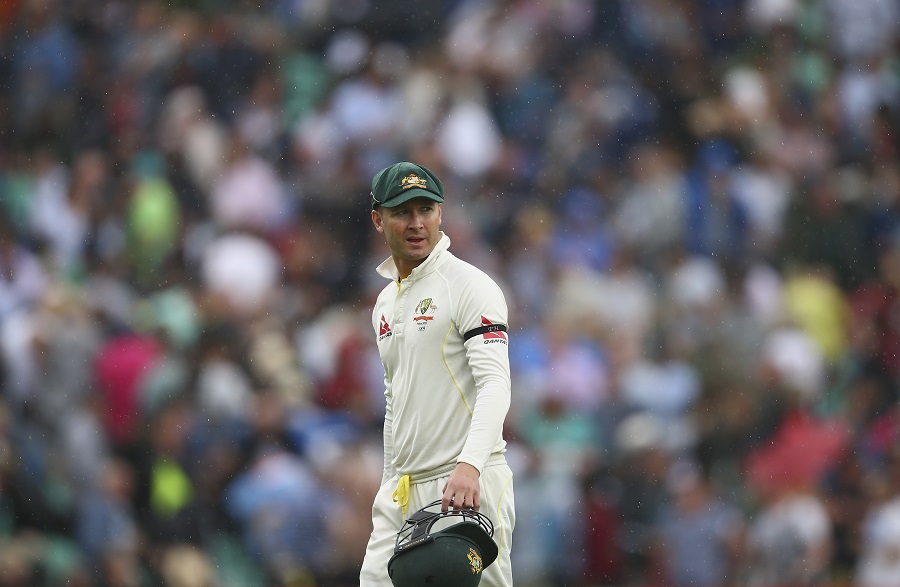 Michael Clarke: a "tactically astute" leader, but what do his numbers say in away Tests? © Getty Images
Let's consider Michael Clarke's record. Clarke is widely regarded as the most tactically astute leader of his generation, but that didn't prevent him from losing 13 out of 28 Tests outside Australia. The only place where Australia have won comfortably under him is the West Indies (where the hosts have won only three out of 17 home Test series against major teams in the 21st century, and lost 11).
Look down the list of captains away from home in the 21st century, and you'll find that some of the most highly regarded captains had losing records - Michael Clarke, Mahela Jayawardene, Nasser Hussain.
All this suggests that captaincy is overrated by observers in cricket. If one were to list the essential cricketing skills for a Test and ODI team from the most important to the least, they would be as follows: fast bowling, spin bowling, allrounders, opening batting, middle-order batting, wicketkeeping, catching, ground fielding, overall fitness, captaincy.
A quality team with a nondescript captain would win way more than a bad team with a "good" captain. This is one of the great features of cricket. Despite being an aristocratic sport, on the field, it is a great leveller. To win, you have to bowl well, bat well and field well. At the highest level, tactics are not a mystery. Every club cricketer knows what the best options (or the best three or four options) are for a given team in a given situation.
Kumble once said of his googly, "They pick it, but they still have to play it." That is what makes a top Test team. The ability to play so well that even when the opposition knows exactly what's coming, they have to play very well to cope.
Perhaps it is better to think of captaincy as one thinks of wicketkeeping. A keeper who makes a lot of mistakes or has bad footwork and is repeatedly caught in bad positions is noticed. Similarly, a keeper who has to keep pulling off brilliant diving takes is also noticed. In the first case, the keeper is poor. In the second, the bowling is poor. Similarly, if a captain is being noticed one way or the other, something is wrong with the team.
Mike Brearley was fortunate to have captained England when Botham and Willis were arguably at their best © Getty ImagesHow often have you heard "captaincy" being applauded by professional observers? "Great captaincy", they say. Or "lacklustre captaincy". Mahendra Singh Dhoni has experience of both types of criticism.
The entire concept is bogus. Have you ever heard of a captain being criticised when his team wins? Or have you heard it said, "We saw some superb captaincy from Clarke today but Australia were just not good enough"? No, when Australia lose, it is the other captain who did well. More consequentially, can you think of a good captain of an inferior team beating a better side purely because of captaincy?
Captaincy seems to be a concept by writers for writers. It exists not because cricket is played but because cricket is written about and argued about. There is a difference between noting the mere existence of a captain as the person who decides bowling changes and field settings, and captaincy as a full-fledged art consequential to the game. It is the latter that is bogus. Every time a captain puts a third slip in and a catch goes there, it doesn't amount to "great captaincy". Since a field is set every over, it's just one choice that worked, among many dozens of choices that didn't.
Historically captaincy has also had social significance. The captain had to be someone from a good background. Who are his parents? What social class does he come from? Which university did he go to? Will he look plausible when dignitaries visit? Until 1952, the captain of England had to be an amateur (someone who could afford to play cricket for fun, not as a job, because he had other sources of income). That year, Len Hutton became the first professional cricketer to captain England, 75 years after England first played a Test. As Osman Samiuddin notes in his history of Pakistan cricket, early Pakistan captains were chosen for their Oxbridge pedigree. Today these colonial markers are no longer fashionable. In their place we have vague notions of "leadership" and other such management-speak.
Mike Brearley (Cambridge University and Middlesex) captained England in 31 of his 39 Tests. He made 1442 runs at 22.88 in 66 innings in Test cricket. He played all his innings in the top seven, most frequently as opener.
Brearley did not get picked for England as a specialist batsman alone after the Centenary Test in Melbourne in March 1977. He is Exhibit A for the pro-captaincy set - the most prominent member of the very small set of players who were not good enough to make a Test team with bat or ball, but were picked primarily as captain.
Brearley's reputation rests on his career as captain in Ashes Tests. He led England to two Ashes wins at home, in 1977 and 1981. He also led England to an Ashes win against a Packer-affected Australia side in Australia. Apart from this, Brearley led England to victory against New Zealand at home, and a Pakistan side (also Packer-depleted) in 1978. Add to this an unconvincing 1-0 win at home against an Indian side that had very little fast bowling (Kapil Dev was still raw in 1979) and the tired remnants of their spin quartet. Sunil Gavaskar nearly brought India level at The Oval in that series, despite Brearley's captaincy.
At first glance, it is an impressive record. But in all those series, England were simply the better side, either because they were playing at home or because their opponents were crippled by defections.
Indian captains have been termed "aggressive" usually when they've had quality bowlers at their disposal © AFPWhat happened to England against full-strength opposition in that 1977-81 period? They were thumped 3-0 in three Tests in Australia in 1979-80 under Brearley, lost 1-0 to West Indies at home in 1980 and 2-0 away in 1980-81. Brearley did not make the side in the two series against West Indies. In fact, he never faced the strongest team of his era. Without him, under Ian Botham, England did quite well against West Indies in 1980 when you consider what had happened in 1976 and what was to happen in 1984.
It is not uncommon for England captains to be highly successful in England. England have traditionally been very difficult to beat at home. Brearley's successor Bob Willis won six out of nine Tests in England against much stronger India, Pakistan and New Zealand sides that had Kapil, Imran Khan and Richard Hadlee in their prime. England's only loss under Willis came against New Zealand in Leeds in 1983, after Lance Cairns took ten wickets in the match.
Brearley's impact on the English teams he led is questionable. Would they have won just as well with any captain other than Botham in 1981? Was Brearley's value purely that Botham flourished under him? It's clear that under Brearley, Botham was an extraordinary player. He made seven centuries and took 15 five-wicket hauls in 26 such Tests. But his next best efforts came under Bob Willis, in the 1982-84 period. It is plausible to think that Brearley merely had the benefit of having Botham at his best. Perhaps equally importantly, he had Willis at his peak.
The crucial question about Brearley might be: if he was really such a fantastic captain, why did he continue to pick himself in the XI when it was clear that he wasn't good enough to play at Test level? Can you imagine what would happen if a player with an average of 22 was allowed 39 Tests as a specialist batsman today? Why, think of what happened to Botham in 1980. Poor performances against the best team in the world brought its own pressure. Brearley had no such problems.
The idea that the record of captains depends on the quality of their players is generally accepted. But it is curiously discarded when captaincy itself is discussed. There are, for example, rumblings about Virat Kohli being a more "aggressive" captain compared to Dhoni. There is no basis for thinking this. Given turning tracks and opponents who had little experience of batting on them and no high-quality spinners in their ranks to exploit them, Dhoni's India demolished teams with disdain. West Indies, New Zealand and an Australian team in crisis all answered to this description. When Dhoni had quality bowling, he looked a very aggressive captain and India won handsomely. Just as they did under Rahul Dravid. If India have quality bowling under Kohli, he will be remembered as an "aggressive captain".
Much is made of the fact that India's batting didn't do well in England and Australia under Dhoni in the 2011-12 seasons. But we forget that when India won in England in 2007, India's top seven did not make a single century in the series. It was the bowling, led by Zaheer Khan, that made all the difference. Zaheer's series in England ranks alongside those of McGrath, Warne and Murali in the 21st century. The support he got from RP Singh, Anil Kumble, Sreesanth and Ganguly made it one of India's finest overseas performances ever.
Michael Clarke: a "tactically astute" leader, but what do his numbers say in away Tests? © Getty ImagesLet's consider Michael Clarke's record. Clarke is widely regarded as the most tactically astute leader of his generation, but that didn't prevent him from losing 13 out of 28 Tests outside Australia. The only place where Australia have won comfortably under him is the West Indies (where the hosts have won only three out of 17 home Test series against major teams in the 21st century, and lost 11).
Look down the list of captains away from home in the 21st century, and you'll find that some of the most highly regarded captains had losing records - Michael Clarke, Mahela Jayawardene, Nasser Hussain.
All this suggests that captaincy is overrated by observers in cricket. If one were to list the essential cricketing skills for a Test and ODI team from the most important to the least, they would be as follows: fast bowling, spin bowling, allrounders, opening batting, middle-order batting, wicketkeeping, catching, ground fielding, overall fitness, captaincy.
A quality team with a nondescript captain would win way more than a bad team with a "good" captain. This is one of the great features of cricket. Despite being an aristocratic sport, on the field, it is a great leveller. To win, you have to bowl well, bat well and field well. At the highest level, tactics are not a mystery. Every club cricketer knows what the best options (or the best three or four options) are for a given team in a given situation.
Kumble once said of his googly, "They pick it, but they still have to play it." That is what makes a top Test team. The ability to play so well that even when the opposition knows exactly what's coming, they have to play very well to cope.
Perhaps it is better to think of captaincy as one thinks of wicketkeeping. A keeper who makes a lot of mistakes or has bad footwork and is repeatedly caught in bad positions is noticed. Similarly, a keeper who has to keep pulling off brilliant diving takes is also noticed. In the first case, the keeper is poor. In the second, the bowling is poor. Similarly, if a captain is being noticed one way or the other, something is wrong with the team.
Subscribe to:
Posts (Atom)