Sunday, 22 August 2021
Friday, 20 August 2021
Ten days that shook the world: The latest Taliban takeover of Afghanistan
Najam Sethi in The Friday Times
The Afghan Taliban talked and fought. They won. The Americans talked and ran. They lost. The end was foretold in 2020 when President Donald Trump announced an exit from Afghanistan without installing a broad-based, inclusive interim government in Kabul. But few – certainly not President Biden who actually gave an unconditional cut-off date in September for full withdrawal but believed that the Afghan National Army could fight on for another year at least — expected the ANA to fold and President Ashraf Ghani to flee in ten days. This followed the last round of talks among the internal and external stakeholders in Doha, August 10-11.
The Taliban’s brilliant strategy was based on the basic principles of guerilla warfare — gain Time to capture Space and use Space to erode the Will of the enemy to fight. This theory was first successfully enunciated by Mao Tse Tung in China in the 1930s and then by Ho Chi Minh in Vietnam in the 1960s. For a decade after their rout in 2001, the Taliban regrouped and reorganized on both sides of the Pakistan border, becoming bolder and more aggressive after 2010. But after signing the Agreement with the US in 2020, they dragged Time to forestall any US-selected “inclusive” government in Kabul while focusing on capturing Space in north Afghanistan – ethnically hostile regions led by warlords who had challenged and undermined their power in 1997-2001. Their tactics of talking and fighting on the front lines – “the Americans are leaving, lay down your weapons, surrender and go home, we won’t exact revenge or hurt you” – paid huge dividends. In the last stage, when the Americans began to progressively pull air support, commanders, trainers, contractors, and air supply lines to distant front lines were severely disrupted, the ANA lost critical elements of the war machine manufactured by the Americans, and crumbled. It didn’t help that massive corruption in the Ghani regime, including in the ANA, was a core demotivating factor, no less than the frequent shuffling of military commanders from the Presidency. The Taliban encirclement of Kabul was complete after the provincial garrison towns surrendered one after another and American soldiers caught their last flights home.
The biggest strategic mistake Ashraf Ghani made was fighting with Pakistan, a key stakeholder, and flirting with India, a distant spoiler. Pakistan’s stake in Afghanistan, for various reasons right or wrong, is forty years old. If Kabul couldn’t be overtly friendly with Islamabad, it should not have been overly hostile to it. Thus Pakistan and the Afghan Taliban became natural covert allies. The Americans, too, lost sight of the ball when they signed the 2020 Agreement by rejecting the Taliban’s demand to replace Ghani with an acceptable transitional option. What next?
In America, President Biden – who was banking on popular goodwill for “bringing the boys home” by ending “America’s longest war” – is besieged with a popular backlash at another “Saigon moment”. Approval for his exit strategy has fallen radically among Democrats and Republicans from over 70% to under 50%. This implies that America might scapegoat Pakistan for its defeat. The anti-Pakistan narrative of “safe havens”, “Haqqani network is a veritable arm of the ISI”, “double-crossing”, etc, is already well established. If pushed, it could estrange Islamabad and derail international efforts to stabilize Afghanistan under an inclusive regime with regard for core human rights.
In Afghanistan, the Taliban 2.0 can be expected to establish only a minimally acceptable inclusive regime with substantive levers of policy and power in their own hands. Initially they will try and run the country with an Amir ul Momineen or Supreme Leader at the helm of a handpicked Council of Ministers along the lines of Iran immediately after the Islamic Revolution. They will also crave international recognition and legitimacy by assuaging the fears of the regional powers – Russia, China, Iran, Central Asian States and Pakistan – by pledging economic cooperation and ending safe havens for regional militants, insurgents and separatists based in Afghanistan. For the international community, they will try to square their idea of human rights in an Islamic regime with Western notions of freedom and democracy.
These factors are going to make or break the Taliban 2.0 regime. Al-Qaeda, TTP, ETM, IS, Daesh, Baloch separatists, etc., will not be easy to knock out or neutralize quickly. Their ranks have been swelled by the thousands of prisoners who have been released. If they continue to spill over across borders, tensions with neighbours will arise. If any Al-Qaeda attack on US soil is uncovered with footsteps going back to Afghanistan, America will come under pressure to exact revenge again.
There is also the factor of Afghanistan 2.0. In the last two decades a new generation of Afghans has grown up in the light of secularism, media freedoms, women’s rights and information revolution. If the Taliban try to scuttle these in any brutal or swift manner, there will be a definite reaction at home and abroad with blowback consequences. Afghanistan 2.0’s economy — its financial system, education, administration and infrastructure , forex reserves, etc — are totally dependent on American largesse and aid.
Finally, much will depend on the experience and wisdom of the three top Taliban leaders who will guide Afghanistan into a new age. Their reputations and credentials precede them. The Supreme Leader, Haibatullah Akhunzada, was “an enthusiastic proponent of suicide bombings” who ordered his own son to blow himself up in an attack in Helmand province. He is also the strategist who fashioned the “talk talk, fight fight” strategy which proved so successful in the end. Sirajuddin Haqqani, number two, has been the “most dogged opponent” of the US who concentrated on “complex suicide attacks and targeted assassinations”. Abdul Ghani Baradar, who is the leading Presidential candidate, has served a decade in Pakistani prison on the say-so of the Americans.
Pakistan is poised to win or lose big time. If Taliban 2.0 neutralize anti-Pakistan elements based in Afghanistan and facilitate the Pak-China CPEC corridor to Central Asia and the Central Asian rail, road, gas and oil corridor to South Asia, it will reap enormous dividends. But if the Taliban victory and American defeat raise the spectre of Islamic radicalism inside Pakistan either by emboldening disgruntled religious elements like the TLP or TTP or by triggering an anti-American populist wave that isolates Pakistan in the international community, the outlook will be bleak. Pakistan’s economy is totally dependent on the goodwill of the West and its civil society is sufficiently developed to resist any radical “Islamist” encroachments on their democratic freedoms.
If the road to a Taliban victory in Afghanistan has been long and hard and bloody, the road ahead is neither secure nor assured. The predominantly Pashtun Taliban constitute only a small percentage of the 45-50% Pashtuns of Afghanistan. The other Pashtuns and ethnic regions may have surrendered to the Taliban military juggernaut but if they are not made real stakeholders in an inclusive broad based political and administrative state system, tribal revolts and foreign interventionists will start brewing once again in the bowels of Afghanistan.
The Afghan Taliban talked and fought. They won. The Americans talked and ran. They lost. The end was foretold in 2020 when President Donald Trump announced an exit from Afghanistan without installing a broad-based, inclusive interim government in Kabul. But few – certainly not President Biden who actually gave an unconditional cut-off date in September for full withdrawal but believed that the Afghan National Army could fight on for another year at least — expected the ANA to fold and President Ashraf Ghani to flee in ten days. This followed the last round of talks among the internal and external stakeholders in Doha, August 10-11.
The Taliban’s brilliant strategy was based on the basic principles of guerilla warfare — gain Time to capture Space and use Space to erode the Will of the enemy to fight. This theory was first successfully enunciated by Mao Tse Tung in China in the 1930s and then by Ho Chi Minh in Vietnam in the 1960s. For a decade after their rout in 2001, the Taliban regrouped and reorganized on both sides of the Pakistan border, becoming bolder and more aggressive after 2010. But after signing the Agreement with the US in 2020, they dragged Time to forestall any US-selected “inclusive” government in Kabul while focusing on capturing Space in north Afghanistan – ethnically hostile regions led by warlords who had challenged and undermined their power in 1997-2001. Their tactics of talking and fighting on the front lines – “the Americans are leaving, lay down your weapons, surrender and go home, we won’t exact revenge or hurt you” – paid huge dividends. In the last stage, when the Americans began to progressively pull air support, commanders, trainers, contractors, and air supply lines to distant front lines were severely disrupted, the ANA lost critical elements of the war machine manufactured by the Americans, and crumbled. It didn’t help that massive corruption in the Ghani regime, including in the ANA, was a core demotivating factor, no less than the frequent shuffling of military commanders from the Presidency. The Taliban encirclement of Kabul was complete after the provincial garrison towns surrendered one after another and American soldiers caught their last flights home.
The biggest strategic mistake Ashraf Ghani made was fighting with Pakistan, a key stakeholder, and flirting with India, a distant spoiler. Pakistan’s stake in Afghanistan, for various reasons right or wrong, is forty years old. If Kabul couldn’t be overtly friendly with Islamabad, it should not have been overly hostile to it. Thus Pakistan and the Afghan Taliban became natural covert allies. The Americans, too, lost sight of the ball when they signed the 2020 Agreement by rejecting the Taliban’s demand to replace Ghani with an acceptable transitional option. What next?
In America, President Biden – who was banking on popular goodwill for “bringing the boys home” by ending “America’s longest war” – is besieged with a popular backlash at another “Saigon moment”. Approval for his exit strategy has fallen radically among Democrats and Republicans from over 70% to under 50%. This implies that America might scapegoat Pakistan for its defeat. The anti-Pakistan narrative of “safe havens”, “Haqqani network is a veritable arm of the ISI”, “double-crossing”, etc, is already well established. If pushed, it could estrange Islamabad and derail international efforts to stabilize Afghanistan under an inclusive regime with regard for core human rights.
In Afghanistan, the Taliban 2.0 can be expected to establish only a minimally acceptable inclusive regime with substantive levers of policy and power in their own hands. Initially they will try and run the country with an Amir ul Momineen or Supreme Leader at the helm of a handpicked Council of Ministers along the lines of Iran immediately after the Islamic Revolution. They will also crave international recognition and legitimacy by assuaging the fears of the regional powers – Russia, China, Iran, Central Asian States and Pakistan – by pledging economic cooperation and ending safe havens for regional militants, insurgents and separatists based in Afghanistan. For the international community, they will try to square their idea of human rights in an Islamic regime with Western notions of freedom and democracy.
These factors are going to make or break the Taliban 2.0 regime. Al-Qaeda, TTP, ETM, IS, Daesh, Baloch separatists, etc., will not be easy to knock out or neutralize quickly. Their ranks have been swelled by the thousands of prisoners who have been released. If they continue to spill over across borders, tensions with neighbours will arise. If any Al-Qaeda attack on US soil is uncovered with footsteps going back to Afghanistan, America will come under pressure to exact revenge again.
There is also the factor of Afghanistan 2.0. In the last two decades a new generation of Afghans has grown up in the light of secularism, media freedoms, women’s rights and information revolution. If the Taliban try to scuttle these in any brutal or swift manner, there will be a definite reaction at home and abroad with blowback consequences. Afghanistan 2.0’s economy — its financial system, education, administration and infrastructure , forex reserves, etc — are totally dependent on American largesse and aid.
Finally, much will depend on the experience and wisdom of the three top Taliban leaders who will guide Afghanistan into a new age. Their reputations and credentials precede them. The Supreme Leader, Haibatullah Akhunzada, was “an enthusiastic proponent of suicide bombings” who ordered his own son to blow himself up in an attack in Helmand province. He is also the strategist who fashioned the “talk talk, fight fight” strategy which proved so successful in the end. Sirajuddin Haqqani, number two, has been the “most dogged opponent” of the US who concentrated on “complex suicide attacks and targeted assassinations”. Abdul Ghani Baradar, who is the leading Presidential candidate, has served a decade in Pakistani prison on the say-so of the Americans.
Pakistan is poised to win or lose big time. If Taliban 2.0 neutralize anti-Pakistan elements based in Afghanistan and facilitate the Pak-China CPEC corridor to Central Asia and the Central Asian rail, road, gas and oil corridor to South Asia, it will reap enormous dividends. But if the Taliban victory and American defeat raise the spectre of Islamic radicalism inside Pakistan either by emboldening disgruntled religious elements like the TLP or TTP or by triggering an anti-American populist wave that isolates Pakistan in the international community, the outlook will be bleak. Pakistan’s economy is totally dependent on the goodwill of the West and its civil society is sufficiently developed to resist any radical “Islamist” encroachments on their democratic freedoms.
If the road to a Taliban victory in Afghanistan has been long and hard and bloody, the road ahead is neither secure nor assured. The predominantly Pashtun Taliban constitute only a small percentage of the 45-50% Pashtuns of Afghanistan. The other Pashtuns and ethnic regions may have surrendered to the Taliban military juggernaut but if they are not made real stakeholders in an inclusive broad based political and administrative state system, tribal revolts and foreign interventionists will start brewing once again in the bowels of Afghanistan.
Thursday, 19 August 2021
No surprise Leeds lost to Manchester United, just look at the wage bills
Although teams can often defy financial logic for a time, to move up a tier is incredibly difficult
The easy thing is to blame the manager. It has become football’s default response to any crisis. A team hits a poor run or loses a big game: get rid of the manager. As Alex Ferguson said as many as 14 years ago, we live in “a mocking culture” and reality television has fostered the idea people should be voted off with great regularity (that he was trying to defend Steve McClaren’s reign as England manager should not undermine the wider point).
Managers are expendable. Rejigging squads takes time and money and huge amounts of effort in terms of research and recruitment, whereas anybody can look at who is doing well in Portugal or Greece or the Championship and spy a potential messiah. Then there are the structural factors, the underlying economic issues it is often preferable to ignore because to acknowledge them is to accept how little agency the people we shout about every week really have in football.
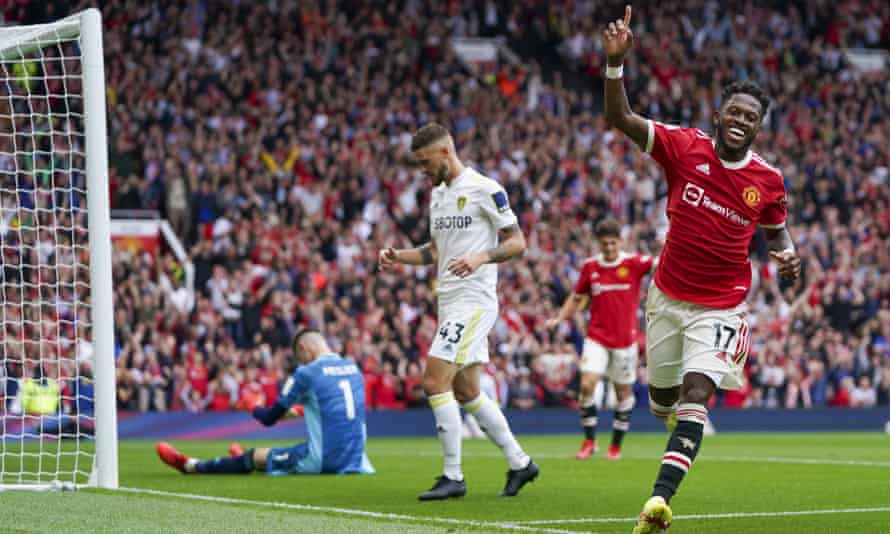
That point reared its head after Manchester United’s 5-1 victory over Leeds on Saturday. There was plenty to discuss: are Leeds overreliant on Kalvin Phillips, who was absent? Why does Marcelo Bielsa’s version of pressing so often lead to heavy defeats? Can Mason Greenwood’s movement allow Ole Gunnar Solskjær to field Paul Pogba and Bruno Fernandes without sacrificing a holding midfielder and, if it does, what does that mean for Marcus Rashford?
Yet there was a weird strand of coverage that insisted Solskjær had somehow outwitted Bielsa, even in some quarters that Bielsa needed to be replaced if Leeds are to kick on. (They finished ninth last season with 59 points, the highest points total by a promoted club for two decades). A Bielsa meltdown is possible; they do happen and he has never managed a fourth season at a club. There should be some concern that, like last season, Leeds lost by four goals at Old Trafford, insufficient lessons were learned, even if Bielsa said this was a better performance. But fundamentally, Manchester United’s wage bill is five times that of Leeds.
Everton, who finished a place below Leeds last season, had a wage bill three times bigger. Of last season’s Premier League, only West Brom and Sheffield United had wage bills lower than that of Leeds. To have finished ninth is an extraordinary achievement and nobody should think to slip back three or four places this season would be a failure. Modern football is starkly stratified and although teams can often defy financial logic for a time, to move up a tier is incredibly difficult.
There is still a tendency to talk of a Big Six in English football and while it is true six clubs last season had a weekly wage bill in excess of £2.5m, it is also true that within that grouping there are three with clear advantages: Manchester City (who had kept their wage bill relatively low, although if they do add Harry Kane to Jack Grealish that would clearly change) and Chelsea because their funding is not reliant on footballing success, and Manchester United because of the legacy that has allowed them to attach their name to a preposterous range of products across the globe.
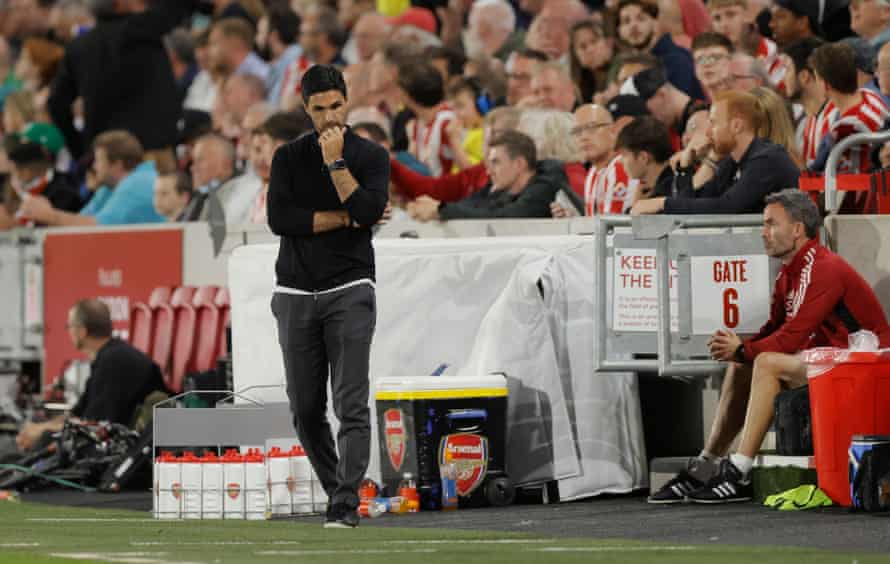 Mikel Arteta is struggling to revive Arsenal. Photograph: Tom Jenkins/The Guardian
Liverpool can perhaps challenge for the title this season, but their wage spending is 74% of that of United. That they were as good as they were in the two seasons before last was remarkable, but last season showed how vulnerable a team like Liverpool can be to a couple of injuries. Similarly, Leicester’s two fifth-place finishes with the eighth-highest wage bill are a striking achievement, their decline towards the end of the past two seasons less the result of them bottling it or any sort of psychological failure than of the limitations of their squad being exposed.
Which brings us to the other two members of the Big Six: Arsenal and Tottenham. Spurs’ last game at White Hart Lane, in 2017, brought a 2-1 win over Manchester United that guaranteed they finished second. Since when Spurs have bought Davinson Sánchez, Lucas Moura, Serge Aurier, Fernando Llorente, Juan Foyth, Tanguy Ndombele, Steven Bergwijn, Ryan Sessegnon, Giovani Lo Celso, Cristian Romero and Bryan Gil, while United have bought, among others, Alexis Sánchez, Victor Lindelöf, Nemanja Matic, Romelu Lukaku, Fred, Daniel James, Aaron Wan-Bissaka, Bruno Fernandes, Harry Maguire, Donny van de Beek, Raphaël Varane and Jadon Sancho. Money may not be everything in football, but it does help.
The irony of the situation is that it was investment in the infrastructure that should allow Spurs to generate additional revenues and better develop their own talent (much cheaper than buying it) that led to the lack of investment in players largely responsible for the staleness resulting in Mauricio Pochettino’s departure. That Daniel Levy compounded the problem by appointing José Mourinho – acting like a big club as though to jolt them to the next level – should not obscure the fact that until that point he had pursued a ruthless and successful economic logic.
Arsenal had gone through a similar process the previous decade, investing heavily in a new stadium at the expense of the squad, only to discover that by the time it was ready the financial environment had changed and the petro-fuelled era had begun. It was easy after the timid performance against Brentford on Friday to blame Mikel Arteta and ask why he gets such an easy ride. For all that Arsenal have finished the past two seasons relatively well, that criticism will only increase if there are not signs the tanker is being turned round. But the gulf to the top of the table is vast and a desperation to bridge that has contributed to a bizarre transfer policy.
That does not mean managers are beyond reproach and limp displays like Arsenal’s deserve criticism. But equally we should probably remember that where a side finishes in the league has far more to do with economic strata than any of the individuals involved.
Manchester United’s Fred celebrates celebrates after completing Manchester United’s 5-1 victory over Leeds. Photograph: Jon Super/AP
Jonathan Wilson in The Guardian
Jonathan Wilson in The Guardian
The easy thing is to blame the manager. It has become football’s default response to any crisis. A team hits a poor run or loses a big game: get rid of the manager. As Alex Ferguson said as many as 14 years ago, we live in “a mocking culture” and reality television has fostered the idea people should be voted off with great regularity (that he was trying to defend Steve McClaren’s reign as England manager should not undermine the wider point).
Managers are expendable. Rejigging squads takes time and money and huge amounts of effort in terms of research and recruitment, whereas anybody can look at who is doing well in Portugal or Greece or the Championship and spy a potential messiah. Then there are the structural factors, the underlying economic issues it is often preferable to ignore because to acknowledge them is to accept how little agency the people we shout about every week really have in football.
That point reared its head after Manchester United’s 5-1 victory over Leeds on Saturday. There was plenty to discuss: are Leeds overreliant on Kalvin Phillips, who was absent? Why does Marcelo Bielsa’s version of pressing so often lead to heavy defeats? Can Mason Greenwood’s movement allow Ole Gunnar Solskjær to field Paul Pogba and Bruno Fernandes without sacrificing a holding midfielder and, if it does, what does that mean for Marcus Rashford?
Yet there was a weird strand of coverage that insisted Solskjær had somehow outwitted Bielsa, even in some quarters that Bielsa needed to be replaced if Leeds are to kick on. (They finished ninth last season with 59 points, the highest points total by a promoted club for two decades). A Bielsa meltdown is possible; they do happen and he has never managed a fourth season at a club. There should be some concern that, like last season, Leeds lost by four goals at Old Trafford, insufficient lessons were learned, even if Bielsa said this was a better performance. But fundamentally, Manchester United’s wage bill is five times that of Leeds.
Everton, who finished a place below Leeds last season, had a wage bill three times bigger. Of last season’s Premier League, only West Brom and Sheffield United had wage bills lower than that of Leeds. To have finished ninth is an extraordinary achievement and nobody should think to slip back three or four places this season would be a failure. Modern football is starkly stratified and although teams can often defy financial logic for a time, to move up a tier is incredibly difficult.
There is still a tendency to talk of a Big Six in English football and while it is true six clubs last season had a weekly wage bill in excess of £2.5m, it is also true that within that grouping there are three with clear advantages: Manchester City (who had kept their wage bill relatively low, although if they do add Harry Kane to Jack Grealish that would clearly change) and Chelsea because their funding is not reliant on footballing success, and Manchester United because of the legacy that has allowed them to attach their name to a preposterous range of products across the globe.
Mikel Arteta is struggling to revive Arsenal. Photograph: Tom Jenkins/The GuardianLiverpool can perhaps challenge for the title this season, but their wage spending is 74% of that of United. That they were as good as they were in the two seasons before last was remarkable, but last season showed how vulnerable a team like Liverpool can be to a couple of injuries. Similarly, Leicester’s two fifth-place finishes with the eighth-highest wage bill are a striking achievement, their decline towards the end of the past two seasons less the result of them bottling it or any sort of psychological failure than of the limitations of their squad being exposed.
Which brings us to the other two members of the Big Six: Arsenal and Tottenham. Spurs’ last game at White Hart Lane, in 2017, brought a 2-1 win over Manchester United that guaranteed they finished second. Since when Spurs have bought Davinson Sánchez, Lucas Moura, Serge Aurier, Fernando Llorente, Juan Foyth, Tanguy Ndombele, Steven Bergwijn, Ryan Sessegnon, Giovani Lo Celso, Cristian Romero and Bryan Gil, while United have bought, among others, Alexis Sánchez, Victor Lindelöf, Nemanja Matic, Romelu Lukaku, Fred, Daniel James, Aaron Wan-Bissaka, Bruno Fernandes, Harry Maguire, Donny van de Beek, Raphaël Varane and Jadon Sancho. Money may not be everything in football, but it does help.
The irony of the situation is that it was investment in the infrastructure that should allow Spurs to generate additional revenues and better develop their own talent (much cheaper than buying it) that led to the lack of investment in players largely responsible for the staleness resulting in Mauricio Pochettino’s departure. That Daniel Levy compounded the problem by appointing José Mourinho – acting like a big club as though to jolt them to the next level – should not obscure the fact that until that point he had pursued a ruthless and successful economic logic.
Arsenal had gone through a similar process the previous decade, investing heavily in a new stadium at the expense of the squad, only to discover that by the time it was ready the financial environment had changed and the petro-fuelled era had begun. It was easy after the timid performance against Brentford on Friday to blame Mikel Arteta and ask why he gets such an easy ride. For all that Arsenal have finished the past two seasons relatively well, that criticism will only increase if there are not signs the tanker is being turned round. But the gulf to the top of the table is vast and a desperation to bridge that has contributed to a bizarre transfer policy.
That does not mean managers are beyond reproach and limp displays like Arsenal’s deserve criticism. But equally we should probably remember that where a side finishes in the league has far more to do with economic strata than any of the individuals involved.
Subscribe to:
Comments (Atom)