Monday, 10 April 2023
Does winning the lottery actually ruin your life?
Contrary to popular belief, not everyone loses their friends and goes bankrupt writes Tim Harford in The FT
At the start of the graphic novel Bloke’s Progress, our everyday hero Darren Bloke isn’t coping with the everyday stresses of life. He has a tedious job, a grinding commute, squalling children and too many bills to pay. Then he wins the lottery — and his troubles truly begin.
First, Darren becomes estranged from his friends, who keep pestering him for money. He hangs out with a richer crowd but feels out of place. He divorces his wife and marries a new woman. Then she divorces him. His money is soon gone, and so, too, are his family and friends.
In Bloke’s Progress, Darren is saved by conversations with the spirit of the Victorian sage John Ruskin. (Of course!) Ruskin’s insights deserve a separate column — or a book. But Darren’s tale made me wonder: is this what happens to people who win the lottery?
A glance at the newspapers suggests that it is. The Courier Journal tells the tale of David Lee Edwards from Ashland, Kentucky. He won $27mn in 2001, spent it on drugs, fast cars and a Learjet. He was living in a storage unit within five years, and died penniless. The Guardian explains that Michael Carroll, self-proclaimed “king of chavs”, was declared bankrupt just eight years after winning nearly £10mn — while Lee Ryan ended up sleeping rough, and spending time in jail for handling stolen cars, despite winning £6.5mn. If only the spirit of John Ruskin had been there to save them all.
But while these cautionary tales offer us a moralistic narrative arc that sticks in the memory, they aren’t necessarily typical. A lot of people win big prizes on the lottery, enough to allow us to draw more subtle — and less tragic — conclusions.
First, do lottery wins estrange us from our friends? Darren Bloke’s fate seems plausible: his friends kept asking him for money, leading him to feel exploited and them to accuse him of meanness. Yet a study by Joan Costa Font of the London School of Economics and Nattavudh Powdthavee of Warwick Business School finds that people who win more than £10,000 on the lottery spend more time socialising with their friends, although less time talking to neighbours.
This result won’t come as a shock to those who read a 2016 study by Emily Bianchi and Kathleen Vohs, which found that richer Americans tended to spend less time with neighbours and family, and more with friends. The simplest explanation is that money makes it easy to socialise for pure pleasure, while reducing the need to maintain relationships for practical reasons, such as sharing childcare.
Second, do lottery winners blow their winnings and lapse into poverty? Here, myths abound; the National Endowment for Financial Education is often cited as the source for a claim that 70 per cent of lottery winners go bankrupt. The NEFE has issued a press release explaining that it has not made that claim and has no reason to believe the claim is true.
A study by the economists Scott Hankins, Mark Hoekstra and Paige Marta Skiba looked at 35,000 lottery winners in Florida, of whom 2,000 later filed for bankruptcy (that’s less than 6 per cent, not 70 per cent). The researchers did find that lottery winners were more likely to file for bankruptcy than non-winners. Perhaps that is not surprising, since lottery enthusiasts tend to be low-income, and most of them don’t win much. Hankins, Hoekstra and Skiba found that bankruptcy struck with equal likelihood whether people won less than $10,000 or more than $50,000.
These Floridian winners, then, were more likely to face bankruptcy than non-winners, but bankruptcy was still an unusual outcome. Nor did it make any difference how much they won.
Third, do lottery winners quit their jobs, as Darren Bloke did? Not according to a study of Swedish lottery winners who had won an average of 2mn Swedish kronor — roughly £200,000 — at some stage between the mid-1990s and 2005. This was about eight times the annual salary of a nurse or police officer in Sweden at the time. The researchers, Bengt Furaker and Anna Hedenus, found that some of these winners reduced their hours or took some unpaid leave, but 62 per cent carried on working exactly as before, and only 12 per cent quit their jobs completely. Either people felt that the jackpot wasn’t quite large enough to make it sensible to quit, or — perhaps more likely — they rather enjoyed their jobs. John Ruskin, who celebrated the value of honest labour, would surely have approved.
Thus far we’ve seen that lottery winners spend more time hanging out with friends, are not notably at risk of bankruptcy and often keep working in their old jobs. The big question remaining is: are they happy?
Yes, say Erik Lindqvist, Robert Östling and David Cesarini, who studied lottery winners in (again) Sweden. They find that winners of large prizes were significantly more satisfied with their lives — and in particular were significantly more satisfied with their finances. There is little sign in this data of the feckless or reckless lottery winners who squander their winnings.
The overall impression I get from these studies is that lottery winners are . . . well, rather sensible. “I won’t let it change my life,” goes the cliché, and perhaps the cliché is true.
Lottery winners typically use their money to increase their financial security and to spend more time with friends. They rarely quit their jobs. Some squander the money; most do not. Ruskin argued that money had no value unless it was wisely used. Lottery winners don’t do as badly as we might have feared.
Saturday, 8 April 2023
Stand on one leg – and 16 other life-changing daily moves that will keep your body happy
Are you sitting comfortably? Well, get up! Stay healthy and supple by adding these basic movements to your daily routine writes Kelly Starrett and Juliet Starrett in The Guardian
Things have changed a lot since the days when humans chased animals for food and had to walk long distances for water. But our bodies haven’t: we are still built to move in all the ways our ancestors needed to. Add in today’s personal transport, mechanical conveniences and screens that glue us to our chairs, and what do you get? Achy hips and backs, stiff necks, sore knees, and a significant downgrading of many markers of good health.
Generally, it is better to think about pain and discomfort in the body not as tissue damage or trauma but as a request for change. We have spent two decades coaching everyone from athletes to ordinary people who just want to feel better. We’ve found that motion can counteract the effects of modern living, enhance your capacity for easy movement and improve all the body’s systems (digestive, circulatory, immune, lymphatic). The following moves are basic body maintenance, and suitable for everyone. They are the key to being able to do all the things you love well into old age.
Motion can counteract the effects of modern living, enhance your capacity for easy movement and improve the body’s systems
Some of these moves you will already be doing; you may just need to do them a bit differently. And many of the others can easily be worked into your day. Stand on one leg while you brush your teeth. Sit on the floor to watch TV. Walk during phone conversations. And squeeze your bum while standing in a queue (no one will know). What you once thought of as idle moments are, in fact, little opportunities to move – opportunities that will add up to a big change in the way you feel. Do them daily or as often as you can.
Sit on the floor (three ways)
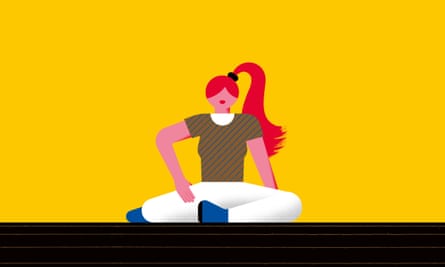
Spending 15 to 30 minutes a day sitting on the floor helps take your hip joints into ranges they don’t normally reach and loads your spine in advantageous ways. Both payoffs help undo some of the pain-inducing positions the body adopts when you sit in a chair for a freakish amount of time to work on a computer or binge-watch a box set.
We suggest switching between three positions:
1 Crisscross: sit with legs crossed in front of you, like you did at primary school.
2 90/90: sit with one leg bent at 90 degrees in front of you (your thigh straight out from your hip). Slightly resting on the front leg’s side of your bum, bend the other leg at a 90-degree angle so that its foot is behind you. Change sides after five minutes.
3 Long sitting: sit with your legs straight in front of you, back straight or with your torso leaning slightly forward.
Get up off the floor unaided
What goes down must come up, but can you get straight up off of the floor from a cross-legged position without holding on to anything or placing a hand or knee on the floor? Don’t worry if you can’t – it takes practice, but it’s worth working on: the ability to rise without assistance is not only a predictor of a longer life (research supports that acing this test correlates to decreases in all causes of mortality and morbidity), it’s an indicator that your body is stable, supple and efficient.
Squat
In some cultures, squatting is as common as sitting in a chair. It’s not seen as a strength training exercise, but is an innately human position that is beneficial for the knees, hips, back and pelvic floor. The ideal squat is with knees bent, bottom a few inches above the floor, hip creases well below the knees, toes pointing forward, and heels flat on the floor. If that’s too difficult, simply squat as low as you can go – feel free to hold on to a door or the back of a chair for stability – and hold for between five and 10 breaths.
Make like a bird
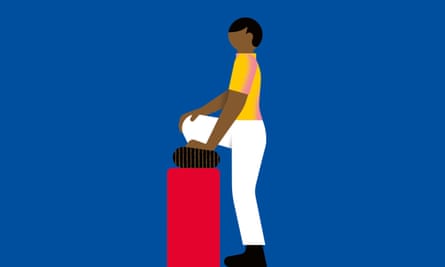
If you’ve ever practised yoga, you may be familiar with pigeon pose, another great move for your hips (like sitting crisscross). This setup is similar but easier, and just as effective. Place your right foot on a bench (or tabletop), letting your knee drop to the side and your calf lie across the bench perpendicular to your body. Place your left hand on your right foot, “stapling” it to the bench, and rotate your torso to the left. Next, rotate to the right. Continue alternating between the two positions for two minutes or for as long as possible. Switch sides.
Stand on one leg
It’s well known that balance diminishes with age and that falling is a real danger for older people. But falls are the third most common cause of unintentional injury worldwide for ages 18 to 35, too. Try standing on one leg for 20 seconds, then switch sides. If you can master that, try it standing inches from a blank white wall. A wall with no visual cues makes it harder. Then try it with your eyes closed.
On the bounce
Skipping is another excellent way to enhance your balance capabilities. But if you haven’t picked up a rope since you were 10, consider bouncing, a modified version of skipping: with your hands resting lightly on a counter, rise up on your toes and quickly bounce up and down 50 times. You don’t need to lower your heels to the ground each time; just drop them part-way as you bounce.
Step up your steps
There is nothing better for your body than walking. Walking doesn’t just stress (in a good way) the bones, joints and muscles, it also increases circulation and decongests your system. Walking also promotes better sleep and weight loss, and strolling around your area might help you get to know your neighbours, so it fosters community too.
If you go walking with someone else (which we highly recommend – conversation makes the miles fly by), this can help stave off loneliness, something we now know is detrimental to physical and mental health. Aim to build up your step count, with a goal of between 8,000 and 10,000 steps a day.
Load up
Adding weight to increase the force on your body is known as loading. That force elicits a positive adaptation response in your bones, muscles and other tissues, making them stronger and healthier. You don’t have to lift weights to load – you can do it while walking.
One way is by “rucking”, which involves walking carrying a backpack loaded with between two and 4.5 kilos of stuff (tinned foods work well). Walking uphill is another form of loading, because it increases the workload on your body. Walking briskly has a loading effect too. All three are excellent ways to improve your cardiovascular system.
It’s not enough to work out if you’re going to park yourself in a chair for the rest of the day
Sit less, stand more
Research shows that women and men who sit for more than six hours a day are, respectively, 37% and 18% more likely to die early than people who sit for less than three hours a day. The message here is that it’s not enough to work out – even if you work out hard – if you’re going to park yourself in a chair the rest of the day. But change your mindset and you will change your body, too: standing burns twice as many calories as sitting, and will make you less prone to aches and pains.
If you can, get a standing desk, or start working on a counter. If that’s not possible, take lots of standup breaks during the day and always opt for the “harder way”: taking the stairs rather than the lift, standing while you wait for the bus, leaning on the counter at a bar, giving your seat on the sofa to someone else at a party. After a while, it will become second nature.
Fidget
One reason we encourage standing is because it causes us to frequently and naturally adjust our posture for comfort. Not only do this and other types of fidgeting – such as changing position on the floor, or sitting in a variety of positions at your desk – keep the body moving, they also increase calorie burning. One study, from the Mayo Clinic/Arizona State University Obesity Solutions, found that compared with lying still, sitting increased energy expenditure by only 6%. But sitting and fidgeting increased it 54%. (Standing and fidgeting increased it by 94%).
Extend your hips
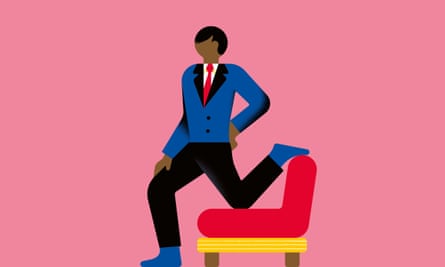
Most things humans are designed for – getting up and down, walking around carrying stuff, lifting – require hip extension. When this is restricted, it inhibits movement. To improve it, try the “couch stretch”: stand with your back to a couch, leave one foot on the floor, tuck the other knee into the area where the seat and back meet, or as far back as you can reach. Rest your shin and foot, toe pointed, on the back of the couch. Squeeze your bum and inhale for a count of five, then release and exhale for five. Do five times then swap sides.
Circle your arms
Remember arm circles in PE? Swap those baby-size revolutions for sweeping ones to keep shoulders and neck muscles supple. Stand tall with your arms above your head. In wide arcs, circle your arms out and down 10 times. Repeat in the other direction.
Rub your feet (and toes)
As well as being our foundation, feet are also the site of proprioceptors, sensors that tell us where our body is in space, helping us maintain balance. Unfortunately, most of us have desensitised our feet by walking around in shoes that block information from the ground. Help remedy this by going barefoot more often and by massaging the heels, arches, balls and tops of your feet for several minutes at a time. Use your fingers to spread your toes and to twist the front of your foot back and forth.
Roll with it
We’re big fans of using foam rollers or balls (although a tennis ball will do) to address pain in various areas of the body. Place it beneath the achy area (perhaps your calf), tighten the muscle as you breathe in for four seconds, hold it in place for four seconds, then relax the muscle and breathe out for eight seconds. Repeat. Continue the process as you move around both up and down and across the sore muscle.
Get in seven to eight
Hours of sleep that is. Yes, technically that’s not moving, but adequate sleep helps sustain movement, giving you the energy you need to mobilise as nature intended.
Breathe deeply
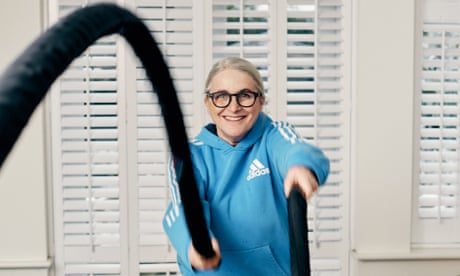
When people come to us with persistent back and neck pain, the first thing we look at is their breathing. Breath is like a canary in a coalmine: if you can’t breathe deeply in a position – whether it’s lifting weights at the gym or carrying a box out to the garage – you don’t have command of that position. We recommend regular deep breathing exercises and to focus on breathing through your nose, which activates breathing musculature more efficiently.
Squeeze your bum
Glutes – the big muscles in your rear – control the pelvis so that it doesn’t pitch forward and cause you to have a swayed banana back, and the strain and instability that come with it. You can improve your glute strength and hip extension by alternately squeezing your butt for five seconds, then relaxing for two over the course of several minutes. Do it while waiting in a coffee queue, while washing the dishes and brushing your teeth. Make every second count.
Things have changed a lot since the days when humans chased animals for food and had to walk long distances for water. But our bodies haven’t: we are still built to move in all the ways our ancestors needed to. Add in today’s personal transport, mechanical conveniences and screens that glue us to our chairs, and what do you get? Achy hips and backs, stiff necks, sore knees, and a significant downgrading of many markers of good health.
Generally, it is better to think about pain and discomfort in the body not as tissue damage or trauma but as a request for change. We have spent two decades coaching everyone from athletes to ordinary people who just want to feel better. We’ve found that motion can counteract the effects of modern living, enhance your capacity for easy movement and improve all the body’s systems (digestive, circulatory, immune, lymphatic). The following moves are basic body maintenance, and suitable for everyone. They are the key to being able to do all the things you love well into old age.
Motion can counteract the effects of modern living, enhance your capacity for easy movement and improve the body’s systems
Some of these moves you will already be doing; you may just need to do them a bit differently. And many of the others can easily be worked into your day. Stand on one leg while you brush your teeth. Sit on the floor to watch TV. Walk during phone conversations. And squeeze your bum while standing in a queue (no one will know). What you once thought of as idle moments are, in fact, little opportunities to move – opportunities that will add up to a big change in the way you feel. Do them daily or as often as you can.
Sit on the floor (three ways)
Spending 15 to 30 minutes a day sitting on the floor helps take your hip joints into ranges they don’t normally reach and loads your spine in advantageous ways. Both payoffs help undo some of the pain-inducing positions the body adopts when you sit in a chair for a freakish amount of time to work on a computer or binge-watch a box set.
We suggest switching between three positions:
1 Crisscross: sit with legs crossed in front of you, like you did at primary school.
2 90/90: sit with one leg bent at 90 degrees in front of you (your thigh straight out from your hip). Slightly resting on the front leg’s side of your bum, bend the other leg at a 90-degree angle so that its foot is behind you. Change sides after five minutes.
3 Long sitting: sit with your legs straight in front of you, back straight or with your torso leaning slightly forward.
Get up off the floor unaided
What goes down must come up, but can you get straight up off of the floor from a cross-legged position without holding on to anything or placing a hand or knee on the floor? Don’t worry if you can’t – it takes practice, but it’s worth working on: the ability to rise without assistance is not only a predictor of a longer life (research supports that acing this test correlates to decreases in all causes of mortality and morbidity), it’s an indicator that your body is stable, supple and efficient.
Squat
In some cultures, squatting is as common as sitting in a chair. It’s not seen as a strength training exercise, but is an innately human position that is beneficial for the knees, hips, back and pelvic floor. The ideal squat is with knees bent, bottom a few inches above the floor, hip creases well below the knees, toes pointing forward, and heels flat on the floor. If that’s too difficult, simply squat as low as you can go – feel free to hold on to a door or the back of a chair for stability – and hold for between five and 10 breaths.
Make like a bird
If you’ve ever practised yoga, you may be familiar with pigeon pose, another great move for your hips (like sitting crisscross). This setup is similar but easier, and just as effective. Place your right foot on a bench (or tabletop), letting your knee drop to the side and your calf lie across the bench perpendicular to your body. Place your left hand on your right foot, “stapling” it to the bench, and rotate your torso to the left. Next, rotate to the right. Continue alternating between the two positions for two minutes or for as long as possible. Switch sides.
Stand on one leg
It’s well known that balance diminishes with age and that falling is a real danger for older people. But falls are the third most common cause of unintentional injury worldwide for ages 18 to 35, too. Try standing on one leg for 20 seconds, then switch sides. If you can master that, try it standing inches from a blank white wall. A wall with no visual cues makes it harder. Then try it with your eyes closed.
On the bounce
Skipping is another excellent way to enhance your balance capabilities. But if you haven’t picked up a rope since you were 10, consider bouncing, a modified version of skipping: with your hands resting lightly on a counter, rise up on your toes and quickly bounce up and down 50 times. You don’t need to lower your heels to the ground each time; just drop them part-way as you bounce.
Step up your steps
There is nothing better for your body than walking. Walking doesn’t just stress (in a good way) the bones, joints and muscles, it also increases circulation and decongests your system. Walking also promotes better sleep and weight loss, and strolling around your area might help you get to know your neighbours, so it fosters community too.
If you go walking with someone else (which we highly recommend – conversation makes the miles fly by), this can help stave off loneliness, something we now know is detrimental to physical and mental health. Aim to build up your step count, with a goal of between 8,000 and 10,000 steps a day.
Load up
Adding weight to increase the force on your body is known as loading. That force elicits a positive adaptation response in your bones, muscles and other tissues, making them stronger and healthier. You don’t have to lift weights to load – you can do it while walking.
One way is by “rucking”, which involves walking carrying a backpack loaded with between two and 4.5 kilos of stuff (tinned foods work well). Walking uphill is another form of loading, because it increases the workload on your body. Walking briskly has a loading effect too. All three are excellent ways to improve your cardiovascular system.
It’s not enough to work out if you’re going to park yourself in a chair for the rest of the day
Sit less, stand more
Research shows that women and men who sit for more than six hours a day are, respectively, 37% and 18% more likely to die early than people who sit for less than three hours a day. The message here is that it’s not enough to work out – even if you work out hard – if you’re going to park yourself in a chair the rest of the day. But change your mindset and you will change your body, too: standing burns twice as many calories as sitting, and will make you less prone to aches and pains.
If you can, get a standing desk, or start working on a counter. If that’s not possible, take lots of standup breaks during the day and always opt for the “harder way”: taking the stairs rather than the lift, standing while you wait for the bus, leaning on the counter at a bar, giving your seat on the sofa to someone else at a party. After a while, it will become second nature.
Fidget
One reason we encourage standing is because it causes us to frequently and naturally adjust our posture for comfort. Not only do this and other types of fidgeting – such as changing position on the floor, or sitting in a variety of positions at your desk – keep the body moving, they also increase calorie burning. One study, from the Mayo Clinic/Arizona State University Obesity Solutions, found that compared with lying still, sitting increased energy expenditure by only 6%. But sitting and fidgeting increased it 54%. (Standing and fidgeting increased it by 94%).
Extend your hips
Most things humans are designed for – getting up and down, walking around carrying stuff, lifting – require hip extension. When this is restricted, it inhibits movement. To improve it, try the “couch stretch”: stand with your back to a couch, leave one foot on the floor, tuck the other knee into the area where the seat and back meet, or as far back as you can reach. Rest your shin and foot, toe pointed, on the back of the couch. Squeeze your bum and inhale for a count of five, then release and exhale for five. Do five times then swap sides.
Circle your arms
Remember arm circles in PE? Swap those baby-size revolutions for sweeping ones to keep shoulders and neck muscles supple. Stand tall with your arms above your head. In wide arcs, circle your arms out and down 10 times. Repeat in the other direction.
Rub your feet (and toes)
As well as being our foundation, feet are also the site of proprioceptors, sensors that tell us where our body is in space, helping us maintain balance. Unfortunately, most of us have desensitised our feet by walking around in shoes that block information from the ground. Help remedy this by going barefoot more often and by massaging the heels, arches, balls and tops of your feet for several minutes at a time. Use your fingers to spread your toes and to twist the front of your foot back and forth.
Roll with it
We’re big fans of using foam rollers or balls (although a tennis ball will do) to address pain in various areas of the body. Place it beneath the achy area (perhaps your calf), tighten the muscle as you breathe in for four seconds, hold it in place for four seconds, then relax the muscle and breathe out for eight seconds. Repeat. Continue the process as you move around both up and down and across the sore muscle.
Get in seven to eight
Hours of sleep that is. Yes, technically that’s not moving, but adequate sleep helps sustain movement, giving you the energy you need to mobilise as nature intended.
Breathe deeply
When people come to us with persistent back and neck pain, the first thing we look at is their breathing. Breath is like a canary in a coalmine: if you can’t breathe deeply in a position – whether it’s lifting weights at the gym or carrying a box out to the garage – you don’t have command of that position. We recommend regular deep breathing exercises and to focus on breathing through your nose, which activates breathing musculature more efficiently.
Squeeze your bum
Glutes – the big muscles in your rear – control the pelvis so that it doesn’t pitch forward and cause you to have a swayed banana back, and the strain and instability that come with it. You can improve your glute strength and hip extension by alternately squeezing your butt for five seconds, then relaxing for two over the course of several minutes. Do it while waiting in a coffee queue, while washing the dishes and brushing your teeth. Make every second count.
Friday, 7 April 2023
Sunday, 2 April 2023
Subscribe to:
Comments (Atom)