Friday, 4 November 2022
Quitting is underrated
We are far too stubborn, committing to an idea, job or romantic partner even when it becomes clear we’ve made a mistakeTim Harford in The FT
“I am a fighter and not a quitter,” said Liz Truss, the day before quitting. She was echoing the words of Peter Mandelson MP over two decades ago, although Mandelson had the good sense to speak after winning a political fight rather than while losing one.
“I am a fighter and not a quitter,” said Liz Truss, the day before quitting. She was echoing the words of Peter Mandelson MP over two decades ago, although Mandelson had the good sense to speak after winning a political fight rather than while losing one.
It’s a curious thing, though. Being a “fighter” is not entirely a compliment. It’s a prized quality in certain circumstances, but it’s not a word I’d use on my résumé or, for that matter, my Tinder bio.
There can be little doubt about the term “quitter”, though. It is an unambiguous insult. That’s strange, because not only is there too much fighting in the world, there’s not nearly enough quitting. We are far too stubborn, sticking with an idea, a job, or a romantic partner even when it becomes clear we’ve made a mistake.
There are few better illustrations of this than the viral popularity of “quiet quitting”, in which jaded young workers refuse to work beyond their contracted hours or to take on responsibilities beyond the job description. It’s a more poetic term than “slacking”, which is what we Gen-Xers would have called exactly the same behaviour 25 years ago. It’s also a perfectly understandable response to being overworked and underpaid. But if you are overworked and underpaid, a better response in most cases would not be quiet quitting, but simply quitting.
I don’t mean this as a sneer at Gen-Z. I remember being utterly miserable at a job in my twenties, and I also remember how much social pressure there was to stick it out for a couple of years for the sake of making my CV seem less flaky. A flaky CV has its costs, of course. But if you’re a young graduate, so does spending two years of your life in a job you hate, while accumulating skills, experience and contacts in an industry you wish to leave. Most people cautioned me about the costs of quitting; only the wisest warned me of the costs of not quitting.
Everything you quit clears space to try something new. Everything you say “no” to is an opportunity to say “yes” to something else.
In her new book, Quit, Annie Duke argues that when we’re weighing up whether or not to quit, our cognitive biases are putting their thumb on the scale in favour of persistence. And persistence is overrated.
To a good poker player — and Duke used to be a very good poker player indeed — this is obvious. “Optimal quitting might be the most important skill separating great players from amateurs,” she writes, adding that without the option to abandon a hand, poker would not be a game of skill at all. Expert players abandon about 80 per cent of their hands in the popular variant of Texas Hold’em. “Compare that to an amateur, who will stick with their starting cards over half the time.”
What are these cognitive biases that push us towards persisting when we should quit?
One is the sunk cost effect, where we treat past costs as a reason to continue with a course of action. If you’re at your favourite high-end shopping mall but you can’t find anything you love, it should be irrelevant how much time and money it cost you to travel to the mall. But it isn’t. We put ourselves under pressure to justify the trouble we’ve already taken, even if that means more waste. The same tendency applies from relationships to multi-billion-dollar mega-projects. Instead of cutting our losses, we throw good money after bad.
(The sunk cost fallacy is old news to economists, but it took Nobel laureate Richard Thaler to point out that if it was common enough to have a name, it was common enough to be regarded as human nature.)
The “status quo bias” also tends to push us towards persevering when we should stop. Highlighted in a 1988 study by the economists William Samuelson and Richard Zeckhauser, the status quo bias is a tendency to reaffirm earlier decisions and cling to the existing path we’re on, rather than make an active choice to do something different.
Duke is frustrated with the way we frame these status quo choices. “I’m not ready to make a decision,” we say. Duke rightly points out that not making a decision is itself a decision.
A few years ago, Steve Levitt, the co-author of Freakonomics, set up a website in which people facing difficult decisions could record their dilemma, toss a coin to help them choose and later return to say what they did and how they felt about it. These decisions were often weighty, such as leaving a job or ending a relationship. Levitt concluded that people who decided to make a major change — that is, the quitters — were significantly happier six months later than those who decided against the change — that is, the fighters. The conclusion: if you’re at the point when you’re tossing a coin to help you decide whether to quit, you should have quit some time ago.
“I am a quitter and not a fighter.” It’s not much of a political slogan. But as a rule of thumb for life, I’ve seen worse.
Wednesday, 2 November 2022
Tuesday, 1 November 2022
Is the IMF fit for purpose?
As the world faces the worst debt crisis in decades, the need for a global lender of last resort is clearer than ever. But many nations view the IMF as overbearing, or even neocolonial – and are now looking elsewhere for help writes Jamie Martin in The Guardian
Last summer, after months of unusually heavy monsoon rains, and temperatures that approached the limits of human survivability, Pakistan – home to thousands of melting Himalayan glaciers – experienced some of the worst floods in its history. The most extensive destruction was in the provinces of Sindh and Balochistan, but some estimated that up to a third of the country was submerged. The floods killed more than 1,700 people and displaced a further 32 million – more than the entire population of Australia. Some of the country’s most fertile agricultural areas became giant lakes, drowning livestock and destroying crops and infrastructure. The cost of the disaster now runs to tens of billions of dollars.
In late August, as the scale of this catastrophe was becoming clear, the Pakistani government was trying to avert a second disaster. It was finally reaching a deal with the International Monetary Fund (IMF) to avoid missing payment on its foreign debt. Without this agreement, Pakistan would likely have been declared in default – an event that can spark a recession, weaken a country’s long-term growth, and make it more difficult to borrow at affordable rates in the future. The terms of the deal were painful: the government was offered a $1.17bn IMF bailout only after it demonstrated a real commitment to undertaking unpopular austerity policies, such as slashing energy subsidies. But the recent fate of another south Asian country appeared to show what happens if you put off the IMF for too long. Only weeks before, the Sri Lankan government, shortly after its own default – and after months of refusing to implement IMF-demanded reforms – was overthrown in a popular uprising.
The correlation of Pakistan’s crises – exceptionally devastating floods and the threat of economic meltdown – was partly bad luck. But it was also emblematic of a challenge faced by many countries at the forefront of the climate crisis: how can they afford to deal with extreme weather events and prepare themselves for the coming disasters, while suffering under crippling debt loads and facing demands for austerity as the price of relief?
Pakistan and Sri Lanka are only two of the many countries currently facing conditions of severe debt distress. Covid-19 delivered a major blow to many low- and middle-income countries that had borrowed heavily during the era of low interest rates beginning with the 2008 financial crisis. As the costs of public health and welfare rocketed, economies were locked down and tourism collapsed, which meant that tax revenues plummeted. The pandemic also disrupted global supply chains, leading to shortages of many goods and higher prices. These inflationary pressures were then exacerbated by Russia’s invasion of Ukraine. Meanwhile, the decision of the US Federal Reserve to raise interest rates to reduce US inflation has pushed the value of the dollar to its highest level in 20 years. This has made the debt of countries that borrowed in dollars – many do – more expensive since their currencies are worth less, while further increasing the cost of their imports. Rising US interest rates have also encouraged investors to pull capital out of riskier emerging markets at a historic rate, since safer dollar investments now produce higher returns.
The result is that the world economy faces the possibility of one of the worst debt crises in decades, threatening deep recessions, political instability, and years of lost growth. At the same time, the increase in extreme weather events – stronger hurricanes, recurring droughts – makes life even harder for states that already dedicate a large portion of their revenues to servicing foreign debt. In the midst of this turmoil, the IMF has become more involved in bailing out countries than it has in years. Over the last few months, the value of its emergency loans reached a record level, as a growing number of states turned to it for help, including Bangladesh, Egypt, Ghana and Tunisia.
Broadly speaking, the way the IMF works is by collecting financial resources from members and then offering them short-term assistance in the case of financial hardship. Based in Washington DC, the institution is staffed by representatives of ministers of finance and central bank governors from around the world. Because voting power is weighted by each state’s financial contribution, the US, as the IMF’s largest shareholder, exercises outsized influence over its major decisions and can veto proposed reforms to its governance. But as an international body that counts nearly every sovereign state as member, the IMF plays a unique role in the world economy. It’s the only institution with the resources, mandate and global reach to help almost any country facing severe economic distress.
But in exchange for its help, the IMF typically insists governments do what they find most difficult: reduce public spending, raise taxes and implement reforms designed to lower their debt-to-GDP ratios, such as cutting subsidies for fuel or food. Unsurprisingly, politicians are often reluctant to undertake these measures. It’s not just that the reforms often leave voters worse off and make politicians less popular. National pride is also at stake. Bowing to demands from an institution dominated by foreign governments can be seen as humiliating, and an admission of domestic dysfunction and misgovernance.
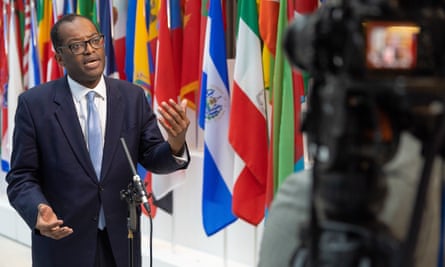
On the rare occasions that the IMF criticises the policies of a wealthy European state, this too can embroil the institution in domestic political conflicts. In September, the IMF’s criticism of Liz Truss’s proposed tax cuts provided ammunition to her political opponents and contributed to a slump in the pound’s value. The decision to sack chancellor Kwasi Kwarteng was taken while he was attending the IMF’s annual meeting in Washington DC, where the institution’s leading officials did little to mask their disapproval of his policies. In future histories of the fall of Truss, the IMF is likely to play a not insignificant role.
Despite all this, the IMF is not the kingmaker it once was. After reaching the height of its powers in the 90s, when its name became synonymous with the excesses of neoliberal globalisation and US overreach, the IMF has faced increasing resistance. It’s still the only institution that can guarantee assistance to nearly any country experiencing extreme financial stress. But the decline of US power, emergence of alternative lenders, and the IMF’s reputation as a domineering taskmaster has left it an anomalous position. It is much needed and little loved, enormously powerful and often ineffectual in getting states to agree to its terms. If predictions are correct that the world is entering an extended period of economic turmoil, this will only increase the need for some kind of global lender of last resort. Whether the IMF is up to the task depends on whether it has learned from its chequered history.
One of the most remarkable aspects of the IMF was what, in theory, it was supposed to accomplish when it was established – and how quickly it departed from this initial vision. The creation of the IMF was agreed at the Bretton Woods Conference of July 1944, when representatives from more than 40 countries met to rewrite the rules of the world economy. Led by the world-famous British economist John Maynard Keynes and his US counterpart Harry Dexter White, their aim was to create an international monetary system that stabilised currencies and facilitated a return to freer trade. National currencies would be set at fixed but adjustable rates to the dollar, which was in turn convertible to gold at a fixed rate of $35 per ounce.
The role of the IMF in this system was to help member states suffering from short-term balance-of-payments problems, while its partner organisation, the World Bank, made long-term loans for reconstruction and development. Crucially, in this original vision, the IMF would help members weather financial instability without browbeating them into undertaking painful policies such as cutting budgets or raising interest rates in the middle of a recession. This marked a break with the previous gold standard system, which from the late 19th century had provided predictable and stable exchange rates for countries that kept the value of their currencies fixed to a specific quantity of gold. This stability had come at the cost of being able to implement expansive national economic policies during a crisis. By contrast, officials involved in the creation of the IMF insisted that it avoid developing what Keynes referred to as “grandmotherly powers”, meaning finger-wagging, moralising strictures that unduly curtailed the freedom of member states.
Shortly after the end of the second world war, however, European representatives in the IMF’s executive board discovered that – despite an apparent wartime consensus shared by their more powerful US counterparts – the IMF was going to readopt an unpopular practice associated with earlier periods of financial imperialism: attaching policy conditions to its loans. To their chagrin, the institution would be authorised to intervene in sensitive domestic matters concerning fiscal and monetary decisions. US representatives were wary of allowing members access to the dollar without strings attached. And because the IMF had been designed in ways that gave the US unparalleled control over its activities, their prerogatives held sway. It was not in Europe that the IMF first deployed these interventionist powers, though; it was in the so-called third world, beginning in South American states such as Chile, Paraguay and Bolivia in the 50s.
After the collapse of the Bretton Woods system in the early 70s, when Richard Nixon removed the US dollar’s peg to gold, the IMF appeared to be out of a job. But it quickly took on new prominence in making bailout loans to financially unstable states. These loans came with demands for major structural reforms (privatisation, deregulation, the removal of tariffs) in addition to fiscal and monetary restraint. What made the IMF so mighty was that other creditors – whether commercial banks such as Citibank, or foreign governments – often considered a prior arrangement with the institution as a sign of a country’s creditworthiness. When the Soviet Union collapsed in the early 90s, the IMF undertook its most ambitious task yet, overseeing the transition of nearly-formerly Soviet republics to capitalism. In the process, it became, as the political scientist Randall Stone put it, the “most powerful international institution in history”.
As the IMF reached the height of its influence in the 90s, however, it sparked a global backlash that continues to this day. And the place where that backlash began was in Asia.
The Asian financial crisis is poorly remembered in the west, having been overshadowed by the 9/11 terrorist attacks and the “war on terror”. But it was an enormously consequential event, and its impact would reshape the global economy over the next 25 years. It began in the summer of 1997, when the collapse of the Thai baht sparked a financial panic that spread quickly throughout the region. As investors dumped one shaky currency after another, the panic became self-perpetuating, wreaking havoc from Indonesia to South Korea, and to countries as far off as Russia and Brazil.
The IMF quickly stepped in to offer rescue loans to the worst-hit countries, including Thailand, Indonesia and South Korea. The conditions of these loans included the institution’s perennial demands for austerity and tighter monetary policies – even though none of these governments had run significant deficits, nor seen much inflation in their economies in the run-up to the crisis. The IMF also insisted on a long list of reforms designed to liberalise their economies and, in particular, to dismantle practices and institutions derided as corrupt and inefficient forms of “crony capitalism”. In South Korea, the IMF set its sights on the country’s huge conglomerates, or chaebol, such as Hyundai, which enjoyed close ties to the state and domestic banks. In Indonesia, the IMF called for uprooting the vast system of patronage that enriched the family of long-ruling autocrat Suharto, such as the lucrative national clove monopoly, which produced a key ingredient of the kretek cigarettes popular in Indonesia, and was controlled by one of Suharto’s sons.
By intervening in sectors that had little to do with the currency crisis, the IMF appeared to be announcing the scale of its ambition. It wanted to transform what had, until then, been widely considered well-run economies. In particular, it seemed dead set on overturning what was known as the “Asian Model” of economic management, characterised by state-led investment in specific industries and firms. This approach had yielded impressive results in several countries, not least Japan, which then boasted the world’s second-largest economy. But it was widely seen by western officials and investors as anachronistic. To them, the crisis had rung the death knell for this Asian statist alternative to the Anglo-American laissez-faire approach.
This reformist zeal made the IMF unpopular across much of Asia. People were especially infuriated by demands to lift restrictions on foreign ownership of domestic firms. As US and European corporations swooped in to buy up financial institutions in Thailand and South Korea at steep discounts, many denounced the IMF as neo-colonial. In China, which was spared from the worst of the crisis, the state-owned People’s Daily newspaper accused the US of “forcing east Asia into submission”. Even Raghuram Rajan, who became the IMF’s chief economist in 2003, later admitted that the institution’s handling of the crisis had left it vulnerable to charges of financial colonialism.
Meanwhile, austerity measures such as cutting subsidies to fuel and foodstuffs like rice and flour, in countries undergoing severe cost of living and unemployment crises, fed growing political turmoil. The crisis was especially dire in Indonesia. As the rupiah continued to plunge into 1998, the country was gripped by political discontent and violence, as mob attacks on the ethnic Chinese minority led to scores of deaths. In Jakarta, the military fired on student protesters at Trisakti University, killing four and fanning the flames of riots spreading across the country. When Suharto raised fuel prices to fulfil IMF demands to produce a budget surplus, opposition intensified. In May 1998, he was forced from office.
At the time, defenders of the IMF insisted Suharto had been the author of his own downfall, claiming he had refused to implement reforms quickly enough to halt a crisis caused by his own corruption. But other contemporaries recognised that insisting he instantly uproot the entire system of patronage on which his regime relied was an impossible demand. “It’s crazy to ask people to commit suicide,” one diplomat remarked at the time.
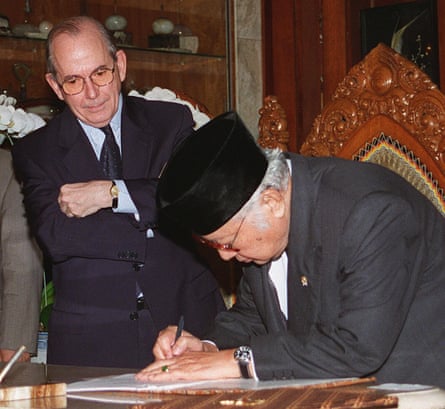
Looking at images of Suharto signing the terms of an agreement with the IMF in January 1998, as the institution’s managing director, the French economist Michel Camdessus, loomed over him, it wasn’t hard to see this as a humiliating surrender of sovereignty. And it did not take conspiracists to recognise that the US Treasury and many western investors wanted Suharto gone, despite the opposition of the state department and Pentagon to anything that threatened the stability of a US strategic partner in the Asia-Pacific region. While the IMF didn’t plot Suharto’s removal, there was little question that US Treasury officials had come to see regime change as the only salvation for the Indonesian economy. As Camdessus himself later admitted: “We created the conditions that obliged Suharto to leave his job.”
To some American observers, Indonesia had proven an iron law of history: that the growing material prosperity of a citizenry would inevitably cause them to reject autocratic rule. What happened to Suharto, they said, would eventually happen to the Chinese Communist party. (Some predicted the exact year – 2015 – that China would see its equivalent popular uprising.)
What went less commented on was the obvious wakeup call the crisis and its political effects delivered to other governments. The lesson was clear: make yourself able to resist a crisis of financial globalisation and, if it comes, be sure you can deal with it on your own.
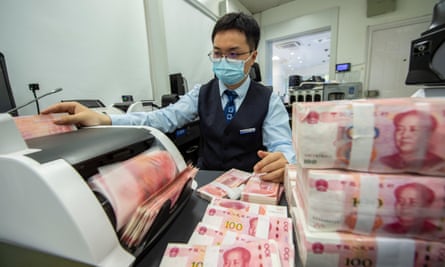
For many states, the Asian crisis was a warning. In the event of a future financial crisis, they wanted to avoid calling in any institutions that might interfere in their domestic affairs. One way to do this was to build up huge stockpiles of foreign currency reserves. At a moment of crisis, these reserves can be used to defend a currency’s value, pay off foreign debts and import necessities. China led the way, but South Korea, Brazil, Mexico and others followed. From 2000 to 2009, the total value of China’s reserve assets grew by nearly $1.8tn. Today, it’s well over $3tn – a figure higher than the total GDP of the entire African continent.
For some countries, accumulating these reserves has been key to a strategy of export-led development, since doing so can help hold down the value of a national currency and thus make exports more competitive. But for most states, the aim has been insurance against financial turmoil. And in some cases, it’s worked remarkably well. The accumulation of currency reserves helped many emerging market economies escape the worst of the global financial crisis that began in 2008. While the IMF played a major role in bailing out Greece in the 2010s, it did comparatively little elsewhere. It was not invited back to countries where it had become so controversially involved in the 90s, such as South Korea and Russia.
One striking consequence of this currency stockpiling is that capital now moves in huge quantities from poorer countries to wealthier ones, rather than vice versa. This is because much of the world’s supply of reserves are held in US dollars, which countries tend to invest back into the safe haven of US treasury bills. Doing so guarantees a nearly bottomless global demand for US government debt and helps ensure the continued centrality of the US dollar to the global economy. The fact that China sits on such a huge stockpile of US treasuries has long generated anxiety about the political leverage this might give Beijing over Washington, since a sell-off would be catastrophic to the value of the dollar. But because it would also be catastrophic to the Chinese economy, the threat has never been close to realisation.
Not all states can afford to pile up currency in this way. For those that can, it is not painless, since it diverts resources away from public investment. Some economists have wondered why governments opt for it, suggesting that the opportunity cost of reducing public investment may outweigh the possible savings of averting a financial crisis. But hoarding these assets is not just a matter of economics. It’s also political and strategic policy designed to guarantee states the kind of autonomy that Indonesia, Thailand and South Korea bargained away during the 1997-98 crisis. Seen in this way, there’s little price that’s not worth paying for full sovereignty. The historian Adam Tooze has aptly referred to the strategies pursued by emerging market economies since the 90s as programmes of “self-strengthening” – a term originally used to describe the efforts of states like China and Japan in the late 19th century to reform their government administrations, militaries and economies to resist the incursion of powerful western empires.
Take Russia, a country that experienced a long and painful engagement with the IMF in the 90s. After defaulting on its sovereign debt in 1998, Russia, under its new president Vladimir Putin, began to amass a stockpile of reserves in the 2000s, facilitated by rising oil prices. By 2008, it sat on such a huge war chest that it could spark an aggressive war with Georgia without much concern for the financial repercussions. Russia appeared to have won new strategic independence.
A similar calculus was likely at play with Putin’s decision to invade Ukraine this year. But in one of the most far-reaching countermoves of Putin’s enemies, the US and its G7 partners targeted the foreign assets that were owned by the Russian central bank, but which they ultimately controlled. In late February, more than $300bn of Russian assets were immobilised in a move designed to paralyse Russia. The same tactic had been used just a few months earlier, when the dollar assets of the Afghan central bank had been frozen to hobble the Taliban in the wake of Kabul’s fall.
In Russia’s case, this strategy failed to end the war. And some worry it will backfire, encouraging states to rethink holding US dollars as a guarantee of economic stability. If the Asian financial crisis had the effect of turning countries away from the IMF and towards stockpiling reserves, the war in Ukraine may similarly push them away from the dollar as the reserve currency of choice. Were this to happen, the impact would be seismic. The dollar would be dethroned, losing its status as the world’s principal safe haven-asset. More likely, others argue, is further diversification away from dollars to other currencies. The ambitious US and European financial sanctions against Russia may prove, over time, to have similar effects to the IMF’s response to the Asian financial crisis: encouraging states to reconsider how they guarantee their autonomy in a global economy whose infrastructures they do not control.
Over the past decade, the IMF has made significant efforts to repair its reputation. In the wake of the global financial crisis, it became routine for IMF officials to publicly acknowledge that austerity could be counterproductive and that tackling inequality had become one of the institution’s central concerns. The selective use of once-taboo policies such as capital controls to restrict the flow of foreign capital into and out of a national economy was reconsidered, while demands for far-reaching domestic structural reforms were supposedly a thing of the past. When the official IMF publication Finance and Development ran an article in 2016 with the provocative headline Neoliberalism: Oversold?, many media outlets reported it as a sign of the institution undergoing a significant transformation. “What the hell is going on?” was how one longtime critic of neoliberalism, the Harvard economist Dani Rodrik, greeted news of its publication.
But in practice, the IMF’s transformation has itself been oversold. As the scholars Alexander Kentikelenis, Thomas Stubbs and Lawrence King showed in an article from the same year, the IMF, despite these rhetorical shifts, continued to insist on just as many, if not more, of the same structural reforms of borrowers as ever – sacking civil servants, cutting pensions, lowering minimum wages. A 2020 study by the Global Development Policy Center at Boston University found something similar. Today’s IMF, it noted, recognises that austerity constrains growth – while continuing to demand austerity from states in receipt of its aid.
Yet the Boston University study also reached another conclusion – one that shows how, despite itself, the institution may be undergoing real changes, not from ideological shifts alone, but from competition for its business. Researchers found that borrowers that had prior loan arrangements with China tended to get more lenient treatment from the IMF. Why? Probably because China does not make austerity or domestic reforms the price of its loans, which pushes the IMF to moderate its terms with clients that have access to this unconditional financing. Other studies have found a similar phenomenon at work at the World Bank.
China is now the world’s largest bilateral lender, a fact that has generated considerable anxiety in the west. Lending without policy strings attached is sometimes seen as Beijing’s way of buying goodwill with corrupt autocrats. China is also accused of “dept trap” diplomacy, by making loans to states to invest in unaffordable “white elephant” infrastructure projects. When these states can’t repay their debts, Chinese officials insist they give up valuable assets, like a 99-year lease over a strategic port, such as happened in Sri Lanka in 2017.
Critics of China have described Sri Lanka’s descent into financial and political turmoil as the logical end point of Beijing’s predatory lending. It’s true that the Rajapaksa brothers, who traded off ruling Sri Lanka from the mid-00s until this summer, pursued an extravagant programme of Chinese-financed infrastructure building. But when the Sri Lankan economy collapsed earlier this year, the government actually owed more money to private bondholders in Europe and the US than to China – despite the role Beijing had played in financing the country’s infrastructure boom. It’s too simple to see Sri Lanka solely as the victim of Chinese debt diplomacy.
Today, many are looking for clues on the nature of China’s role as lender in how it navigates its first global debt crisis. Over the last few years, it’s started making more emergency bailouts, setting itself up even more as a direct alternative to the IMF. But even critics of the IMF see the institution – with its broad membership, global reach and public aims – as playing a meaningfully different role in the world economy from a state actor like China, which – like all states – will make loans largely for the sake of its strategic aims and national interests. This is why many reformers calling for changes to the international financial system – such as Mia Mottley, the prime minister of Barbados – still focus on the IMF. Despite its history of missteps, and close ties to US foreign policy objectives, the institution is still seen as being uniquely able to provide something approximating a global financial safety net.
Given its continued dominance of the IMF, it is from the US that the greatest pressure to actually reshape the institution will have to come. There are signs that the current global crisis is forcing political change. In October, just before the annual meeting of the IMF and World Bank, the former Treasury secretary Lawrence Summers called on the institution to develop new, unconditional ways of providing financial assistance to states facing extreme pressures, as central banks raised interest rates. The political stigma involved in traditional IMF forms of lending, Summers suggested, was pushing states away from the institution when they needed it most.
It was extraordinary to see Summers making this case. During the Asian financial crisis, Summers had been deputy secretary of the US Treasury. He had played a leading role in coordinating Washington’s response to the crisis through the IMF. He had even met with Suharto in Jakarta to personally convince him to agree to its terms. But now, the world economy needed a kind of financial assistance, Summers implied, that moved past the legacy of the interventionist IMF, whose powers he himself had once helped to unleash. This year’s annual meetings, which failed to consider ambitious measures to rescue the world economy, he claimed, would be remembered as nothing more than a “missed opportunity”.
As the Fed’s decisions threaten a new wave of global economic instability, these meetings may also be remembered for something else entirely: as an illustration of the paradoxical nature of US power in the third decade of the 21st century – mighty enough to break the world, but not to put it back together again.
Last summer, after months of unusually heavy monsoon rains, and temperatures that approached the limits of human survivability, Pakistan – home to thousands of melting Himalayan glaciers – experienced some of the worst floods in its history. The most extensive destruction was in the provinces of Sindh and Balochistan, but some estimated that up to a third of the country was submerged. The floods killed more than 1,700 people and displaced a further 32 million – more than the entire population of Australia. Some of the country’s most fertile agricultural areas became giant lakes, drowning livestock and destroying crops and infrastructure. The cost of the disaster now runs to tens of billions of dollars.
In late August, as the scale of this catastrophe was becoming clear, the Pakistani government was trying to avert a second disaster. It was finally reaching a deal with the International Monetary Fund (IMF) to avoid missing payment on its foreign debt. Without this agreement, Pakistan would likely have been declared in default – an event that can spark a recession, weaken a country’s long-term growth, and make it more difficult to borrow at affordable rates in the future. The terms of the deal were painful: the government was offered a $1.17bn IMF bailout only after it demonstrated a real commitment to undertaking unpopular austerity policies, such as slashing energy subsidies. But the recent fate of another south Asian country appeared to show what happens if you put off the IMF for too long. Only weeks before, the Sri Lankan government, shortly after its own default – and after months of refusing to implement IMF-demanded reforms – was overthrown in a popular uprising.
The correlation of Pakistan’s crises – exceptionally devastating floods and the threat of economic meltdown – was partly bad luck. But it was also emblematic of a challenge faced by many countries at the forefront of the climate crisis: how can they afford to deal with extreme weather events and prepare themselves for the coming disasters, while suffering under crippling debt loads and facing demands for austerity as the price of relief?
Pakistan and Sri Lanka are only two of the many countries currently facing conditions of severe debt distress. Covid-19 delivered a major blow to many low- and middle-income countries that had borrowed heavily during the era of low interest rates beginning with the 2008 financial crisis. As the costs of public health and welfare rocketed, economies were locked down and tourism collapsed, which meant that tax revenues plummeted. The pandemic also disrupted global supply chains, leading to shortages of many goods and higher prices. These inflationary pressures were then exacerbated by Russia’s invasion of Ukraine. Meanwhile, the decision of the US Federal Reserve to raise interest rates to reduce US inflation has pushed the value of the dollar to its highest level in 20 years. This has made the debt of countries that borrowed in dollars – many do – more expensive since their currencies are worth less, while further increasing the cost of their imports. Rising US interest rates have also encouraged investors to pull capital out of riskier emerging markets at a historic rate, since safer dollar investments now produce higher returns.
The result is that the world economy faces the possibility of one of the worst debt crises in decades, threatening deep recessions, political instability, and years of lost growth. At the same time, the increase in extreme weather events – stronger hurricanes, recurring droughts – makes life even harder for states that already dedicate a large portion of their revenues to servicing foreign debt. In the midst of this turmoil, the IMF has become more involved in bailing out countries than it has in years. Over the last few months, the value of its emergency loans reached a record level, as a growing number of states turned to it for help, including Bangladesh, Egypt, Ghana and Tunisia.
Broadly speaking, the way the IMF works is by collecting financial resources from members and then offering them short-term assistance in the case of financial hardship. Based in Washington DC, the institution is staffed by representatives of ministers of finance and central bank governors from around the world. Because voting power is weighted by each state’s financial contribution, the US, as the IMF’s largest shareholder, exercises outsized influence over its major decisions and can veto proposed reforms to its governance. But as an international body that counts nearly every sovereign state as member, the IMF plays a unique role in the world economy. It’s the only institution with the resources, mandate and global reach to help almost any country facing severe economic distress.
But in exchange for its help, the IMF typically insists governments do what they find most difficult: reduce public spending, raise taxes and implement reforms designed to lower their debt-to-GDP ratios, such as cutting subsidies for fuel or food. Unsurprisingly, politicians are often reluctant to undertake these measures. It’s not just that the reforms often leave voters worse off and make politicians less popular. National pride is also at stake. Bowing to demands from an institution dominated by foreign governments can be seen as humiliating, and an admission of domestic dysfunction and misgovernance.
On the rare occasions that the IMF criticises the policies of a wealthy European state, this too can embroil the institution in domestic political conflicts. In September, the IMF’s criticism of Liz Truss’s proposed tax cuts provided ammunition to her political opponents and contributed to a slump in the pound’s value. The decision to sack chancellor Kwasi Kwarteng was taken while he was attending the IMF’s annual meeting in Washington DC, where the institution’s leading officials did little to mask their disapproval of his policies. In future histories of the fall of Truss, the IMF is likely to play a not insignificant role.
Despite all this, the IMF is not the kingmaker it once was. After reaching the height of its powers in the 90s, when its name became synonymous with the excesses of neoliberal globalisation and US overreach, the IMF has faced increasing resistance. It’s still the only institution that can guarantee assistance to nearly any country experiencing extreme financial stress. But the decline of US power, emergence of alternative lenders, and the IMF’s reputation as a domineering taskmaster has left it an anomalous position. It is much needed and little loved, enormously powerful and often ineffectual in getting states to agree to its terms. If predictions are correct that the world is entering an extended period of economic turmoil, this will only increase the need for some kind of global lender of last resort. Whether the IMF is up to the task depends on whether it has learned from its chequered history.
One of the most remarkable aspects of the IMF was what, in theory, it was supposed to accomplish when it was established – and how quickly it departed from this initial vision. The creation of the IMF was agreed at the Bretton Woods Conference of July 1944, when representatives from more than 40 countries met to rewrite the rules of the world economy. Led by the world-famous British economist John Maynard Keynes and his US counterpart Harry Dexter White, their aim was to create an international monetary system that stabilised currencies and facilitated a return to freer trade. National currencies would be set at fixed but adjustable rates to the dollar, which was in turn convertible to gold at a fixed rate of $35 per ounce.
The role of the IMF in this system was to help member states suffering from short-term balance-of-payments problems, while its partner organisation, the World Bank, made long-term loans for reconstruction and development. Crucially, in this original vision, the IMF would help members weather financial instability without browbeating them into undertaking painful policies such as cutting budgets or raising interest rates in the middle of a recession. This marked a break with the previous gold standard system, which from the late 19th century had provided predictable and stable exchange rates for countries that kept the value of their currencies fixed to a specific quantity of gold. This stability had come at the cost of being able to implement expansive national economic policies during a crisis. By contrast, officials involved in the creation of the IMF insisted that it avoid developing what Keynes referred to as “grandmotherly powers”, meaning finger-wagging, moralising strictures that unduly curtailed the freedom of member states.
Shortly after the end of the second world war, however, European representatives in the IMF’s executive board discovered that – despite an apparent wartime consensus shared by their more powerful US counterparts – the IMF was going to readopt an unpopular practice associated with earlier periods of financial imperialism: attaching policy conditions to its loans. To their chagrin, the institution would be authorised to intervene in sensitive domestic matters concerning fiscal and monetary decisions. US representatives were wary of allowing members access to the dollar without strings attached. And because the IMF had been designed in ways that gave the US unparalleled control over its activities, their prerogatives held sway. It was not in Europe that the IMF first deployed these interventionist powers, though; it was in the so-called third world, beginning in South American states such as Chile, Paraguay and Bolivia in the 50s.
After the collapse of the Bretton Woods system in the early 70s, when Richard Nixon removed the US dollar’s peg to gold, the IMF appeared to be out of a job. But it quickly took on new prominence in making bailout loans to financially unstable states. These loans came with demands for major structural reforms (privatisation, deregulation, the removal of tariffs) in addition to fiscal and monetary restraint. What made the IMF so mighty was that other creditors – whether commercial banks such as Citibank, or foreign governments – often considered a prior arrangement with the institution as a sign of a country’s creditworthiness. When the Soviet Union collapsed in the early 90s, the IMF undertook its most ambitious task yet, overseeing the transition of nearly-formerly Soviet republics to capitalism. In the process, it became, as the political scientist Randall Stone put it, the “most powerful international institution in history”.
As the IMF reached the height of its influence in the 90s, however, it sparked a global backlash that continues to this day. And the place where that backlash began was in Asia.
The Asian financial crisis is poorly remembered in the west, having been overshadowed by the 9/11 terrorist attacks and the “war on terror”. But it was an enormously consequential event, and its impact would reshape the global economy over the next 25 years. It began in the summer of 1997, when the collapse of the Thai baht sparked a financial panic that spread quickly throughout the region. As investors dumped one shaky currency after another, the panic became self-perpetuating, wreaking havoc from Indonesia to South Korea, and to countries as far off as Russia and Brazil.
The IMF quickly stepped in to offer rescue loans to the worst-hit countries, including Thailand, Indonesia and South Korea. The conditions of these loans included the institution’s perennial demands for austerity and tighter monetary policies – even though none of these governments had run significant deficits, nor seen much inflation in their economies in the run-up to the crisis. The IMF also insisted on a long list of reforms designed to liberalise their economies and, in particular, to dismantle practices and institutions derided as corrupt and inefficient forms of “crony capitalism”. In South Korea, the IMF set its sights on the country’s huge conglomerates, or chaebol, such as Hyundai, which enjoyed close ties to the state and domestic banks. In Indonesia, the IMF called for uprooting the vast system of patronage that enriched the family of long-ruling autocrat Suharto, such as the lucrative national clove monopoly, which produced a key ingredient of the kretek cigarettes popular in Indonesia, and was controlled by one of Suharto’s sons.
By intervening in sectors that had little to do with the currency crisis, the IMF appeared to be announcing the scale of its ambition. It wanted to transform what had, until then, been widely considered well-run economies. In particular, it seemed dead set on overturning what was known as the “Asian Model” of economic management, characterised by state-led investment in specific industries and firms. This approach had yielded impressive results in several countries, not least Japan, which then boasted the world’s second-largest economy. But it was widely seen by western officials and investors as anachronistic. To them, the crisis had rung the death knell for this Asian statist alternative to the Anglo-American laissez-faire approach.
This reformist zeal made the IMF unpopular across much of Asia. People were especially infuriated by demands to lift restrictions on foreign ownership of domestic firms. As US and European corporations swooped in to buy up financial institutions in Thailand and South Korea at steep discounts, many denounced the IMF as neo-colonial. In China, which was spared from the worst of the crisis, the state-owned People’s Daily newspaper accused the US of “forcing east Asia into submission”. Even Raghuram Rajan, who became the IMF’s chief economist in 2003, later admitted that the institution’s handling of the crisis had left it vulnerable to charges of financial colonialism.
Meanwhile, austerity measures such as cutting subsidies to fuel and foodstuffs like rice and flour, in countries undergoing severe cost of living and unemployment crises, fed growing political turmoil. The crisis was especially dire in Indonesia. As the rupiah continued to plunge into 1998, the country was gripped by political discontent and violence, as mob attacks on the ethnic Chinese minority led to scores of deaths. In Jakarta, the military fired on student protesters at Trisakti University, killing four and fanning the flames of riots spreading across the country. When Suharto raised fuel prices to fulfil IMF demands to produce a budget surplus, opposition intensified. In May 1998, he was forced from office.
At the time, defenders of the IMF insisted Suharto had been the author of his own downfall, claiming he had refused to implement reforms quickly enough to halt a crisis caused by his own corruption. But other contemporaries recognised that insisting he instantly uproot the entire system of patronage on which his regime relied was an impossible demand. “It’s crazy to ask people to commit suicide,” one diplomat remarked at the time.
Looking at images of Suharto signing the terms of an agreement with the IMF in January 1998, as the institution’s managing director, the French economist Michel Camdessus, loomed over him, it wasn’t hard to see this as a humiliating surrender of sovereignty. And it did not take conspiracists to recognise that the US Treasury and many western investors wanted Suharto gone, despite the opposition of the state department and Pentagon to anything that threatened the stability of a US strategic partner in the Asia-Pacific region. While the IMF didn’t plot Suharto’s removal, there was little question that US Treasury officials had come to see regime change as the only salvation for the Indonesian economy. As Camdessus himself later admitted: “We created the conditions that obliged Suharto to leave his job.”

To some American observers, Indonesia had proven an iron law of history: that the growing material prosperity of a citizenry would inevitably cause them to reject autocratic rule. What happened to Suharto, they said, would eventually happen to the Chinese Communist party. (Some predicted the exact year – 2015 – that China would see its equivalent popular uprising.)
What went less commented on was the obvious wakeup call the crisis and its political effects delivered to other governments. The lesson was clear: make yourself able to resist a crisis of financial globalisation and, if it comes, be sure you can deal with it on your own.
For many states, the Asian crisis was a warning. In the event of a future financial crisis, they wanted to avoid calling in any institutions that might interfere in their domestic affairs. One way to do this was to build up huge stockpiles of foreign currency reserves. At a moment of crisis, these reserves can be used to defend a currency’s value, pay off foreign debts and import necessities. China led the way, but South Korea, Brazil, Mexico and others followed. From 2000 to 2009, the total value of China’s reserve assets grew by nearly $1.8tn. Today, it’s well over $3tn – a figure higher than the total GDP of the entire African continent.
For some countries, accumulating these reserves has been key to a strategy of export-led development, since doing so can help hold down the value of a national currency and thus make exports more competitive. But for most states, the aim has been insurance against financial turmoil. And in some cases, it’s worked remarkably well. The accumulation of currency reserves helped many emerging market economies escape the worst of the global financial crisis that began in 2008. While the IMF played a major role in bailing out Greece in the 2010s, it did comparatively little elsewhere. It was not invited back to countries where it had become so controversially involved in the 90s, such as South Korea and Russia.
One striking consequence of this currency stockpiling is that capital now moves in huge quantities from poorer countries to wealthier ones, rather than vice versa. This is because much of the world’s supply of reserves are held in US dollars, which countries tend to invest back into the safe haven of US treasury bills. Doing so guarantees a nearly bottomless global demand for US government debt and helps ensure the continued centrality of the US dollar to the global economy. The fact that China sits on such a huge stockpile of US treasuries has long generated anxiety about the political leverage this might give Beijing over Washington, since a sell-off would be catastrophic to the value of the dollar. But because it would also be catastrophic to the Chinese economy, the threat has never been close to realisation.
Not all states can afford to pile up currency in this way. For those that can, it is not painless, since it diverts resources away from public investment. Some economists have wondered why governments opt for it, suggesting that the opportunity cost of reducing public investment may outweigh the possible savings of averting a financial crisis. But hoarding these assets is not just a matter of economics. It’s also political and strategic policy designed to guarantee states the kind of autonomy that Indonesia, Thailand and South Korea bargained away during the 1997-98 crisis. Seen in this way, there’s little price that’s not worth paying for full sovereignty. The historian Adam Tooze has aptly referred to the strategies pursued by emerging market economies since the 90s as programmes of “self-strengthening” – a term originally used to describe the efforts of states like China and Japan in the late 19th century to reform their government administrations, militaries and economies to resist the incursion of powerful western empires.
Take Russia, a country that experienced a long and painful engagement with the IMF in the 90s. After defaulting on its sovereign debt in 1998, Russia, under its new president Vladimir Putin, began to amass a stockpile of reserves in the 2000s, facilitated by rising oil prices. By 2008, it sat on such a huge war chest that it could spark an aggressive war with Georgia without much concern for the financial repercussions. Russia appeared to have won new strategic independence.
A similar calculus was likely at play with Putin’s decision to invade Ukraine this year. But in one of the most far-reaching countermoves of Putin’s enemies, the US and its G7 partners targeted the foreign assets that were owned by the Russian central bank, but which they ultimately controlled. In late February, more than $300bn of Russian assets were immobilised in a move designed to paralyse Russia. The same tactic had been used just a few months earlier, when the dollar assets of the Afghan central bank had been frozen to hobble the Taliban in the wake of Kabul’s fall.
In Russia’s case, this strategy failed to end the war. And some worry it will backfire, encouraging states to rethink holding US dollars as a guarantee of economic stability. If the Asian financial crisis had the effect of turning countries away from the IMF and towards stockpiling reserves, the war in Ukraine may similarly push them away from the dollar as the reserve currency of choice. Were this to happen, the impact would be seismic. The dollar would be dethroned, losing its status as the world’s principal safe haven-asset. More likely, others argue, is further diversification away from dollars to other currencies. The ambitious US and European financial sanctions against Russia may prove, over time, to have similar effects to the IMF’s response to the Asian financial crisis: encouraging states to reconsider how they guarantee their autonomy in a global economy whose infrastructures they do not control.
Over the past decade, the IMF has made significant efforts to repair its reputation. In the wake of the global financial crisis, it became routine for IMF officials to publicly acknowledge that austerity could be counterproductive and that tackling inequality had become one of the institution’s central concerns. The selective use of once-taboo policies such as capital controls to restrict the flow of foreign capital into and out of a national economy was reconsidered, while demands for far-reaching domestic structural reforms were supposedly a thing of the past. When the official IMF publication Finance and Development ran an article in 2016 with the provocative headline Neoliberalism: Oversold?, many media outlets reported it as a sign of the institution undergoing a significant transformation. “What the hell is going on?” was how one longtime critic of neoliberalism, the Harvard economist Dani Rodrik, greeted news of its publication.
But in practice, the IMF’s transformation has itself been oversold. As the scholars Alexander Kentikelenis, Thomas Stubbs and Lawrence King showed in an article from the same year, the IMF, despite these rhetorical shifts, continued to insist on just as many, if not more, of the same structural reforms of borrowers as ever – sacking civil servants, cutting pensions, lowering minimum wages. A 2020 study by the Global Development Policy Center at Boston University found something similar. Today’s IMF, it noted, recognises that austerity constrains growth – while continuing to demand austerity from states in receipt of its aid.
Yet the Boston University study also reached another conclusion – one that shows how, despite itself, the institution may be undergoing real changes, not from ideological shifts alone, but from competition for its business. Researchers found that borrowers that had prior loan arrangements with China tended to get more lenient treatment from the IMF. Why? Probably because China does not make austerity or domestic reforms the price of its loans, which pushes the IMF to moderate its terms with clients that have access to this unconditional financing. Other studies have found a similar phenomenon at work at the World Bank.
China is now the world’s largest bilateral lender, a fact that has generated considerable anxiety in the west. Lending without policy strings attached is sometimes seen as Beijing’s way of buying goodwill with corrupt autocrats. China is also accused of “dept trap” diplomacy, by making loans to states to invest in unaffordable “white elephant” infrastructure projects. When these states can’t repay their debts, Chinese officials insist they give up valuable assets, like a 99-year lease over a strategic port, such as happened in Sri Lanka in 2017.
Critics of China have described Sri Lanka’s descent into financial and political turmoil as the logical end point of Beijing’s predatory lending. It’s true that the Rajapaksa brothers, who traded off ruling Sri Lanka from the mid-00s until this summer, pursued an extravagant programme of Chinese-financed infrastructure building. But when the Sri Lankan economy collapsed earlier this year, the government actually owed more money to private bondholders in Europe and the US than to China – despite the role Beijing had played in financing the country’s infrastructure boom. It’s too simple to see Sri Lanka solely as the victim of Chinese debt diplomacy.
Today, many are looking for clues on the nature of China’s role as lender in how it navigates its first global debt crisis. Over the last few years, it’s started making more emergency bailouts, setting itself up even more as a direct alternative to the IMF. But even critics of the IMF see the institution – with its broad membership, global reach and public aims – as playing a meaningfully different role in the world economy from a state actor like China, which – like all states – will make loans largely for the sake of its strategic aims and national interests. This is why many reformers calling for changes to the international financial system – such as Mia Mottley, the prime minister of Barbados – still focus on the IMF. Despite its history of missteps, and close ties to US foreign policy objectives, the institution is still seen as being uniquely able to provide something approximating a global financial safety net.
Given its continued dominance of the IMF, it is from the US that the greatest pressure to actually reshape the institution will have to come. There are signs that the current global crisis is forcing political change. In October, just before the annual meeting of the IMF and World Bank, the former Treasury secretary Lawrence Summers called on the institution to develop new, unconditional ways of providing financial assistance to states facing extreme pressures, as central banks raised interest rates. The political stigma involved in traditional IMF forms of lending, Summers suggested, was pushing states away from the institution when they needed it most.
It was extraordinary to see Summers making this case. During the Asian financial crisis, Summers had been deputy secretary of the US Treasury. He had played a leading role in coordinating Washington’s response to the crisis through the IMF. He had even met with Suharto in Jakarta to personally convince him to agree to its terms. But now, the world economy needed a kind of financial assistance, Summers implied, that moved past the legacy of the interventionist IMF, whose powers he himself had once helped to unleash. This year’s annual meetings, which failed to consider ambitious measures to rescue the world economy, he claimed, would be remembered as nothing more than a “missed opportunity”.
As the Fed’s decisions threaten a new wave of global economic instability, these meetings may also be remembered for something else entirely: as an illustration of the paradoxical nature of US power in the third decade of the 21st century – mighty enough to break the world, but not to put it back together again.
Monday, 31 October 2022
Pakistan: Ironies of Liberation
by Najam Sethi in The Friday Times
Will November prove to be the cruelest month of all? It all depends on the answers to some burning questions. Will the COAS, General Qamar Javed Bajwa, go home on 29th November, 2022, as he has pledged several times, or will some extraordinary development “compel” him to stay on? Will Imran Khan’s long march of thousands end with a whimper or a bang (literally)? Will Imran Khan and Shehbaz Sharif enter into negotiations to end civil strife by setting a mutually acceptable date for the next general elections? What role will the Chief Justice of Pakistan (CJP), Umar Bandial, play in mediating or exacerbating political conflict?
With less than one month to go, General Bajwa’s departure is clouded by the reluctance of the PDM government to announce his successor. Just as rumours abounded earlier about Imran Khan’s offer of an extension to the COAS in exchange for help in defeating the vote of no-confidence against him launched by the opposition in March – now proven true – it is no secret that the PDM leadership would like to scratch his back in exchange for help in warding off the looming threat from the PTI. Even Imran Khan has suggested that if the PDM government can be packed off this month and caretakers installed, General Bajwa may stay on as COAS until after the elections have returned a new government to office. Thus, despite his avowed “apolitical” stance, if push comes to shove during the PTI’s long march, it is not inconceivable that General Bajwa may be “compelled” to step in, pry apart the two warring sides, knock some sense into them and gain an extension in tenure by virtue of his “good deed”. That would open the door to an early election rather than a late one. Under the circumstances, CJP Bandial might see the wisdom of approving another extension for General Bajwa until a new government is installed after the elections.
Much will therefore depend on how Imran Khan’s long march pans out in the next week or two. It has begun on a soft note, partly because Imran knows that, after the DGISI’s unprecedented public intervention, the Miltablishment could take off its gloves if he crosses their red lines again, and partly because he is still hoping that the PDM government will succumb to the threat of violence and open the door to negotiations that fulfil his objectives. Both sides are propagating their intent to fight despite admitting pressure to talk.
Significantly, too, both parties are begging CJP Bandial to take their side. Imran Khan wants to march and the PDM government wants to stop him in his tracks. Khan insists his marchers will remain peaceful but Rana Sanaullah, the interior minister, has offered evidence of the PTI’s intentions to incite violence. The CJP says that the PTI has a right to march but notes his power to stop it at any time. Meanwhile, the good judge is exploiting this opportunity to browbeat the government and pack the court with handpicked junior judges. The threat of blocking the acquittal of Maryam Nawaz and outlawing the amended NAB law that has reprieved the top leaders of the PDM has sent the government scurrying for compromise, even to the extent of sacrificing its law minister, Azam Tarar, who was compelled to vote in favour of CJP Bandial’s nominees in the Judicial Commission against the interests of the bar which he has long represented.
Another struggle is manifestly unfolding in the background. At least five top generals are vying for the top slot in the army on November 29th when General Bajwa is scheduled to doff his uniform. If he doesn’t do so because of some extraordinary development, they will all go home before he does. So they have a vested interest in forestalling violent conflict, keeping Imran Khan at bay and showing their chief to the door.
It is a perverse comment on the state of Pakistan that the two institutions that are supposed to be “politically neutral” – the army and the judiciary – have become the most intrusive and controversial. Worse, their heads are flaunting their unaccountable powers and prejudices without restraint.
The double irony built into the situation should not be lost on us, too.
Even as the army high command is insisting that it has become apolitical and neutral and intends to stay that way in the future, both the PTI and PDM are knocking on its door for salvation. The former is threatening them and the latter is cajoling them. Under the circumstances, the probability is that the generals will not shy away from upholding the “national interest” when the state is threatened by instability and destabilization in the face of financial bankruptcy, as always.
The other irony lies in the nature of the unprecedented popular attack on the army’s political interventionism launched by Imran Khan. In normal circumstances, this would be viewed as a belated but welcome development to strengthen constitutional democracy. Indeed, this is the common thread running through the long struggles of liberals, leftists, democrats, human and women’s rights groups and ethnic/sub-nationalist, religious minorities on the periphery. The problem has arisen because the current struggle for “real liberation” led by the PTI is not aimed at defanging the army to strengthen multi-party constitutional democracy but at sharpening its claws to clamp down on the PTI’s political opponents to entrench populist one party fascism.
Not so long ago, the people of Pakistan passionately backed the Lawyers Movement for Independence of the Judiciary as a veritable “revolution” in the offing. A decade later, we have been lumped with the most unaccountable and politically biased judiciary in history as exemplified by the likes of ex-CJPs Iftikhar Mohammad Chaudhry, Saqib Nisar and Asif Khosa. Today, we are in the throes of another such populist upsurge against another repressive state institution that threatens to further enslave us instead of liberating us.
Will November prove to be the cruelest month of all? It all depends on the answers to some burning questions. Will the COAS, General Qamar Javed Bajwa, go home on 29th November, 2022, as he has pledged several times, or will some extraordinary development “compel” him to stay on? Will Imran Khan’s long march of thousands end with a whimper or a bang (literally)? Will Imran Khan and Shehbaz Sharif enter into negotiations to end civil strife by setting a mutually acceptable date for the next general elections? What role will the Chief Justice of Pakistan (CJP), Umar Bandial, play in mediating or exacerbating political conflict?
With less than one month to go, General Bajwa’s departure is clouded by the reluctance of the PDM government to announce his successor. Just as rumours abounded earlier about Imran Khan’s offer of an extension to the COAS in exchange for help in defeating the vote of no-confidence against him launched by the opposition in March – now proven true – it is no secret that the PDM leadership would like to scratch his back in exchange for help in warding off the looming threat from the PTI. Even Imran Khan has suggested that if the PDM government can be packed off this month and caretakers installed, General Bajwa may stay on as COAS until after the elections have returned a new government to office. Thus, despite his avowed “apolitical” stance, if push comes to shove during the PTI’s long march, it is not inconceivable that General Bajwa may be “compelled” to step in, pry apart the two warring sides, knock some sense into them and gain an extension in tenure by virtue of his “good deed”. That would open the door to an early election rather than a late one. Under the circumstances, CJP Bandial might see the wisdom of approving another extension for General Bajwa until a new government is installed after the elections.
Much will therefore depend on how Imran Khan’s long march pans out in the next week or two. It has begun on a soft note, partly because Imran knows that, after the DGISI’s unprecedented public intervention, the Miltablishment could take off its gloves if he crosses their red lines again, and partly because he is still hoping that the PDM government will succumb to the threat of violence and open the door to negotiations that fulfil his objectives. Both sides are propagating their intent to fight despite admitting pressure to talk.
Significantly, too, both parties are begging CJP Bandial to take their side. Imran Khan wants to march and the PDM government wants to stop him in his tracks. Khan insists his marchers will remain peaceful but Rana Sanaullah, the interior minister, has offered evidence of the PTI’s intentions to incite violence. The CJP says that the PTI has a right to march but notes his power to stop it at any time. Meanwhile, the good judge is exploiting this opportunity to browbeat the government and pack the court with handpicked junior judges. The threat of blocking the acquittal of Maryam Nawaz and outlawing the amended NAB law that has reprieved the top leaders of the PDM has sent the government scurrying for compromise, even to the extent of sacrificing its law minister, Azam Tarar, who was compelled to vote in favour of CJP Bandial’s nominees in the Judicial Commission against the interests of the bar which he has long represented.
Another struggle is manifestly unfolding in the background. At least five top generals are vying for the top slot in the army on November 29th when General Bajwa is scheduled to doff his uniform. If he doesn’t do so because of some extraordinary development, they will all go home before he does. So they have a vested interest in forestalling violent conflict, keeping Imran Khan at bay and showing their chief to the door.
It is a perverse comment on the state of Pakistan that the two institutions that are supposed to be “politically neutral” – the army and the judiciary – have become the most intrusive and controversial. Worse, their heads are flaunting their unaccountable powers and prejudices without restraint.
The double irony built into the situation should not be lost on us, too.
Even as the army high command is insisting that it has become apolitical and neutral and intends to stay that way in the future, both the PTI and PDM are knocking on its door for salvation. The former is threatening them and the latter is cajoling them. Under the circumstances, the probability is that the generals will not shy away from upholding the “national interest” when the state is threatened by instability and destabilization in the face of financial bankruptcy, as always.
The other irony lies in the nature of the unprecedented popular attack on the army’s political interventionism launched by Imran Khan. In normal circumstances, this would be viewed as a belated but welcome development to strengthen constitutional democracy. Indeed, this is the common thread running through the long struggles of liberals, leftists, democrats, human and women’s rights groups and ethnic/sub-nationalist, religious minorities on the periphery. The problem has arisen because the current struggle for “real liberation” led by the PTI is not aimed at defanging the army to strengthen multi-party constitutional democracy but at sharpening its claws to clamp down on the PTI’s political opponents to entrench populist one party fascism.
Not so long ago, the people of Pakistan passionately backed the Lawyers Movement for Independence of the Judiciary as a veritable “revolution” in the offing. A decade later, we have been lumped with the most unaccountable and politically biased judiciary in history as exemplified by the likes of ex-CJPs Iftikhar Mohammad Chaudhry, Saqib Nisar and Asif Khosa. Today, we are in the throes of another such populist upsurge against another repressive state institution that threatens to further enslave us instead of liberating us.
Subscribe to:
Comments (Atom)