Thursday, 18 August 2022
Wednesday, 17 August 2022
I worked on the privatisation of England’s water in 1989. It was an organised rip-off
Taxpayers lost out, and consumers have paid through the nose ever since. This failed regime is long past its sell-by date writes Jonathan Portes in The Guardian
“You could be an H2Owner.” That was the slogan, to the sound of Handel’s Water Music, of the 1989 campaign to sell shares in the 10 water and sewage companies of England and Wales – not quite as memorable as British Gas’s earlier “Tell Sid” campaign, but almost as successful. Although water privatisation was extremely unpopular, with every poll showing that a substantial majority of people were opposed to the policy, that didn’t stop more than 2.5 million people applying for shares. The offer was nearly six times oversubscribed.
The only surprise is that it wasn’t much more. Long before anyone talked about “magic money trees”, the Thatcher government offered one: this was free money to anyone who filled in the application form. The average gain to investors on the first day of trading was 40%, and over the next two decades the privatised water companies paid more than £57bn in dividends, at the same time as running up large amounts of debt, the interest on which is effectively paid for by customers.
So how did we get it so wrong? I mean me, not you. I was a very junior Treasury official working on the water privatisation project, responsible for securing value for money for taxpayers and water consumers. In retrospect, we utterly failed on both counts: the shares were sold well below their value so taxpayers lost out, and consumers have paid through the nose ever since. But this is not just hindsight. We knew what was going on, because water privatisation was never really about efficiency. In the short term, the overriding political priority was a “successful” sale – one where demand for shares was high – and where those who applied and who had, from previous privatisations, already come to expect a large premium, were not disappointed.
That meant that the Treasury’s position, when arguing for a higher share price or for tighter regulation to restrain bills in the future, was exceptionally weak. The National Audit Office report on the sale details how the forecast proceeds fell by more than a third over just three months, costing taxpayers £6bn or so in today’s money, as the Treasury was steamrollered by the combined forces of the water companies’ management, the Department of the Environment, No 10 and a huge army of investment bankers, accountants and PR consultants.
In our (partial) defence, we hoped that this was a one-off transfer of wealth from taxpayers and consumers to shareholders, and that over the longer term, if we got the regulatory structure right, shareholder returns would return to something more like “normal”, as the Office of Water Regulation (Ofwat) found its feet and sought to defend the interest of consumers. But as we now know, we were wrong. Just this morning, the hapless chief executive of Ofwat, David Black, was on the Today programme, claiming that Thames Water was penalised for excessive leaks. It was left to the indefatigable Feargal Sharkey to put the numbers in perspective.
Paradoxically, while the underpricing of the water and sewage companies helped fulfil Thatcher’s short-term goal of a successful sale that was lucrative for those who bought shares, it fatally undermined her long-term goal, which was to create a “shareholding democracy” that would parallel the way right-to-buy created a “property-owning democracy”. The problem was that few small shareholders could resist the temptation to cash out their large profits.
So, as they sold their shares, the companies were bought up, mostly by private equity, institutional investors and large infrastructure firms from abroad. These investors spotted the combination of large investment programmes, effectively guaranteed returns, and a supine and underpowered regulator that lacked access to high-powered economic consultants and lawyers. The result is that companies have been loaded with debt that has permitted huge returns for shareholders. Meanwhile, regulators have allowed returns that have been high or higher than an average risky private company, yet investors have been exposed to no more risk than government bonds. As the Financial Times puts it, 30 years on, “water privatisation looks like little more than an organised rip-off”.
Where next? Here it’s worth engaging with an interesting but deeply self-contradictory defence of the sector by the head of the Centre for Policy Studies, Robert Colvile. He acknowledges upfront that the “water companies are essentially contractors. They are running the water network on behalf of the state, in a fashion agreed with the state, to targets laid down by the state.”
Indeed – so why should directors get million-pound salaries and bonuses? Why should shareholders and bondholders get returns far in excess of those we offer to investors in government debt? His answer to this is that the “single greatest justification for privatisation is competition for capital”; by which he means that if water companies were in the public sector, their investment would be in competition with other priorities, from HS2 to hospitals, and the result, inevitably, would be underinvestment.
This is helpful for two reasons. First, it’s more credible than other defences of privatisation. It doesn’t claim some mythical gains from the magic of competitive markets. Nor is it an economic argument. From a rational perspective, there’s no reason why the government can’t invest as much as is justified by the underlying economics. Instead, Colvile’s argument is political. It implies that governments, especially but not only Conservative ones, pursue stupid, self-defeating policies for short-term political reasons, so it’s worth consumers massively overpaying the private sector to secure the level of investment that is required, even if the public sector could, in theory, do it more cheaply.
Second, this points to a potential way forward that could avoid both the upheaval of renationalisation and the continued reliance on a failed regulatory regime. At the moment, the water companies are simply permanent regulated monopolies. But if those operating the water companies are contractors delivering a public service, why not, as regulatory expert Dieter Helm suggests, treat them as such, and force them to bid competitively for the right to operate? One thing we know for sure is that the current model, where companies face public sector levels of competition and risk, and get private sector levels of profits and return, has long past its sell-by date.
“You could be an H2Owner.” That was the slogan, to the sound of Handel’s Water Music, of the 1989 campaign to sell shares in the 10 water and sewage companies of England and Wales – not quite as memorable as British Gas’s earlier “Tell Sid” campaign, but almost as successful. Although water privatisation was extremely unpopular, with every poll showing that a substantial majority of people were opposed to the policy, that didn’t stop more than 2.5 million people applying for shares. The offer was nearly six times oversubscribed.
The only surprise is that it wasn’t much more. Long before anyone talked about “magic money trees”, the Thatcher government offered one: this was free money to anyone who filled in the application form. The average gain to investors on the first day of trading was 40%, and over the next two decades the privatised water companies paid more than £57bn in dividends, at the same time as running up large amounts of debt, the interest on which is effectively paid for by customers.
So how did we get it so wrong? I mean me, not you. I was a very junior Treasury official working on the water privatisation project, responsible for securing value for money for taxpayers and water consumers. In retrospect, we utterly failed on both counts: the shares were sold well below their value so taxpayers lost out, and consumers have paid through the nose ever since. But this is not just hindsight. We knew what was going on, because water privatisation was never really about efficiency. In the short term, the overriding political priority was a “successful” sale – one where demand for shares was high – and where those who applied and who had, from previous privatisations, already come to expect a large premium, were not disappointed.
That meant that the Treasury’s position, when arguing for a higher share price or for tighter regulation to restrain bills in the future, was exceptionally weak. The National Audit Office report on the sale details how the forecast proceeds fell by more than a third over just three months, costing taxpayers £6bn or so in today’s money, as the Treasury was steamrollered by the combined forces of the water companies’ management, the Department of the Environment, No 10 and a huge army of investment bankers, accountants and PR consultants.
In our (partial) defence, we hoped that this was a one-off transfer of wealth from taxpayers and consumers to shareholders, and that over the longer term, if we got the regulatory structure right, shareholder returns would return to something more like “normal”, as the Office of Water Regulation (Ofwat) found its feet and sought to defend the interest of consumers. But as we now know, we were wrong. Just this morning, the hapless chief executive of Ofwat, David Black, was on the Today programme, claiming that Thames Water was penalised for excessive leaks. It was left to the indefatigable Feargal Sharkey to put the numbers in perspective.
Paradoxically, while the underpricing of the water and sewage companies helped fulfil Thatcher’s short-term goal of a successful sale that was lucrative for those who bought shares, it fatally undermined her long-term goal, which was to create a “shareholding democracy” that would parallel the way right-to-buy created a “property-owning democracy”. The problem was that few small shareholders could resist the temptation to cash out their large profits.
So, as they sold their shares, the companies were bought up, mostly by private equity, institutional investors and large infrastructure firms from abroad. These investors spotted the combination of large investment programmes, effectively guaranteed returns, and a supine and underpowered regulator that lacked access to high-powered economic consultants and lawyers. The result is that companies have been loaded with debt that has permitted huge returns for shareholders. Meanwhile, regulators have allowed returns that have been high or higher than an average risky private company, yet investors have been exposed to no more risk than government bonds. As the Financial Times puts it, 30 years on, “water privatisation looks like little more than an organised rip-off”.
Where next? Here it’s worth engaging with an interesting but deeply self-contradictory defence of the sector by the head of the Centre for Policy Studies, Robert Colvile. He acknowledges upfront that the “water companies are essentially contractors. They are running the water network on behalf of the state, in a fashion agreed with the state, to targets laid down by the state.”
Indeed – so why should directors get million-pound salaries and bonuses? Why should shareholders and bondholders get returns far in excess of those we offer to investors in government debt? His answer to this is that the “single greatest justification for privatisation is competition for capital”; by which he means that if water companies were in the public sector, their investment would be in competition with other priorities, from HS2 to hospitals, and the result, inevitably, would be underinvestment.
This is helpful for two reasons. First, it’s more credible than other defences of privatisation. It doesn’t claim some mythical gains from the magic of competitive markets. Nor is it an economic argument. From a rational perspective, there’s no reason why the government can’t invest as much as is justified by the underlying economics. Instead, Colvile’s argument is political. It implies that governments, especially but not only Conservative ones, pursue stupid, self-defeating policies for short-term political reasons, so it’s worth consumers massively overpaying the private sector to secure the level of investment that is required, even if the public sector could, in theory, do it more cheaply.
Second, this points to a potential way forward that could avoid both the upheaval of renationalisation and the continued reliance on a failed regulatory regime. At the moment, the water companies are simply permanent regulated monopolies. But if those operating the water companies are contractors delivering a public service, why not, as regulatory expert Dieter Helm suggests, treat them as such, and force them to bid competitively for the right to operate? One thing we know for sure is that the current model, where companies face public sector levels of competition and risk, and get private sector levels of profits and return, has long past its sell-by date.
Tuesday, 16 August 2022
Sunday, 14 August 2022
Friday, 12 August 2022
Thursday, 11 August 2022
We must tax profits now, freeze energy prices – and if necessary bring suppliers into the public sector
Without urgent action, families are seeing nothing more than pain now and pain later. There is a way through writes former PM and Chancellor Gordon Brown in The Guardian
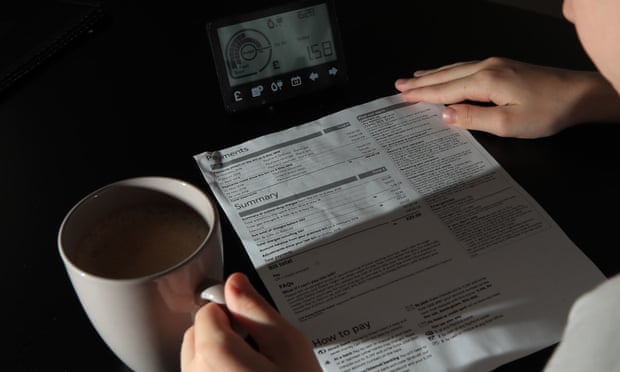
The energy cap has to be suspended before 26 August, the date on which an approximately 80% increase in our energy bills is expected to be announced. Photograph: Peter Byrne/PA
Time and tide wait for no one. Neither do crises. They don’t take holidays, and don’t politely hang fire – certainly not to suit the convenience of a departing PM and the whims of two potential successors and the Conservative party membership. But with the country already in the eye of a cost of living storm, decisions cannot be put on hold until a changeover on 5 September, leaving impoverished families twisting in the wind.
The energy cap has to be suspended before 26 August, the date on which an approximately 80% increase in our energy bills is expected to be announced. The Department for Work and Pensions computers, which adjust universal credit and legacy benefits, have to be reprogrammed in the next few days if help is to be given to all who need it when prices rise on 1 October. Voluntary cuts in energy usage – good for our green agenda – should, as has happened in Germany and France, be agreed upon now when the weather is good if we are to prevent rationing later when the weather turns bad. And windfall profits and bonuses have to be properly taxed now before the money flees the country.
There were two great lessons I learned right at the start of the last great economic crisis in 2008: never to be behind the curve but be ahead of events; and to get to the root of the problem. And it is not tax cuts or, as yet, a wage-price inflation spiral that are the most urgent priorities for action, but dealing with the soaring costs of fuel and food: the cause of half of our current inflation.
So it is indeed urgent that the candidates to be prime minister – and the current prime minister and chancellor – meet to make not just one or two but several urgently needed decisions: to suspend and fundamentally reform the energy price cap; to agree October payments for those who will not be able to afford to turn up their heating; to home in on alternative supplies abroad and open up appropriate storage facilities at home; to agree voluntary energy reductions; and to help pay for these measures with a watertight windfall tax on energy companies and a tax on the high levels of City bonus payments. For if we could remove the opportunity to avoid or opt out, as we did when imposing the windfall tax on privatised utilities in 1997 and the banker bonus levy of 2009, we could raise not just £5bn but as much as £15bn. This would be enough, for example, to give nearly 8 million low-income families just under £2,000 each.
All these measures should be based on a clear set of principles: that the right to a warm home is a human right; that we should do most for those who have least; and that no energy retailer should be allowed to additionally profit from the crisis.
Britain’s crises have one thing in common: a failure to invest
Larry Elliott

Read more
What’s more, British ministers – and no one has yet grasped this – should also be leading the way, as we did in 2009, in demanding coordinated international action with an emergency G20 early in September to address the fuel, food, inflation and debt emergencies. These are global problems that can only be fully addressed by globally coordinated solutions.
Tuesday’s forecast from Cornwall Insight of a £4,266 average annual energy price by January is remarkable. It means, as an immediate analysis carried out by Jonathan Bradshaw and Antonia Keung shows, that more than half of British households, 54%, will be in fuel poverty by October and two-thirds, 66%, by January. Six million households, an astonishing number, will be forced to pay an unprecedented 25% of their income in fuel costs and 4.4 million will be subject to a virtually unaffordable 30%.
So instead of allowing Ofgem to announce an increase on a scale that will send shock waves through every household, the government should pause any further increase in the cap; assess the actual costs of the energy supplies being sold to consumers by the major companies; and, after reviewing the profit margins, and examining how to make standing charges and social tariffs more progressive, negotiate separate company agreements to keep prices down. They should work with businesses to cut consumption, as is happening in France and Spain, which have imposed their own cap on energy prices, dictated more by what people can afford than the current wholesale gas price in the marketplace.
And if the companies cannot meet these new requirements, we should consider all the options we used with the banks in 2009: guaranteed loans, equity financing and, if this fails, as a last resort, operate their essential services from the public sector until the crisis is over.
With one of our main suppliers, Norway, seeking to retain its own gas for domestic use and France running into problems with its nuclear reactors, we are already running out of time to negotiate new deals with other international suppliers. And we are already missing out of additional capacity from Qatar, which has gone to mainland Europe. Over time, we can and must increase domestic production, and agree on a home insulation programme with the same urgency as our vaccination programme.
It’s true that Britain’s decade-long low growth, caused by low investment, has made us vulnerable to skill shortages and supply-side bottlenecks and thus higher inflation than our competitors. But most of the current rise in inflation has been generated from energy and food prices caused by the war in Ukraine and so removing the Bank of England’s independence is merely an exercise in blame shifting, as is direct criticism of the Treasury which, in my view, will take its lead from ministers.
It is the government that sets the inflation target and appoints the Bank’s main decision-makers. And it is the duty of government in a crisis to send the Bank an open letter telling it to set out a clear pathway over the coming years to return to stable prices. On the basis of an agreed inflation trajectory back to 2%, we should consider agreeing year-on-year wage settlements – starting with a flat rate of between £2-3,000 this year – so that hardworking families, especially those on the lowest incomes, can afford their energy bills without being plunged into poverty.
The truth is that without a plan the government is lurching from one crisis to another, failing to address the anxieties of families who see nothing more than pain now and pain later. But there is a way through from pain today to gain tomorrow, not just through the immediate relief I propose but in a clear strategy to move us from the 1.4% annual growth that the Conservatives have achieved back to a 2.5% trend growth rate. This is the one way to permanently end the cost of living crisis that British families have had to endure through an austerity decade.
No one can be secure when millions feel insecure and no one can be content when there is so much discontent. Churchill once said that those who build the present in the image of the past will utterly fail to meet the challenges of the future. Only bold and decisive action starting this week will rescue people from hardship and reunite our fractured country.
Time and tide wait for no one. Neither do crises. They don’t take holidays, and don’t politely hang fire – certainly not to suit the convenience of a departing PM and the whims of two potential successors and the Conservative party membership. But with the country already in the eye of a cost of living storm, decisions cannot be put on hold until a changeover on 5 September, leaving impoverished families twisting in the wind.
The energy cap has to be suspended before 26 August, the date on which an approximately 80% increase in our energy bills is expected to be announced. The Department for Work and Pensions computers, which adjust universal credit and legacy benefits, have to be reprogrammed in the next few days if help is to be given to all who need it when prices rise on 1 October. Voluntary cuts in energy usage – good for our green agenda – should, as has happened in Germany and France, be agreed upon now when the weather is good if we are to prevent rationing later when the weather turns bad. And windfall profits and bonuses have to be properly taxed now before the money flees the country.
There were two great lessons I learned right at the start of the last great economic crisis in 2008: never to be behind the curve but be ahead of events; and to get to the root of the problem. And it is not tax cuts or, as yet, a wage-price inflation spiral that are the most urgent priorities for action, but dealing with the soaring costs of fuel and food: the cause of half of our current inflation.
So it is indeed urgent that the candidates to be prime minister – and the current prime minister and chancellor – meet to make not just one or two but several urgently needed decisions: to suspend and fundamentally reform the energy price cap; to agree October payments for those who will not be able to afford to turn up their heating; to home in on alternative supplies abroad and open up appropriate storage facilities at home; to agree voluntary energy reductions; and to help pay for these measures with a watertight windfall tax on energy companies and a tax on the high levels of City bonus payments. For if we could remove the opportunity to avoid or opt out, as we did when imposing the windfall tax on privatised utilities in 1997 and the banker bonus levy of 2009, we could raise not just £5bn but as much as £15bn. This would be enough, for example, to give nearly 8 million low-income families just under £2,000 each.
All these measures should be based on a clear set of principles: that the right to a warm home is a human right; that we should do most for those who have least; and that no energy retailer should be allowed to additionally profit from the crisis.
Britain’s crises have one thing in common: a failure to invest
Larry Elliott
Read more
What’s more, British ministers – and no one has yet grasped this – should also be leading the way, as we did in 2009, in demanding coordinated international action with an emergency G20 early in September to address the fuel, food, inflation and debt emergencies. These are global problems that can only be fully addressed by globally coordinated solutions.
Tuesday’s forecast from Cornwall Insight of a £4,266 average annual energy price by January is remarkable. It means, as an immediate analysis carried out by Jonathan Bradshaw and Antonia Keung shows, that more than half of British households, 54%, will be in fuel poverty by October and two-thirds, 66%, by January. Six million households, an astonishing number, will be forced to pay an unprecedented 25% of their income in fuel costs and 4.4 million will be subject to a virtually unaffordable 30%.
So instead of allowing Ofgem to announce an increase on a scale that will send shock waves through every household, the government should pause any further increase in the cap; assess the actual costs of the energy supplies being sold to consumers by the major companies; and, after reviewing the profit margins, and examining how to make standing charges and social tariffs more progressive, negotiate separate company agreements to keep prices down. They should work with businesses to cut consumption, as is happening in France and Spain, which have imposed their own cap on energy prices, dictated more by what people can afford than the current wholesale gas price in the marketplace.
And if the companies cannot meet these new requirements, we should consider all the options we used with the banks in 2009: guaranteed loans, equity financing and, if this fails, as a last resort, operate their essential services from the public sector until the crisis is over.
With one of our main suppliers, Norway, seeking to retain its own gas for domestic use and France running into problems with its nuclear reactors, we are already running out of time to negotiate new deals with other international suppliers. And we are already missing out of additional capacity from Qatar, which has gone to mainland Europe. Over time, we can and must increase domestic production, and agree on a home insulation programme with the same urgency as our vaccination programme.
It’s true that Britain’s decade-long low growth, caused by low investment, has made us vulnerable to skill shortages and supply-side bottlenecks and thus higher inflation than our competitors. But most of the current rise in inflation has been generated from energy and food prices caused by the war in Ukraine and so removing the Bank of England’s independence is merely an exercise in blame shifting, as is direct criticism of the Treasury which, in my view, will take its lead from ministers.
It is the government that sets the inflation target and appoints the Bank’s main decision-makers. And it is the duty of government in a crisis to send the Bank an open letter telling it to set out a clear pathway over the coming years to return to stable prices. On the basis of an agreed inflation trajectory back to 2%, we should consider agreeing year-on-year wage settlements – starting with a flat rate of between £2-3,000 this year – so that hardworking families, especially those on the lowest incomes, can afford their energy bills without being plunged into poverty.
The truth is that without a plan the government is lurching from one crisis to another, failing to address the anxieties of families who see nothing more than pain now and pain later. But there is a way through from pain today to gain tomorrow, not just through the immediate relief I propose but in a clear strategy to move us from the 1.4% annual growth that the Conservatives have achieved back to a 2.5% trend growth rate. This is the one way to permanently end the cost of living crisis that British families have had to endure through an austerity decade.
No one can be secure when millions feel insecure and no one can be content when there is so much discontent. Churchill once said that those who build the present in the image of the past will utterly fail to meet the challenges of the future. Only bold and decisive action starting this week will rescue people from hardship and reunite our fractured country.
Subscribe to:
Comments (Atom)