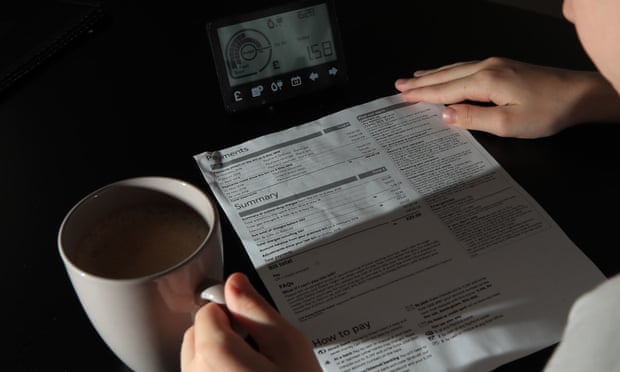
The energy cap has to be suspended before 26 August, the date on which an approximately 80% increase in our energy bills is expected to be announced. Photograph: Peter Byrne/PA
Time and tide wait for no one. Neither do crises. They don’t take holidays, and don’t politely hang fire – certainly not to suit the convenience of a departing PM and the whims of two potential successors and the Conservative party membership. But with the country already in the eye of a cost of living storm, decisions cannot be put on hold until a changeover on 5 September, leaving impoverished families twisting in the wind.
The energy cap has to be suspended before 26 August, the date on which an approximately 80% increase in our energy bills is expected to be announced. The Department for Work and Pensions computers, which adjust universal credit and legacy benefits, have to be reprogrammed in the next few days if help is to be given to all who need it when prices rise on 1 October. Voluntary cuts in energy usage – good for our green agenda – should, as has happened in Germany and France, be agreed upon now when the weather is good if we are to prevent rationing later when the weather turns bad. And windfall profits and bonuses have to be properly taxed now before the money flees the country.
There were two great lessons I learned right at the start of the last great economic crisis in 2008: never to be behind the curve but be ahead of events; and to get to the root of the problem. And it is not tax cuts or, as yet, a wage-price inflation spiral that are the most urgent priorities for action, but dealing with the soaring costs of fuel and food: the cause of half of our current inflation.
So it is indeed urgent that the candidates to be prime minister – and the current prime minister and chancellor – meet to make not just one or two but several urgently needed decisions: to suspend and fundamentally reform the energy price cap; to agree October payments for those who will not be able to afford to turn up their heating; to home in on alternative supplies abroad and open up appropriate storage facilities at home; to agree voluntary energy reductions; and to help pay for these measures with a watertight windfall tax on energy companies and a tax on the high levels of City bonus payments. For if we could remove the opportunity to avoid or opt out, as we did when imposing the windfall tax on privatised utilities in 1997 and the banker bonus levy of 2009, we could raise not just £5bn but as much as £15bn. This would be enough, for example, to give nearly 8 million low-income families just under £2,000 each.
All these measures should be based on a clear set of principles: that the right to a warm home is a human right; that we should do most for those who have least; and that no energy retailer should be allowed to additionally profit from the crisis.
Britain’s crises have one thing in common: a failure to invest
Larry Elliott

Read more
What’s more, British ministers – and no one has yet grasped this – should also be leading the way, as we did in 2009, in demanding coordinated international action with an emergency G20 early in September to address the fuel, food, inflation and debt emergencies. These are global problems that can only be fully addressed by globally coordinated solutions.
Tuesday’s forecast from Cornwall Insight of a £4,266 average annual energy price by January is remarkable. It means, as an immediate analysis carried out by Jonathan Bradshaw and Antonia Keung shows, that more than half of British households, 54%, will be in fuel poverty by October and two-thirds, 66%, by January. Six million households, an astonishing number, will be forced to pay an unprecedented 25% of their income in fuel costs and 4.4 million will be subject to a virtually unaffordable 30%.
So instead of allowing Ofgem to announce an increase on a scale that will send shock waves through every household, the government should pause any further increase in the cap; assess the actual costs of the energy supplies being sold to consumers by the major companies; and, after reviewing the profit margins, and examining how to make standing charges and social tariffs more progressive, negotiate separate company agreements to keep prices down. They should work with businesses to cut consumption, as is happening in France and Spain, which have imposed their own cap on energy prices, dictated more by what people can afford than the current wholesale gas price in the marketplace.
And if the companies cannot meet these new requirements, we should consider all the options we used with the banks in 2009: guaranteed loans, equity financing and, if this fails, as a last resort, operate their essential services from the public sector until the crisis is over.
With one of our main suppliers, Norway, seeking to retain its own gas for domestic use and France running into problems with its nuclear reactors, we are already running out of time to negotiate new deals with other international suppliers. And we are already missing out of additional capacity from Qatar, which has gone to mainland Europe. Over time, we can and must increase domestic production, and agree on a home insulation programme with the same urgency as our vaccination programme.
It’s true that Britain’s decade-long low growth, caused by low investment, has made us vulnerable to skill shortages and supply-side bottlenecks and thus higher inflation than our competitors. But most of the current rise in inflation has been generated from energy and food prices caused by the war in Ukraine and so removing the Bank of England’s independence is merely an exercise in blame shifting, as is direct criticism of the Treasury which, in my view, will take its lead from ministers.
It is the government that sets the inflation target and appoints the Bank’s main decision-makers. And it is the duty of government in a crisis to send the Bank an open letter telling it to set out a clear pathway over the coming years to return to stable prices. On the basis of an agreed inflation trajectory back to 2%, we should consider agreeing year-on-year wage settlements – starting with a flat rate of between £2-3,000 this year – so that hardworking families, especially those on the lowest incomes, can afford their energy bills without being plunged into poverty.
The truth is that without a plan the government is lurching from one crisis to another, failing to address the anxieties of families who see nothing more than pain now and pain later. But there is a way through from pain today to gain tomorrow, not just through the immediate relief I propose but in a clear strategy to move us from the 1.4% annual growth that the Conservatives have achieved back to a 2.5% trend growth rate. This is the one way to permanently end the cost of living crisis that British families have had to endure through an austerity decade.
No one can be secure when millions feel insecure and no one can be content when there is so much discontent. Churchill once said that those who build the present in the image of the past will utterly fail to meet the challenges of the future. Only bold and decisive action starting this week will rescue people from hardship and reunite our fractured country.
Time and tide wait for no one. Neither do crises. They don’t take holidays, and don’t politely hang fire – certainly not to suit the convenience of a departing PM and the whims of two potential successors and the Conservative party membership. But with the country already in the eye of a cost of living storm, decisions cannot be put on hold until a changeover on 5 September, leaving impoverished families twisting in the wind.
The energy cap has to be suspended before 26 August, the date on which an approximately 80% increase in our energy bills is expected to be announced. The Department for Work and Pensions computers, which adjust universal credit and legacy benefits, have to be reprogrammed in the next few days if help is to be given to all who need it when prices rise on 1 October. Voluntary cuts in energy usage – good for our green agenda – should, as has happened in Germany and France, be agreed upon now when the weather is good if we are to prevent rationing later when the weather turns bad. And windfall profits and bonuses have to be properly taxed now before the money flees the country.
There were two great lessons I learned right at the start of the last great economic crisis in 2008: never to be behind the curve but be ahead of events; and to get to the root of the problem. And it is not tax cuts or, as yet, a wage-price inflation spiral that are the most urgent priorities for action, but dealing with the soaring costs of fuel and food: the cause of half of our current inflation.
So it is indeed urgent that the candidates to be prime minister – and the current prime minister and chancellor – meet to make not just one or two but several urgently needed decisions: to suspend and fundamentally reform the energy price cap; to agree October payments for those who will not be able to afford to turn up their heating; to home in on alternative supplies abroad and open up appropriate storage facilities at home; to agree voluntary energy reductions; and to help pay for these measures with a watertight windfall tax on energy companies and a tax on the high levels of City bonus payments. For if we could remove the opportunity to avoid or opt out, as we did when imposing the windfall tax on privatised utilities in 1997 and the banker bonus levy of 2009, we could raise not just £5bn but as much as £15bn. This would be enough, for example, to give nearly 8 million low-income families just under £2,000 each.
All these measures should be based on a clear set of principles: that the right to a warm home is a human right; that we should do most for those who have least; and that no energy retailer should be allowed to additionally profit from the crisis.
Britain’s crises have one thing in common: a failure to invest
Larry Elliott
Read more
What’s more, British ministers – and no one has yet grasped this – should also be leading the way, as we did in 2009, in demanding coordinated international action with an emergency G20 early in September to address the fuel, food, inflation and debt emergencies. These are global problems that can only be fully addressed by globally coordinated solutions.
Tuesday’s forecast from Cornwall Insight of a £4,266 average annual energy price by January is remarkable. It means, as an immediate analysis carried out by Jonathan Bradshaw and Antonia Keung shows, that more than half of British households, 54%, will be in fuel poverty by October and two-thirds, 66%, by January. Six million households, an astonishing number, will be forced to pay an unprecedented 25% of their income in fuel costs and 4.4 million will be subject to a virtually unaffordable 30%.
So instead of allowing Ofgem to announce an increase on a scale that will send shock waves through every household, the government should pause any further increase in the cap; assess the actual costs of the energy supplies being sold to consumers by the major companies; and, after reviewing the profit margins, and examining how to make standing charges and social tariffs more progressive, negotiate separate company agreements to keep prices down. They should work with businesses to cut consumption, as is happening in France and Spain, which have imposed their own cap on energy prices, dictated more by what people can afford than the current wholesale gas price in the marketplace.
And if the companies cannot meet these new requirements, we should consider all the options we used with the banks in 2009: guaranteed loans, equity financing and, if this fails, as a last resort, operate their essential services from the public sector until the crisis is over.
With one of our main suppliers, Norway, seeking to retain its own gas for domestic use and France running into problems with its nuclear reactors, we are already running out of time to negotiate new deals with other international suppliers. And we are already missing out of additional capacity from Qatar, which has gone to mainland Europe. Over time, we can and must increase domestic production, and agree on a home insulation programme with the same urgency as our vaccination programme.
It’s true that Britain’s decade-long low growth, caused by low investment, has made us vulnerable to skill shortages and supply-side bottlenecks and thus higher inflation than our competitors. But most of the current rise in inflation has been generated from energy and food prices caused by the war in Ukraine and so removing the Bank of England’s independence is merely an exercise in blame shifting, as is direct criticism of the Treasury which, in my view, will take its lead from ministers.
It is the government that sets the inflation target and appoints the Bank’s main decision-makers. And it is the duty of government in a crisis to send the Bank an open letter telling it to set out a clear pathway over the coming years to return to stable prices. On the basis of an agreed inflation trajectory back to 2%, we should consider agreeing year-on-year wage settlements – starting with a flat rate of between £2-3,000 this year – so that hardworking families, especially those on the lowest incomes, can afford their energy bills without being plunged into poverty.
The truth is that without a plan the government is lurching from one crisis to another, failing to address the anxieties of families who see nothing more than pain now and pain later. But there is a way through from pain today to gain tomorrow, not just through the immediate relief I propose but in a clear strategy to move us from the 1.4% annual growth that the Conservatives have achieved back to a 2.5% trend growth rate. This is the one way to permanently end the cost of living crisis that British families have had to endure through an austerity decade.
No one can be secure when millions feel insecure and no one can be content when there is so much discontent. Churchill once said that those who build the present in the image of the past will utterly fail to meet the challenges of the future. Only bold and decisive action starting this week will rescue people from hardship and reunite our fractured country.


