Search This Blog

Friday, 1 July 2022

The parallels between Boris Johnson and Jeremy Corbyn

How did the Conservatives become Corbynites asks Bagehot in The Economist


Switch the names, change a few dates and squint a little, and the potted biographies of Boris Johnson and Jeremy Corbyn look very similar. After bohemian childhoods in the English countryside and stints at private schools, each makes his home in Islington, cycles a lot and marries thrice (to a much younger spouse on the third occasion). A career in politics is spent on the fringes of their respective parties, communicating with their most loyal fans via columns in the Daily Telegraph (for Mr Johnson) and the Morning Star (for Mr Corbyn). 

Then, abruptly, each finds himself thrust into the leadership by party members frustrated about their wishes being ignored. In the case of Labour’s selectocracy, the desire was for unashamed socialism. Their Conservative cousins yearned for a proper Brexit. As leaders, both are written off by commentators and rivals alike before enjoying a surprise triumph in an election. In the 2017 general election Mr Corbyn was expected to be steamrollered by Theresa May, Mr Johnson’s predecessor as prime minister; instead the Conservatives lost their majority. Two years later Mr Johnson did pulverise Mr Corbyn, winning the Conservatives’ largest majority since the days of Margaret Thatcher.

If Mr Johnson’s ascent has been oddly similar to Mr Corbyn’s rise, so too may be his demise. James Johnson (no relation), a pollster who worked for Mrs May, argues Mr Johnson is the Conservative Corbyn: an unpopular leader, dragging towards defeat a party that is split between those deluded enough to support him and those too impotent to stop him. The problems that beset Labour during the Corbyn years are now swallowing the Conservatives.

It starts with the manner of their elections to the leadership. Just like Mr Corbyn, Mr Johnson is not a creature of the parliamentary party. Mr Corbyn derived his authority from Labour members. In 2016 he lost a confidence vote among his mps, yet shamelessly stayed on. Mr Johnson claims his legitimacy from the 14m people who voted Conservative at the election in 2019. The fact that 41% of Conservative mps opposed him in a confidence vote in June can therefore be dismissed. That creates a surreal situation in which two-thirds of the House of Commons would rather the prime minister was gone. Constitutionally, it is a mess. But Mr Johnson cares little about such disorder.

Delusion has sunk in among Mr Johnson’s remaining acolytes. In the wake of two dire by-election defeats on June 23rd, Tory flunkeys were reduced to arguing that the Conservatives won more votes across both seats, akin to a relegated football manager pointing out his team’s sturdy goal difference. Such derangement has echoes of Labour figures in 2019 who, in the wake of their worst result since 1935, claimed that the party had “won the argument”.

The ineptitude of his internal enemies was the main reason Mr Corbyn stayed in power. When a leadership challenge was launched Mr Corbyn’s opponents alighted on Owen Smith, then the mp for Pontypridd, as a candidate. His most notable moment in the campaign came when he accidentally implied he had a 29-inch penis. He lost. Mr Johnson is similarly blessed when it comes to his enemies. Conservative plotters lumbered into a poorly timed leadership contest at the start of June, a few weeks before Mr Johnson’s electoral popularity was found badly wanting in the by-elections. Organising another crack at him will take time.

In each case, some mps stay loyal because they have no prospects under another leader. Some of the 2019 intake of Conservative mps are lucky to be employed, never mind in Parliament. Mr Corbyn introduced the world to Richard Burgon, an mp whose hidden talents remained just that during a brief foray onto the front bench. Nadine Dorries, the culture secretary and Mr Johnson’s staunchest ally, may be the most successful novelist in cabinet since Disraeli, but the comparisons end there.

Mr Corbyn and Mr Johnson also share an ability to drive opponents to near insanity. Mr Johnson seems sometimes to be regarded as the first politician ever to tell fibs in office, when he is just the latest to do so. When home secretary, for example, Mrs May launched a salvo at the concept of human rights after someone could not be deported “because—and I am not making this up—he had a pet cat”. (Reader, she was making it up.) Likewise, Mr Corbyn threw out a range of often reasonable, if offbeat, policies such as increased provision of free school meals or free broadband, which generated disproportionately angry reactions. Rage at their faults blinded opponents to the qualities of both men; it is impossible to understand an enemy if you cannot appreciate his appeal.

Jeremy Johnson

Yet the critics are also right to be furious. Mr Corbyn did, eventually, lead his party to electoral destruction. The Labour leader was, notoriously, the dimmest member of the party’s left-wing rump, with noxious views on everything from anti-Semitism to Russia. Voters sniffed that out. Likewise, Mr Johnson is manifestly unsuited to the job of prime minister. Brexit, which Mr Johnson did more than any other politician to bring about, has been a slow-moving disaster, throttling the British economy just as its critics warned.

Such vindication, however, is worth little on its own. And as any Labour mp can confirm, changing leader—even an unpopular one—does not solve everything. Under his aegis Mr Corbyn’s critics argued the party would be 20 points ahead of the then wobbling Conservatives with any other leader. It is now three years since Mr Corbyn stepped down as leader. Despite the backdrop of an unpopular prime minister, police investigations into Downing Street and rocketing inflation, Labour cannot even sustain a double-digit lead in the polls. Allies of Sir Keir Starmer, Mr Corbyn’s successor as party leader, blame “long Corbyn” for this slack performance. At the dispatch box Mr Johnson brings up Mr Corbyn whenever he can. When the time comes, Labour will happily repay the favour. Long Boris may linger, too.

Thursday, 30 June 2022

Scientific Facts have a Half-Life - Life is Poker not Chess 4

Abridged and adapted from Thinking in Bets by Annie Duke


The Half-Life of Facts, by Samuel Arbesman, is a great read about how practically every fact we’ve ever known has been subject to revision or reversal. The book talks about the extinction of the coelacanth, a fish from the Late Cretaceous period. This was the period that also saw the extinction of dinosaurs and other species. In the late 1930s and independently in the mid 1950s, coelacanths were found alive and well. Arbesman quoted a list of 187 species of mammals declared extinct, more than a third of which have subsequently been discovered as un-extinct.


Given that even scientific facts have an expiration date, we would all be well advised to take a good hard look at our beliefs, which are formed and updated in a much more haphazard way than in science.


We would be better served as communicators and decision makers if we thought less about whether we are confident in our beliefs and more about how confident we are about each of our beliefs. What if, in addition to expressing what we believe, we also rated our level of confidence about the accuracy of our belief on a scale of zero to ten? Zero would mean we are certain a belief is not true. Ten would mean we are certain that our belief is true. Forcing ourselves to express how sure we are of our beliefs brings to plain sight the probabilistic nature of those beliefs, that we believe is almost never 100% or 0% accurate but, rather, somewhere in between.


Incorporating uncertainty in the way we think about what we believe creates open-mindedness, moving us closer to a more objective stance towards information that disagrees with us. We are less likely to succumb to motivated reasoning since it feels better to make small adjustments in degrees of certainty instead of having to grossly downgrade from ‘right’ to ‘’wrong’. This shifts us away from treating information that disagrees with us as a threat, as something we have to defend against, making us better able to truthseek.


There is no sin in finding out there is evidence that contradicts what we believe. The only sin is in not using that evidence as objectively as possible to refine that belief going forward. By saying, ‘I’m 80%’ and thereby communicating we aren’t sure, we open the door for others to tell us what they know. They realise they can contribute without having to confront us by saying or implying, ‘You’re wrong’. Admitting we are not sure is an invitation for help in refining our beliefs and that will make our beliefs more accurate over time as we are more likely to gather relevant information.


Acknowledging that decisions are bets based on our beliefs, getting comfortable with uncertainty and redefining right and wrong are integral to a good overall approach to decision making.


Udaipur’s is not 1st one & not last one too


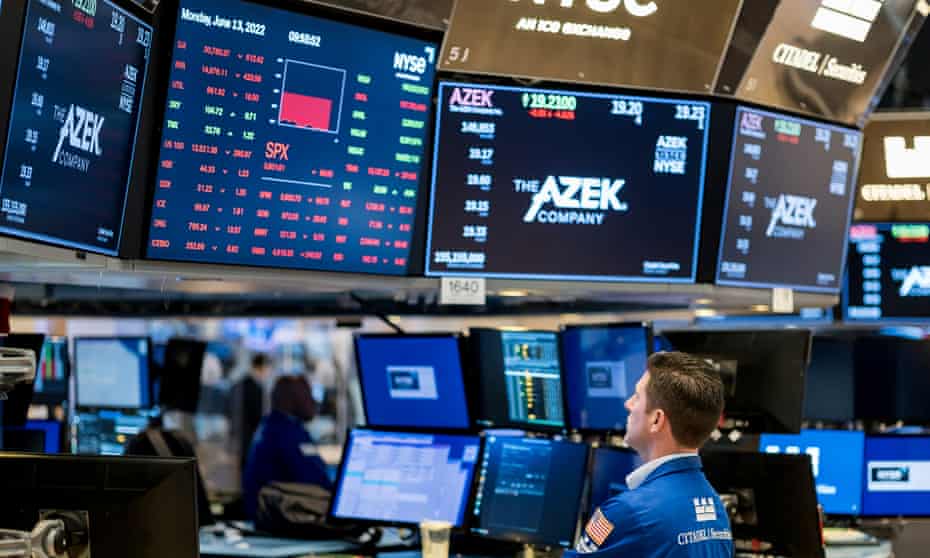
Stagflationary global debt crisis looms – and things will get much worse


The global financial and economic outlook for the year ahead has soured rapidly in recent months, with policymakers, investors and households now asking how much they should revise their expectations, and for how long. That depends on the answers to six questions.

First, will the rise in inflation in most advanced economies be temporary or more persistent? This debate has raged for the past year but now it is largely settled: “Team Persistent” won, and “Team Transitory” – which previously included most central banks and fiscal authorities – must admit to having been mistaken.

The second question is whether the increase in inflation was driven more by excessive aggregate demand (loose monetary, credit, and fiscal policies) or by stagflationary negative aggregate supply shocks (including the initial Covid-19 lockdowns, supply-chain bottlenecks, a reduced US labour supply, the impact of Russia’s war in Ukraine on commodity prices, and China’s “zero-Covid” policy). While demand and supply factors were in the mix, it is now widely recognised that supply factors have played an increasingly decisive role. This matters because supply-driven inflation is stagflationary and thus raises the risk of a hard landing (increased unemployment and potentially a recession) when monetary policy is tightened. 
That leads directly to the third question: will monetary-policy tightening by the US Federal Reserve and other major central banks bring a hard or soft landing? Until recently, most central banks and most of Wall Street occupied “Team Soft Landing”. But the consensus has rapidly shifted, with even the Fed Chair, Jerome Powell, recognising that a recession is possible, and that a soft landing will be “very challenging”.

Moreover, a model used by the Federal Reserve Bank of New York shows a high probability of a hard landing, and the Bank of England has expressed similar views. Several prominent Wall Street institutions have now decided that a recession is their baseline scenario (the most likely outcome if all other variables are held constant). In the US and Europe, forward-looking indicators of economic activity and business and consumer confidence are heading sharply south.

The fourth question is whether a hard landing would weaken central banks’ hawkish resolve on inflation. If they stop their policy-tightening once a hard landing becomes likely, we can expect a persistent rise in inflation and either economic overheating (above-target inflation and above potential growth) or stagflation (above-target inflation and a recession), depending on whether demand shocks or supply shocks are dominant.

Most market analysts seem to think that central banks will remain hawkish but I am not so sure. I have argued that they will eventually wimp out and accept higher inflation – followed by stagflation – once a hard landing becomes imminent because they will be worried about the damage of a recession and a debt trap, owing to an excessive buildup of private and public liabilities after years of low interest rates.

Now that a hard landing is becoming a baseline for more analysts, a new (fifth) question is emerging: Will the coming recession be mild and short-lived, or will it be more severe and characterised by deep financial distress? Most of those who have come late and grudgingly to the hard-landing baseline still contend that any recession will be shallow and brief. They argue that today’s financial imbalances are not as severe as those in the run-up to the 2008 global financial crisis, and that the risk of a recession with a severe debt and financial crisis is therefore low. But this view is dangerously naive.

There is ample reason to believe that the next recession will be marked by a severe stagflationary debt crisis. As a share of global GDP, private and public debt levels are much higher today than in the past, having risen from 200% in 1999 to 350% today (with a particularly sharp increase since the start of the pandemic). Under these conditions, rapid normalisation of monetary policy and rising interest rates will drive highly leveraged zombie households, companies, financial institutions, and governments into bankruptcy and default.

The next crisis will not be like its predecessors. In the 1970s, we had stagflation but no massive debt crises because debt levels were low. After 2008, we had a debt crisis followed by low inflation or deflation because the credit crunch had generated a negative demand shock. Today, we face supply shocks in a context of much higher debt levels, implying that we are heading for a combination of 1970s-style stagflation and 2008-style debt crises – that is, a stagflationary debt crisis.

When confronting stagflationary shocks, a central bank must tighten its policy stance even as the economy heads toward a recession. The situation today is thus fundamentally different from the global financial crisis or the early months of the pandemic, when central banks could ease monetary policy aggressively in response to falling aggregate demand and deflationary pressure. The space for fiscal expansion will also be more limited this time. Most of the fiscal ammunition has been used, and public debts are becoming unsustainable.
 
Moreover, because today’s higher inflation is a global phenomenon, most central banks are tightening at the same time, thereby increasing the probability of a synchronised global recession. This tightening is already having an effect: bubbles are deflating everywhere – including in public and private equity, real estate, housing, meme stocks, crypto, Spacs (special purpose acquisition companies), bonds, and credit instruments. Real and financial wealth is falling, and debts and debt-servicing ratios are rising.

That brings us to the final question: will equity markets rebound from the current bear market (a decline of at least 20% from the last peak), or will they plunge even lower? Most likely, they will plunge lower. After all, in typical plain-vanilla recessions, US and global equities tend to fall by about 35%. But because the next recession will be stagflationary and accompanied by a financial crisis, the crash in equity markets could be closer to 50%.

Regardless of whether the recession is mild or severe, history suggests that the equity market has much more room to fall before it bottoms out. In the current context, any rebound – such as the one in the last two weeks – should be regarded as a dead-cat bounce, rather than the usual buy-the-dip opportunity. Though the current global situation confronts us with many questions, there is no real riddle to solve. Things will get much worse before they get better.

There is ample reason to fear big economies such as the US face recession and financial turmoil writes Nouriel Roubini in The Guardian


Wednesday, 29 June 2022

Being smart makes our bias worse: Life is Poker not Chess - 3


Abridged and adapted from Thinking in Bets by Annie Duke


We bet based on what we believe about the world.This is very good news: part of the skill in life comes from learning to be a better belief calibrator, using experience and information to more objectively update our beliefs to more accurately represent the world. The more accurate our beliefs, the better the foundation of the bets we make. However there is also some bad news: our beliefs can be way, way off.


Hearing is believing


We form beliefs in a haphazard way, believing all sorts of things based just on what we hear out in the world but haven’t researched for ourselves.


This is how we think we form abstract beliefs:


  1. We hear something

  2. We think about it and vet it, determining whether it is true or false; only after that

  3. We form our belief


It turns out though, that we actually form abstract beliefs this way:


  1. We hear something

  2. We believe it to be true

  3. Only sometimes, later, if we have the time or the inclination, we think about it and vet it, determining whether it is, in fact, true or false.


These belief formation methods had evolved due to a need for efficiency not accuracy. In fact, questioning what you see or hear could get you eaten in the jungle. However, assuming that you are no longer living in a jungle, we have failed to develop a high degree of scepticism to deal with materials available in the modern social media age. This general belief-formation process may affect our decision making in areas that can have significant consequences.


If we were good at updating our beliefs based on new information, our haphazard belief formation process might cause relatively few problems. Sadly, we form beliefs without vetting most of them, and maintain them even after receiving clear, corrective information.


Truthseeking, the desire to know the truth regardless of whether the truth aligns with the beliefs we currently hold, is not naturally supported by the way we process information. Instead of altering our beliefs to fit new information, we do the opposite, altering our interpretation of that information to fit our beliefs.


The stubbornness of beliefs


Once a belief is lodged, it becomes difficult to dislodge. It takes on a life of its own, leading us to notice and seek out evidence confirming our belief, rarely challenge the validity of confirming evidence, and ignore or work hard to actively discredit information contradicting the belief. This irrational, circular information processing pattern is called motivated reasoning.


Fake news works because people who already hold beliefs consistent with the story generally won’t question the evidence. Disinformation is even more powerful because the confirmable facts in the story make it feel like the information has been vetted, adding to the power of the narrative being pushed.


Fake news isn’t meant to change minds. The potency of fake news is that it entrenches beliefs its intended audience already has, and then amplifies them. The Internet is a playground for motivated reasoning. It provides the promise of access to a greater diversity of information sources and opinions than we’ve ever had available. Yet, we gravitate towards sources that confirm our beliefs. Every flavour is out there, but we tend to stick with our favourite. 


Even when directly confronted with facts that disconfirm our beliefs, we don’t let facts get in the way.


Being smart makes it worse


Surprisingly, being smart can actually make bias worse. The smarter you are, the better you are at constructing a narrative that supports your beliefs, rationalising and framing the data to fit your argument or point of view.


Blind spot bias - is an irrationality where people are better at recognising biased reasoning in others but are blind to bias in themselves. It was found that blind spot bias is greater the smarter you are.  Furthermore, people who were aware of their own biases were not better able to overcome them. 


Dan Kahan discovered that the more numerate people made more mistakes interpreting data on emotionally charged topics than the less numerate subjects sharing the same beliefs. It turns out the better you are with numbers, the better you are at spinning those numbers to conform to and support your beliefs.


Wanna bet


Imagine taking part in a conversation with a friend about the movie Chintavishtayaya Shyamala. Best film of all time, introduces a bunch of new techniques by which directors could contribute to story-telling. ‘Obviously, it won the national award’ you gush, as part of a list of superlatives the film unquestionably deserves.


Then your friend says, ‘Wanna bet?’


Suddenly, you are not so sure. That challenge puts you on your heels, causing you to back off your declaration and question the belief that you just declared with such assurance.


Remember the order in which we form abstract beliefs:


  1. We hear something

  2. We believe it to be true

  3. Only sometimes, later, if we have the time or the inclination, we think about it and vet it, determining whether it is, in fact, true or false.


‘Wanna bet?’ triggers us to engage in that third step that we only sometimes get to. Being asked if we're willing to bet money on it makes it much more likely that we will examine our information in a less biased way, be more honest with ourselves about how sure we are of our beliefs, and be more open to updating and calibrating our beliefs. The more objective we are, the more accurate our beliefs become. And the person who wins bets over the long run is the one with the more accurate beliefs.


Of course, in most instances, the person offering to bet isn’t actually looking to put any money on it. They are just making a point - a valid point that perhaps we overstated our conclusion or made our statement without including relevant caveats.


I’d imagine that if you went around challenging everyone with ‘Wanna bet?’ it would be difficult to make friends and you’d lose the ones you have. But that doesn’t mean we can’t change the framework for ourselves in the way we think about our biases. decisions and opinions.


Tuesday, 28 June 2022

Every Decision is a Bet : Life is poker not chess - 2

Abridged and adapted from Thinking in Bets by Annie Duke


Merriam Webster’s Online Dictionary defines ‘bet’ as ‘a choice made by thinking about what will probably happen’. ‘To risk losing (something) when you try to do or achieve something’ and ‘to make decisions that are based on the belief that something will happen or is true’.


These definitions often overlooked the border aspects of betting: choice, probability, risk, decision, belief. By this definition betting doesn’t have to take place only in a casino or against somebody else.


We routinely decide among alternatives, put resources at risk, assess the likelihood of different outcomes and consider what it is that we value. Every decision commits us to some course of action that, by definition, eliminates acting on other alternatives. All such decisions are bets. Not placing a bet on something is, itself a bet.


Choosing to go to the movies means that we are choosing to not do all other things with our time. If we accept a job offer, we are also choosing to foreclose all other alternatives.  There is always an opportunity cost in choosing one path over others. This is betting in action.


The betting elements of decisions - choice, probability, risk etc. are more obvious in some situations than others. Investments are clearly bets. A decision about a stock (buy, don’t buy, sell, hold..) involves a choice about the best use of our financial resources.


We don’t think of our parenting choices as bets but they are. We want our children to be happy, productive adults when we send them out into the world. Whenever we make a parenting choice (about discipline, nutrition, parenting philosophy, where to live etc.), we are betting that our choice will achieve the future we want for our children.


Job and relocation decisions are bets. Sales negotiations and contracts are bets. Buying a house is a bet. Ordering the chicken instead of vegetables is a bet. Everything is a bet.


Most bets are bets against ourselves


In most of our decisions, we are not betting against another person. We are betting against all the future versions of ourselves that we are not choosing. Whenever we make a choice we are betting on a potential future. We are betting that the future version of us that results from the decisions we make will be better off. At stake in a decision is that the return to us (measured in money, time, happiness, health or whatever we value) will be greater than what we are giving up by betting against the other alternative future versions of us.


But, how can we be sure that we are choosing the alternative that is best for us? What if another alternative would bring us more happiness, satisfaction or money? The answer, of course, is we can’t be sure. Things outside our control (luck) can influence the result. The futures we imagine are merely possible. They haven’t happened yet. We can only make our best guess, given what we know and don’t know, at what the future will look like. When we decide, we are betting whatever we value on one set of possible and uncertain futures. That is where the risk is.


Poker players live in a world where that risk is made explicit. They can get comfortable with uncertainty because they put it up front in their decisions. Ignoring the risk and uncertainty in every decision might make us feel better in the short run, but the cost to the quality of our decision making can be immense. If we can find ways to be more comfortable with uncertainty, we can see the world more accurately and be better for it. 


Monday, 27 June 2022

Don’t date anybody if you only want positive results! Life is poker not chess

Abridged and adapted from Thinking in Bets by Annie Duke


Suppose someone says, “I flipped a coin and it landed heads four times in a row. How likely is that to occur?”


It feels that should be a pretty easy question to answer. Once we do the maths on the probability of heads on four consecutive 50-50 flips, we can determine that would happen 6.25% of the time (0.5 x 0.5 x 0.5 x 0,.5).


The problem is that we came to this answer without knowing anything about the coin or the person flipping it. Is it a two-sided coin or three-sided or four? If it is two-sided, is it a two-headed coin? Even if the coin is two sided, is the coin weighted to land on heads more often than tails? Is the coin flipper a magician who is capable of influencing how the coin lands? This information is all incomplete, yet we answered the question as if we had examined the coin and knew everything about it.


Now if that person flipped the coin 10,000 times, giving us a sufficiently large sample size, we could figure out, with some certainty, whether the coin is fair. Four flips simply isn’t enough to determine much about the coin


We make this same mistake when we look for lessons in life’s results. Our lives are too short to collect enough data from our own experience to make it easy to dig down into decision quality from the small set of results we experience. If we buy a house, fix it up a little, and sell it three years later for 50% more than we paid. Does that mean we are smart at buying and selling property, or at fixing up houses? It could, but it could also mean there was a big upward trend in the market and buying almost any piece of property would have made just as much money. Bitcoin buyers may now wonder about the wisdom of their decisions.


The hazards of resulting


Take a moment to imagine your best decision or your worst decision. I’m willing to bet that your best decision preceded a good result and the worst decision preceded a bad result. This is a safe bet for me because we deduce an overly tight relationship between our decisions and the consequent results. 


There is an imperfect relationship between results and decision quality. I never seem to come across anyone who identifies a bad decision when they got lucky with the result, or a well reasoned decision that didn’t work out. We are uncomfortable with the idea that luck plays a significant role in our lives. We assume causation when there is only a correlation and tend to cherry-pick data to confirm the narrative we prefer.


Poker and decisions


Poker is a game that mimics human decision making. Every poker hand requires making at least one decision (to fold or to stay) and some hands can require up to twenty decisions. During a poker game players get in about thirty hands per hour. This means a poker player makes hundreds of decisions at breakneck speed with every hand having immediate financial consequences. 


It is a game of decision making with incomplete information. Valuable information remains hidden. There is also an element of luck in any outcome. You could make the best possible decision at every point and still lose the hand, because you don’t know what new cards will be dealt and revealed.


In addition, once the game is over, poker players must learn from that jumbled mass of decisions and outcomes, separating the luck from the skill, and guarding against using results to justify/criticise decisions made,


The quality of our lives is the sum of decision quality plus luck. Poker is a mirror to life and helps us recognise the mistakes we never spot because we win the hand anyway or the leeway to do everything right, still lose, and treat the losing result as proof that we made a mistake,


Decisions are bets on the future


Decisions aren’t ‘right’ or ‘wrong’ based on whether they turn out well on any particular iteration. An unwanted result doesn’t make our decision wrong if we had thought about the alternatives and probabilities in advance and made our decisions accordingly. 


Our world is structured to give us lots of opportunities to feel bad about being wrong if we want to measure ourselves by outcomes. Don’t fall in love or even date anybody if you want only positive results.