Search This Blog

Sunday, 2 May 2021

Bitcoin: too good to miss or a bubble ready to burst?

Eva Szalay in The FT


The problem with investing in bitcoin is that it instinctively feels too good to be true. 

The largest cryptocurrency by volume is worth 600 per cent more today than a year ago, soaring from about $7,000 per bitcoin to $54,000 this week, along the way becoming one of the best performing financial assets of 2020. Despite including some extreme price swings, the year-long rally has so far defied fears of a repeat of bitcoin’s spectacular price crash of 2018.

Eye-popping returns are making it difficult for even hardened cryptocurrency sceptics not to consider putting money into bitcoin and many long-term doubters are crumbling. Jamie Dimon, chief of US banking giant JPMorgan, is just one prominent crypto bear who turned bullish in recent years. Recently emerged cheerleaders include Tesla chief Elon Musk and a number of billionaire hedge fund managers who are convinced that as the digital equivalent of gold, bitcoin’s exchange rate against conventional currencies has even further to soar.  

So is bitcoin just a big Ponzi scheme or a genuine investment opportunity? Should retail investors give in to the temptation to pile in? FT Money has spoken to finance professionals inside and outside the cryptomarket and found that opinion remains sharply divided. The recent stellar performance has turned some bears into bulls. But hardcore naysayers warn that a bubble that has grown bigger is still a bubble. 

Even ardent crypto fans are reluctant to wager their life savings on an asset associated with hair-raising levels of volatility. Even among these enthusiasts, many limit their investments to 1-2 per cent of their portfolio. 

Regardless of whether cryptocurrencies turn out to be the digital equivalent of gold in the long run, today they are providing fraudsters with a rich hunting ground.  

Is it really different this time? 

Since the start of January, bitcoin’s value has risen by 85 per cent and in mid-April it hit the latest in a series of record highs at $65,000. Companies that operate in the digital currency sector are attracting a flood of money. In a recent (conventional) stock market flotation, investors valued Coinbase, the cryptocurrency exchange launched less than 10 years ago, at $72bn, putting it equal with BNP Paribas, a French bank with roots stretching back to 1848. 

Young people are in the vanguard of investing. In the UK, millennial and Gen Z investors are more likely to buy cryptocurrencies than equities and more than half (51 per cent) of those surveyed had traded digital currencies, research from broker Charles Schwab shows.  

After a year of spiralling prices, bears warn of the growing risk of a 2018-style collapse. Bitcoin bulls argue that the current rally is different from the 2018 bubble burst, when the price collapsed from above $16,000 to just $3,000. Today, they say, it is driven by demand from professional trading firms and institutional investors whose presence brings stability.  

Not everyone agrees. “It’s not different this time. There are no new eras, despite what the promoters tell you,” says David Rosenberg, a Canadian economist and president of Rosenberg Research. “Asset price bubbles come, bubbles go, but none of them correct by going sideways.” 

In contrast with younger investors, those aged 55 or over remain resolutely on the margins with just 8 per cent of survey respondents in this age group trading digital currencies, the Charles Schwab study found.  

They may be right to do so. Investors globally have lost more than $16bn since 2012 in cryptocurrency-related scams and fraud, according to disclosure platform Xangle. The Financial Conduct Authority, the UK’s financial watchdog, warned this year that investors can lose 100 per cent of their money when punting on cryptocurrencies. It has not sought to block cryptocurrency dealings but has forbidden the sale of derivatives on crypto assets to UK retail customers. 

As crypto markets are unregulated, investors have no one to turn to for help if they fall victim to fraud. Exchanges can turn out to be bogus and their founders disappear. A new coin might turn out to be a tissue of lies. 

“There are a lot of scams and criminal operations that target individuals and it’s very important to recognise that in an unregulated market there is no recourse,” says Ian Taylor, the chief executive of lobby group CryptoUK.  

Another concern for investors is the environmental footprint of cryptocurrencies. The carbon emissions associated with bitcoin equal that of Greece, according to research by Bank of America, because the coins are created or “mined”, in vast computing centres, which burn electricity and generate heat. 

What are the ground rules? 

Crypto specialists say the most important rule for investors is to be prepared to lose all their money. 

On April 13, bitcoin began a sharp decline, its exchange rate shedding 23 per cent in less than two weeks. Marcus Swanepoel, chief executive of Luno, a retail-focused cryptocurrency exchange with 5m-plus customers, says that in some cases they were overstretching themselves. Luno surveyed its clients last year and found that 55 per cent had no other investments.  

“Never spend more money than you can afford to lose,” he says. “It’s very risky, there is no doubt about it.” 

Extreme swings in the exchange rate mean cryptocurrency exposure should be kept at a low proportion of a portfolio, say most mainstream investment analysts. 

“I understand if you want to buy it because you believe the price will go up but make sure it’s a very small portion of your portfolio, maybe 1 or 2 per cent,” says Thanos Papasavvas, founder of research group ABP Invest, who has a 20-year background in asset management. 

Borrowing money to pump up trades with leverage amplifies gains but inflates losses. As there are no official rules, trading platforms allow investors to wager multiples of the money they deposit, inflating the amount at stake by as much as a 100 times.  

“Leverage on a crazy asset class is a recipe for disaster,” says Abhishek Sachdev, a derivatives expert and head of Vedanta Hedging. 

Choosing the right coin is also important. There are hundreds of cryptocurrencies; most are worthless and some are plain scams. Bitcoin is the oldest, most liquid, coin and it is the one that enjoys support due to institutions investing due to its limited supply. 

According to its original computer-based design, only 21m bitcoins will ever exist and 99 per cent of these coins will be mined by 2030. Other cryptocurrencies are not limited in this way and the hundreds of available digital coins all have different characteristics. 

It is also the most expensive per unit but since it can be bought in small increments, there is no requirement to splash out $50,000 or so for a full coin.  

Ethereum is the second most traded cryptocurrency and has benefited from the tailwind of bitcoin’s rally. The technology behind ethereum is also used in a nascent market dubbed decentralised finance, making the coin a relatively safe choice. dogecoin and the likes occupy the riskiest and most illiquid end of the spectrum. 

How do I buy cryptocurrencies and what are the risks? 

In the UK the easiest way to access cryptocurrencies is to buy a portion of bitcoin on an established exchange such as Coinbase. Given that exchanges have suffered outages, been hacked or collapsed, this is the safest approach, though it is more expensive than other exchanges. 

Coinbase typically charges a spread of about 0.50 per cent plus a fee depending on the size of purchase and payment method. 

 Fintech companies such as Revolut also offer a way in for bitcoin buyers, but there is no way to transfer bitcoins from the app elsewhere or into other types of coin. Since they may only sell it back within Revolut, investors only nominally own bitcoin via the app.  

In the US, investors are able to buy shares in diversified cryptocurrency funds such as Grayscale, which can then be bought and sold like other mutual holdings. Institutional investors can also buy into exchange traded products but these are inaccessible for retail investors in the UK. It is possible to buy into products that offer exposure to companies active around blockchain — the public, digital ledger than underlies bitcoin — such as Invesco Elwood Global Blockchain UCITS ETF. These are a bet on technology, however, rather than the cryptocurrency.  

Selling cryptocurrencies also has tax implications. Digital assets count as property for accounting purposes and profits may be subject to capital gains tax. 

Scammers are a growing problem. Some ask investors to send their private keys to their crypto holdings, promising to return with a profit. But once done, there is no way to undo a transfer. 

Lihan Lee, co-founder of Xangle, advises potential investors to check the past records of any crypto investment schemes, while CryptoUK’s Taylor warns of posting about cryptocurrency investment on social media or cold callers promising guaranteed returns.  

“If a stranger walks up to you on the street and says they’ll give you £150 if they can borrow £100, you probably wouldn’t give them the money,” he says. “It’s the same with crypto.”  

Why are institutions getting involved? 

“If it’s on the side of a bus it’s time to buy,” screams an advertisement from Luno in London. 

Many seasoned investors say the ad should say the opposite. If everyone is talking about the same thing, it’s a sure-fire sign that prices have reached unsustainable heights and are about to collapse — as they did in 2018.  

But in the past 12 months companies and institutional investors have cautiously dipped their toes into digital assets. Since central banks around the world responded to the coronavirus pandemic with easy money policies, large asset managers and hedge funds have been looking for ways to protect themselves from a return of inflation and the erosion in value of of some currencies, including the dollar. 

“We’ve seen a step change in institutional interest last year,” says James Butterfill, an investment analyst at digital asset specialist Coinshares. He notes that around $54bn of money is invested across 120 cryptocurrency funds. A year ago, the total figure was $3.5bn across 89 funds.  

“Cryptocurrencies are here to stay,” wrote Christian Nolting, global chief investment officer at Deutsche Bank’s international private bank, in a report.  

Central banks are even exploring the idea of issuing digital alternatives for domestic currencies. To some analysts, central bank digital currencies lend legitimacy to the crypto space, while others believe it is an attempt by central banks to wrest back control of the market. 

“Central banks have always thought that they were key for payments,” says Randy Kroszner, professor of economics at the University of Chicago Booth School of Business. “And now they’ve realised they’re not.” 

But that does not mean that the risks of cryptocurrencies are likely to dissipate any time soon. As the unregulated market bounces through its latest price gyrations, it is a long way off from either stability or security.
One Nation One Healthcare System for India?


Saturday, 1 May 2021

Jordan Peterson's Guide to Speaking


Salman Rushdie on Midnight's Children at 40: 'India is no longer the country of this novel'

Four decades after his Booker-winner was published, Salman Rushdie (in The Guardian) reflects on the Bombay of his childhood – and his despair at the sectarianism he sees in India today 

Longevity is the real prize for which writers strive, and it isn’t awarded by any jury. For a book to stand the test of time, to pass successfully down the generations, is uncommon enough to be worth a small celebration. For a writer in his mid-70s, the continued health of a book published in his mid-30s is, quite simply, a delight. This is why we do what we do: to make works of art that, if we are very lucky, will endure.

As a reader, I have always been attracted to capacious, largehearted fictions, books that try to gather up large armfuls of the world. When I started to think about the work that would grow into Midnight’s Children, I looked again at the great Russian novels of the 19th century, Crime and Punishment, Anna Karenina, Dead Souls, books of the type that Henry James had called “loose, baggy monsters”, large-scale realist novels – though, in the case of Dead Souls, on the very edge of surrealism. And at the great English novels of the 18th and 19th centuries, Tristram Shandy (wildly innovative and by no means realist), Vanity Fair (bristling with sharp knives of satire), Little Dorrit (in which the Circumlocution Office, a government department whose purpose is to do nothing, comes close to magic realism), and Bleak House (in which the interminable court case Jarndyce v Jarndyce comes even closer). And at their great French precursor, Gargantua and Pantagruel, which is completely fabulist.

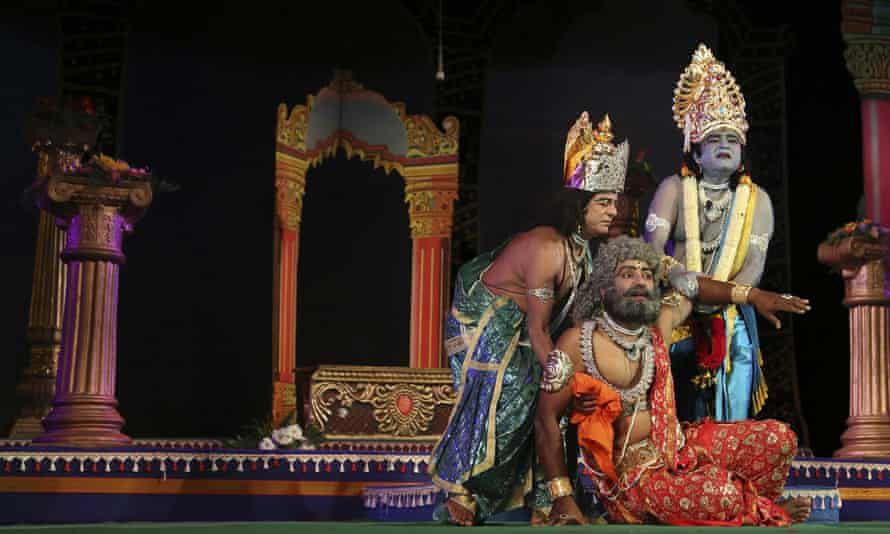
I also had in mind the modern counterparts of these masterpieces, The Tin Drum and One Hundred Years of Solitude, The Adventures of Augie March and Catch-22, and the rich, expansive worlds of Iris Murdoch and Doris Lessing (both too prolific to be defined by any single title, but Murdoch’s The Black Prince and Lessing’s The Making of the Representative from Planet 8 have stayed with me). But I was also thinking about another kind of capaciousness, the immense epics of India, the Mahabharata and Ramayana, and the fabulist traditions of the Panchatantra, the Thousand and One Nights and the Kashmiri Sanskrit compendium called Katha-sarit-sagar (Ocean of the Streams of Story). I was thinking of India’s oral narrative traditions, too, which were a form of storytelling in which digression was almost the basic principle; the storyteller could tell, in a sort of whirling cycle, a fictional tale, a mythological tale, a political story and an autobiographical story; he – because it was always a he – could intersperse his multiple narratives with songs and keep large audiences entranced.

A performance of the Ramayana at a theatre in Bangalore, 2015. Photograph: Aijaz Rahi/AP

I loved that multiplicity could be so captivating. Young writers are often given a version of the advice that the King of Hearts gives the White Rabbit in Alice’s Adventures in Wonderland, when the Rabbit becomes confused in court about how to tell his story: “‘Begin at the beginning,’ the King said, very gravely, ‘and go on until you come to the end; then stop.’” It was inspiring to learn, from the oral narrative masters of, in particular, Kerala in south India, that this was not the only way, or even the most captivating way, to go about things.

The novel I was planning was a multigenerational family novel, so inevitably I thought of Thomas Mann’s Buddenbrooks and, for all its non-realist elements, I knew that my book needed to be a novel deeply rooted in history, so I read, with great admiration, Elsa Morante’s History: A Novel. And, because it was to be a novel of Bombay, it had to be rooted in the movies as well, movies of the kind now called “Bollywood”, in which calamities such as babies exchanged at birth and given to the wrong mothers were everyday occurrences.
I wanted to write a novel in which memory and politics, love and hate would mingle on every page

As you can see, I wanted to write a novel of vaulting ambition, a high-wire act with no safety net, an all-or-nothing effort: Bollywood or bust, as one might say. A novel in which memory and politics, love and hate would mingle on almost every page. I was an inexperienced, unsuccessful, unknown writer. To write such a book I had to learn how to do so; to learn by writing it. Five years passed before I was ready to show it to anybody. For all its surrealist elements Midnight’s Children is a history novel, looking for an answer to the great question history asks us: what is the relationship between society and the individual, between the macrocosm and the microcosm? To put it another way: do we make history, or does it make (or unmake) us? Are we the masters or victims of our times? 

My protagonist, Saleem Sinai, makes an unusual assertion in reply: he believes that everything that happens, happens because of him. That history is his fault. This belief is absurd, of course, and so his insistence on it feels comic at first. Later, as he grows up, and as the gulf between his belief and the reality of his life grows ever wider – as he becomes increasingly victim-like, not a person who acts but one who is acted upon, who does not do but is done to – it begins to be sad, perhaps even tragic. Forty years after he first arrived on the scene – 45 years after he first made his assertion on my typewriter – I feel the urge to defend his apparently insane boast. Perhaps we are all, to use Saleem’s phrase, “handcuffed to history”. And if so, then yes, history is our fault. History is the fluid, mutable, metamorphic consequence of our choices, and so the responsibility for it, even the moral responsibility, is ours. After all: if it’s not ours, then whose is it? There’s nobody else here. It’s just us. If Saleem Sinai made an error, it was that he took on too much responsibility for events. I want to say to him now: we all share that burden. You don’t have to carry all of it.

The question of language was central to the making of Midnight’s Children. In a later novel, The Ground Beneath Her Feet, I used the acronym “Hug-me” to describe the language spoken in Bombay streets, a melange of Hindi, Urdu, Gujarati, Marathi and English. In addition to those five “official” languages, there’s also the city’s unique slang, Bambaiyya, which nobody from anywhere else in India understands. Clearly, any novel aiming for readability could not be written in Hug-me or Bambaiyya. A novel must know what language it’s being written in. However, writing in classical English felt wrong, like a misrepresentation of the rich linguistic environment of the book’s setting. In the end I took my cue from Jewish American writers such as Philip Roth, who sprinkled their English with untranslated Yiddish words. If they could do it, so could I. The important thing was to make the approximate meaning of the word clear from the context. If Roth talks about getting a zetz in the kishkes, we understand from context that a zetz is some sort of violent blow and kishkes are a sensitive part of the human body. So if Saleem mentions a rutputty motor car, it should be clear that the car in question is a ramshackle, near-derelict old wreck.

In the end I used fewer non-English words than I originally intended. Sentence structure, the flow and rhythm of the language, ended up being more useful, I thought, in my quest to write in an English that wasn’t owned by the English. The flexibility of the English language has allowed it to become naturalised in many different countries, and Indian English is its own thing by now, just as Irish English is, or West Indian English, or Australian English, or the many variations of American English. I set out to write an Indian English novel. Since then, the literature of the English language has expanded to include many more such projects: I’m thinking of Edwidge Danticat’s Creole-inflected English in Breath, Eyes, Memory, for example, or Chimamanda Ngozi Adichie’s use of Igbo words and idioms in Purple Hibiscus and Half of a Yellow Sun, or Junot Díaz’s slangy, musical, Dominican remake of the language in The Brief Wondrous Life of Oscar Wao.


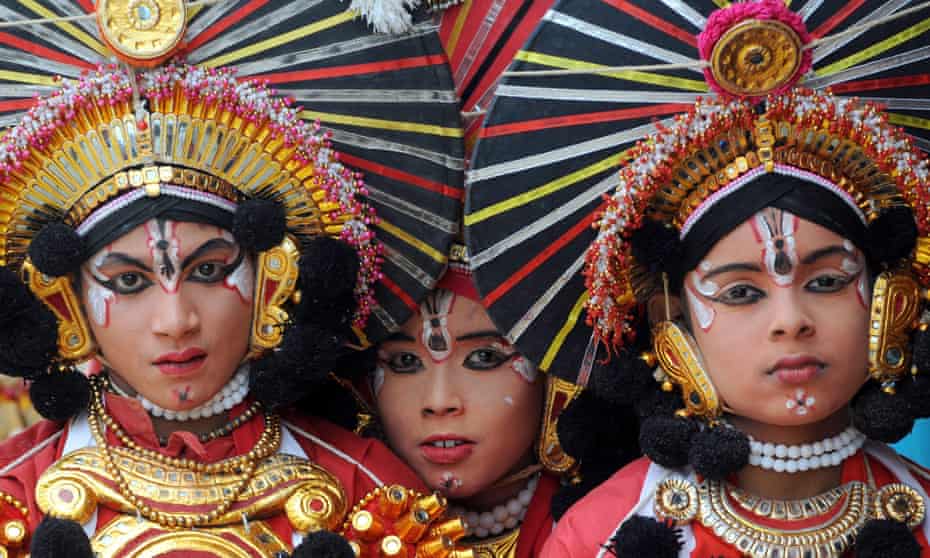
Children wait to participate in Indian Independence day celebrations. Photograph: Jagadeesh Nv/EPA

I found myself in conversation, so to speak, with a great forerunner, EM Forster’s A Passage to India. I had admired this novel even before I had the great good fortune, as an undergraduate at King’s College, Cambridge, to meet Morgan Forster himself, who was in residence there as an honorary fellow, and was generously and kindly encouraging when I shyly admitted that I wanted to write. But as I began to write my “India book” – for a while I didn’t even know what it was called – I understood that Forsterian English, so cool, so precise, would not do for me. It would not do, I thought, for India. India is not cool. India is hot. It’s hot and noisy and odorous and crowded and excessive. How could I represent that on the page? I asked myself. What would a hot, noisy, odorous, crowded, excessive English sound like? How would it read? The novel I wrote was my best effort to answer that question.

The question of crowdedness needed a formal answer as well as a linguistic one. Multitude is the most obvious fact about the subcontinent. Everywhere you go, there’s a throng of humanity. How could a novel embrace the idea of such multitude? My answer was to tell a crowd of stories, deliberately to overcrowd the narrative, so that “my” story, the main thrust of the novel, would need to push its way, so to speak, through a crowd of other stories. There are small, secondary characters and peripheral incidents in the book that could be expanded into longer narratives of their own. This kind of deliberate “wasting” of material was intentional. This was my hubbub, my maelstrom, my crowd.

When I started writing, the family at the heart of the novel was much more like my family than it is now. However, the characters felt oddly lifeless and inert. So I started making them unlike the people on whom they were modelled, and at once they began to come to life. For example, I did have an aunt who married a Pakistani general, who, in real life, was one of the founders, and the first chief, of the much feared ISI, the Inter-Services Intelligence agency. But as far as I know he was not involved in planning or executing a military coup, with or without the help of pepper pots. So that story was fiction. At least I think it was.

Saleem Sinai went to my school. He also lived, in Bombay, in my childhood home, in my old neighbourhood, and is just eight weeks younger than me. His childhood friends are composites of children I knew when I was young. Once, after a reading in Bombay, a man came up to me and said: “Hello, Salman. I’m Hairoil.” He wasn’t wrong. The character of Hairoil Sabarmati, or at least Hairoil’s neatly oiled and parted hair, had indeed been based on him. But he had never been nicknamed Hairoil in real life. That was something I made up for the novel. I couldn’t help thinking how strange it was that my childhood friend introduced himself to me by a fictional name. Especially as he had lost all his hair.

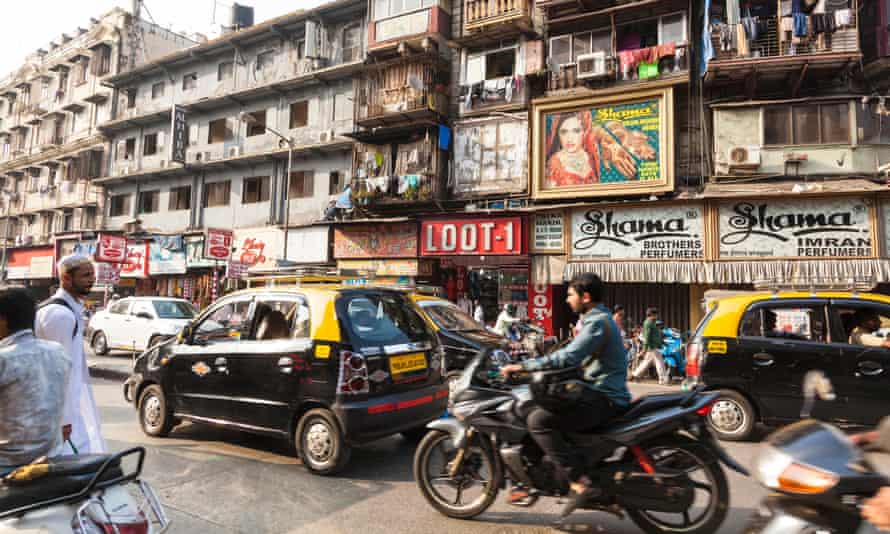
Bombay ... a hubub, a maelstrom. Photograph: Galit Seligmann/Alamy
But in spite of these echoes, Saleem and I are unalike. For one thing, our lives took very different directions. Mine led me abroad to England and eventually to America. But Saleem never leaves the subcontinent. His life is contained within, and defined by, the borders of India, Pakistan and Bangladesh. As a final proof that my character and I are not one and the same, I offer another anecdote. When I was in Delhi to do one of the first Indian readings from Midnight’s Children, I heard a woman’s voice cry loudly as I walked out on to the stage: “Oh! But he’s got a perfectly ordinary nose!”

Forty years is a long time. I have to say that India is no longer the country of this novel. When I wrote Midnight’s Children I had in mind an arc of history moving from the hope – the bloodied hope, but still the hope – of independence to the betrayal of that hope in the so-called Emergency, followed by the birth of a new hope. India today, to someone of my mind, has entered an even darker phase than the Emergency years. The horrifying escalation of assaults on women, the increasingly authoritarian character of the state, the unjustifiable arrests of people who dare to stand against that authoritarianism, the religious fanaticism, the rewriting of history to fit the narrative of those who want to transform India into a Hindu-nationalist, majoritarian state, and the popularity of the regime in spite of it all, or, worse, perhaps because of it all – these things encourage a kind of despair.

When I wrote this book I could associate big-nosed Saleem with the elephant-trunked god Ganesh, the patron deity of literature, among other things, and that felt perfectly easy and natural even though Saleem was not a Hindu. All of India belonged to all of us, or so I deeply believed. And still believe, even though the rise of a brutal sectarianism believes otherwise. But I find hope in the determination of India’s women and college students to resist that sectarianism, to reclaim the old, secular India and dismiss the darkness. I wish them well. But right now, in India, it’s midnight again.

UN Resolutions 1947 and 1948 Explained


Thursday, 29 April 2021

Jordan Peterson: Order and Chaos in 2021


‘We are witnessing a crime against humanity’: On India’s Covid catastrophe

It’s hard to convey the full depth and range of the trauma, the chaos and the indignity that people are being subjected to. Meanwhile, Modi and his allies are telling us not to complain
by Arundhati Roy in The Guardian


During a particularly polarising election campaign in the state of Uttar Pradesh in 2017, India’s prime minister, Narendra Modi, waded into the fray to stir things up even further. From a public podium, he accused the state government – which was led by an opposition party – of pandering to the Muslim community by spending more on Muslim graveyards (kabristans) than on Hindu cremation grounds (shamshans). With his customary braying sneer, in which every taunt and barb rises to a high note mid-sentence before it falls away in a menacing echo, he stirred up the crowd. “If a kabristan is built in a village, a shamshan should also be constructed there,” he said.

“Shamshan! Shamshan!” the mesmerised, adoring crowd echoed back.

Perhaps he is happy now that the haunting image of the flames rising from the mass funerals in India’s cremation grounds is making the front page of international newspapers. And that all the kabristans and shamshans in his country are working properly, in direct proportion to the populations they cater for, and far beyond their capacities.

“Can India, population 1.3 billion, be isolated?” the Washington Post asked rhetorically in a recent editorial about India’s unfolding catastrophe and the difficulty of containing new, fast-spreading Covid variants within national borders. “Not easily,” it replied. It’s unlikely this question was posed in quite the same way when the coronavirus was raging through the UK and Europe just a few months ago. But we in India have little right to take offence, given our prime minister’s words at the World Economic Forum in January this year.

Modi spoke at a time when people in Europe and the US were suffering through the peak of the second wave of the pandemic. He had not one word of sympathy to offer, only a long, gloating boast about India’s infrastructure and Covid-preparedness. I downloaded the speech because I fear that when history is rewritten by the Modi regime, as it soon will be, it might disappear, or become hard to find. Here are some priceless snippets:

“Friends, I have brought the message of confidence, positivity and hope from 1.3 billion Indians amid these times of apprehension … It was predicted that India would be the most affected country from corona all over the world. It was said that there would be a tsunami of corona infections in India, somebody said 700-800 million Indians would get infected while others said 2 million Indians would die.”

“Friends, it would not be advisable to judge India’s success with that of another country. In a country which is home to 18% of the world population, that country has saved humanity from a big disaster by containing corona effectively.”

Modi the magician takes a bow for saving humanity by containing the coronavirus effectively. Now that it turns out that he has not contained it, can we complain about being viewed as though we are radioactive? That other countries’ borders are being closed to us and flights are being cancelled? That we’re being sealed in with our virus and our prime minister, along with all the sickness, the anti-science, the hatred and the idiocy that he, his party and its brand of politics represent?

When the first wave of Covid came to India and then subsided last year, the government and its supportive commentariat were triumphant. “India isn’t having a picnic,” tweeted Shekhar Gupta, the editor-in-chief of the online news site the Print. “But our drains aren’t choked with bodies, hospitals aren’t out of beds, nor crematoriums & graveyards out of wood or space. Too good to be true? Bring data if you disagree. Unless you think you’re god.” Leave aside the callous, disrespectful imagery – did we need a god to tell us that most pandemics have a second wave?

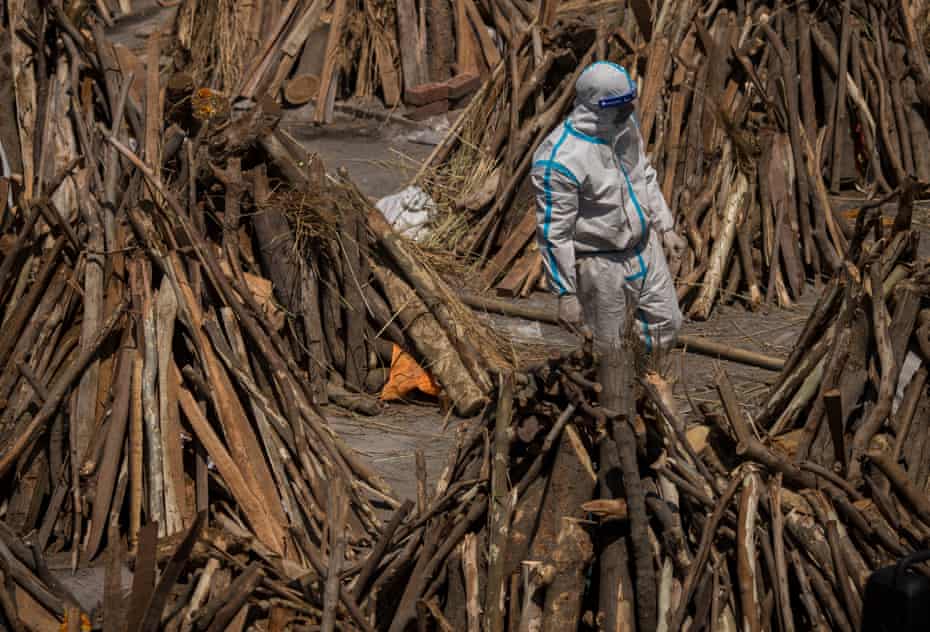
This one was predicted, although its virulence has taken even scientists and virologists by surprise. So where is the Covid-specific infrastructure and the “people’s movement” against the virus that Modi boasted about in his speech? Hospital beds are unavailable. Doctors and medical staff are at breaking point. Friends call with stories about wards with no staff and more dead patients than live ones. People are dying in hospital corridors, on roads and in their homes. Crematoriums in Delhi have run out of firewood. The forest department has had to give special permission for the felling of city trees. Desperate people are using whatever kindling they can find. Parks and car parks are being turned into cremation grounds. It’s as if there’s an invisible UFO parked in our skies, sucking the air out of our lungs. An air raid of a kind we’ve never known.

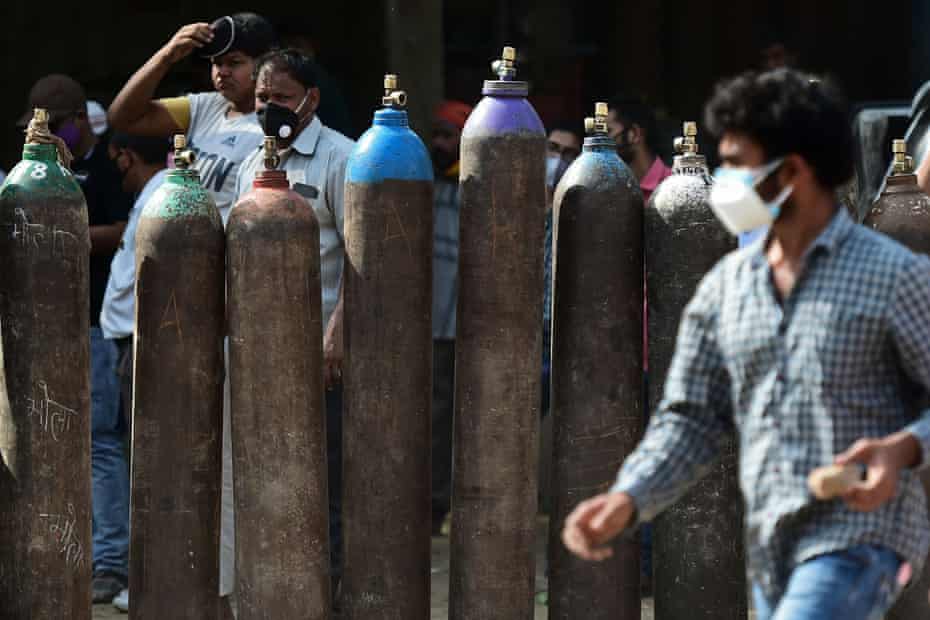
Oxygen is the new currency on India’s morbid new stock exchange. Senior politicians, journalists, lawyers – India’s elite – are on Twitter pleading for hospital beds and oxygen cylinders. The hidden market for cylinders is booming. Oxygen saturation machines and drugs are hard to come by.

People wait to refill oxygen cylinders in Allahabad. Photograph: Sanjay Kanojia/AFP/Getty Images

There are markets for other things, too. At the bottom end of the free market, a bribe to sneak a last look at your loved one, bagged and stacked in a hospital mortuary. A surcharge for a priest who agrees to say the final prayers. Online medical consultancies in which desperate families are fleeced by ruthless doctors. At the top end, you might need to sell your land and home and use up every last rupee for treatment at a private hospital. Just the deposit alone, before they even agree to admit you, could set your family back a couple of generations.

None of this conveys the full depth and range of the trauma, the chaos and, above all, the indignity that people are being subjected to. What happened to my young friend T is just one of hundreds, perhaps thousands of similar stories in Delhi alone. T, who is in his 20s, lives in his parents’ tiny flat in Ghaziabad on the outskirts of Delhi. All three of them tested positive for Covid. His mother was critically ill. Since it was in the early days, he was lucky enough to find a hospital bed for her. His father, diagnosed with severe bipolar depression, turned violent and began to harm himself. He stopped sleeping. He soiled himself. His psychiatrist was online trying to help, although she also broke down from time to time because her husband had just died from Covid. She said T’s father needed hospitalisation, but since he was Covid positive there was no chance of that. So T stayed awake, night after night, holding his father down, sponging him, cleaning him up. Each time I spoke to him I felt my own breath falter. Finally, the message came: “Father’s dead.” He did not die of Covid, but of a massive spike in blood pressure induced by a psychiatric meltdown induced by utter helplessness.

What to do with the body? I desperately called everybody I knew. Among those who responded was Anirban Bhattacharya, who works with the well-known social activist Harsh Mander. Bhattacharya is about to stand trial on a charge of sedition for a protest he helped organise on his university campus in 2016. Mander, who has not fully recovered from a savage case of Covid last year, is being threatened with arrest and the closure of the orphanages he runs after he mobilised people against the National Register of Citizens (NRC) and the Citizenship Amendment Act (CAA) passed in December 2020, both of which blatantly discriminate against Muslims. Mander and Bhattacharya are among the many citizens who, in the absence of all forms of governance, have set up helplines and emergency responses, and are running themselves ragged organising ambulances and coordinating funerals and the transport of dead bodies. It’s not safe for these volunteers to do what they’re doing. In this wave of the pandemic, it’s the young who are falling, who are filling the intensive care units. When young people die, the older among us lose a little of our will to live.

T’s father was cremated. T and his mother are recovering.

Things will settle down eventually. Of course, they will. But we don’t know who among us will survive to see that day. The rich will breathe easier. The poor will not. For now, among the sick and dying, there is a vestige of democracy. The rich have been felled, too. Hospitals are begging for oxygen. Some have started bring-your-own-oxygen schemes. The oxygen crisis has led to intense, unseemly battles between states, with political parties trying to deflect blame from themselves.

On the night of 22 April, 25 critically ill coronavirus patients on high-flow oxygen died in one of Delhi’s biggest private hospitals, Sir Ganga Ram. The hospital issued several desperate SOS messages for the replenishment of its oxygen supply. A day later, the chair of the hospital board rushed to clarify matters: “We cannot say that they have died due to lack of oxygen support.” On 24 April, 20 more patients died when oxygen supplies were depleted in another big Delhi hospital, Jaipur Golden. That same day, in the Delhi high court, Tushar Mehta, India’s solicitor general, speaking for the government of India, said: “Let’s try and not be a cry baby … so far we have ensured that no one in the country was left without oxygen.”

Ajay Mohan Bisht, the saffron-robed chief minister of Uttar Pradesh, who goes by the name Yogi Adityanath, has declared that there is no shortage of oxygen in any hospital in his state and that rumourmongers will be arrested without bail under the National Security Act and have their property seized.

Yogi Adityanath doesn’t play around. Siddique Kappan, a Muslim journalist from Kerala, jailed for months in Uttar Pradesh when he and two others travelled there to report on the gang-rape and murder of a Dalit girl in Hathras district, is critically ill and has tested positive for Covid. His wife, in a desperate petition to the chief justice of the supreme court of India, says her husband is lying chained “like an animal” to a hospital bed in the Medical College hospital in Mathura. (The supreme court has now ordered the Uttar Pradesh government to move him to a hospital in Delhi.) So, if you live in Uttar Pradesh, the message seems to be, please do yourself a favour and die without complaining.


Funeral pyres in Delhi last week. Photograph: Anindito Mukherjee/Getty Images

The threat to those who complain is not restricted to Uttar Pradesh. A spokesperson for the fascist Hindu nationalist organisation the Rashtriya Swayamsevak Sangh (RSS) – of which Modi and several of his ministers are members, and which runs its own armed militia – has warned that “anti-India forces” would use the crisis to fuel “negativity” and “mistrust” and asked the media to help foster a “positive atmosphere”. Twitter has helped them out by deactivating accounts critical of the government.

Where shall we look for solace? For science? Shall we cling to numbers? How many dead? How many recovered? How many infected? When will the peak come? On 27 April, the report was 323,144 new cases, 2,771 deaths. The precision is somewhat reassuring. Except – how do we know? Tests are hard to come by, even in Delhi. The number of Covid-protocol funerals from graveyards and crematoriums in small towns and cities suggest a death toll up to 30 times higher than the official count. Doctors who are working outside the metropolitan areas can tell you how it is.

If Delhi is breaking down, what should we imagine is happening in villages in Bihar, in Uttar Pradesh, in Madhya Pradesh? Where tens of millions of workers from the cities, carrying the virus with them, are fleeing home to their families, traumatised by their memory of Modi’s national lockdown in 2020. It was the strictest lockdown in the world, announced with only four hours’ notice. It left migrant workers stranded in cities with no work, no money to pay their rent, no food and no transport. Many had to walk hundreds of miles to their homes in far-flung villages. Hundreds died on the way.

This time around, although there is no national lockdown, the workers have left while transport is still available, while trains and buses are still running. They’ve left because they know that even though they make up the engine of the economy in this huge country, when a crisis comes, in the eyes of this administration, they simply don’t exist. This year’s exodus has resulted in a different kind of chaos: there are no quarantine centres for them to stay in before they enter their village homes. There’s not even the meagre pretence of trying to protect the countryside from the city virus.

These are villages where people die of easily treatable diseases like diarrhoea and tuberculosis. How are they to cope with Covid? Are Covid tests available to them? Are there hospitals? Is there oxygen? More than that, is there love? Forget love, is there even concern? There isn’t. Because there is only a heart-shaped hole filled with cold indifference where India’s public heart should be.

Early this morning, on 28 April, news came that our friend Prabhubhai has died. Before he died, he showed classic Covid symptoms. But his death will not register in the official Covid count because he died at home without a test or treatment. Prabhubhai was a stalwart of the anti-dam movement in the Narmada valley. I stayed several times at his home in Kevadia, where decades ago the first group of indigenous tribespeople were thrown off their lands to make room for the dam-builders and officers’ colony. Displaced families like Prabhubhai’s still remain on the edges of that colony, impoverished and unsettled, transgressors on land that was once theirs.

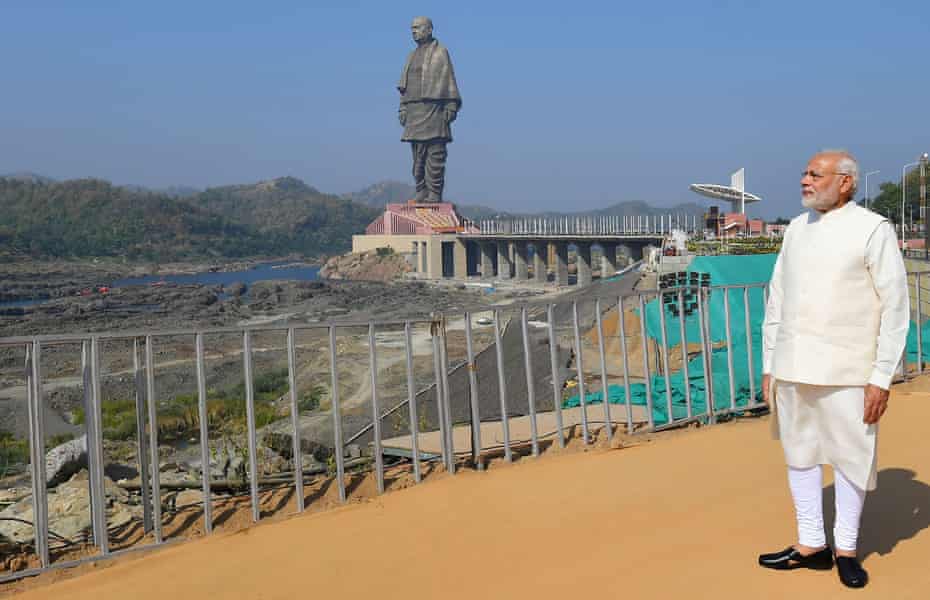
There is no hospital in Kevadia. There’s only the Statue of Unity, built in the likeness of the freedom fighter and first deputy prime minister of India, Sardar Vallabhbhai Patel, who the dam is named after. At 182 metres high, it’s the tallest statue in the world and cost US$422m. High-speed elevators inside take tourists up to view the Narmada dam from the level of Sardar Patel’s chest. Of course, you cannot see the river valley civilisation that lies destroyed, submerged in the depths of the vast reservoir, or hear the stories of the people who waged one of the most beautiful, profound struggles the world has ever known – not just against that one dam, but against the accepted ideas of what constitutes civilisation, happiness and progress. The statue was Modi’s pet project. He inaugurated it in October 2018.
Narendra Modi at the inauguration of the Statue of Unity, the world’s tallest statue, in India’s western Gujarat state in 2018. Photograph: HANDOUT/AFP/Getty Images

The friend who messaged about Prabhubhai had spent years as an anti-dam activist in the Narmada valley. She wrote: “My hands shiver as I write this. Covid situation in and around Kevadia Colony grim.”

The precise numbers that make up India’s Covid graph are like the wall that was built in Ahmedabad to hide the slums Donald Trump would drive past on his way to the “Namaste Trump” event that Modi hosted for him in February 2020. Grim as those numbers are, they give you a picture of the India-that-matters, but certainly not the India that is. In the India that is, people are expected to vote as Hindus, but die as disposables.

“Let’s try and not be a cry baby.”

Try not to pay attention to the fact that the possibility of a dire shortage of oxygen had been flagged as far back as April 2020, and then again in November by a committee set up by the government itself. Try not to wonder why even Delhi’s biggest hospitals don’t have their own oxygen-generating plants. Try not to wonder why the PM Cares Fund – the opaque organisation that has recently replaced the more public Prime Minister’s National Relief Fund, and which uses public money and government infrastructure but functions like a private trust with zero public accountability – has suddenly moved in to address the oxygen crisis. Will Modi own shares in our air-supply now?

“Let’s try and not be a cry baby.”

Understand that there were and are so many far more pressing issues for the Modi government to attend to. Destroying the last vestiges of democracy, persecuting non-Hindu minorities and consolidating the foundations of the Hindu Nation makes for a relentless schedule. There are massive prison complexes, for example, that must be urgently constructed in Assam for the 2 million people who have lived there for generations and have suddenly been stripped of their citizenship. (On this matter, our independent supreme court came down hard on the side of the government and leniently on the side of the vandals.)

There are hundreds of students and activists and young Muslim citizens to be tried and imprisoned as the primary accused in the anti-Muslim pogrom that took place against their own community in north-east Delhi last March. If you are Muslim in India, it’s a crime to be murdered. Your folks will pay for it. There was the inauguration of the new Ram Temple in Ayodhya, which is being built in place of the mosque that was hammered to dust by Hindu vandals watched over by senior BJP politicians. (On this matter, our independent supreme court came down hard on the side of the government and the vandals.) There were the controversial new Farm Bills to be passed, corporatising agriculture. There were hundreds of thousands of farmers to be beaten and teargassed when they came out on to the streets to protest.

Then there’s the multi-multi-multimillion-dollar plan for a grand new replacement for the fading grandeur of New Delhi’s imperial centre to be urgently attended to. After all, how can the government of the new Hindu India be housed in old buildings? While Delhi is locked down, ravaged by the pandemic, construction work on the “Central Vista” project, declared as an essential service, has begun. Workers are being transported in. Maybe they can alter the plans to add a crematorium.
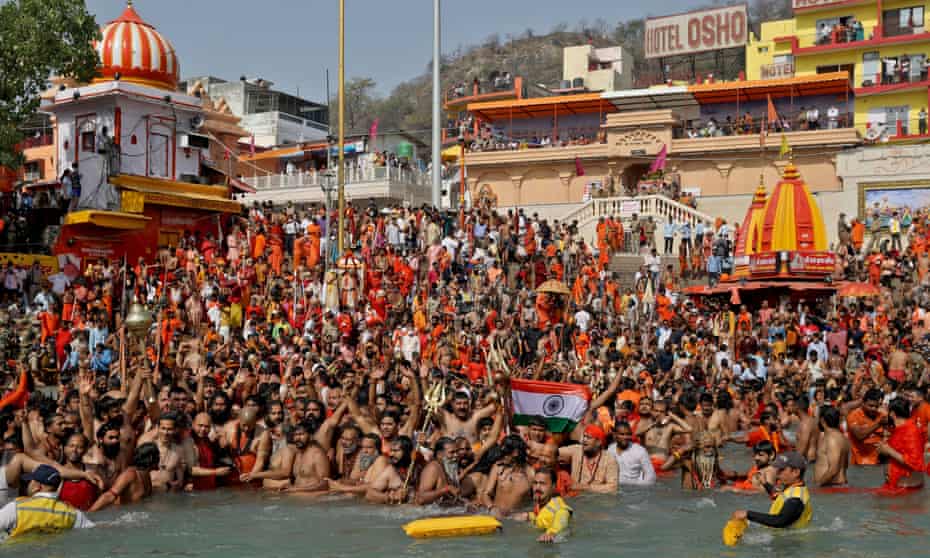
Crowds at the Kumbh Mela festival in Haridwar earlier this month. Photograph: Anushree Fadnavis/Reuters

There was also the Kumbh Mela to be organised, so that millions of Hindu pilgrims could crowd together in a small town to bathe in the Ganges and spread the virus even-handedly as they returned to their homes across the country, blessed and purified. This Kumbh rocks on, although Modi has gently suggested that it might be an idea for the holy dip to become “symbolic” – whatever that means. (Unlike what happened with those who attended a conference for the Islamic organisation Tablighi Jamaat last year, the media has not run a campaign against them calling them “corona jihadis” or accusing them of committing crimes against humanity.) There were also those few thousand Rohingya refugees who had to be urgently deported back to the genocidal regime in Myanmar from where they had fled – in the middle of a coup. (Once again, when our independent supreme court was petitioned on this matter, it concurred with the government’s view.)

So, as you can tell, it’s been busy, busy, busy.

Over and above all this urgent activity, there is an election to be won in the state of West Bengal. This required our home minister, Modi’s man Amit Shah, to more or less abandon his cabinet duties and focus all his attention on Bengal for months, to disseminate his party’s murderous propaganda, to pit human against human in every little town and village. West Bengal is a small state. The election could have taken place in a single day, and has done so in the past. But since it is new territory for the BJP, the party needed time to move its cadres, many of who are not from Bengal, from constituency to constituency to oversee the voting. The election schedule was divided into eight phases, spread out over a month, the last on 29 April. As the count of corona infections ticked up, the other political parties pleaded with the election commission to rethink the election schedule. The commission refused and came down hard on the side of the BJP, and the campaign continued. Who hasn’t seen the videos of the BJP’s star campaigner, the prime minister himself, triumphant and maskless, speaking to the maskless crowds, thanking people for coming out in unprecedented numbers? That was on 17 April, when the official number of daily infections was already rocketing upward of 200,000.

Now, as voting closes, Bengal is poised to become the new corona cauldron, with a new triple mutant strain known as – guess what – the “Bengal strain”. Newspapers report that every second person tested in the state capital, Kolkata, is Covid positive. The BJP has declared that if it wins Bengal, it will ensure people get free vaccines. And if it doesn’t?

“Let’s try and not be a cry baby.”

Anyway, what about the vaccines? Surely they’ll save us? Isn’t India a vaccine powerhouse? In fact, the Indian government is entirely dependent on two manufacturers, the Serum Institute of India (SII) and Bharat Biotech. Both are being allowed to roll out two of the most expensive vaccines in the world, to the poorest people in the world. This week they announced that they will sell to private hospitals at a slightly elevated price, and to state governments at a somewhat lower price. Back-of-the-envelope calculations show the vaccine companies are likely to make obscene profits.

Under Modi, India’s economy has been hollowed out, and hundreds of millions of people who were already living precarious lives have been pushed into abject poverty. A huge number now depend for survival on paltry earnings from the National Rural Employment Guarantee Act (NREGA), which was instituted in 2005 when the Congress party was in power. It is impossible to expect that families on the verge of starvation will pay most of a month’s income to have themselves vaccinated. In the UK, vaccines are free and a fundamental right. Those trying to get vaccinated out of turn can be prosecuted. In India, the main underlying impetus of the vaccination campaign seems to be corporate profit.
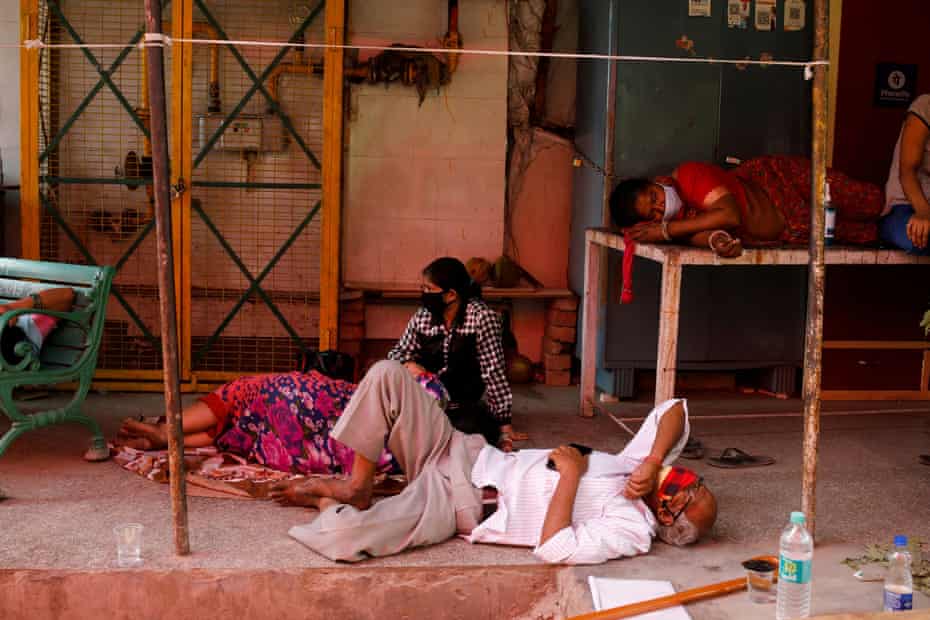
People with breathing problems caused by Covid-19 wait to receive oxygen in Ghaziabad. Photograph: Adnan Abidi/Reuters

As this epic catastrophe plays out on our Modi-aligned Indian television channels, you’ll notice how they all speak in one tutored voice. The “system” has collapsed, they say, again and again. The virus has overwhelmed India’s health care “system”.

The system has not collapsed. The “system” barely existed. The government – this one, as well as the Congress government that preceded it – deliberately dismantled what little medical infrastructure there was. This is what happens when a pandemic hits a country with an almost nonexistent public healthcare system. India spends about 1.25% of its gross domestic product on health, far lower than most countries in the world, even the poorest ones. Even that figure is thought to be inflated, because things that are important but do not strictly qualify as healthcare have been slipped into it. So the real figure is estimated to be more like 0.34%. The tragedy is that in this devastatingly poor country, as a 2016 Lancet study shows, 78% of the healthcare in urban areas and 71% in rural areas is now handled by the private sector. The resources that remain in the public sector are systematically siphoned into the private sector by a nexus of corrupt administrators and medical practitioners, corrupt referrals and insurance rackets.

Healthcare is a fundamental right. The private sector will not cater to starving, sick, dying people who don’t have money. This massive privatisation of India’s healthcare is a crime.

The system hasn’t collapsed. The government has failed. Perhaps “failed” is an inaccurate word, because what we are witnessing is not criminal negligence, but an outright crime against humanity. Virologists predict that the number of cases in India will grow exponentially to more than 500,000 a day. They predict the death of many hundreds of thousands in the coming months, perhaps more. My friends and I have agreed to call each other every day just to mark ourselves present, like roll call in our school classrooms. We speak to those we love in tears, and with trepidation, not knowing if we will ever see each other again. We write, we work, not knowing if we will live to finish what we started. Not knowing what horror and humiliation awaits us. The indignity of it all. That is what breaks us.

The hashtag #ModiMustResign is trending on social media. Some of the memes and illustrations show Modi with a heap of skulls peeping out from behind the curtain of his beard. Modi the Messiah speaking at a public rally of corpses. Modi and Amit Shah as vultures, scanning the horizon for corpses to harvest votes from. But that is only one part of the story. The other part is that the man with no feelings, the man with empty eyes and a mirthless smile, can, like so many tyrants in the past, arouse passionate feelings in others. His pathology is infectious. And that is what sets him apart. In north India, which is home to his largest voting base, and which, by dint of sheer numbers, tends to decide the political fate of the country, the pain he inflicts seems to turn into a peculiar pleasure.

Fredrick Douglass said it right: “The limits of tyrants are prescribed by the endurance of those whom they oppress.” How we in India pride ourselves on our capacity to endure. How beautifully we have trained ourselves to meditate, to turn inward, to exorcise our fury as well as justify our inability to be egalitarian. How meekly we embrace our humiliation.

When he made his political debut as Gujarat’s new chief minister in 2001, Modi ensured his place in posterity after what has come to be known as the 2002 Gujarat pogrom. Over a period of a few days, Hindu vigilante mobs, watched over and sometimes actively assisted by the Gujarat police, murdered, raped and burned alive thousands of Muslims as “revenge” for a gruesome arson attack on a train in which more than 50 Hindu pilgrims had been burned alive. Once the violence subsided, Modi, who had until then only been appointed as chief minister by his party, called for early elections. The campaign in which he was portrayed as Hindu Hriday Samrat (“The Emperor of Hindu Hearts”) won him a landslide victory. Modi hasn’t lost an election since.

Several of the killers in the Gujrat pogrom were subsequently captured on camera by the journalist Ashish Khetan, boasting of how they hacked people to death, slashed pregnant women’s stomachs open and smashed infants’ heads against rocks. They said they could only have done what they did because Modi was their chief minister. Those tapes were broadcast on national TV. While Modi remained in the seat of power, Khetan, whose tapes were submitted to the courts and forensically examined, appeared as a witness on several occasions. Over time, some of the killers were arrested and imprisoned, but many were let off. In his recent book, Undercover: My Journey Into the Darkness of Hindutva, Khetan describes in detail how, during Modi’s tenure as chief minister, the Gujarat police, judges, lawyers, prosecutors and inquiry committees all colluded to tamper with evidence, intimidate witnesses and transfer judges.

Despite knowing all this, many of India’s so-called public intellectuals, the CEOs of its major corporations and the media houses they own, worked hard to pave the way for Modi to become the prime minister. They humiliated and shouted down those of us who persisted in our criticism. “Move on”, was their mantra. Even today, they mitigate their harsh words for Modi with praise for his oratory skills and his “hard work”. Their denunciation and bullying contempt for politicians in opposition parties is far more strident. They reserve their special scorn for Rahul Gandhi of the Congress party, the only politician who has consistently warned of the coming Covid crisis and repeatedly asked the government to prepare itself as best it could. To assist the ruling party in its campaign to destroy all opposition parties amounts to colluding with the destruction of democracy.

So here we are now, in the hell of their collective making, with every independent institution essential to the functioning of a democracy compromised and hollowed out, and a virus that is out of control. 

The crisis-generating machine that we call our government is incapable of leading us out of this disaster. Not least because one man makes all the decisions in this government, and that man is dangerous – and not very bright. This virus is an international problem. To deal with it, decision-making, at least on the control and administration of the pandemic, will need to pass into the hands of some sort of non-partisan body consisting of members of the ruling party, members of the opposition, and health and public policy experts.

As for Modi, is resigning from your crimes a feasible proposition? Perhaps he could just take a break from them – a break from all his hard work. There’s that $564m Boeing 777, Air India One, customised for VVIP travel – for him, actually – that’s been sitting idle on the runway for a while now. He and his men could just leave. The rest of us will do all we can to clean up their mess.

No, India cannot be isolated. We need help.