Wednesday, 17 March 2021
Why can't Britain handle the truth about Winston Churchill?
Nothing, it seems, can be allowed to tarnish the national myth – as I found when hosting a Cambridge debate about his murkier side writes Priyamvada Gopal in The Guardian
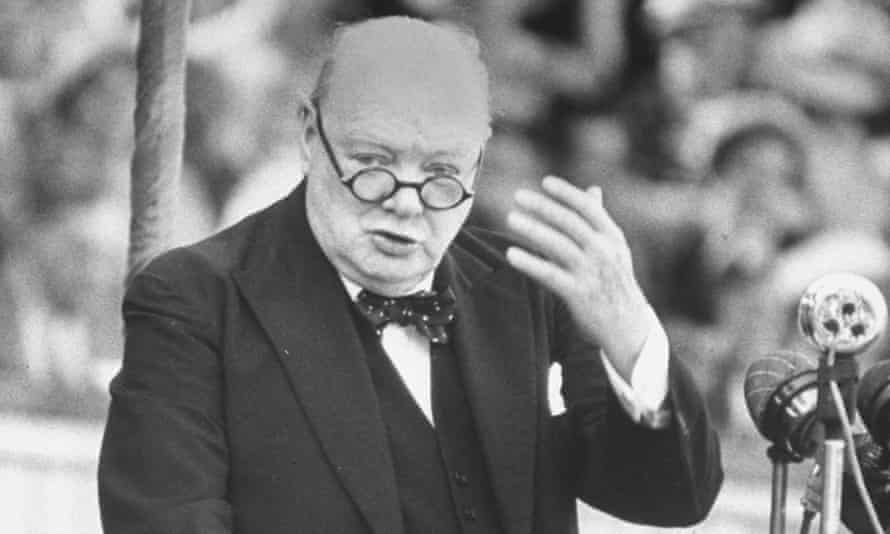
Winston Churchill speaking at Wolverhampton football field in 1949. Photograph: Mark Kauffman/The LIFE Picture Collection/Getty Images
A baleful silence attends one of the most talked-about figures in British history. You may enthuse endlessly about Winston Churchill “single-handedly” defeating Hitler. But mention his views on race or his colonial policies, and you’ll be instantly drowned in ferocious and orchestrated vitriol.
In a sea of fawningly reverential Churchill biographies, hardly any books seriously examine his documented racism. Nothing, it seems, can be allowed to complicate, let alone tarnish, the national myth of a flawless hero: an idol who “saved our civilisation”, as Boris Johnson claims, or “humanity as a whole”, as David Cameron did. Make an uncomfortable observation about his views on white supremacy and the likes of Piers Morgan will ask: “Why do you live in this country?”
Not everyone is content to be told to be quiet because they would be “speaking German” if not for Churchill. Many people want to know more about the historical figures they are required to admire uncritically. The Black Lives Matter protests last June – during which the word “racist” was sprayed in red letters on Churchill’s statue in Parliament Square, were accompanied by demands for more education on race, empire and the figures whose statues dot our landscapes.
Yet providing a fuller picture is made difficult. Scholars who explore less illustrious sides of Churchill are treated dismissively. Take the example of Churchill College, Cambridge, where I am a teaching fellow. In response to calls for fuller information about its founder, the college set up a series of events on Churchill, Empire and Race. I recently chaired the second of these, a panel discussion on “The Racial Consequences of Mr Churchill”.
Even before it took place, the discussion was repeatedly denounced in the tabloids and on social media as “idiotic”, a “character assassination” aimed at “trashing” the great man. Outraged letters to the college said this was academic freedom gone too far, and that the event should be cancelled. The speakers and I, all scholars and people of colour, were subjected to vicious hate mail, racist slurs and threats. We were accused of treason and slander. One correspondent warned that my name was being forwarded to the commanding officer of an RAF base near my home.
The college is now under heavy pressure to stop doing these events. After the recent panel, the rightwing thinktank Policy Exchange, which is influential in government circles – and claims to champion free speech and controversial views on campus – published a “review” of the event. The foreword, written by Churchill’s grandson Nicholas Soames, stated that he hoped the review would “prevent such an intellectually dishonest event from being organised at Churchill College in the future – and, one might hope, elsewhere”.
It’s ironic. We’re told by government and media that “cancel culture” is an imposition of the academic left. Yet here it is in reality, the actual “cancel culture” that prevents a truthful engagement with British history. Churchill was an admired wartime leader who recognised the threat of Hitler in time and played a pivotal role in the allied victory. It should be possible to recognise this without glossing over his less benign side. The scholars at the Cambridge event – Madhusree Mukerjee, Onyeka Nubia and Kehinde Andrews – drew attention to Churchill’s dogged advocacy of British colonial rule; his contributing role in the disastrous 1943 Bengal famine, in which millions of people died unnecessarily; his interest in eugenics; and his views, deeply retrograde even for his time, on race.
Churchill is on record as praising “Aryan stock” and insisting it was right for “a stronger race, a higher-grade race” to take the place of indigenous peoples. He reportedly did not think “black people were as capable or as efficient as white people”. In 1911, Churchill banned interracial boxing matches so white fighters would not be seen losing to black ones. He insisted that Britain and the US shared “Anglo-Saxon superiority”. He described anticolonial campaigners as “savages armed with ideas”.
Even his contemporaries found his views on race shocking. In the context of Churchill’s hard line against providing famine relief to Bengal, the colonial secretary, Leo Amery, remarked: “On the subject of India, Winston is not quite sane … I didn’t see much difference between his outlook and Hitler’s.”
Just because Hitler was a racist does not mean Churchill could not have been one. Britain entered the war, after all, because it faced an existential threat – and not primarily because it disagreed with Nazi ideology. Noting affinities between colonial and Nazi race-thinking, African and Asian leaders queried Churchill’s double standards in firmly rejecting self-determination for colonial subjects who were also fighting Hitler.
It is worth recalling that the uncritical Churchill-worship that is so dominant today was not shared by many British people in 1945, when they voted him out of office before the war was even completely over. Many working-class communities in Britain, from Dundee to south Wales, felt strong animosity towards Churchill for his willingness to mobilise military force during industrial disputes. As recently as 2010, Llanmaes community council opposed the renaming of a military base to Churchill Lines.
Critical assessment is not “character assassination”. Thanks to the groupthink of “the cult of Churchill”, the late prime minister has become a mythological figure rather than a historical one. To play down the implications of Churchill’s views on race – or suggest absurdly, as Policy Exchange does, that his racist words meant “something other than their conventional definition” – speaks to me of a profound lack of honesty and courage.
This failure of courage is tied to a wider aversion to examining the British empire truthfully, perhaps for fear of what it might say about Britain today. A necessary national conversation about Churchill and the empire he was so committed to is one necessary way to break this unacceptable silence.
A baleful silence attends one of the most talked-about figures in British history. You may enthuse endlessly about Winston Churchill “single-handedly” defeating Hitler. But mention his views on race or his colonial policies, and you’ll be instantly drowned in ferocious and orchestrated vitriol.
In a sea of fawningly reverential Churchill biographies, hardly any books seriously examine his documented racism. Nothing, it seems, can be allowed to complicate, let alone tarnish, the national myth of a flawless hero: an idol who “saved our civilisation”, as Boris Johnson claims, or “humanity as a whole”, as David Cameron did. Make an uncomfortable observation about his views on white supremacy and the likes of Piers Morgan will ask: “Why do you live in this country?”
Not everyone is content to be told to be quiet because they would be “speaking German” if not for Churchill. Many people want to know more about the historical figures they are required to admire uncritically. The Black Lives Matter protests last June – during which the word “racist” was sprayed in red letters on Churchill’s statue in Parliament Square, were accompanied by demands for more education on race, empire and the figures whose statues dot our landscapes.
Yet providing a fuller picture is made difficult. Scholars who explore less illustrious sides of Churchill are treated dismissively. Take the example of Churchill College, Cambridge, where I am a teaching fellow. In response to calls for fuller information about its founder, the college set up a series of events on Churchill, Empire and Race. I recently chaired the second of these, a panel discussion on “The Racial Consequences of Mr Churchill”.
Even before it took place, the discussion was repeatedly denounced in the tabloids and on social media as “idiotic”, a “character assassination” aimed at “trashing” the great man. Outraged letters to the college said this was academic freedom gone too far, and that the event should be cancelled. The speakers and I, all scholars and people of colour, were subjected to vicious hate mail, racist slurs and threats. We were accused of treason and slander. One correspondent warned that my name was being forwarded to the commanding officer of an RAF base near my home.
The college is now under heavy pressure to stop doing these events. After the recent panel, the rightwing thinktank Policy Exchange, which is influential in government circles – and claims to champion free speech and controversial views on campus – published a “review” of the event. The foreword, written by Churchill’s grandson Nicholas Soames, stated that he hoped the review would “prevent such an intellectually dishonest event from being organised at Churchill College in the future – and, one might hope, elsewhere”.
It’s ironic. We’re told by government and media that “cancel culture” is an imposition of the academic left. Yet here it is in reality, the actual “cancel culture” that prevents a truthful engagement with British history. Churchill was an admired wartime leader who recognised the threat of Hitler in time and played a pivotal role in the allied victory. It should be possible to recognise this without glossing over his less benign side. The scholars at the Cambridge event – Madhusree Mukerjee, Onyeka Nubia and Kehinde Andrews – drew attention to Churchill’s dogged advocacy of British colonial rule; his contributing role in the disastrous 1943 Bengal famine, in which millions of people died unnecessarily; his interest in eugenics; and his views, deeply retrograde even for his time, on race.
Churchill is on record as praising “Aryan stock” and insisting it was right for “a stronger race, a higher-grade race” to take the place of indigenous peoples. He reportedly did not think “black people were as capable or as efficient as white people”. In 1911, Churchill banned interracial boxing matches so white fighters would not be seen losing to black ones. He insisted that Britain and the US shared “Anglo-Saxon superiority”. He described anticolonial campaigners as “savages armed with ideas”.
Even his contemporaries found his views on race shocking. In the context of Churchill’s hard line against providing famine relief to Bengal, the colonial secretary, Leo Amery, remarked: “On the subject of India, Winston is not quite sane … I didn’t see much difference between his outlook and Hitler’s.”
Just because Hitler was a racist does not mean Churchill could not have been one. Britain entered the war, after all, because it faced an existential threat – and not primarily because it disagreed with Nazi ideology. Noting affinities between colonial and Nazi race-thinking, African and Asian leaders queried Churchill’s double standards in firmly rejecting self-determination for colonial subjects who were also fighting Hitler.
It is worth recalling that the uncritical Churchill-worship that is so dominant today was not shared by many British people in 1945, when they voted him out of office before the war was even completely over. Many working-class communities in Britain, from Dundee to south Wales, felt strong animosity towards Churchill for his willingness to mobilise military force during industrial disputes. As recently as 2010, Llanmaes community council opposed the renaming of a military base to Churchill Lines.
Critical assessment is not “character assassination”. Thanks to the groupthink of “the cult of Churchill”, the late prime minister has become a mythological figure rather than a historical one. To play down the implications of Churchill’s views on race – or suggest absurdly, as Policy Exchange does, that his racist words meant “something other than their conventional definition” – speaks to me of a profound lack of honesty and courage.
This failure of courage is tied to a wider aversion to examining the British empire truthfully, perhaps for fear of what it might say about Britain today. A necessary national conversation about Churchill and the empire he was so committed to is one necessary way to break this unacceptable silence.
Monday, 15 March 2021
Sunday, 14 March 2021
The tragedy of the missing middle classes
It is disappointing to see the middle class indifferent to the protests of farmers. The missing middle class will hasten the demise of democracy writes P Chidambaram in The Indian Express
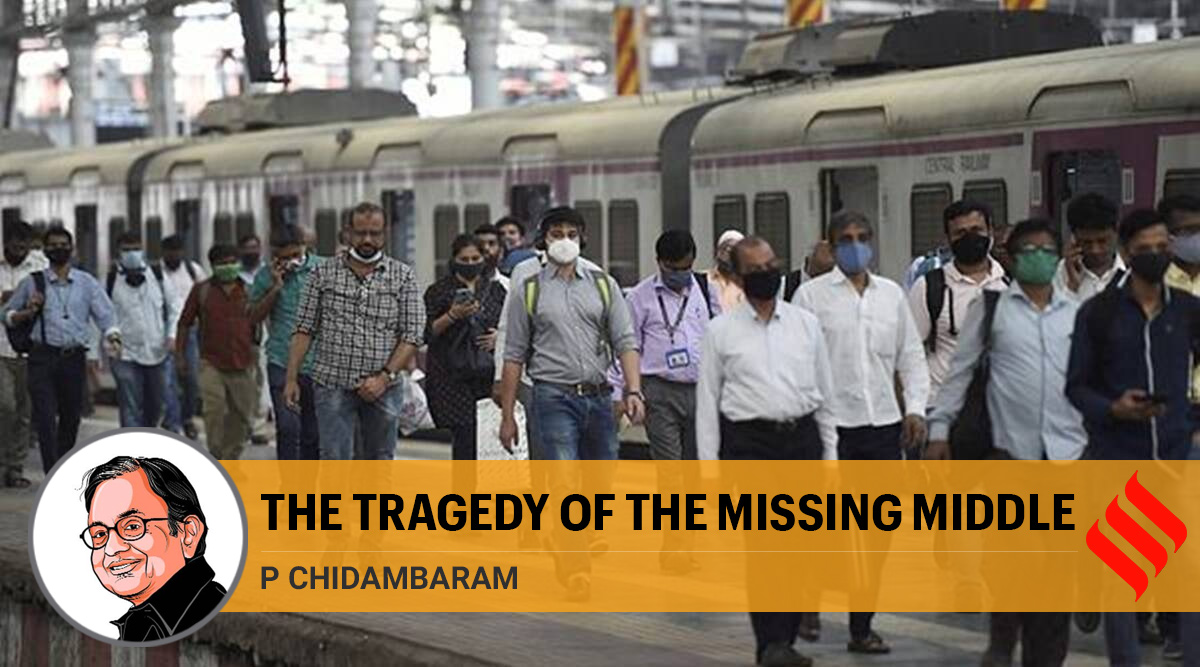
The middle class seems to have taken literally the moral of the story of the three monkeys — one blindfolded, one with cotton in its ears and one with its mouth taped. (File/Representational Image)
In a country of 138 crore people, a per capita income of Rs 98,000 and extreme inequality, it is difficult to estimate the size of the middle class. The first hurdle is definitional. What is the income slab which may be taken to count the middle class? Just 1 per cent of the population holds 73 per cent of the wealth. Given that the bottom 20 per cent of any developing country must be assumed to be poor, that leaves 79 per cent of which about 10 per cent, that is 7 per cent, may be called the truly middle class. Even that is a humongous number — nearly 10 crore, which is more than the population of all but 14 countries!
The second hurdle is the quality of life that can be described as a middle-class life. What kind of a life can a per capita income of Rs 98,000 buy? At Rs 8,000 per month per person, it is barely sufficient to meet the requirements of shelter, food, clothing, education, health, leisure, entertainment and some savings. That is what everyone should have. Hence, to be counted in the middle class, one must have an annual income of at least twice or thrice that amount. I suspect that number will be not more than the number who pay income tax. That number was 3.29 crore in 2018-19 — barely 2.4 per cent of the population.
Neither seen nor heard
Suppose we make a rough estimate of the size of the middle class as between 3 crore and 10 crore. Let’s pick the number as 6 crore. Among them are businesspersons, farmers, judges, lawyers, doctors, engineers, chartered accountants, actors, writers and other professionals.
The subject of this essay is, what is this ‘middle class’ of an estimated size of 6 crore doing?
Through the 1930s and 1940s, and up to the 1980s, there were thousands who would cheerfully identify themselves as belonging to the middle class. They were active in public life, including politics. They were candidates in elections to Parliament, the state legislatures and local bodies. One found them in executive posts in municipalities, cooperative societies, voluntary associations, sports bodies and the like. They were found among speakers, writers, poets, actors and artistes. They debated issues that were relevant and topical. They wrote letters to editors and, sometimes, op-eds and middles.
No more a resource
The middle class served as a rich intellectual resource during the freedom struggle. Hundreds belonging to that class were counted as friends and advisers by political leaders. They brushed shoulders with those in power. Their views shaped public discourse. In Bengal, they were called the bhadralok. In Tamil Nadu, they read The Hindu and Dinamani, thronged music concerts and cinema halls, and led religious festivals like Theppam (the float) and Ther (the rath or chariot). In Maharashtra, they were patrons of Marathi literature and theatre. In Kerala and Karnataka they were active in churches and mutts. The middle class was really in the middle of things.
Politics was enriched and civilized by the participation of the middle class, not always as candidates, but as opinion makers and opinion leaders. Out of this middle class emerged leaders like Achuta Menon, C Subramaniam, Veerendra Patil and Sanjivayya in the South and many others in the North. The middle class, through its opinions, mediated in people’s struggles against the government like farmers’ issues, trade union agitations, students’ protests etc. The middle class embodied empathy, reason, fairness and equity and ensured that these values were respected.
Alas, that middle class seems to have vanished. It exists only as a classification for economists, but it seems to have retreated from practically all walks of life. Full-time politicians have taken over clubs, societies, sports bodies, cooperative societies, trade unions, temple trusts and practically every other organised unit of society. It is perhaps the reason why public life, especially politics, has become acrimonious and monetised and the level of debate coarse, vulgar and vapid.
Gated mini-republics
It is disappointing to see the middle class indifferent to the over-100 days of protests of the farmers at Singhu and Tikri. Except when the horror on Nirbhaya was perpetrated, the middle class distanced itself from the police excesses in JNU and AMU, the anti-CAA protests at Shaheen Bagh and elsewhere and, shamefully, the plight of the millions of migrant workers who trekked hundreds of kilometres to their homes following the sudden lockdown on March 25, 2020. Trade union struggles in Haryana and Karnataka have gone unnoticed. Police firings and encounters do not seem to stir their conscience. Arbitrary arrests of social activists, writers and poets or harassment of Opposition political leaders do not seem to shake them out of their complacency. It is as though the middle class has withdrawn itself into its gated mini-republics all over the country.
Witness the buying and selling of MPs and MLAs. The trade flourishes during the time of elections as evidenced by the volume of trade on the shadowy political exchange in West Bengal and Puducherry! Yet, elections are notified without changing the law on defections and there is hardly a murmur of protest.
The middle class seems to have taken literally the moral of the story of the three monkeys — one blindfolded, one with cotton in its ears and one with its mouth taped. I am afraid, the missing middle class will hasten the demise of democracy.
Debt levels are not an issue
The Bank of England must be clear about its focus on jobs and growth – and that stimulus needn’t spoil anyone’s sleep writes Phillip Inman in The Guardian
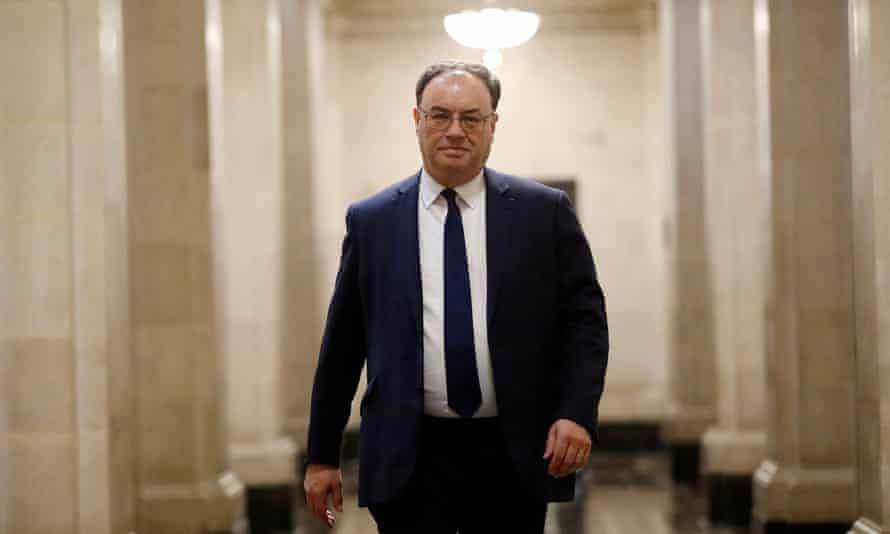
Bank of England governor Andrew Bailey was sure-footed at the start of the pandemic. Photograph: Reuters
Tearing at the Tory party’s fabric is the thought of spiralling government debt. The subject triggers a cold sweat in some of the most emotionally resilient Conservative backbench MPs, such is the distress it generates.
Much as the German centre-right parties have spent the past 90 years fearing a return of hyperinflation, their UK counterparts worry about paying the national mortgage bill, and the possibility it will one day engulf and sink the ship of state.
Since the budget, there is a sense that the costs of the pandemic, of levelling up, of going green and of social care – to name just four candidates for extra spending – are scarily high.
Plenty of economists say these costs can be managed with higher borrowing. Even the experts who warned against rising debts back in 2009 have changed their minds. The International Monetary Fund and the Organisation for Economic Cooperation and Development say that after 30 years of falling interest rates, this is the moment to stick extra spending on a buy now, pay later tab.
Yet, gnawing away at the Tory soul is the prospect of an increase in interest rates by a fragile Bank of England, an institution that owns more than a third of UK government debt. This week, Threadneedle Street’s monetary policy committee meets to discuss the state of the economy and whether it needs to adjust its current 0.1% base rate.
Last year the committee was concerned that the economic situation was so bad it might need to lower interest rates even further, pushing them into negative territory. In recent weeks, though, the success of the vaccine programme, some additional spending by Rishi Sunak in his spring budget and Joe Biden’s monster stimulus package – which has made its way unscathed through the US Congress – have turned a few heads.
Now there are warnings of a rebound in growth so strong that it will force central banks to calm things down with the much-dreaded increase in interest rates.
At Thursday’s meeting, Andrew Bailey will mark a year as governor, and will be forgiven for wanting to draw breath. Within weeks of the handover from Mark Carney, he was plunged into the pandemic and – like his counterpart in the Treasury, Sunak – forced to plot a way through the crisis.
Bailey should set aside his in-tray and do the nation a favour by making explicit what, in a post-pandemic world, the Bank’s mandate means. And what he should say is neither outlandish nor controversial.
It should not differ wildly from what Jerome Powell, the head of the US central bank, said last week. Bailey should explain that the Bank’s focus is on generating a path for growth that has momentum and is sustainable. Only when the Bank can verify that jobs are being created – and, more importantly, that pay rises of at least 4% a year are being awarded – will it begin to consider tightening monetary policy.
This means interest rates cannot increase until the government has two things working in its favour. First, that there are enough jobs and pay increases to generate the level of tax receipts that can pay for higher debt bills. Second, that there is a level of growth which means the debt-to-GDP ratio, expected to hit about 110% during this parliament, starts coming down, even as the government spends more.
If Bailey says this like he means it, those who worry about rising interest rates can switch to worrying about something else, such as the climate emergency, Britain’s spectacular loss of biodiversity and rising levels of child poverty.
Bailey’s record over his first year in charge does not augur well. While he was sure-footed at the outset of the pandemic, dusting off the 2008 crisis playbook and printing a huge sum of money to restore confidence, things soon started to go awry.
He has flip-flopped from optimist to pessimist on the economy while throwing incendiary devices on the fears of those who worry about debt. In an interview last June, for example, he claimed the bond markets brought Britain close to insolvency when the bank launched its first pandemic rescue operation. It was an exaggeration that matched the hyperbole of his recent support for the idea that consumers are ready to “binge” once lockdown eases.
If the past 10 years has taught us anything, it is that the Bank has consistently done too little to help the economy and not too much. Bailey could ask Sunak to overhaul the MPC remit, increasing the inflation target from the current 2% to 3% or 4%, or bolting on a growth target that would force the Bank to keep rates where they are until growth reaches 3% or 3.5% a year.
That could be Bailey’s legacy, for which the nation would thank him.
Tearing at the Tory party’s fabric is the thought of spiralling government debt. The subject triggers a cold sweat in some of the most emotionally resilient Conservative backbench MPs, such is the distress it generates.
Much as the German centre-right parties have spent the past 90 years fearing a return of hyperinflation, their UK counterparts worry about paying the national mortgage bill, and the possibility it will one day engulf and sink the ship of state.
Since the budget, there is a sense that the costs of the pandemic, of levelling up, of going green and of social care – to name just four candidates for extra spending – are scarily high.
Plenty of economists say these costs can be managed with higher borrowing. Even the experts who warned against rising debts back in 2009 have changed their minds. The International Monetary Fund and the Organisation for Economic Cooperation and Development say that after 30 years of falling interest rates, this is the moment to stick extra spending on a buy now, pay later tab.
Yet, gnawing away at the Tory soul is the prospect of an increase in interest rates by a fragile Bank of England, an institution that owns more than a third of UK government debt. This week, Threadneedle Street’s monetary policy committee meets to discuss the state of the economy and whether it needs to adjust its current 0.1% base rate.
Last year the committee was concerned that the economic situation was so bad it might need to lower interest rates even further, pushing them into negative territory. In recent weeks, though, the success of the vaccine programme, some additional spending by Rishi Sunak in his spring budget and Joe Biden’s monster stimulus package – which has made its way unscathed through the US Congress – have turned a few heads.
Now there are warnings of a rebound in growth so strong that it will force central banks to calm things down with the much-dreaded increase in interest rates.
At Thursday’s meeting, Andrew Bailey will mark a year as governor, and will be forgiven for wanting to draw breath. Within weeks of the handover from Mark Carney, he was plunged into the pandemic and – like his counterpart in the Treasury, Sunak – forced to plot a way through the crisis.
Bailey should set aside his in-tray and do the nation a favour by making explicit what, in a post-pandemic world, the Bank’s mandate means. And what he should say is neither outlandish nor controversial.
It should not differ wildly from what Jerome Powell, the head of the US central bank, said last week. Bailey should explain that the Bank’s focus is on generating a path for growth that has momentum and is sustainable. Only when the Bank can verify that jobs are being created – and, more importantly, that pay rises of at least 4% a year are being awarded – will it begin to consider tightening monetary policy.
This means interest rates cannot increase until the government has two things working in its favour. First, that there are enough jobs and pay increases to generate the level of tax receipts that can pay for higher debt bills. Second, that there is a level of growth which means the debt-to-GDP ratio, expected to hit about 110% during this parliament, starts coming down, even as the government spends more.
If Bailey says this like he means it, those who worry about rising interest rates can switch to worrying about something else, such as the climate emergency, Britain’s spectacular loss of biodiversity and rising levels of child poverty.
Bailey’s record over his first year in charge does not augur well. While he was sure-footed at the outset of the pandemic, dusting off the 2008 crisis playbook and printing a huge sum of money to restore confidence, things soon started to go awry.
He has flip-flopped from optimist to pessimist on the economy while throwing incendiary devices on the fears of those who worry about debt. In an interview last June, for example, he claimed the bond markets brought Britain close to insolvency when the bank launched its first pandemic rescue operation. It was an exaggeration that matched the hyperbole of his recent support for the idea that consumers are ready to “binge” once lockdown eases.
If the past 10 years has taught us anything, it is that the Bank has consistently done too little to help the economy and not too much. Bailey could ask Sunak to overhaul the MPC remit, increasing the inflation target from the current 2% to 3% or 4%, or bolting on a growth target that would force the Bank to keep rates where they are until growth reaches 3% or 3.5% a year.
That could be Bailey’s legacy, for which the nation would thank him.
Subscribe to:
Posts (Atom)